

Table of Contents
- Bagster vs Roll-Off Dumpster Rental: Quick Comparison
- Capacity and Volume: Understanding 15-Yard Dumpster Capacity
- Weight Limits and Heavy Material Disposal Rules
- Cost-Effectiveness for Your Project Scale
- Convenience, Scheduling, and Pickup Flexibility
- Types of Yard Debris Accepted and Prohibited Materials
- Which Option Is Right for Your Yard Waste Project
- Frequently Asked Questions
Last Updated: October 1, 2026
Bagster vs Roll-Off Dumpster Rental: Quick Comparison
When you’re facing a yard cleanup, understanding bagster vs dumpster rental for yard waste shapes your entire project timeline and budget. Both handle yard waste, but they operate at fundamentally different scales. A Bagster works for small, contained jobs. A roll-off dumpster handles the heavy lifting when you’re serious about clearing space.
Here’s the core tension: Bagster feels convenient because it’s simple and compact. But that simplicity comes with real constraints. Roll-off dumpsters like those from Austex Dumpsters demand more planning around placement and scheduling, yet they unlock capacity that Bagster simply cannot match. For most homeowners tackling substantial yard debris, the roll-off dumpster wins on value and practicality.
Let’s break down exactly where each excels and where it falls short.
| Feature | Bagster | Roll-Off Dumpster (Austex) | Winner |
|---|---|---|---|
| Capacity | ~3 cubic yards | 15-30 cubic yards | Roll-off |
| Weight limit | 3,300 lbs | Varies by size | Roll-off |
| Best for | Small cleanups | Large projects | Roll-off |
| Space needed | Minimal | Significant | Bagster |
| Pickup flexibility | No time pressure | Scheduled | Bagster |
| Heavy materials | Not recommended | 15-yard designed for it | Roll-off |
Capacity and Volume: Understanding 15-Yard Dumpster Capacity
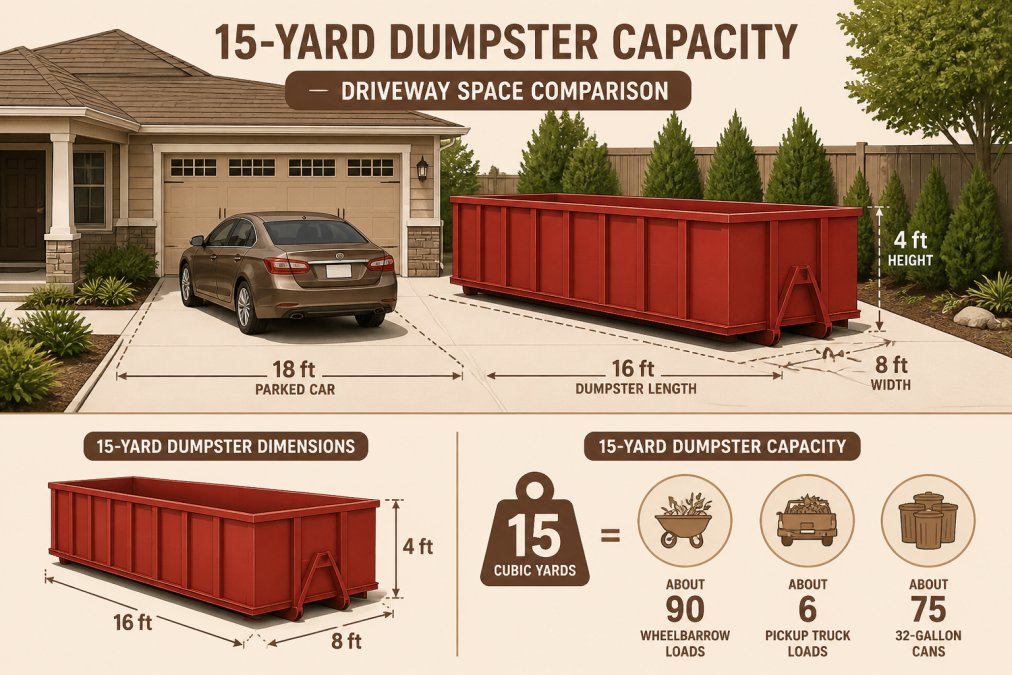
A 15-yard dumpster holds roughly 15 cubic yards of material, that’s the volume of a cube 15 feet on each side. To visualize it: imagine filling a space about the size of a small bedroom, floor to ceiling. For yard waste specifically, that translates to roughly 4-5 pickup truck loads of leaves, branches, and grass clippings.
Bagster maxes out at approximately 3 cubic yards. The math is straightforward: a 15-yard roll-off dumpster holds 5 times the volume. If you’re clearing a modest backyard, Bagster might suffice. If you’re removing an old deck, clearing overgrown landscaping, or handling a major tree removal, you’ll exceed Bagster capacity within hours.
Austex Dumpsters offers 15-yard, 20-yard, 25-yard, and 30-yard sizes. Larger projects benefit from the 20-, 25-, or 30-yard options, which scale your capacity without changing the logistics of the rental itself.
Weight Limits and Heavy Material Disposal Rules
This is where the comparison gets specific and important. Bagster holds up to 3,300 lbs total. That sounds like plenty until you’re loading concrete, brick, dirt, or rock, the materials that weigh the most per cubic yard.
Here’s the critical rule: heavy materials like concrete, dirt, brick, and rock belong in a 15-yard dumpster. These materials are dense. A single cubic yard of dirt weighs roughly 1,400-1,600 lbs. A cubic yard of concrete runs 2,000-2,400 lbs. Load three cubic yards of concrete into a Bagster and you’ve instantly exceeded its weight capacity. The pickup service will refuse it or charge substantial overage fees.
A 15-yard dumpster designed for heavy materials handles these loads by design. When filled with clean concrete, dirt, brick, or rock, with no trash or other contamination mixed in, you may qualify for a tonnage break on pricing. This benefit exists specifically because Austex Dumpsters has engineered the 15-yard option for this use case.
For yard waste that’s primarily organic (leaves, branches, grass), weight is less of a constraint. But the moment your project includes soil removal, hardscape demolition, or fill material, you need a dumpster rated for heavy loads. Bagster simply isn’t engineered for that duty.
Cost-Effectiveness for Your Project Scale
Bagster pricing runs around $30 for the bag itself, plus $150-$350 for collection, depending on your location and service availability. That’s a fixed cost regardless of how full the bag is, you pay the same whether it holds 1 cubic yard or 3.
Roll-off dumpster pricing depends on rental duration, delivery location, and material type. Austex Dumpsters offers competitive and straightforward pricing, but you’ll need to contact them for a specific quote based on your project scope.
Hidden Fees and Surcharges to Watch For
Both options carry costs beyond the headline price. Understanding these prevents budget surprises:
Fill Out Form to Request Dumpster Rental →
- Weight overages: Bagster charges overage fees if your load exceeds 3,300 lbs. A single cubic yard of wet leaves or soil can push you toward that limit fast. Roll-off dumpsters have weight limits tied to the container size; exceeding them triggers per-ton surcharges.
- Prohibited item fees: If a pickup crew discovers hazardous materials, electronics, or contaminated loads, they may refuse pickup or charge a disposal fee. This is especially common when yard waste gets mixed with construction debris or treated wood.
- Failed pickup or rescheduling: If your dumpster is blocked, inaccessible, or overloaded when the truck arrives, the driver may leave without picking it up. Bagster charges a trip fee; roll-off rentals may extend your rental period, adding daily charges.
- Permit costs: Some municipalities require permits for dumpster placement on public property or right-of-way. Permit fees are your responsibility, not the rental company’s. Check with your local code enforcement office before scheduling delivery.
The Break-Even Math
For small projects generating 3 cubic yards or less, Bagster’s all-in cost feels reasonable.
Convenience, Scheduling, and Pickup Flexibility
Bagster’s strength is flexibility. Once you fill it, you can call for pickup on your schedule, no rental period, no daily fees ticking up. If you’re working slowly or want to spread the cleanup over several weeks, Bagster accommodates that without penalty.
Local Permit and Disposal Regulations: The Hidden Scheduling Factor
- Dumpster placement permits: If your dumpster will sit on public property, a sidewalk, or right-of-way, most municipalities require a permit. The application process takes 3-7 business days. Some jurisdictions restrict dumpster placement entirely in certain zones. Contact your local code enforcement or public works department to confirm whether a permit is required and how long approval takes.
- Yard waste disposal restrictions: Many municipalities prohibit yard waste from being mixed with general trash or sent to landfills. Some require yard waste to be composted, chipped, or taken to a dedicated green-waste facility. This affects which dumpster option is even legal for your project. A roll-off dumpster filled with leaves and branches may be rejected at your local landfill if the facility has a yard-waste-only policy.
- Bagster availability by region: Bagster operates in select areas. If you live in a rural or underserved region, Bagster may not service your address, eliminating that option entirely. Check Bagster’s service map before assuming it’s available.
- Debris type restrictions: Some jurisdictions prohibit certain materials (treated wood, soil, concrete) from being disposed of together. If your yard project involves mixed debris, you may need two separate dumpsters or two Bagster pickups, a cost multiplier that changes the math entirely.
How to Check Your Local Rules
Before committing to either option, take these steps:
- Call your city or county code enforcement office and ask: “Do I need a permit to place a dumpster on my property?” and “Are there restrictions on yard waste disposal?”
- Check your municipality’s website for solid waste or environmental services pages, most post disposal guidelines and facility rules.
- If using a roll-off dumpster, confirm with Austex Dumpsters that they service your area and can deliver within your timeline, accounting for any permit delays.
- If considering Bagster, verify service availability at your address before planning around it.
Types of Yard Debris Accepted and Prohibited Materials
Both Bagster and roll-off dumpsters accept common yard waste: leaves, branches, grass clippings, small tree stumps, and general landscaping debris. The difference emerges with heavier and bulkier materials.
Which Option Is Right for Your Yard Waste Project
Choose Bagster if you’re handling a small, contained cleanup, a few bags of leaves, minor pruning, or a modest landscaping refresh. The convenience and simplicity justify the cost for one-off, low-volume jobs.
When comparing bagster vs dumpster rental for yard waste, choose a roll-off dumpster rental from Austex Dumpsters if your project involves:
- Heavy materials like concrete, dirt, brick, or rock
- More than 4-6 cubic yards of debris
- A defined project timeline where you want everything removed in one pickup
- Multiple tree removals, full-property clearing, or renovation debris
- The need for same-day or next-day delivery
Frequently Asked Questions
How much yard waste can a Bagster hold compared to a 15-yard dumpster?
A Bagster holds approximately 3 cubic yards of yard waste and can carry up to 3,300 lbs. A 15-yard dumpster holds 15 cubic yards, roughly five times the volume. For small cleanups like trimming branches or seasonal leaf removal, a Bagster works. For major landscaping projects, tree removal, or mulch disposal, a 15-yard dumpster rental provides significantly more capacity without multiple pickups.
What are the weight limits for yard waste in a dumpster rental?
Weight limits depend on the dumpster size and local landfill regulations. A Bagster maxes out at 3,300 lbs total. Roll-off dumpsters have higher weight capacities, though exact limits vary by rental company and debris type. Heavy materials like dirt, concrete, brick, and rock must go in a 15-yard dumpster only. Contact your rental provider for specific weight allowances for your project.
Is it cheaper to use a Bagster or rent a roll-off dumpster for large landscaping jobs?
For large projects, roll-off dumpster rental typically offers better value per cubic yard. Bagster charges per pickup, so multiple collections add up quickly on big jobs. A single dumpster rental handles high-volume yard waste in one pickup, avoiding repeat fees. Your actual cost depends on project size, local market rates, and how many Bagster pickups you’d need. Request quotes from both to compare for your specific project.
Can I put heavy dirt and rock in a Bagster?
No. Bagster is not designed for heavy materials like dirt, rock, concrete, or brick. These materials exceed the weight capacity and damage the bag. A 15-yard dumpster rental is required for heavy material disposal. If your yard waste includes significant amounts of soil from excavation, rock removal, or demolition debris, a roll-off dumpster is the only appropriate option.
What are the benefits of a professional dumpster rental for yard debris?
Professional roll-off dumpster rentals handle large volumes without multiple trips, offer expert guidance on sizing to avoid overage fees, and provide reliable pickup scheduling. For yard waste projects involving heavy materials, construction debris, or significant volume, dumpster rental prevents damage to your property, eliminates the need for personal hauling, and ensures proper disposal compliance with local landfill regulations.