

Table of Contents
- Why Reliable Waste Scheduling Matters for Project Success
- Dumpster Rental Size Guide: Getting the Right Container
- Dumpster Rental Delivery and Pickup: Timing That Keeps Work Moving
- How to Avoid Dumpster Overage Fees and Unexpected Charges
- Choosing a Dumpster Rental Company You Can Count On
- Practical Scheduling Workflow for Changing Project Timelines
- Conclusion
- Frequently Asked Questions
Last Updated: October 6, 2026
Why Reliable Waste Scheduling Matters for Project Success
Delays cost money. A crew idling while waiting for a dumpster pickup loses productivity hours that compound into missed deadlines and unanticipated overage fees.
This is where reliable waste scheduling becomes your competitive advantage: knowing exactly when your container arrives, gets swapped out, and leaves the site keeps your project on track with no surprises, stoppages, or unexpected charges.
At Austex Dumpsters, we’ve worked with homeowners, contractors, and property managers across Austin who’ve learned this the hard way.
Dumpster Rental Size Guide: Getting the Right Container
Picking the wrong size creates two problems: too small means emergency swaps or an overfilled container refused at pickup; too large means paying for unused capacity. The right size depends on three factors: debris type, volume, and project length.
General debris projects, home cleanouts, renovation waste, landscaping debris, fit comfortably in a 20-yard or 25-yard dumpster for most residential jobs. A 15-yard works for smaller cleanouts or single-room renovations, and a 30-yard handles larger commercial cleanouts or major renovations.
Heavy Materials Require Specific Container Sizing
Large amounts of concrete, dirt, brick, or rock must go in a 15-yard dumpster. These dense materials exceed weight limits in larger containers, and rental companies won’t accept overweight loads. If you’re demolishing a concrete patio, removing clay soil, or clearing brick, a 15-yard is your container.
The upside? When your 15-yard dumpster is filled with clean concrete, dirt, brick, or rock with no trash or other contamination mixed in, you may receive a break on tonnage, a direct savings, but only if you plan ahead and keep the load clean.
Dumpster Rental Delivery and Pickup: Timing That Keeps Work Moving
A dumpster that arrives three days late derails your schedule, and a missed pickup leaves your site blocked and your crew waiting. This is the operational heart of reliable waste scheduling: delivery and pickup happen on the dates and times you need them, not the company’s preferred schedule.
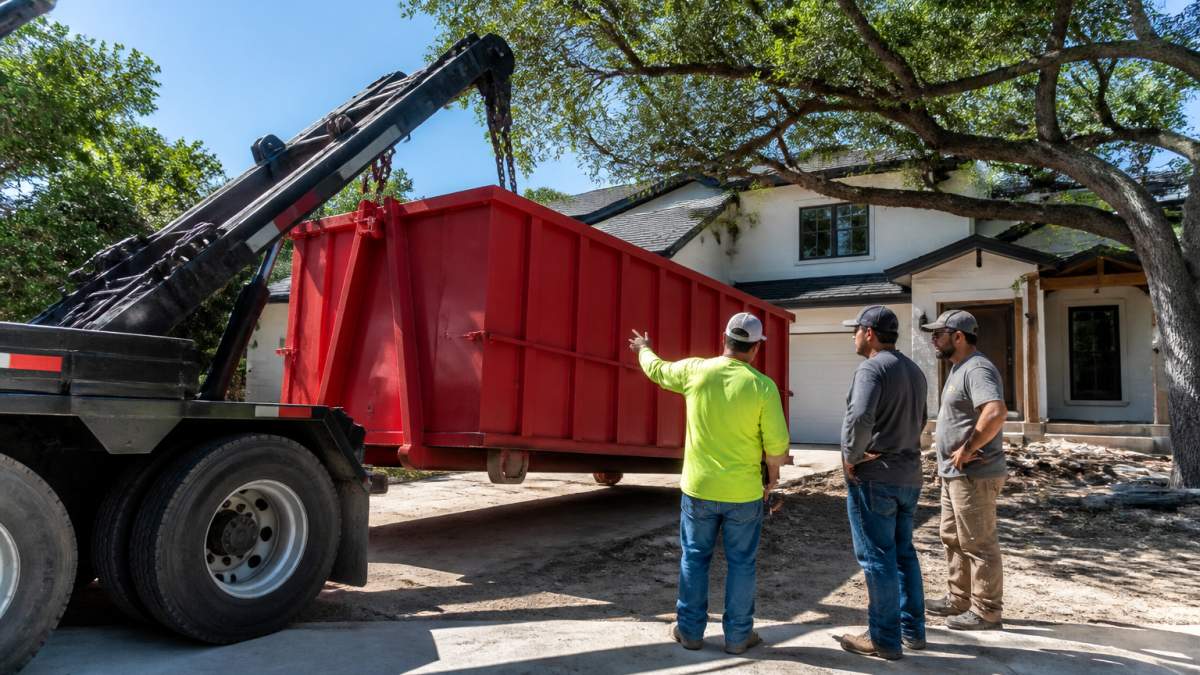
Precise coordination of equipment arrival prevents site bottlenecks, serving as a foundational step in avoiding construction delays throughout the lifecycle of complex custom builds.
What to Agree On Before the First Truck Rolls
Before you book, agree on a short service-level list and put it in writing:
- Delivery window: A two- to four-hour arrival window, not “sometime Tuesday.”
- Placement confirmation: Where the container goes, and who approves an alternate spot if access is blocked.
- Pickup trigger: The exact condition that signals pickup is due (for example, a photo of a loaded container sent by text).
- Response time for changes: How fast the company confirms a reschedule or swap request.
- Missed-service protocol: What happens if the truck doesn’t arrive, and who you call.
These five items separate a vendor from a partner.
Contingency Planning for Late Delivery, Missed Pickup, and Weather
Even good schedules break. The question is what happens next.
Late delivery. Keep a staging area where debris can accumulate safely for a day without blocking work, and ask about a backup delivery slot at booking.
Missed pickup. Confirm in writing whether the company offers a same-day or next-day recovery window. If they can’t commit, that’s a signal about their capacity.
Weather and site access. Rain, snow, and freeze-thaw cycles can make a driveway unsafe for a heavy truck.
Full container before the project ends. The most common failure point.
Measuring Whether Delivery and Pickup Are Actually Reliable
Reliability isn’t a feeling, it’s a set of numbers. Track these on your next project:
- On-time delivery rate: Deliveries inside the agreed window divided by total deliveries.
- On-time pickup rate: Pickups inside the agreed window divided by total pickups.
- Missed-service rate: Missed or refused pickups per project.
- Container utilization: How full the container is at pickup, as a rough percentage.
- Swap lead time: Days between requesting a swap and receiving it.
If on-time rates fall below what you agreed to, you have data to renegotiate or switch vendors.
Confirming Dates, Times, and Site Restrictions in Writing
Before your dumpster arrives, confirm three things in writing: the delivery date, the time window, and any site restrictions. A narrow driveway, overhead power lines, or a shared parking lot all affect where the truck can safely place the container, and if the driver can’t access your preferred spot, you’ve created a delay.
Write it down, email confirmation beats a phone call, and text messages beat verbal agreements. When your dumpster doesn’t show up or shows up at the wrong time, you’ll have documentation of what was promised.
Treat the delivery window and pickup trigger like any other trade on your schedule. If they slip, the trades behind them slip too.
How to Avoid Dumpster Overage Fees and Unexpected Charges
Overage fees are the hidden cost that kills project budgets: you think you’ve accounted for waste removal, then an invoice arrives for exceeding the weight limit. They happen because most people underestimate how much their project will generate, a kitchen demolition produces more debris than you think, a roof tearoff weighs more than you expect, and yard waste takes up more space than your initial estimate. To prevent overages, track what’s going into the dumpster and know your container’s weight limit. If you’re approaching capacity before the project ends, request a swap before you hit the limit.
Preventing Overage Fees vs. Keeping the Project on Schedule
These two outcomes are often discussed separately, but they’re two sides of the same decision.
Keeping the project on schedule is a productivity problem, solved by confirming delivery and pickup windows, planning swaps in advance, and having a contingency plan when the schedule shifts.
Where they overlap is the swap. A scheduled swap prevents an overage fee and a work stoppage; an emergency swap often causes both.
Fill Out Form to Request Dumpster Rental →
A Simple Cost Model You Can Apply to Any Project
You don’t need exact numbers to see the pattern. Build a rough model with four inputs:
- Overage weight charge. What the company charges per ton over the included limit.
- Extra rental day rate. What an additional day on site costs.
- Idle labor cost. Crew size times hourly rate times hours lost waiting.
- Downtime ripple. Delays to the next trade or inspection that push the completion date.
Run two scenarios side by side: a proactive swap versus waiting and getting hit with an overage plus a delayed pickup. In most cases the proactive swap wins on total cost, even though it looks like an extra line item upfront, overage fees and idle labor compound, and a missed pickup can idle a crew for a full day and push every downstream task.
When in doubt, price the swap against the cost of a stalled crew. The swap is almost always the cheaper option.
Container Swaps and Scheduled Exchanges
A scheduled swap prevents overages and keeps your project moving.
This is where reliable waste scheduling saves real money: a swap costs less than an overage fee, a scheduled swap costs less than an emergency swap, and your crew stays productive instead of sitting idle waiting for pickup. When planning a large project, ask your rental company about swap options upfront.
Matching the Container to the Project Type
Different project types generate different waste profiles, and the right container strategy changes with them.
- Roofing tearoffs. Dense shingles and underlayment pack weight fast. Schedule swaps based on squares torn off, not days elapsed.
- Interior renovations. Mixed debris with moderate weight. A 20-yard or 25-yard container usually fits, but track drywall and flooring separately.
- Demolition. Heavy, dense material. Large amounts of concrete, dirt, brick, or rock must go in a 15-yard dumpster. Keep these loads clean to qualify for a possible tonnage break.
- Recurring commercial work. Predictable volume. Set a standing swap schedule rather than calling ad hoc.
The pattern is the same across all four: match the container to the debris, then schedule the swap before the limit, not after.
Never mix heavy materials like concrete, dirt, brick, or rock into a 20-, 25-, or 30-yard container. Those loads must go in a 15-yard dumpster.
Choosing a Dumpster Rental Company You Can Count On
Not all rental companies deliver the same reliability. Some treat dumpster placement like a logistics puzzle where your project is just one piece; others treat it like a partnership where your timeline matters. The difference shows up in how they handle scheduling changes, how they respond when something goes wrong, and whether they show up when they say they will. Three things matter when evaluating a rental company:
Same-day or next-day delivery availability. If your project starts unexpectedly or your timeline shifts, a company that can deliver quickly keeps you moving; one that books out two weeks in advance doesn’t.
Clear, straightforward pricing. Overage fees, tonnage charges, and extended rental periods should be explained upfront, not discovered in an invoice.
Expert guidance on sizing and planning. The best companies don’t just drop a dumpster and disappear, they ask about your project, help you pick the right size, and warn you about issues before they become problems.
Austex Dumpsters handles all three: same-day delivery when you book early enough, pricing explained upfront, and help planning your waste removal logistics as part of the rental process.
Practical Scheduling Workflow for Changing Project Timelines
Most projects don’t go exactly as planned, weather delays the start, unexpected demolition extends the timeline, a crew member gets sick.
Step 1: Build in a buffer. Schedule delivery one or two days before your project starts, so minor delays don’t force an emergency delivery call.
Step 5: Document all changes in writing. Email confirmations of date changes, pickup adjustments, and swap schedules prevent misunderstandings and give you proof of what was agreed.
The rental companies that handle timeline changes smoothly are the ones that expect them.
Conclusion
The real cost of poor waste scheduling isn’t the overage fee, it’s the work stoppage, the crew sitting idle because the dumpster didn’t arrive, and the deadline that slips because waste removal wasn’t treated as a critical timeline item.
Reliable waste scheduling prevents those costs: it keeps your crew productive, eliminates surprise charges, and keeps your project on track.
When you’re ready to schedule your dumpster rental, start with a clear picture of your project: what debris you’re generating, how long you’ll need the container, and whether you’ll need swaps.
Austex Dumpsters specializes in exactly this: same-day delivery when you need it, expert guidance on sizing and planning, and straightforward pricing with no hidden overage surprises. Fill out a form to request your dumpster rental and let’s make sure your project stays on schedule.
Frequently Asked Questions
How can reliable waste scheduling help prevent project delays?
Reliable waste scheduling ensures your dumpster arrives when you need it and gets picked up on time, preventing waste buildup that stops work. When pickup dates are confirmed in advance and honored consistently, your team stays productive without waiting for container swaps or dealing with overfilled containers that delay collection. This direct connection between on-time service and project momentum is why contractors prioritize waste providers with proven track records for meeting schedules.
How do I know what dumpster size my project needs?
Start by estimating the volume and type of debris. For general household cleanouts and renovation waste, a 20-yard or 25-yard dumpster typically works well. Heavy materials like concrete, dirt, brick, or rock in large amounts require a 15-yard dumpster. Contact your provider with a description of your project; experienced teams can recommend the right size and alert you if you’re borderline between two options, helping you avoid undersizing or paying for unnecessary capacity.
What should I confirm before booking a dumpster rental?
Confirm delivery and pickup dates, time windows, and any site-specific restrictions in writing. Ask about overage policies, weight limits, and whether your debris type (roofing materials, concrete, landscaping waste) has any special handling or fees. Clarify the rental period and what happens if your timeline changes. Getting these details upfront in writing prevents surprises and gives you a clear reference if scheduling questions arise during your project.
How can I avoid dumpster overage fees and unexpected charges?
Avoid overfilling by keeping materials inside the container and the lid closed. Monitor debris volume as your project progresses, and schedule a container swap or second dumpster before you reach capacity. Know your weight limits and plan for scheduled pickups rather than emergency calls. Routine scheduled pickups cost less than emergency service and reduce the risk of overage charges. If your project generates ongoing waste, discuss recurring service options with your provider to keep costs predictable.