

Table of Contents
- Yes, You Can Put Roofing Shingles in a Roll-Off Dumpster
- Understanding Dumpster Weight Limits for Shingles
- How to Estimate Roofing Waste for Your Project
- Choosing the Right Roll-Off Dumpster Rental for Roofing Projects
- What You Cannot Put in Your Roofing Dumpster
- Environmental Regulations and Recycling Options
- Loading and Safety Best Practices
- Conclusion
- Frequently Asked Questions
Last Updated: September 21, 2026
Yes, You Can Put Roofing Shingles in a Roll-Off Dumpster
Roofing shingles can absolutely go in a roofing shingles roll-off dumpster. The key is understanding your dumpster’s weight limits and choosing the right size for your project. At Austex Dumpsters, we help homeowners and contractors handle roofing debris efficiently without surprises. Most roofing projects generate more weight than people expect, which is why sizing matters.
The real question isn’t whether you can put roofing shingles in a roofing shingles roll-off dumpster, it’s whether you’ve picked the right dumpster for the job. A typical roof tearoff creates heavy material. Asphalt shingles, underlayment, flashing, and nails add up fast. Understanding weight limits prevents overage charges and project delays.
Understanding Dumpster Weight Limits for Shingles
Roll-off dumpsters come with tonnage allowances built into your rental. This is the total weight your dumpster can hold before you face extra fees. Roofing debris is heavy, so weight limits matter more than container volume.
Most roll-off dumpster rentals include a base tonnage allowance. Once you exceed that, overage charges apply. Asphalt shingles weigh roughly 2-3 tons per roofing square (100 square feet of roof coverage). A single-story home might generate 8-12 tons of roofing waste.
Here’s what affects your weight limit:
- Dumpster size (15-yard, 20-yard, 25-yard, or 30-yard)
- Type of material (roofing debris is heavier than general construction waste)
- Local landfill regulations and fees
- Whether materials are mixed or separated for recycling
Austex Dumpsters provides guidance on sizing based on your project scope.
Ask about tonnage breaks when your 15-yard dumpster contains only clean concrete, dirt, brick, or rock with no trash or contamination mixed in. You may qualify for reduced overage fees on heavy material loads.
How to Estimate Roofing Waste for Your Project
Step 1: Determine Your Roof Size
Find your roof size in three ways:
- Check your home’s inspection report, property tax documents, or original roofing estimate
- Measure your home’s footprint and multiply by roof pitch factor (a 6:12 pitch multiplies by 1.12; ask a roofing contractor for help with your specific slope)
- Count roofing squares, one square equals 100 square feet of roof coverage
Step 2: Calculate Weight Per Square
- Three-tab asphalt shingles: approximately 2-2.5 tons per square
- Architectural/dimensional shingles: approximately 2.5-3 tons per square
- Underlayment and flashing: add 0.25-0.5 tons per square
- Multiple existing layers (common in older homes): multiply base weight by number of layers
Step 3: Account for Multiple Layers
- Single layer removal: use base weight calculation above
- Two layers: multiply by 2
- Three or more layers: multiply by 3 and add 10-15% for nails, flashing, and debris compaction
Step 4: Apply the Calculation
Use this formula:
Total Weight = (Roof Squares × Weight Per Square) + (Roof Squares × Underlayment Weight) × Number of Layers
Example calculations:
| Scenario | Calculation | Result | Recommended Dumpster |
|---|---|---|---|
| 10 squares, single layer, three-tab | (10 × 2.25) + (10 × 0.25) = | 25 tons | 15-yard |
| 15 squares, single layer, architectural | (15 × 2.75) + (15 × 0.25) = | 45 tons | 20-yard |
| 20 squares, two layers, architectural | (20 × 2.75 × 2) + (20 × 0.25 × 2) = | 120 tons | 25-yard or 30-yard |
| 12 squares, single layer, three-tab | (12 × 2.25) + (12 × 0.25) = | 30 tons | 15-yard or 20-yard |
Why This Matters
When in doubt, round up. Empty space in a dumpster costs nothing, but overage fees add up fast. If your calculation lands between two dumpster sizes, choose the larger one.
Getting Help with Your Calculation
Choosing the Right Roll-Off Dumpster Rental for Roofing Projects
Austex Dumpsters offers 15-yard, 20-yard, 25-yard, and 30-yard roll-off dumpsters. For roofing projects, size depends on your roof’s square footage and whether you’re removing one layer or multiple layers of old shingles.
What You Cannot Put in Your Roofing Dumpster
Not everything from a roof tearoff goes in a roll-off dumpster. Some materials are prohibited by law or landfill policy. Others require special handling.
Materials you cannot put in a standard roofing dumpster:
- Asbestos-containing shingles or insulation (common in homes built before 1980)
- Hazardous waste like paint, solvents, or chemicals
- Propane tanks or compressed gas cylinders
- Electronics or appliances
- Tires
- Batteries or fluorescent bulbs
- Contaminated soil or materials with mold
Always ask about material restrictions before filling your dumpster. One prohibited item can get your entire load rejected, turning a simple cleanup into a major headache.
Environmental Regulations and Recycling Options
Roofing shingles and construction debris are subject to disposal regulations that vary by location. Understanding these rules and exploring recycling options helps you avoid fines, reduce landfill impact, and sometimes qualify for disposal savings.
How Roofing Debris Is Regulated
- Many states require C&D debris to be separated from general waste at the source
- Some jurisdictions mandate that recyclable materials (like asphalt shingles) be diverted from landfills if recycling capacity exists in the region
- Certain areas charge higher tipping fees for mixed debris versus sorted materials
- A few states require facilities to report C&D waste diversion rates to environmental agencies
Finding Local Recycling Facilities for Roofing Shingles
- Road base and asphalt: Recycled shingles are ground and mixed into new asphalt for road construction and repair
- Roofing products: Some manufacturers use recycled shingle material in new shingles
- Aggregate: Shingle granules are used in landscaping and industrial applications
- Asphalt sealant: Recycled material goes into driveway sealers and parking lot coatings
To find recycling options in your area:
- Contact your local waste management authority, Search “[your county] construction debris recycling” or call your county solid waste department. They maintain lists of licensed C&D recycling facilities.
- Check the Recycling Partnership database, The Recycling Partnership (recyclingpartnership.org) has a facility locator for construction material recyclers.
- Ask your roofing contractor, Professional roofers often have relationships with local recycling centers and may haul materials directly to facilities that accept shingles.
- Call roofing material suppliers, Local roofing supply companies often know which recyclers accept shingles and may offer drop-off programs.
- Search for “asphalt shingle recycling near me”, Many regional recyclers advertise online and list accepted materials.
Separating Materials for Recycling
- Asphalt shingles and underlayment: Go to C&D recycling centers (most accept these)
- Metal flashing and gutters: Separate for scrap metal recycling (these have resale value)
- Wood from roof decking: Can go to wood recycling or be chipped for mulch
- Nails and fasteners: Remove or leave in place, facilities have magnets to extract them
- Hazardous materials: Asbestos shingles, lead flashing, or tar paper with asbestos must be handled separately by licensed contractors
Environmental and Cost Benefits
Recycling roofing debris provides measurable benefits:
- Reduces landfill waste: Asphalt shingles make up roughly 10-15 million tons of landfill waste annually in the U.S. Recycling diverts material from this stream.
- Lowers disposal costs: Some facilities charge less for sorted, recyclable materials than mixed debris.
- Supports local infrastructure: Recycled shingles go directly into road projects and new products in your region.
- Meets sustainability goals: If your project is part of a green building initiative or LEED certification, documented recycling supports those objectives.
Checking Local Municipal Ordinances
- Visit your city or county website and search for “construction debris disposal” or “C&D waste regulations”
- Look for requirements on material separation, prohibited items, or mandatory recycling
- Note any local tipping fees or surcharges for roofing materials
- Confirm whether your dumpster load will go to a landfill or a recycling facility
Loading and Safety Best Practices
Loading a dumpster safely prevents injuries and keeps your project moving. Roofing debris is sharp, heavy, and awkward to handle. A few precautions make a big difference.
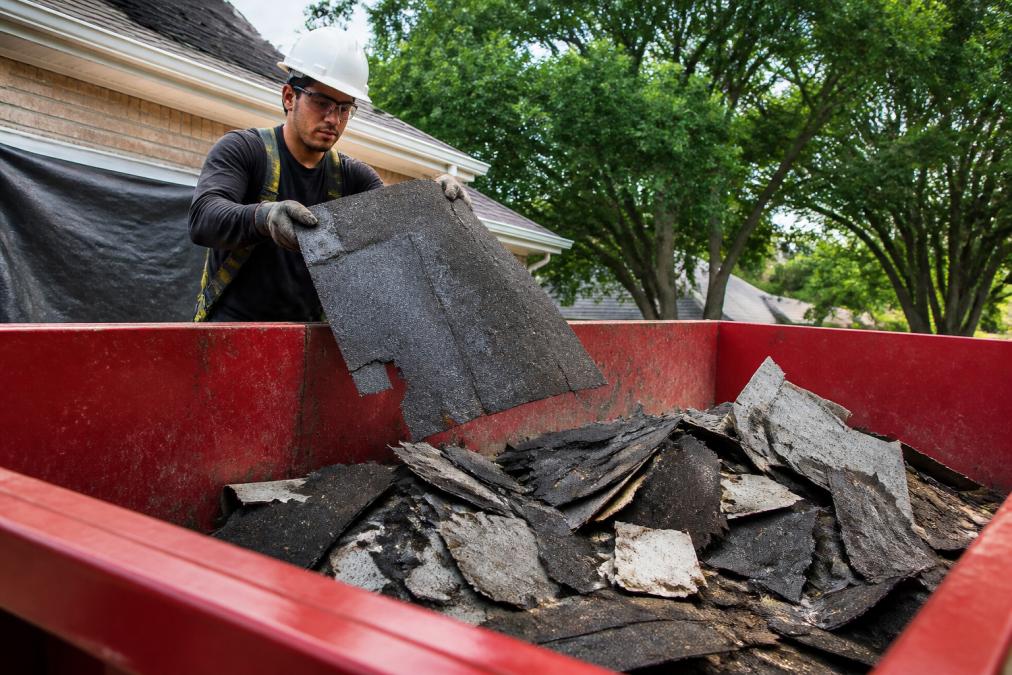
Safety rules for loading roofing debris:
- Wear heavy-duty gloves, steel-toed boots, and eye protection
- Load shingles and underlayment first, creating a stable base
- Place heavier materials at the bottom of the dumpster
- Avoid stacking debris above the dumpster’s sides
- Never throw materials from heights into the container
- Keep nails and sharp edges pointed inward
- Clear the loading area of tripping hazards
Rent your dumpster a day or two before your project starts. This gives you flexibility if loading takes longer than expected and prevents project delays while waiting for container pickup.
Conclusion
Frequently Asked Questions
How much do roofing shingles weigh, and will they exceed dumpster weight limits?
Asphalt shingles typically weigh 2-3 pounds per square foot. A standard roofing square (100 square feet) weighs roughly 200-300 pounds. Most roll-off dumpsters have tonnage allowances built into rental rates. However, shingles are dense material, so weight adds up quickly on larger roof tearoffs. Always estimate your total roofing debris weight and discuss tonnage limits with your dumpster rental provider to avoid overage charges.
Can I put old roofing shingles in a 20-yard, 25-yard, or 30-yard roll-off dumpster?
Roofing shingles can go in any properly sized roll-off dumpster. However, if your project involves large amounts of heavy materials such as concrete, dirt, brick, or rock from the roof base or structural work, a 15-yard dumpster is required for those materials. For shingles alone, a 20-yard, 25-yard, or 30-yard dumpster works based on your project volume. Consult your dumpster rental provider to match container size to your total debris load.
What roofing materials are prohibited in roll-off dumpsters?
Most standard roofing materials like asphalt shingles, underlayment, and flashing are accepted. However, hazardous materials are prohibited: asbestos-containing shingles (common in older roofs), lead-based materials, and fiberglass insulation mixed with debris. Some facilities also restrict treated wood or tar-based products. Always disclose the age and composition of your roof to your dumpster rental company before scheduling pickup.
Can roofing shingles be recycled instead of sent to a landfill?
Yes. Many recycling facilities accept asphalt shingles and use them to produce asphalt for road paving or aggregate materials. Some dumpster rental services offer recycling options for shingles at no additional cost or with a tonnage discount for clean, uncontaminated material. Ask your rental provider about local recycling facilities and whether they can divert your shingles from the landfill.
Yes, you can put roofing shingles in a roll-off dumpster, but success depends on sizing correctly and understanding weight limits. Most residential roofing projects need a 20-yard or 25-yard dumpster to avoid overage charges. Austex Dumpsters helps you pick the right size, delivers same-day when available, and handles disposal at licensed facilities that follow environmental regulations. Fill out a form to request your dumpster rental and get expert guidance on sizing for your roofing project.