
Table of Contents
- Dumpster Rental vs City Bulk Pickup Austin: Quick Comparison
- How On-Demand Bulk Trash Pickup Works
- Accepted and Prohibited Items for City Curbside Collection
- Heavy Material Disposal Requirements: When City Pickup Says No
- Dumpster Rental Sizing Guide: 15, 20, 25, or 30 Yards
- Hidden Costs and Trade-Offs: Free City Service vs Paid Rental
- Which Option Fits Your Project? A Decision Matrix
- Frequently Asked Questions
Last Updated: September 16, 2026
Dumpster Rental vs City Bulk Pickup Austin: Quick Comparison
Choosing between dumpster rental vs city bulk pickup comes down to volume, material type, and timeline. City on-demand collection handles occasional household items at no direct charge, while a roll-off dumpster rental suits renovation debris, construction material, and anything that needs to leave the property this week. This guide from Austex Dumpsters breaks down where each option wins.
The short version: city service is built for a few bulky items, not a whole cleanout. Once you’re hauling cabinets, shingles, or concrete, the free option stops being free in practice.
| Factor | City Bulk Pickup | Roll-Off Dumpster Rental |
|---|---|---|
| Scheduling | On-demand request via 3-1-1 | Same-day when available |
| Volume limit | Small to moderate piles | 15 to 30 cubic yards |
| Heavy material | Restricted | 15-yard only for concrete, dirt, brick, rock |
| Timeline | Wait for assigned date | On site when you need it |
| Best for | Occasional household items | Renovations, roofing, cleanouts |
How On-Demand Bulk Trash Pickup Works
On-demand bulk collection is a scheduled municipal service that picks up large items, brush, and household hazardous waste from the curb after a resident files a request. The city routes the request, assigns a collection window, and crews collect what’s set out according to program rules.
The mechanics matter more than the marketing. You submit a request, wait for a date, then place items at the curb by the stated time. Miss the set-out window and the truck rolls past. Overload the pile and crews may leave part of it behind.
For a single old couch or a stack of branches, that trade-off is fine. For a kitchen tear-out producing a dozen trips’ worth of debris, waiting on a routing queue stalls the whole job.
Photograph your curbside pile before the scheduled pickup. If crews leave items behind, that timestamped photo is your evidence when you call to reschedule.
Accepted and Prohibited Items for City Curbside Collection
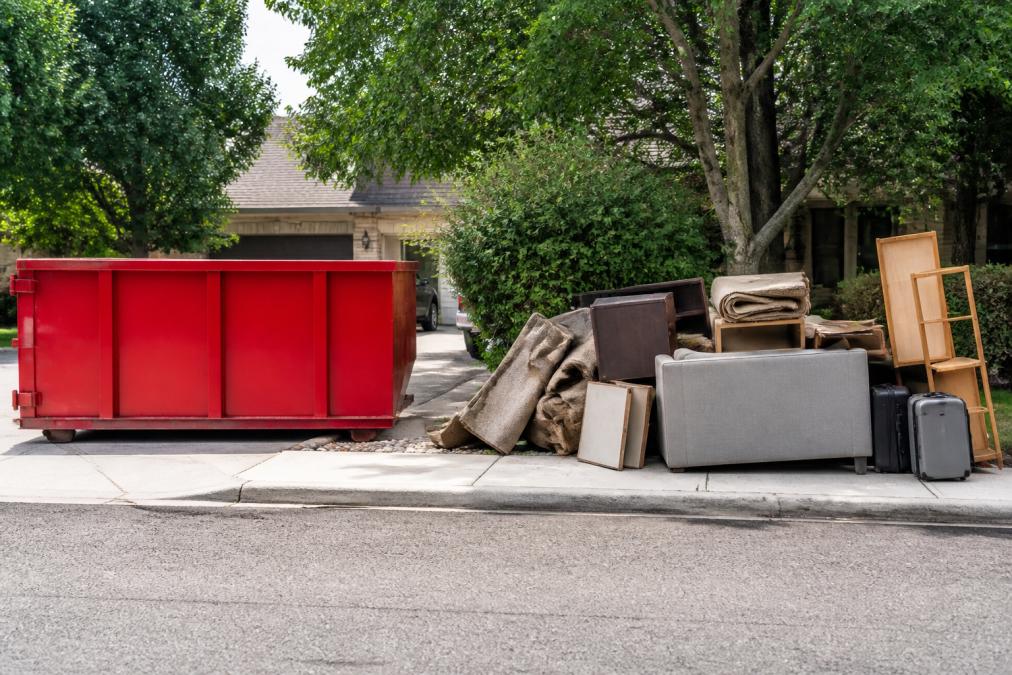
City curbside collection is a household waste stream, not a construction one. Knowing the line between the two before you drag anything to the curb is what separates a clean pickup from a pile that sits there for another cycle.
Generally accepted at the curb:
- Furniture and mattresses
- Appliances (with refrigerant-bearing units handled through documented appliance recycling)
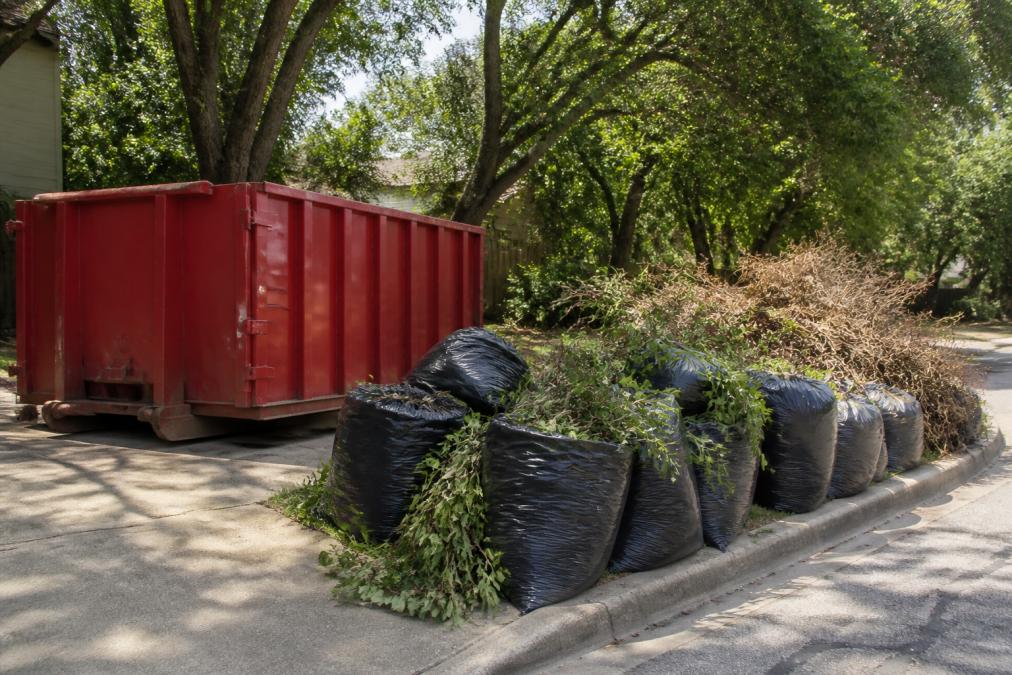
- Brush, limbs, and bagged yard trimmings
- Bagged household waste within program limits
- Bulky items a two-person crew can safely lift
Generally prohibited from curbside collection:
- Concrete, dirt, brick, rock, and other dense masonry
- Construction and demolition debris (cabinets, drywall, shingles, tile)
- Tires
- Household hazardous waste, paint, solvents, pesticides, propane tanks, motor oil
- Anything a crew cannot safely lift or that exceeds program size limits
That split is where most residents get surprised. A broken bookshelf is fine. The paint cans, solvent, and old propane tank from the same garage are not, and they cannot ride along in the same pile.
The compliance risk nobody mentions
Improper set-out is not just an inconvenience, it can carry a penalty. Common triggers include:
- Placing prohibited material in a curbside pile
- Setting items out before the allowed window or after the collection date
- Exceeding the pile size or weight limit
- Blocking the right-of-way, sidewalk, or utility access
Before you set anything out, walk the pile and pull these five items: paint, solvents, tires, propane tanks, and any masonry. Those are the most common causes of a refused pickup.
Where the city stream ends and a rental begins
If your debris is mixed, some furniture, some drywall, some bagged trash, it does not fit the curbside stream cleanly. Mixed loads are the single most common reason a city pickup gets partially refused. A roll-off container accepts mixed household and renovation debris in one load, which is why it becomes the default once a project produces more than a few bulky items.
Heavy Material Disposal Requirements: When City Pickup Says No
Heavy material disposal requirements are the single biggest reason homeowners switch to a rental. Concrete, dirt, brick, and rock are dense, and municipal collection programs are not built to lift them from a residential curb.
Fill Out Form to Request Dumpster Rental →
Never load concrete, dirt, brick, or rock into a 20-, 25-, or 30-yard container. The weight can exceed what the container and truck can handle, which means a refused pickup, a wasted rental day, and a mess you still have to solve.
Dumpster Rental Sizing Guide: 15, 20, 25, or 30 Yards
The right dumpster size depends on debris volume and weight, not on how big your project feels. Austex Dumpsters offers four roll-off sizes, and matching the container to the load prevents both overpaying and ordering a second unit mid-project.
- 15-yard: Heavy material only. Concrete, dirt, brick, and rock belong here. Also handles small general debris loads.
- 20-yard: Mid-size renovations, flooring removal, and moderate cleanouts.
- 25-yard: Larger remodels, roofing tearoffs, and multi-room cleanouts.
- 30-yard: Whole-home cleanouts and large construction debris volumes.
Hidden Costs and Trade-Offs: Free City Service vs Paid Rental
The word “free” does a lot of work in this comparison. City bulk pickup carries no per-load charge, but it is not costless. The real question is what the free option costs you in time, compliance risk, and project momentum, and whether a paid rental is cheaper once you count those.
The hidden costs of city service
1. The re-scheduling cycle. A missed set-out window or a partially refused pile does not resolve itself. You file another request and wait for another assigned date. For a single couch, that is a minor annoyance. For a project on a contractor’s schedule, it is a stall.
What a paid rental actually buys
A roll-off rental flips the equation. You pay for certainty: the container arrives, sits on site, and leaves when you are done. There is no routing queue, no set-out window, and no partial refusal because the load is mixed. For contractors and property managers, that predictability is the product, not the container itself.
The environmental trade-off
The eco-friendly answer is not as simple as “recycling good, landfill bad.” The two services sort material differently:
- City curbside collection routes accepted items through municipal sorting, where metals and some appliances are recovered and yard trimmings are often composted. The catch is that mixed or contaminated piles get refused, and refused material frequently ends up landfilled anyway after a second trip.
- Roll-off rental puts everything in one container, which means less source separation by default. The upside is that a clean, separated load, particularly clean concrete, dirt, brick, or rock in a 15-yard container, can be diverted to recycling rather than landfill, and customers may receive a break on tonnage for a clean load with no trash or other contamination.
City pickup is cheaper on paper. A rental is cheaper in practice whenever a delay would stall labor, equipment, or a closing date, and a clean, separated rental load is often the better diversion outcome too.
Which Option Fits Your Project? A Decision Matrix
Match the project to the service, not the other way around. Use this matrix before you schedule anything.
| Project Type | Best Option | Why |
|---|---|---|
| One couch or mattress | City bulk pickup | Small volume, no deadline |
| Brush and yard trimmings | City bulk pickup | Accepted curbside material |
| Household hazardous waste | City drop-off event | Prohibited from curbside |
| Kitchen or bath remodel | Dumpster rental | Mixed debris, tight timeline |
| Roofing tearoff | Dumpster rental | High volume, weight-sensitive |
| Concrete, dirt, brick, rock | 15-yard rental | Heavy material requirement |
| Whole-home cleanout | 25 or 30-yard rental | Large mixed volume |
| Multi-site office cleanouts | Dumpster rental | Repeat scheduling |
Frequently Asked Questions
What items are prohibited in city bulk trash collection?
City bulk collection will not take household hazardous waste such as paint, motor oil, batteries, or pesticides, and it rejects construction debris, tires, and large appliances in many cases. Brush and yard trimmings are usually accepted, but they must be cut and bundled to set-out instructions. Anything on the prohibited items list has to go through a separate drop-off event or a roll-off dumpster rental instead.
How does the city’s on-demand bulk pickup schedule work?
Residents request an on-demand bulk, brush, or household hazardous waste collection through the city’s 3-1-1 system. You submit the request, get a scheduled collection window, and place items at the curb by the date given. This is not same-day service, and scheduling requirements mean you may wait days or weeks depending on route volume, which is a real problem when a renovation is mid-stream and debris is piling up.
Can I dispose of construction debris in city bulk pickup?
No. City bulk pickup is built for residential waste like furniture, brush, and occasional bulky items, not construction debris. Remodeling materials, drywall, roofing shingles, concrete, and demolition waste are excluded and can trigger an illegal dumping citation if left at the curb. For renovation or roofing tear-off debris, a roll-off dumpster rental is the correct path because it is sized and permitted for that waste stream.
Is a roll-off dumpster more cost-effective for large cleanouts?
For large cleanouts, a roll-off dumpster usually wins on total cost and time. City pickup is free with utility service but limited in volume and frequency, so a big cleanout often needs multiple requests spread over weeks. A rental gives you one container, one pickup, and a defined weight limit, which prevents the delays and overage surprises that come from piecing together municipal collections.
How do I choose the right dumpster size for heavy materials like concrete or dirt?
Heavy material disposal requirements are strict: concrete, dirt, brick, and rock must go in a 15-yard dumpster, never a 20-, 25-, or 30-yard container. A 15-yard holds general debris too, but for clean loads of concrete, dirt, brick, or rock with no trash mixed in, you may qualify for a tonnage break. Call Austex Dumpsters with your material type and volume for sizing guidance.