

Table of Contents
- Roll Off Dumpster Rental Comparison: What to Look For
- Austex Dumpsters: Purpose-Built for Construction Debris
- Full-Service Hauling Alternatives for Construction Debris
- Dumpster Rental Sizing Guide for Construction Projects
- Heavy Material Disposal Requirements: Concrete, Dirt, Brick, and Rock
- How to Schedule a Roll-Off Dumpster for a Construction Site
- Conclusion
- Frequently Asked Questions
Last Updated: September 16, 2026
Roll Off Dumpster Rental Comparison: What to Look For
Anyone searching for a Redboxplus alternative for construction debris usually has the same complaint: the job stalled because the container wasn’t there when promised. This comparison from Austex Dumpsters breaks down what actually separates one roll off dumpster rental from another, the things that affect your schedule.
Construction debris is the mixed waste a build or teardown produces: framing lumber, drywall, roofing shingles, tile, packaging, and fixtures. It is heavy, bulky, and unforgiving of a late container or a refused load.
Three factors decide whether a rental helps or hurts your project:
- Scheduling flexibility. Can you get a container on the day your crew is ready, or are you locked into a fixed window?
- Size guidance. Does the provider help you match bin size to debris type, or leave you guessing?
- Material rules. Will they tell you upfront what can and cannot go in the container?
Flexible Scheduling vs. Fixed Pickup Windows
Fixed-window service works on the provider’s calendar. Flexible scheduling works on yours.
That distinction matters on construction sites. A roofing tearoff generates its waste in a single day, a remodel produces a steady trickle over weeks, and a demolition can fill a container in hours. None of those rhythms match a municipal-style pickup window, and a container that arrives two days late can idle an entire crew.
The practical test: ask how far out you can book, whether delivery windows are measured in hours or days, and what happens if your project runs long. Providers that handle this well put their pickup commitments in writing.
Ask about same-day availability before you commit, not after your crew is standing around. Providers that offer it will say so plainly.
Austex Dumpsters: Purpose-Built for Construction Debris
Austex Dumpsters is a roll-off dumpster rental provider serving homeowners, contractors, and property managers, built around the scheduling problem that sends most people looking for an alternative. Same-day delivery is available when the schedule allows.
The sizing conversation is where most rentals go wrong. Austex offers four roll-off sizes: 15-yard, 20-yard, 25-yard, and 30-yard. Rather than quoting you the biggest bin, the team matches the container to the debris type.
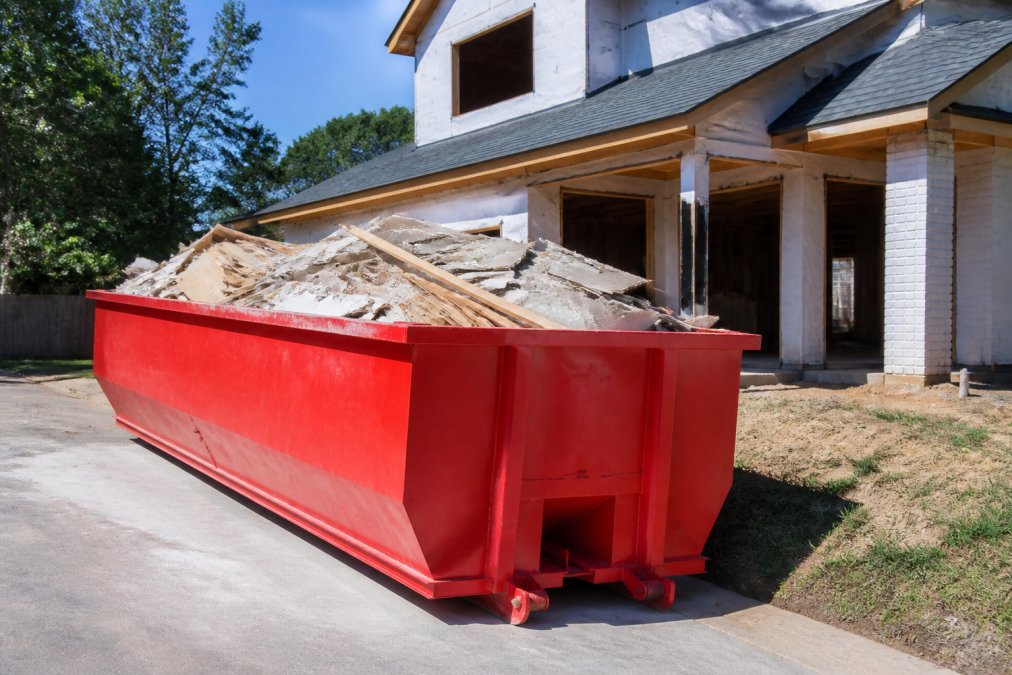
One rule matters more than any other on a construction site.
Full-Service Hauling Alternatives for Construction Debris
Full-service hauling suits a specific kind of job. Instead of renting a container, you hire a crew that loads the debris for you.
Which One Do You Actually Need? A Project-Type Decision Matrix
The useful question is which model fits your specific job. Work down this table until a row matches:
| Your Project | Debris Pattern | Best Fit | Why |
|---|---|---|---|
| Kitchen or bath remodel | Steady trickle over 2-6 weeks | Roll-off rental | Container stays on site; you load as you go |
| Roofing tearoff | One heavy day, then done | Roll-off rental | Single-day volume spike; heavy shingles need weight planning |
| Concrete slab or foundation removal | Dense, heavy, one-time | Roll-off rental (15-yard) | Heavy material must go in a 15-yard container |
| Garage or basement cleanout | Mixed, one-time, no labor | Full-service hauling | Crew loads; you don’t touch it |
| Single appliance or furniture piece | One bulky item | On-demand pickup | Doesn’t justify a container |
| Multi-month new build | Continuous mixed waste | Roll-off rental | Per-load hauling pricing compounds over weeks |
| Storm debris, scattered | Irregular, unpredictable | Full-service hauling | Crews handle scattered piles a container can’t reach |
The Labor Math Nobody Runs
Full-service hauling feels simpler because it removes a variable, you. But that convenience punishes ongoing projects: a crew that loads and hauls per visit charges per visit, while a container charges once and sits there while you fill it at your own pace.
When Full-Service Hauling Is the Right Call
There are real cases where full-service hauling beats a container:
- No one on site can load. If you’re a homeowner managing a cleanout alone, a crew that loads is worth the premium.
- The debris is scattered or inaccessible. A container needs a clear approach and a flat placement spot.
- The job is genuinely one-time. A single garage cleanout doesn’t need a container in the driveway for a week.
- You need it gone today. Full-service crews can often mobilize faster than a container delivery window allows.
Dumpster Rental Sizing Guide for Construction Projects
Sizing determines whether you pay for one container or two. Estimate volume by debris type, then check the weight implications before you book.
Fill Out Form to Request Dumpster Rental →
Matching Bin Size to Debris Type
Work backward from what you’re throwing away:
- Concrete, dirt, brick, rock: 15-yard only, and keep it clean to qualify for the tonnage break
- Roofing shingles: heavy for their volume, so size conservatively and confirm the weight allowance
- Mixed renovation debris: match to volume, since density is usually moderate
- Bulky light waste: a larger container fills faster than you expect
Ordering a 30-yard container for a concrete slab pour is the fastest way to a refused load. Heavy material goes in a 15-yard dumpster, full stop. A rejected haul means a second delivery, a second pickup, and an idle crew in between.
Heavy Material Disposal Requirements: Concrete, Dirt, Brick, and Rock
Heavy material disposal follows one rule: dense debris belongs in a 15-yard container, regardless of how much space it appears to take up. Concrete, dirt, brick, and rock weigh far more per cubic yard than mixed construction waste, and a container that looks half full can already be at its hauling limit. That is why the size restriction exists, it is the difference between a load that leaves on the first attempt and one that gets turned away.
How to Schedule a Roll-Off Dumpster for a Construction Site
Scheduling a roll-off dumpster takes three decisions: size, timing, and placement. Settle those before you call and the booking takes minutes, but scheduling is also where hidden costs hide.
Book delivery for the day before your crew starts, not the morning of. A container sitting ready costs nothing extra; a crew waiting on one costs you every hour.
The Hidden Costs of Getting It Wrong
The line items that surprise people aren’t the rental itself, they’re the consequences of a load that can’t be hauled or a schedule that slips.
Scheduling Around Municipal Pickup Rules
If your project overlaps with a city bulk pickup or on-demand collection program, timing gets more complicated. Many cities now run on-demand scheduling rather than fixed routes, so you book a pickup window instead of waiting for a calendar date. Missed windows and non-compliant set-outs are treated as violations rather than oversights.
A few habits keep you out of trouble:
- Separate your streams. City programs typically reject construction debris, tires, electronics, and hazardous waste. A rental container is the right home for mixed construction waste.
- Don’t stage prohibited items curbside. Even briefly. Inspectors don’t distinguish between “waiting for pickup” and “illegally dumped.”
- Confirm your city’s current rules. On-demand scheduling policies can change set-out windows, item limits, and what counts as a violation.
- Keep heavy material out of city piles entirely. Concrete, dirt, brick, and rock belong in a 15-yard dumpster, not a curbside pile.
A Simple Rule for Scheduling
Book the container for the day before you need it. Confirm the included rental period in writing. Keep heavy material separate from the start. Those three habits prevent the refused loads, overage charges, and extended-day fees that turn a straightforward rental into an expensive one.
Conclusion
The gap between a rental that keeps your project moving and one that stalls it comes down to scheduling, sizing, and material rules, and most providers only get one of the three right. Austex Dumpsters handles all three: same-day roll-off delivery when available, guidance on matching bin size to debris type across 15-, 20-, 25-, and 30-yard containers, and clear rules on heavy material so your load leaves on the first attempt.
Frequently Asked Questions
What size dumpster do I need for construction debris?
It depends on your debris type and volume. For heavy materials like concrete, dirt, brick, or rock, you must use a 15-yard dumpster. For mixed construction debris such as wood, drywall, and shingles, a 20-yard or larger dumpster works well. Estimate about 1 cubic yard of debris per 100 square feet of renovation area, then round up to avoid needing a second dumpster mid-project.
Can I put concrete and dirt in a large roll-off dumpster?
No. Austex Dumpsters requires that large amounts of concrete, dirt, brick, or rock go into a 15-yard dumpster only. Placing these heavy materials in a 20-, 25-, or 30-yard dumpster is not allowed because the concentrated weight can damage the container and the hauling truck. When you fill a 15-yard dumpster with clean concrete, dirt, brick, or rock and no trash or contamination, you may qualify for a break on tonnage.
How does local dumpster rental service compare to national chains?
Local providers often deliver faster, communicate more directly, and can adjust to your project schedule without going through a national call center. For construction debris projects that need same-day delivery when available, a local provider like Austex Dumpsters can keep your crew working without waiting on a dumpster.
What are the benefits of choosing a local dumpster provider?
A local provider knows the area, can offer same-day delivery when available, and gives you direct access to someone who understands construction timelines. You get expert guidance on dumpster rental sizing, straightforward pricing without hidden fees, and reliable pickup so the container does not sit in your driveway for days after the job is done. Local service also means faster response if your project schedule changes.
How do I schedule a roll-off dumpster for a construction site?
Contact Austex Dumpsters with your project address, debris type, estimated volume, and preferred delivery date. For roofing tearoffs, specify that you have shingles so the right container is dispatched. If you need same-day delivery, ask about availability when you call. Confirm the pickup date and any tonnage limits upfront so you avoid overage fees and keep your project on schedule.