

Table of Contents
- How to Get a Cheap Dumpster for Home Cleanout: Step-by-Step
- Dumpster Size Guide for Home Cleanouts
- Dumpster Rental Weight Limits and What They Mean for Your Budget
- Avoiding Dumpster Rental Overage Fees: Tips That Save Money
- DIY vs. Junk Removal vs. Dumpster Rental: Which Is Cheapest?
- How to Handle Permits and Placement for a Cheap Dumpster
- Common Mistakes That Raise Your Dumpster Rental Cost
- Frequently Asked Questions
Last Updated: September 14, 2026
How to Get a Cheap Dumpster for Home Cleanout: Step-by-Step
Getting a cheap dumpster for home cleanout comes down to three things: knowing your debris volume, booking the right size early, and understanding what drives the final bill. This guide from Austex Dumpsters walks through each step so you can plan without surprise charges.
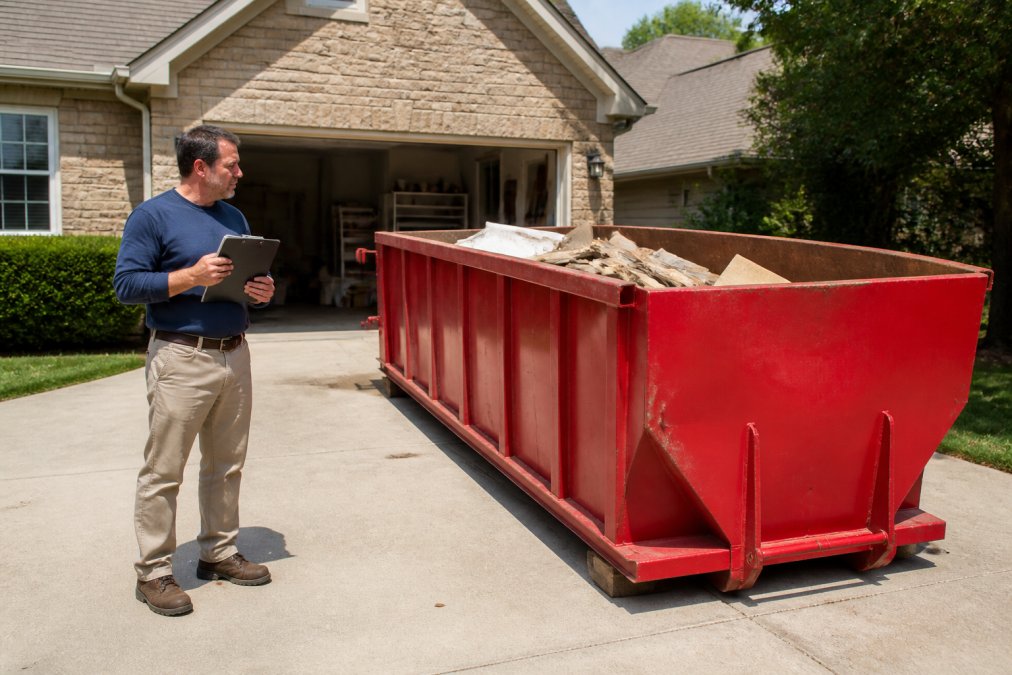
A roll-off dumpster is a heavy-duty open-top container delivered to your property, filled at your pace, then hauled away. That rental period is the key difference from a junk removal crew, who show up, quote on sight, and leave with your stuff in one visit.
Step 1: Estimate Your Debris Volume
Walk through each room and group debris into rough pile sizes. A 15-yard dumpster holds about 4 to 5 pickup truck loads, covering most single-room cleanouts, garage purges, and small deck tear-offs (the EPA). Basement clear-outs, whole-home decluttering, and roofing tear-offs typically need 20 to 30 yards.
Write down what you’re tossing before you call. Vague estimates are the fastest way to reserve the wrong container and pay for a second drop-off.
Step 2: Choose the Right Size and Book Early
Reserve your container as soon as your cleanout date is set. Weekend slots fill first, and last-minute bookings limit your size and timing options. Same-day delivery is available when the schedule allows, but booking ahead is the cheapest path.
Confirm three things when you book: the rental period, the included weight allowance, and what happens if you go over. Those answers determine your real cost more than the quoted rate.
Dumpster Size Guide for Home Cleanouts
Matching container size to debris type is the biggest cost lever in a home cleanout. Oversize and you pay for air; undersize and you pay for a second delivery. Think in terms of what actually fits, not square footage.
| Size | Best For | Heavy Material Rule |
|---|---|---|
| 15-yard | Garage cleanouts, single-room purges, small deck removal | Required for concrete, dirt, brick, or rock |
| 20-yard | Whole-home decluttering, furniture and appliance removal | General debris only |
| 25-yard | Mid-size renovation debris, flooring tear-out, roofing | General debris only |
| 30-yard | Large renovations, multi-room cleanouts, bulky light debris | General debris only |
What Actually Fits, by Size
A 15-yard container holds roughly 4 to 5 pickup truck loads: a one-car garage cleared to the walls, a single bedroom’s furniture and boxes, a small deck tear-off, or about 10 to 12 cubic yards of bagged clutter. It’s also the container heavy material must go in.
A 20-yard container handles a whole-home decluttering pass, a kitchen or bathroom remodel’s cabinets and fixtures, or a basement purge without concrete. It’s the workhorse for furniture, appliances, and general household debris.
A 25-yard container fits mid-size renovation debris: flooring tear-out across several rooms, a roofing tear-off on a modest home, or a garage plus attic cleanout in one booking.
A 30-yard container is for large renovations and multi-room cleanouts where debris is bulky but light: siding, insulation, drywall, old furniture. It is not for heavy material.
The Heavy Material Rule
Heavy materials such as concrete, dirt, brick, or rock must go in a 15-yard dumpster, never a 20-, 25-, or 30-yard container. A 20-yard box filled with concrete can exceed the truck’s legal hauling weight, and the load gets refused or repriced. There’s also a financial upside to keeping heavy loads clean: customers who fill a 15-yard dumpster with clean concrete, dirt, brick, or rock, with no trash or other contamination mixed in, may receive a break on tonnage.
How to Choose Between Two Sizes
Stuck between two sizes? Ask one question: is the debris dense or bulky? Dense debris (concrete, dirt, brick, rock, tile, shingles) belongs in the 15-yard container. Bulky-but-light debris (furniture, cardboard, insulation, siding) can go in a larger container because it fills volume without threatening the weight limit.
A common pattern for a mixed cleanout is two containers: a 15-yard for the heavy material and a larger one for light debris. That split keeps both loads under their weight allowances and usually costs less than overloading one container and paying overage fees.
Walk the cleanout with a tape measure and a notepad before you book. Note the longest single item you’re tossing. Roll-off containers have low side walls, so long items like lumber, doors, and countertops load easily, but oversized items that can’t lie flat may need to be cut down or set aside for a separate haul.
When in doubt, describe your debris to the hauler room by room and ask which size they’d send. A good dispatcher will tell you which way to lean.
Dumpster Rental Weight Limits and What They Mean for Your Budget
Dumpster rental weight limits are the maximum tonnage a hauler will accept before charging extra. Every rental includes a base weight allowance, and anything above that is billed per ton as an overage fee.
This is where home cleanouts get expensive. A garage full of paint cans, tires, and pressure-treated lumber is far heavier than the same volume of cardboard and furniture. Household junk feels light until you’re loading it.
Two rules keep you under the limit. Ask what the included tonnage is before you book, not after the truck leaves. And if your load leans heavy, put dense material in a 15-yard container and spread light debris across the larger one. Mixing concrete into a 30-yard box of furniture is the classic mistake: the container looks half full, but the scale says otherwise.
Never hide heavy material at the bottom of a large container to avoid the size restriction. Drivers and disposal facilities check loads, and a refused load means you pay for the return trip plus re-disposal. It costs more than booking the correct container up front.
Avoiding Dumpster Rental Overage Fees: Tips That Save Money
Avoiding dumpster rental overage fees starts with three habits: weighing your heaviest items mentally before you load, keeping prohibited materials out, and confirming the tonnage allowance in writing.
Prohibited materials are the silent budget killer. Hazardous waste such as paint, solvents, motor oil, batteries, and asbestos cannot go in any roll-off container, and a contaminated load can be rejected at the landfill, triggering re-hauling charges (the EPA). Set those items aside for a household hazardous waste drop-off before the container arrives.
A few habits that consistently keep final bills close to the quoted rate:
- Load heavy debris first and evenly, not in one corner
- Keep the load level with the top rail, never above it
- Don’t compact debris with a vehicle or heavy equipment
- Schedule pickup only when the container is genuinely finished
Photograph the loaded container before you call for pickup. If there’s a dispute about weight or contamination later, a timestamped photo of a clean, level load settles it fast.
DIY vs. Junk Removal vs. Dumpster Rental: Which Is Cheapest?
Dumpster rental is usually the cheapest option for any cleanout that takes more than a few hours or fills more than a pickup truck. Junk removal wins on convenience; DIY hauling wins only for very small loads. Large-scale projects often involve hidden obstacles in subterranean spaces, where basement junk removal costs fluctuate based on accessibility and the specific nature of the debris being cleared.
Fill Out Form to Request Dumpster Rental →
Here’s how the three compare when you’re weighing a home cleanout:
- DIY hauling: Cheapest per trip, but limited by truck capacity, landfill hours, and your own labor. A multi-room cleanout can mean a dozen trips.
- Junk removal: You pay for labor, loading, and disposal in one bundled price. Fast and hands-off, but the per-item cost adds up quickly on large volumes.
- Dumpster rental: One flat rate covers the container, delivery, pickup, and a weight allowance. You load at your own pace over the rental period, which is why it’s the standard choice for renovations and full-home cleanouts.
For a single couch or a few bags, junk removal or a curbside bulk item pickup makes more sense. For anything that fills a garage, a dumpster rental is the better value.
How to Handle Permits and Placement for a Cheap Dumpster
Permit requirements depend on where the container sits, and most homeowners skip this step until the truck is in the driveway. Getting it wrong can mean a failed delivery, a wasted trip fee, or a citation.
Driveway vs. Street: The Permit Divide
On private property such as a driveway, yard, or side lot, most jurisdictions require no permit. The only rules are usually HOA covenants, worth checking before you book in a planned community.
On a public street, right-of-way, or alley, a permit is typically required. Rules vary by municipality, and the permit is usually issued by public works, the streets department, or the permitting office. Some cities issue it to the homeowner; others require the hauler to pull it. Ask the hauler which applies to you before you book.
How to Check Your Local Rules in Five Minutes
Search your city or county website for “right-of-way permit” or “dumpster permit.” Most municipalities publish a one-page application with placement rules. If the website is unclear, call public works and ask three questions:
- Does a container on a private driveway need a permit?
- Does a container on the street need a permit, and who pulls it?
- Are there placement restrictions, such as distance from a fire hydrant, crosswalk, or driveway apron?
Write down the answers and the name of the person you spoke with. If a neighbor complains or an inspector visits, that record saves time.
Placement and Surface Protection
Driveway protection matters. A loaded roll-off container can weigh several tons, enough to crack concrete or leave ruts in soft ground. Place plywood or boards under the rails, and choose a firm, level surface away from sprinkler heads and low overhead lines.
A few placement rules that prevent most delivery problems:
- Keep the delivery path clear. The truck needs room to back in and set the container down, so move cars, trash bins, and basketball hoops out of the way the night before.
- Leave clearance for the container doors. Roll-off containers have a rear door that swings open, so don’t place the container tight against a fence or wall.
- Avoid soft ground after rain. A loaded container on saturated turf will sink and can be difficult to retrieve.
- Check for overhead wires. The truck’s boom needs vertical clearance to lift and set the container.
When You Can’t Use the Driveway
If your driveway is too short, too steep, or blocked, the street is the fallback, and that’s when the permit matters most. Some cities restrict street placement to certain hours or require cones and signage, and a few allow it only for a set number of days. Confirm the allowed duration when you pull the permit.
For curbside placement, check with your local public works or permitting office before delivery. The EPA’s guidance on household hazardous waste disposal is also worth a look if your cleanout includes paint, chemicals, or electronics, since those items never belong in a roll-off container.
Never place a container on a neighbor’s property or block a shared driveway without written permission. Even if the city allows it, a neighbor complaint can trigger a removal order, and you’ll pay for the return trip.
A five-minute call to public works before you book is the cheapest insurance against a failed delivery, and it tells you whether the permit is yours or the hauler’s.
Common Mistakes That Raise Your Dumpster Rental Cost
Most cost overruns trace back to four mistakes: booking too small, overloading the container, mixing prohibited items into general debris, and letting the rental period lapse without scheduling pickup.
The size mistake is most common. A homeowner reserves a 15-yard container for a whole-home cleanout, fills it in two days, then pays for a second delivery plus extra rental days. A five-minute volume estimate prevents that.
The second mistake is treating the container like a trash compactor. Jumping on debris or packing it with equipment pushes the load past the weight allowance and can damage the container.
Hidden fees are the third trap. Ask any hauler to spell out delivery fees, fuel surcharges, extra-day charges, and overage rates before you sign. A transparent quote lists all of them.
The cheapest dumpster rental isn’t the lowest quoted rate. It’s the one where the final invoice matches the quote, which comes from correct sizing, clean loads, and a confirmed pickup date.
A home cleanout gets expensive fast when the container is the wrong size or the load tips over the weight allowance. Austex Dumpsters takes the guesswork out of it with expert guidance on sizing, straightforward pricing, and same-day delivery when available. Our team serves homeowners and contractors with roll-off containers from 15 to 30 yards, and we’ll help you match the right size to your debris before you book. Fill out the form to request your dumpster rental and get a clear answer on sizing and pickup timing.
Frequently Asked Questions
How big of a dumpster do I need for a house cleanout?
For a typical single-room cleanout or garage purge, a 15-yard dumpster often works. Whole-home cleanouts with furniture, appliances, and years of clutter usually need a 20-yard or larger. Austex Dumpsters offers 15, 20, 25, and 30-yard sizes. Estimate your debris volume first, then size up if you’re unsure. Remember that heavy materials like concrete or dirt must go in a 15-yard dumpster only.
What factors influence the cost of a dumpster rental?
Key factors include dumpster size, rental period length, weight of debris, delivery and pickup logistics, and local disposal facility fees. In Austin, same-day delivery availability and whether you need a permit for street placement also affect the total. Austex Dumpsters provides straightforward pricing without hidden fees, so you know what to expect upfront. Always ask about tonnage allowances and overage rates before booking.
Are there hidden fees to watch out for when renting a dumpster?
Common hidden fees include overage charges for exceeding weight limits, extra days beyond the standard rental period, and surcharges for prohibited items like tires or hazardous waste. Some companies also charge fuel or environmental fees. Austex Dumpsters is transparent about pricing and helps you avoid surprises by explaining weight limits and accepted materials before delivery. Always read the rental agreement carefully.
Can I put heavy materials like concrete in any dumpster size?
No. Large amounts of heavy material such as concrete, dirt, brick, or rock must go in a 15-yard dumpster only. Putting them in a 20-, 25-, or 30-yard dumpster can damage the container and create safety issues. Austex Dumpsters may offer a break on tonnage when a 15-yard dumpster is filled with clean heavy material and no trash contamination. Ask about this when booking.