

Table of Contents
- Why Dumpster Rental Delays Happen (and What They Cost You)
- The Dumpster Rental Booking Timeline: When to Reserve Your Container
- Dumpster Site Preparation Tips That Prevent Delivery Problems
- Loading Rules That Keep Pickup on Schedule
- Heavy Material Disposal Regulations and 15-Yard Placement
- Permits, Prohibited Items, and HOA Coordination
- Roll Off Dumpster Rental Comparison: What Separates Reliable Providers
- Weather Delays, Digital Scheduling, and Post-Pickup Verification
- Frequently Asked Questions
Last Updated: September 11, 2026
Why Dumpster Rental Delays Happen (and What They Cost You)
A dumpster rental delay is any gap between the scheduled delivery or pickup window and the actual arrival of the container or truck. Most delays trace back to four causes: tight booking windows, blocked site access, overweight containers, and missing permits, and at Austex Dumpsters, we see the same preventable pattern on nearly every delayed job.
The cost is not just the rental day. A container sitting past its window stalls your crew, pushes back inspections, and can trigger extra billing if the load exceeds the weight limit or sits beyond the rental duration.
Below, we break down how to avoid dumpster rental delays at every stage, from booking to final pickup.
The Dumpster Rental Booking Timeline: When to Reserve Your Container
Reserve your dumpster at least three to five business days ahead, and longer during peak season (the EPA). The booking timeline is the most controllable factor in whether your delivery lands on the day you want.
Here is a practical schedule to work from:
- One to two weeks out: Confirm your project start date and estimate debris volume.
- Three to five days out: Call to reserve your container and lock in the delivery window.
- One day out: Confirm site access, gate codes, and any HOA notifications.
- Day of delivery: Keep the drop zone clear and someone reachable by phone.
Why the Booking Window Is the Real Bottleneck
Most delays that look like a truck problem are actually a booking problem. Roll-off haulers run fixed routes, and each truck carries one container at a time, so a late booking competes for a slot on a route already sequenced the day before.
Three mechanisms drive this:
- Route sequencing. Dispatchers build the next day’s route the afternoon before, so a later booking gets pushed to the following day even if a container sits in the yard.
- Inventory turnover. Containers return throughout the day, so a unit that looks available in the morning may already be committed by the time your call is logged.
- Peak-season compression. Spring through early fall, and the first two weeks after a major storm, spike residential and roofing demand, stretching the usual three-to-five-day lead time to a week or more.
Same-Day Delivery: When It Works and When It Does Not
Same-day delivery is possible when inventory allows, but treat it as a backup, not a plan. It works when your project is small, the container is already in the yard, you can accept a late-afternoon drop, and you are outside peak demand. It fails when you need a specific morning window, your site requires a smaller truck, or a storm has just moved through. If your project has a hard deadline, book early and confirm in writing.
Ask the dispatcher which day of the week is busiest for deliveries in your area. Booking around that peak, even by a single day, often means a tighter arrival window and fewer surprises.
How to Confirm Your Booking Without Adding a Delay
Confirmation is not a formality. A booking never confirmed in writing is the most common reason a customer believes they have a Tuesday delivery and the dispatcher has them on Wednesday.
When you book, ask for four things in writing:
- The delivery date and arrival window, not just the day
- The container size and rated weight limit
- The pickup trigger, whether you call when done or pickup is pre-scheduled
- The name or direct line of the person who owns your order
That last item matters. When a delay does happen, a direct contact shortens the resolution from a day of phone tag to a single call.
Dumpster Site Preparation Tips That Prevent Delivery Problems
Most delivery failures are site problems, not truck problems. These dumpster site preparation tips address the three things drivers check before dropping a container: clearance, surface stability, and lifting arm access.
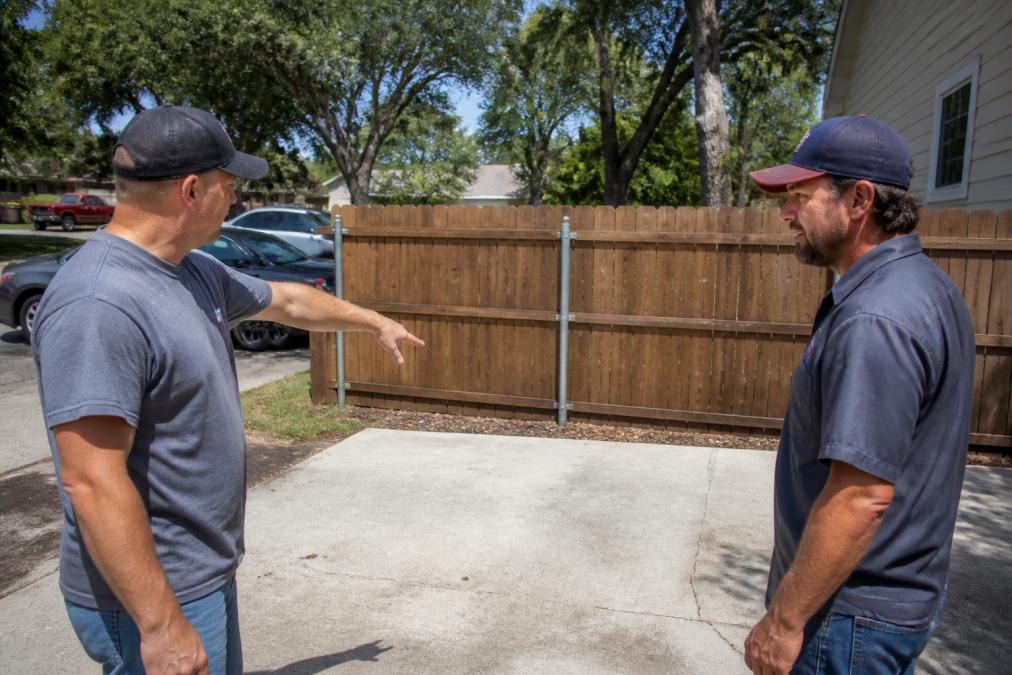
Clearance, Surface Stability, and Lifting Arm Access
A roll-off truck needs roughly 60 feet of straight approach and 18 to 22 feet of vertical clearance to raise the container off the rails (dot.gov). Overhead branches, low power lines, and parked cars are the most common blockers.
The drop zone must sit on firm, level ground. Compacted gravel, asphalt, and concrete handle a loaded container well; soft turf, fresh fill dirt, and sloped driveways do not, and a container that sinks or shifts can damage the surface underneath.
- Keep the pad clear of debris, tools, and vehicles before the truck arrives
- Trim low branches along the approach path
- Mark sprinkler heads, drains, or utility covers near the drop zone
- Confirm the driver can reach the pad without backing over a curb or soft shoulder
If your only option is a street or alley placement, check local rules first. Many cities require a permit for containers in the public right-of-way, and an unpermitted container can be ticketed or towed.
Loading Rules That Keep Pickup on Schedule
An overloaded or unevenly loaded container is the most common reason a scheduled pickup gets refused. Follow the weight limit, keep the load level, and tarp loose material before the truck arrives.
Weight Limits, Load Level, and Tarping Requirements
Every container has a rated weight limit, and it is lower than most people assume. Heavy debris like concrete, dirt, and brick reaches that limit long before the container looks full. When the load exceeds the limit, the driver cannot legally haul it, and the pickup gets rescheduled while you offload material.
Load level matters just as much. Debris piled above the walls will not fit under the truck’s rails and can spill onto the road. Keep everything at or below the top edge, and distribute weight evenly.
Tarping requirements vary by hauler and local rules, but loose items like insulation, cardboard, and yard waste should always be secured. A tarp keeps light material from blowing out on the highway, a safety issue and a reason for a refused pickup.
Never load heavy material like concrete or dirt into a 20-, 25-, or 30-yard container. Those sizes are built for bulky, lighter debris. Heavy material belongs in a 15-yard dumpster, and overloading a larger container with it will exceed the weight limit and stall your pickup.
Heavy Material Disposal Regulations and 15-Yard Placement
Heavy material disposal regulations vary by state and facility, but the practical rule is consistent: concrete, dirt, brick, and rock must go in a 15-yard dumpster, never in a 20-, 25-, or 30-yard unit.
The reason is simple physics. A 15-yard container filled with clean concrete weighs far more than the same container filled with household clutter, and larger containers have weight limits that dense material blows past quickly. Putting heavy debris in the right size the first time is the difference between an on-time pickup and a rescheduled one.
There is a financial upside, too. Customers may receive a break on tonnage when a 15-yard dumpster is filled with clean concrete, dirt, brick, or rock with no trash or other contamination.
Some materials are banned from landfills entirely. Tires, liquids, paint, batteries, and appliances with refrigerant require separate disposal, and a container holding them can be rejected at the facility (the EPA). Check with your hauler before loading anything questionable.
Permits, Prohibited Items, and HOA Coordination
Permit requirements and HOA rules are the two approval steps most homeowners skip, and both can stop a delivery cold. Confirm them before you book.
Right-of-Way Permits: What Triggers Them and How Long They Take
If the container will sit on a public street, alley, or sidewalk, you likely need a right-of-way permit from your city. The application usually takes a few business days, so start early. Placing a container without one risks a fine and a forced relocation.
What triggers a permit is not the container itself but where it sits. A container placed entirely on private property, such as a driveway or side yard, typically does not need a permit. A container that touches the public right-of-way, even by a few feet, usually does.
A few practical points that catch people off guard:
- Some jurisdictions require the permit to be posted visibly on the container or at the site
- Some require reflective markings or cones around the container if it sits near a travel lane
- Some limit how many consecutive days a container can remain in the right-of-way
- Some require the hauler, not the homeowner, to pull the permit, which changes your lead time
Ask your hauler which of these applies before you book.
Prohibited Items: The Short List That Voids a Rental
Prohibited items are typically non-negotiable. Hazardous materials like paint, solvents, motor oil, and asbestos cannot go in a roll-off container. Neither can tires, propane tanks, or electronics in most cases. Loading any of these can void your rental agreement and trigger a special-handling charge.
Landfills and transfer stations test loads, and a rejected load means the truck turns around, the container is re-sorted, and your pickup gets rescheduled, a delay you caused without realizing it.
A useful rule of thumb: if the item has a warning label, a battery, a liquid, or a refrigerant, it does not belong in a general debris container. Set those aside for a separate disposal route before the container arrives.
HOA and Neighborhood Coordination: The Step That Prevents Forced Delays
This is the step most guides skip, and the one most likely to cause a delay you cannot fix on delivery day. Private community rules often govern where a container can sit, how long it can stay, and what it can look like. An HOA can issue a removal order that forces your hauler to pull the container mid-project, a delay no amount of scheduling can undo.
Before you book, do four things:
- Check the covenants, not just the board’s memory. Many HOAs have written rules about dumpsters, construction debris, and duration limits that board members may not recall accurately.
- Submit any required architectural or project request early. Some communities require a form and a few days of review before a container can be placed.
- Confirm placement in writing. Get the approved location in an email so there is no dispute if a neighbor complains.
- Notify immediate neighbors. A short note with your dates and a contact number prevents the complaint that triggers a removal order in the first place.
Complaints, not rules, usually drive forced removals.
Never load heavy material like concrete or dirt into a 20-, 25-, or 30-yard container. Those sizes are built for bulky, lighter debris. Heavy material belongs in a 15-yard dumpster, and overloading a larger container with it will exceed the weight limit and stall your pickup.
Heavy Material and the Permit Picture
Concrete, dirt, brick, and rock must go in a 15-yard dumpster, never in a 20-, 25-, or 30-yard unit. Some facilities also require separate documentation for clean heavy loads, and keeping your load free of trash and contamination can simplify that paperwork and qualify you for a tonnage break on a 15-yard container filled with clean concrete, dirt, brick, or rock.
Roll Off Dumpster Rental Comparison: What Separates Reliable Providers
A roll off dumpster rental comparison usually focuses on price, but reliability is what keeps your project moving. Providers that deliver on time share a few traits worth checking before you book.
| What to Check | Reliable Provider | Warning Sign |
|---|---|---|
| Delivery window | Specific time range confirmed | “Sometime that day” |
| Pricing structure | Flat rate plus clear tonnage terms | Vague per-ton fees |
| Sizing guidance | Asks about your debris type | Pushes the biggest container |
| Pickup scheduling | Confirms date in writing | “Call when you’re done” |
| Heavy material policy | Directs heavy loads to 15-yard | Allows concrete in any size |
Austex Dumpsters offers 15-, 20-, 25-, and 30-yard roll-off containers with expert sizing guidance, straightforward pricing, and same-day delivery when available. For heavy loads, the team directs concrete, dirt, brick, and rock to a 15-yard container and can explain the tonnage break for clean loads. Customers like Russel C. and Jeffrey B. have relied on that consistency to keep their projects on schedule.
Weather Delays, Digital Scheduling, and Post-Pickup Verification
Weather is the one variable no provider controls, but you can plan around it. Heavy rain softens the ground and makes a loaded truck more likely to get stuck, and high winds can ground a delivery for safety. If a storm is forecast, move your delivery window or lay down plywood and gravel to firm up the approach.
Digital scheduling and tracking tools close the communication gap behind most “where is my dumpster” calls. A provider that confirms your window by text or email and sends an arrival update removes the guesswork.
Post-pickup verification matters more than most people realize. After the container is hauled away, confirm the pickup in writing and check that no debris or damage was left behind. This closes out the rental agreement cleanly and protects you if a dispute arises later.
The pattern across all of this is the same: delays are almost never random. They come from a booking made too late, a site that was not ready, a load that broke the rules, or a permit that was never pulled. Fix those four things and your container shows up and leaves when it should.
Frequently Asked Questions
What are the most common causes of dumpster rental delays?
Most dumpster rental delays trace back to four issues: booking too late for the desired delivery window, blocked or unstable placement sites, overloaded containers that exceed the weight limit, and loads containing prohibited items like tires or paint. Weather and permit gaps add more delays. Fixing the first four before delivery day prevents the majority of scheduling problems.
How far in advance should I book a dumpster?
Reserve your roll-off dumpster at least three to five business days before you need it for standard projects. Weekend deliveries and peak renovation seasons fill up faster, so book one to two weeks out if your timeline is tight. Same-day delivery is sometimes available, but treating it as a backup rather than a plan keeps your project moving.
What site preparation is required to prevent delivery issues?
Clear a flat, firm surface at least 60 feet long and 12 feet wide for the delivery truck, with no low branches, power lines, or parked vehicles in the path. Compacted gravel, asphalt, or concrete works best. Place wooden boards under the rails on softer ground and keep the approach clear of soft turf or fresh landscaping.
Does the type of waste impact dumpster rental scheduling?
Yes. Heavy materials like concrete, dirt, brick, and rock must go in a 15-yard dumpster, which affects which container is dispatched and how the load is weighed. Clean heavy loads may qualify for a tonnage break with no trash mixed in. Mixed debris and bulky items like furniture or shingles usually fit standard scheduling, but flagging heavy loads early helps the hauler plan the right truck and disposal facility.
Dumpster rental delays rarely come from the hauler alone. They come from unclear sizing, heavy loads in the wrong container, and delivery windows that were never confirmed. Austex Dumpsters removes that guesswork with same-day delivery when available, expert guidance on sizing, and straightforward pricing that flags overage risk before it happens. Fill out the form to request your roll-off dumpster and keep your project on schedule.