
Table of Contents
- What Construction Debris Can Go in a Roll-Off Dumpster?
- Roll-Off Dumpster Size Guide: Choosing the Right Capacity
- Heavy Material Disposal Requirements: Concrete, Dirt, and Brick
- Clean Concrete and Dirt Disposal Benefits: Tonnage Savings Explained
- Prohibited Items and Hazardous Materials in Construction Dumpsters
- Site Preparation Checklist Before Your Dumpster Arrives
- How Construction Debris Removal Pricing Works
- Eco-Friendly Disposal: Recycling and Waste Diversion on the Job Site
Last Updated: August 15, 2026
Most contractors and homeowners underestimate how much their debris weighs until they see an overage charge on their final bill. At Austex Dumpsters, we’ve guided hundreds of Austin-area projects through the sizing and logistics of dumpster rental for construction debris removal. The same mistakes show up repeatedly: wrong container size, prohibited items tossed in, no permit secured, and no plan for heavy materials like concrete or brick. Below, we cover everything you need to get your job site cleanup right the first time.
What Construction Debris Can Go in a Roll-Off Dumpster?
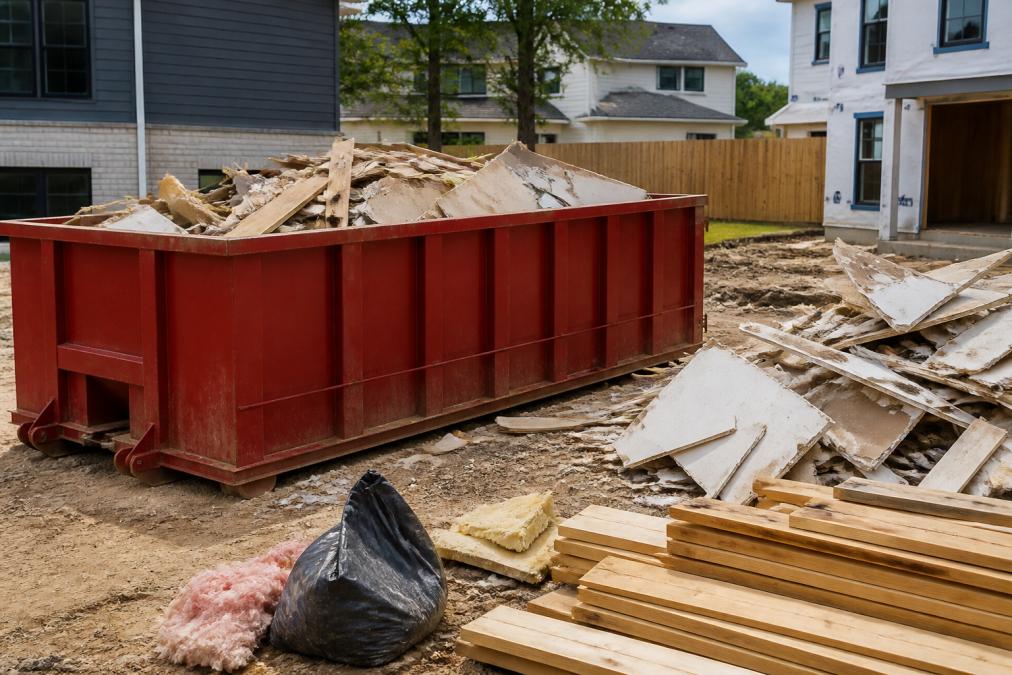
A roll-off dumpster for construction debris removal accepts most non-hazardous waste generated during building, renovation, and demolition projects.
Common accepted materials include:
- Drywall and gypsum board
- Lumber, dimensional wood, and framing scraps
- Roofing shingles and underlayment
- Flooring materials (tile, hardwood, laminate, carpet)
- Insulation (fiberglass batts, rigid foam)
- Plaster and lath
- Metal scraps and ductwork
- Concrete, brick, and masonry (with size restrictions, see below)
- Dirt and clean fill (with size restrictions, see below)
- Doors, windows, and cabinetry
- Packaging and cardboard from materials
The key phrase is “non-hazardous.” Anything containing regulated substances, asbestos-containing materials, lead paint residue, or chemical solvents requires specialized handling.
A common mistake is treating a roll-off as a catch-all for every item on a job site. Mixing clean concrete with general trash eliminates any chance of recycling that material and can cost you money in tonnage fees. Separate your debris streams from day one.
Roll-Off Dumpster Size Guide: Choosing the Right Capacity
Choosing the wrong dumpster size is the most common and most costly mistake on a construction cleanup. Too small and you’re paying for a second haul. Too large and you’ve paid for capacity you didn’t use.
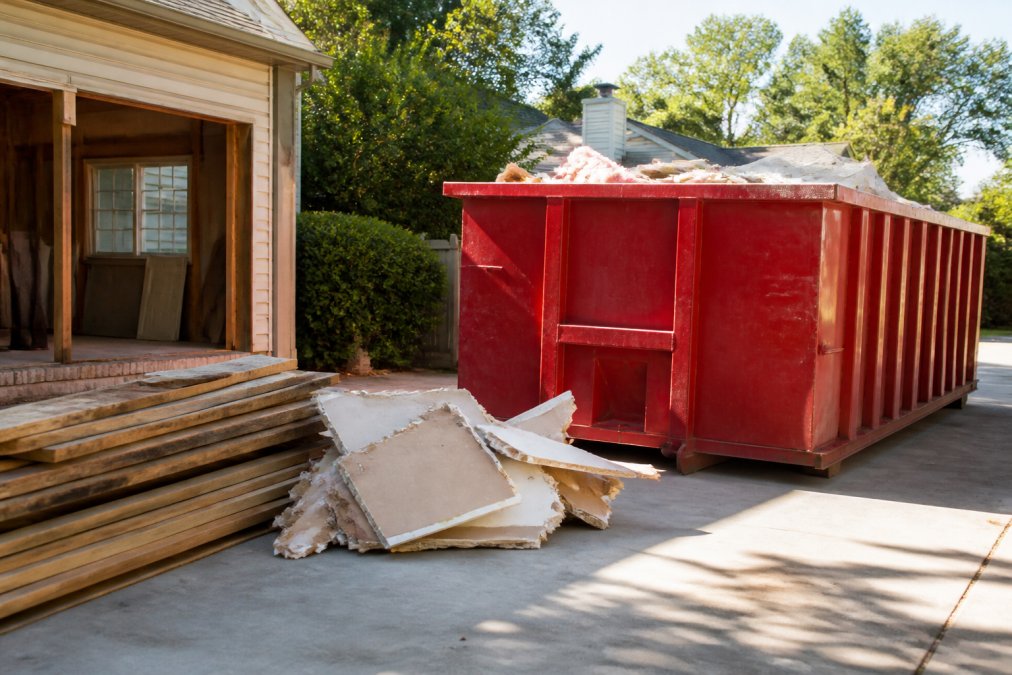
Austex Dumpsters offers four roll-off sizes: 15-yard, 20-yard, 25-yard, and 30-yard. Here’s how to match each one to your project.
|
Dumpster Size |
Cubic Yard Capacity |
Typical Project Fit |
Heavy Materials Allowed |
|---|---|---|---|
|
15-Yard |
15 cubic yards |
Small renovations, heavy material loads, residential cleanouts |
Yes (concrete, dirt, brick, rock) |
|
20-Yard |
20 cubic yards |
Mid-size renovations, roofing tear-offs, flooring removal |
General debris only |
|
25-Yard |
25 cubic yards |
Larger renovations, multi-room remodels, commercial cleanouts |
General debris only |
|
30-Yard |
30 cubic yards |
Full demolitions, large construction sites, disaster recovery |
General debris only |
15-Yard Dumpster: General Debris and Heavy Materials
The 15-yard dumpster is the workhorse of construction debris removal. It handles general renovation debris well, but it’s the only size appropriate for large amounts of heavy materials like concrete, dirt, brick, or rock. Heavy materials loaded into a 20-, 25-, or 30-yard container can exceed truck weight limits before the container is even half full, creating safety and logistical problems on the road. For a bathroom gut-out, concrete patio demolition, or masonry repair job, the 15-yard is your container.
20-Yard and 25-Yard Dumpsters: Mid-Size Renovation Projects
The 20-yard and 25-yard containers handle the majority of residential renovation projects. A full kitchen remodel, roofing tear-off, or multi-room flooring replacement all fit comfortably in this range. These containers accept general construction debris but are not suited for concentrated loads of concrete, dirt, brick, or rock. If your project generates a mix of light debris with a small amount of concrete or masonry, the 20-yard is fine.
30-Yard Dumpster: Large-Scale Construction and Demolition
The 30-yard container is built for large-scale work: full home demolitions, commercial build-outs, disaster recovery cleanups, and major commercial waste removal. General contractors managing active job sites often keep a 30-yard on-site for the duration of a project, scheduling pickups and returns as the container fills.
Heavy Material Disposal Requirements: Concrete, Dirt, and Brick
Heavy material disposal is the area where the most expensive mistakes happen. Concrete, dirt, brick, and rock are dense materials, and their weight accumulates fast.
The rule at Austex Dumpsters is clear: large amounts of heavy material such as concrete, dirt, brick, or rock must go in a 15-yard dumpster. Loading these materials into a 20-, 25-, or 30-yard container creates a weight overload situation well before the container reaches visual capacity. Trucks have load limits governed by federal Department of Transportation regulations, and exceeding them isn’t just a billing issue, it’s a safety and compliance issue.
Concrete weighs roughly 150 pounds per cubic foot. A few feet of concrete rubble can weigh several tons. Always route heavy materials to the 15-yard container.
Clean Concrete and Dirt Disposal Benefits: Tonnage Savings Explained
Here’s the part most debris removal guides skip entirely: how you load your 15-yard dumpster can directly affect what you pay.
Clean concrete and dirt disposal benefits apply when a 15-yard container is filled exclusively with clean concrete, dirt, brick, or rock, with no trash, mixed debris, or contamination. In that scenario, customers may receive a break on tonnage costs. The logic is straightforward: clean, uncontaminated concrete and dirt can be recycled or reused, which reduces the cost of processing at the disposal facility.
The moment you mix general trash into that load, the material becomes contaminated. It can no longer be separated for recycling, and the tonnage break disappears. A half-eaten lunch, a few pieces of drywall, or a handful of plastic packaging is enough to contaminate an otherwise clean load.
For contractors running concrete demolition or excavation work, this is a meaningful financial consideration. Keep one 15-yard container dedicated exclusively to clean heavy materials. The separation takes discipline on the job site, but the tonnage savings can offset the cost of the additional container.
Prohibited Items and Hazardous Materials in Construction Dumpsters
Not everything on a construction site belongs in a roll-off dumpster. Prohibited items fall into two categories: materials that damage disposal equipment and materials regulated under federal or state environmental law.
Items prohibited from construction roll-off dumpsters:
- Asbestos-containing materials (floor tiles, pipe insulation, roofing felt from older buildings)
- Lead-based paint debris requiring specialized handling
- Chemical solvents, adhesives, and cleaning agents
- Paints and stains (liquid)
- Pesticides, herbicides, and fertilizers
- Batteries (automotive and industrial)
- Tires
- Propane tanks and compressed gas cylinders
- Electronics (e-waste)
- Medical or biohazardous waste
- Flammable liquids and fuels
The EPA guidelines on construction and demolition debris outline which materials from renovation and demolition projects require separate handling under federal environmental regulations. For older home renovations: structures built before 1980 have a meaningful probability of containing asbestos in floor tiles, popcorn ceilings, pipe insulation, and roofing materials. Test before you demo. The cost of proper abatement is far lower than the cost of a contaminated dumpster load and the regulatory exposure that follows.
Site Preparation Checklist Before Your Dumpster Arrives
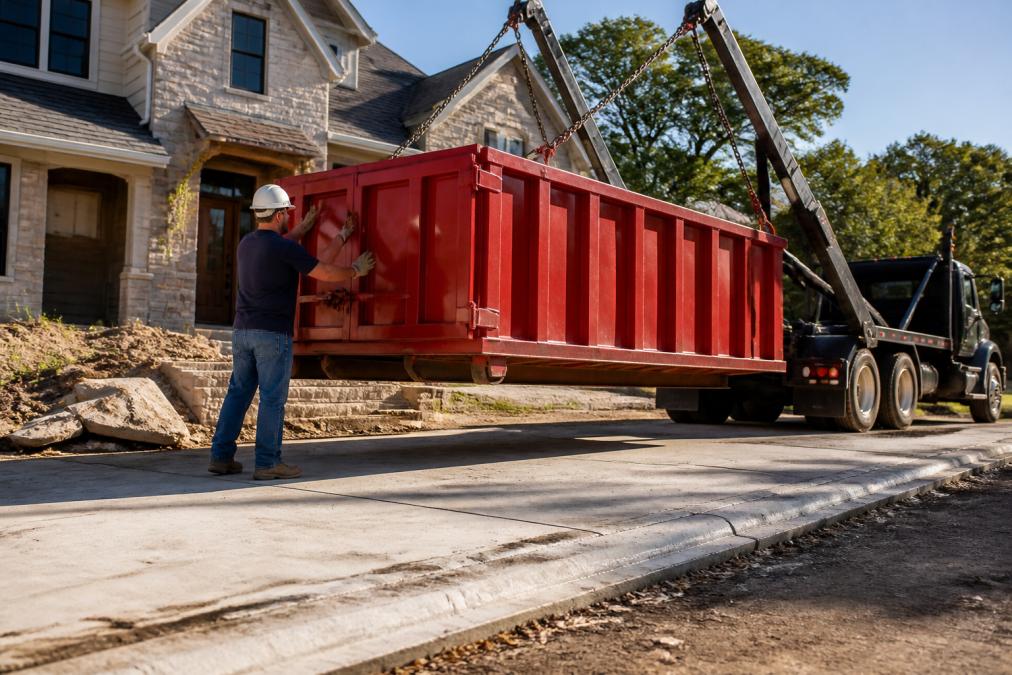
Getting your site ready before delivery saves time and prevents damage. A roll-off dumpster requires a specific footprint and a clear path for the delivery truck.
Site preparation checklist:
- Measure the delivery area: most 15-yard through 30-yard containers need at least 60 feet of clearance for the truck to position and drop the container
- Clear the placement area of vehicles, equipment, and loose materials
- Check overhead clearance for power lines, tree branches, and garage structures (minimum 22 feet of vertical clearance is typical)
- Confirm the surface can support the container’s weight (concrete and asphalt are preferred; soft ground may require plywood protection)
- Identify the closest access point for workers loading debris
- Confirm permit status if placing on a public street or sidewalk (see below)
- Notify neighbors if the dumpster placement affects shared driveways or sight lines
Permit Requirements for Placing a Dumpster on Public Property
A dumpster placed entirely on private property, such as a driveway or private lot, typically requires no permit. The moment the container extends onto a public street, sidewalk, or right-of-way, local permit requirements apply.
Permit rules vary by municipality. Most cities require a right-of-way permit from the local public works or transportation department before a container can be placed on a public street. Some jurisdictions also require reflective markers or safety cones around the container, especially for overnight placement.
Steps to acquire a right-of-way permit:
- Contact your city or county public works department before scheduling delivery
- Provide the placement address, container dimensions, and planned rental duration
- Pay any applicable permit fees (these vary by jurisdiction)
- Post the permit or permit number as required by local ordinance
- Add any required safety markings around the container
Your dumpster rental provider can often advise on local permit norms for your area, but the permit application is typically the responsibility of the property owner or contractor.
How Construction Debris Removal Pricing Works
Dumpster rental pricing for construction debris removal is not a flat rate. Several variables combine to determine your final cost, and understanding them upfront prevents surprise charges.
Primary pricing factors:
- Container size: Larger containers cost more to deliver, haul, and dispose of
- Rental duration: Short-term rentals and long-term service arrangements are priced differently
- Debris type: Heavy materials like concrete and dirt carry different disposal fees than light general debris
- Weight allowance and tonnage: Most rentals include a weight allowance; loads exceeding that allowance generate overage charges
- Distance to disposal facility: Haul distance affects fuel and time costs
- Local landfill regulations and tipping fees: These vary by county and municipality
The most common source of unexpected charges is exceeding the weight allowance. Many customers focus on cubic yard capacity and forget that weight limits exist independently. A container that looks half-full can be overweight if it contains dense materials.
To avoid overage charges: know your debris type before you order, route heavy materials to the correct container size, and ask your provider to explain the weight allowance included in your rental. Austex Dumpsters provides straightforward pricing guidance and will help you select the right container to avoid paying for capacity or tonnage you don’t need. Contact us to get a quote based on your specific project.
Eco-Friendly Disposal: Recycling and Waste Diversion on the Job Site
Construction and demolition debris is one of the largest waste streams in the country. A significant portion of it is recyclable, and job site practices can meaningfully reduce what ends up in a landfill.
Materials commonly diverted from landfill on construction sites:
- Concrete and masonry: Can be crushed and recycled as aggregate for road base and fill
- Clean wood and lumber: Accepted by many wood recyclers and biomass facilities
- Metals: Steel, copper, aluminum, and other metals have active recycling markets
- Drywall: Clean gypsum board can be recycled into new drywall or soil amendment
- Cardboard and packaging: Recyclable through standard streams
The separation practices described earlier in this guide serve a dual purpose: they enable tonnage savings on clean heavy materials, and they support waste diversion goals. A job site that separates concrete from general debris and keeps cardboard and metal out of the landfill container reduces its environmental footprint and often reduces disposal costs.
For contractors pursuing LEED certification or other green building standards, documented waste diversion rates are a project requirement. Maintaining separate debris streams and working with a disposal provider who can document material destinations supports that certification process.
The practical starting point is simple: designate separate areas on your job site for different debris categories before work begins. Train your crew on what goes where. The discipline pays off in lower disposal costs and a cleaner environmental record.
Frequently Asked Questions
Can I put construction debris in a dumpster?
Yes. Roll-off dumpsters are designed specifically for construction debris removal. Accepted materials typically include drywall, lumber, roofing shingles, flooring, siding, and general mixed renovation waste. Heavy materials like concrete, dirt, brick, and rock require special handling — they must go in a 15-yard dumpster due to weight limits. Always confirm accepted debris types with your rental provider before loading to avoid surprise overage charges or rejected loads.
How do I determine the right dumpster size for my renovation project?
Start by estimating the total volume of debris your project will generate. A 15-yard dumpster handles smaller renovations and all heavy materials like concrete or dirt. A 20-yard or 25-yard unit fits mid-size remodels — kitchen tearouts, flooring replacement, or window removal. A 30-yard dumpster suits full demolitions or large commercial cleanouts. When in doubt, sizing up avoids the cost and delay of ordering a second dumpster mid-project.
Are there weight limits for construction debris dumpsters?
Yes, every roll-off dumpster has a tonnage limit tied to its size. Exceeding that limit triggers overage charges, which can add up quickly on heavy-material jobs. Concrete, dirt, brick, and rock are especially dense — a 15-yard dumpster filled with clean concrete or dirt may qualify for a tonnage break when no other waste is mixed in. Always ask your provider about weight allowances before loading heavy debris.
What materials are prohibited in construction dumpsters?
Prohibited items typically include hazardous materials such as asbestos, lead paint, chemicals, solvents, batteries, tires, and appliances containing refrigerants. Landfill regulations and EPA guidelines restrict these from standard roll-off containers. Disposing of prohibited items in a dumpster can result in fines and additional disposal fees. If your project involves older structures, test for hazardous materials before demolition and arrange separate, compliant disposal.
How should I prepare my site for a roll-off dumpster delivery?
Clear the delivery area of vehicles, equipment, and overhead obstructions like low-hanging branches or power lines. The ground should be flat and firm enough to support a loaded dumpster. If placing the unit on a public street or sidewalk, check whether a permit is required through your local municipality. Having the space ready before the truck arrives prevents delivery delays and keeps your project on schedule.