
Table of Contents
- Understand Cubic Yards and Dumpster Dimensions
- Calculate Your Debris Volume
- Dumpster Rental for Heavy Debris
- What Fits in a 15 Yard Dumpster
- Dumpster Size for Garage Cleanout
- Match Project Type to Dumpster Capacity
- Avoid Common Sizing Mistakes
- Conclusion
Understand Cubic Yards and Dumpster Dimensions
What Is a Cubic Yard?
A cubic yard is a unit of volume measurement equal to 27 cubic feet, or a cube measuring 3 feet on each side (nist.gov). Understanding cubic yards is essential when estimating dumpster size, as all roll-off dumpsters are measured and priced by this standard unit. This measurement helps you visualize exactly how much space you’re working with and prevents renting a container that’s too small or unnecessarily large.
A cubic yard of light materials like drywall or insulation takes up more physical space than a cubic yard of heavy concrete or dirt. This distinction matters when calculating what you actually need.
Standard Roll-Off Dumpster Sizes
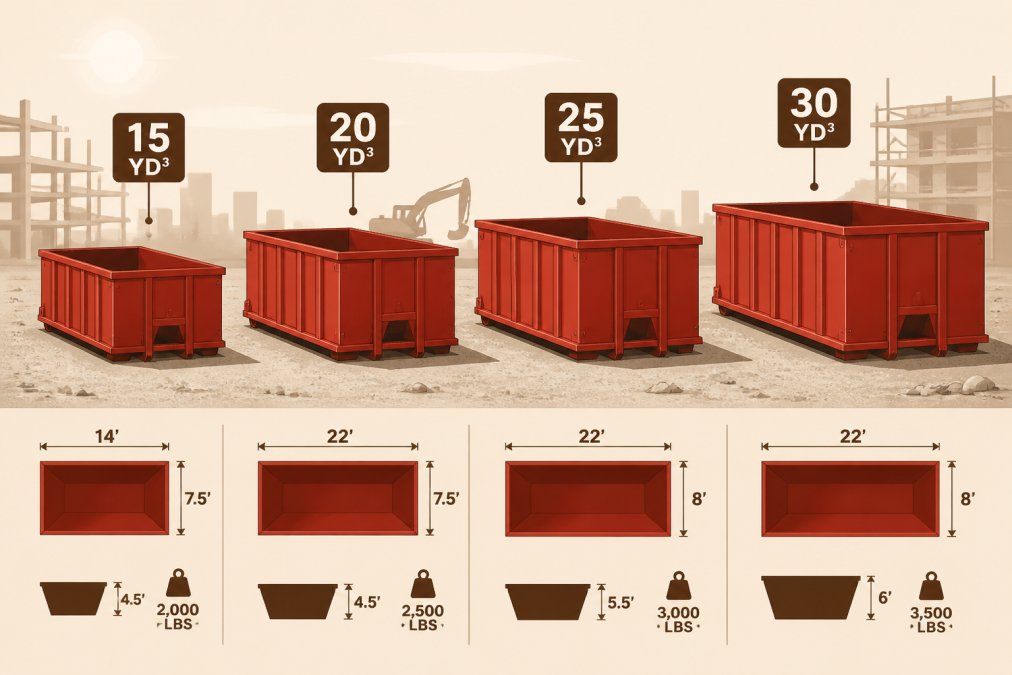
Austex Dumpsters offers four standard roll-off dumpster sizes: 15-yard, 20-yard, 25-yard, and 30-yard containers. Each size serves specific project needs.
A 15-yard dumpster holds approximately 405 cubic feet of material and is the right choice for smaller residential projects, garage cleanouts, and general debris removal (peer-reviewed research). The 15-yard is also the designated container for large amounts of heavy materials such as concrete, dirt, brick, or rock. When these materials fill a 15-yard dumpster cleanly with no trash or other contamination, customers may receive a break on tonnage charges.
The 20-yard dumpster provides 540 cubic feet of capacity for medium-sized renovation projects and commercial cleanouts. The 25-yard container holds 675 cubic feet and works well for larger renovation projects and substantial construction debris removal. The 30-yard dumpster offers 810 cubic feet of capacity for major demolition projects and large-scale construction sites.
Picking the right size on the first call prevents project delays and the expense of ordering a second dumpster halfway through the work.
Calculate Your Debris Volume
Measure Your Project Space
Start by measuring the area where your debris will accumulate. For a room renovation, measure length, width, and the height of material you expect to pile up. For outdoor projects, estimate the square footage and approximate depth of debris.
Multiply length × width × height (all in feet) and divide by 27 to convert cubic feet to cubic yards. For debris spread across multiple areas, calculate each section separately and add them together.
Most homeowners underestimate debris volume because they picture it neatly stacked (the EPA). In reality, debris settles and compresses differently depending on material type. Account for this variability by adding 15-20% to your initial estimate.
Measure twice, estimate once. Take photos of the space from multiple angles before the project starts. This reference helps you visualize the final debris volume more accurately and prevents mid-project surprises.
Account for Waste Density
Waste density is the weight of material per unit volume. Understanding density prevents overage fees when you miscalculate what the dumpster can hold by weight, not just by volume.
Light materials like drywall, insulation, and cardboard have low density. Heavy materials like concrete, dirt, brick, and rock have high density. A 15-yard dumpster filled with concrete or dirt can quickly exceed weight capacity, even though physical space remains inside the container.
This is why the 15-yard dumpster is the correct choice for large amounts of heavy materials. The smaller footprint ensures weight limits are respected while the material is contained. Placing heavy debris in a larger dumpster creates the false impression of more capacity, leading to overages when the truck arrives for pickup.
Research typical density ranges for your specific debris type. Construction sites with mixed debris need different planning than a roofing tearoff, which differs from a residential cleanout.
Dumpster Rental for Heavy Debris
Concrete, dirt, brick, and rock are dense and can quickly exceed weight limits in standard dumpsters. The 15-yard dumpster is specifically designed to handle large quantities of these materials without triggering overage charges.
When removing concrete from a driveway or excavating dirt from a landscaping project, the 15-yard container provides the right balance of volume and weight capacity. The smaller footprint actually works in your favor for weight-dense materials.
If your heavy debris is clean, concrete with no attached rebar or dirt with no mixed trash, you may qualify for a tonnage break. This benefit applies specifically to 15-yard dumpsters filled with clean concrete, dirt, brick, or rock. Contamination from other materials disqualifies this benefit, so separating heavy materials from general trash during the project pays off.
Never attempt to fit large amounts of heavy materials into a 20-, 25-, or [30-yard dumpster](/30-yd-dumpster-rentals/). These containers are not designed for the weight concentration of dense materials. Overloading creates safety hazards, triggers substantial overage fees, and may result in the hauler refusing the load entirely.
What Fits in a 15 Yard Dumpster
The 15-yard dumpster is your workhorse for general debris and the only appropriate choice for heavy materials. A 15-yard dumpster holds approximately 405 cubic feet of material.
For general household debris like furniture, boxes, and miscellaneous items from a garage cleanout, you can typically fit the contents of a 3-car garage or a moderate home renovation. For construction debris like drywall, lumber, and roofing materials, a 15-yard dumpster accommodates a typical single-room renovation or a modest roof tearoff. For heavy materials specifically, concrete, dirt, brick, or rock, the 15-yard is the designated container. A concrete driveway removal, foundation excavation, or substantial brick removal fits appropriately in this size.
The 15-yard dumpster serves dual purposes: it’s large enough for general residential projects, and it’s the only size that should contain heavy materials in large quantities. When uncertain whether a 15-yard will accommodate your project, consider the density of your debris and total volume. If you’re removing heavy materials, the 15-yard is non-negotiable. If you’re handling general debris from a moderate project, the 15-yard works well.
Dumpster Size for Garage Cleanout
Most garage cleanouts fit comfortably in a 15-yard dumpster, making it the standard choice for this project type. A typical two-car garage contains years of accumulated items: old furniture, tools, boxes, seasonal decorations, and miscellaneous equipment. When consolidated into a single dumpster, these items occupy roughly 200-300 cubic feet of space, well within the 405-cubic-foot capacity of a 15-yard container. Even a three-car garage usually stays within this range unless exceptionally full or containing heavy materials.
The challenge in garage cleanouts is mixed debris types. Garages contain light items, heavy items, and sometimes hazardous materials. Sort as you go. Separate heavy tools and equipment from lightweight boxes and furniture. If your garage contains significant quantities of concrete or dirt, those materials belong in the 15-yard dumpster and should be kept separate from general household items to qualify for potential tonnage benefits.
Most garage cleanouts complete in one to two days with a single 15-yard dumpster.
Fill Out Form to Request Dumpster Rental →
A 15-yard dumpster is [the right](/how-to-choose-dumpster-size/) size for most garage cleanouts. The only exception is if your garage contains large amounts of heavy materials like concrete or dirt, which still go in the 15-yard but change how you pack and organize the load.
Match Project Type to Dumpster Capacity
Choosing the right dumpster size depends on understanding what you’re throwing away and how much volume it generates.
Residential Cleanouts and Renovations
A basic home cleanout, removing old furniture, boxes, and general household items, typically generates 150-250 cubic feet of debris, fitting easily in a 15-yard dumpster. Estate cleanouts or whole-house decluttering might reach 300-350 cubic feet, still within the 15-yard capacity.
Kitchen and bathroom renovations produce moderate volumes of drywall, tile, fixtures, and packaging materials. A single-room renovation usually generates 200-300 cubic feet of debris. A whole-home renovation with multiple rooms, flooring removal, and cabinet replacement can generate 400-500 cubic feet, suggesting a 20-yard dumpster for comfort and flexibility.
Construction and Demolition Debris
A modest deck removal produces 150-200 cubic feet of lumber and fasteners. A roof tearoff generates 250-350 cubic feet of shingles, plywood, and roofing materials. A foundation or concrete removal project requires the 15-yard dumpster for heavy materials, regardless of total volume.
Demolition work produces mixed debris including drywall, lumber, metal, and sometimes concrete. A single-room demolition might generate 300-400 cubic feet. Whole-house demolition or extensive site clearing likely moves into the 25- or 30-yard range depending on structure size.
Construction debris is often denser than residential cleanout material, so weight becomes a consideration even before volume fills the container.
Roofing and Landscaping Projects
A typical residential roof produces 250-350 cubic feet of shingles, plywood, and underlayment, fitting in a 15-yard dumpster for most homes. Larger roofs or commercial buildings might require a 20-yard dumpster. The material is relatively light, so volume is the limiting factor.
A yard cleanup with brush, branches, and leaves generates 100-200 cubic feet. A major tree removal or landscape overhaul might produce 300-500 cubic feet. Soil excavation or gravel removal involves heavy materials; these belong in the 15-yard dumpster if the volume is substantial.
A 15-yard dumpster filled with clean soil or gravel qualifies for potential tonnage benefits if there’s no contamination. A 15-yard filled with branches and leaves has room to spare by weight but might approach volume limits.
Avoid Common Sizing Mistakes
The biggest mistake is renting a dumpster that’s too large. Homeowners often assume bigger is safer, but oversized dumpsters cost more and sit partially empty. Accurately estimate your debris volume first, then choose the smallest dumpster that comfortably accommodates your project.
The second major mistake is placing heavy materials in oversized dumpsters. A 20-yard or 30-yard dumpster feels spacious, creating the false impression of weight capacity to spare. In reality, these containers are designed for lighter, more voluminous debris. Filling a 30-yard dumpster with concrete or dirt triggers massive overage fees because the weight limit is exceeded long before physical space is full. Use the 15-yard dumpster for heavy materials, period.
A third common error is underestimating mixed debris. A project combining light materials with heavy materials needs careful planning. Separate them, put heavy materials in the 15-yard dumpster, and place lighter debris in a separate container if volume exceeds 15-yard capacity.
Many contractors and homeowners also fail to account for settling and compression. Debris compresses during transport, and volume estimates that seemed generous become tight. Add 15-20% to your initial calculation to account for this reality.
Finally, avoid choosing a dumpster size without understanding your debris density. A 15-yard dumpster might seem small, but it’s the right choice for heavy materials and many general projects. Larger dumpsters aren’t automatically better; they’re appropriate for specific project types.
Don’t let past experiences with other waste management companies dictate your sizing decision. Each project is unique. Measure your space, identify your debris type, and estimate conservatively. Austex Dumpsters provides expert guidance on sizing to help you get it right the first time.
Conclusion
Estimating dumpster size accurately is the foundation of a smooth project and predictable costs. By understanding cubic yards, measuring your project space, accounting for waste density, and matching your debris type to the right container, you eliminate the guesswork and avoid overage fees.
Austex Dumpsters helps you get the sizing decision right with expert guidance on debris volume calculation, weight capacity planning, and project-specific recommendations. Our team knows the difference between heavy materials that require a 15-yard dumpster and general debris that might fit in a larger container, and we help you avoid costly mistakes that come from guessing. Get started with Austex Dumpsters and rent the right size container for your project, delivered when you need it.
Frequently Asked Questions
Q: How do I know if I need a 15-yard or a 30-yard dumpster?
A: The size you need depends on your project scope and debris type. A 15-yard dumpster works for small residential cleanouts, garage overhauls, and light renovations. A 30-yard dumpster suits larger construction projects, whole-home renovations, or significant landscaping work. If you're unsure, measure your project space, estimate the cubic yards of debris, and consider whether you have heavy materials like concrete or dirt, which require a 15-yard dumpster specifically.
Q: Can I put heavy materials like concrete in any dumpster size?
A: No. Large amounts of heavy materials such as concrete, dirt, brick, and rock must go in a 15-yard dumpster only. These materials are dense and exceed weight limits in larger containers. When a 15-yard dumpster is filled with clean concrete, dirt, brick, or rock with no trash or other contamination, you may receive a tonnage break, reducing your overall cost.
Q: What happens if I miscalculate and end up with too much debris?
A: If you underestimate and run out of space, you'll face overage fees or need a second rental. To avoid this, add 20 percent to your initial volume estimate as a buffer. Measure your project area carefully, account for waste density variation, and consider the material types. If you're uncertain, choose the next size up, it's more cost-effective than managing overages mid-project.
Q: How do I calculate the volume of my waste?
A: Measure the length, width, and height of your project area in feet, then multiply those three numbers together. Divide by 27 to convert cubic feet into cubic yards. For example, a 10-foot by 10-foot by 3-foot pile equals 300 cubic feet, or about 11 cubic yards. Account for waste density: lighter materials like drywall compress more, while heavy materials like concrete remain dense. Add 20 percent to your final calculation for safety.
This article was written using GrandRanker