
Table of Contents
- How Waste Disposal Services Work
- Roll-Off Dumpster Rental for Your Project
- Residential Waste Disposal Options
- How to Dispose of Construction Debris
- Waste Recycling Services and Environmental Impact
- Selecting a Waste Disposal Provider
- Frequently Asked Questions
Last Updated: October 19, 2026
How Waste Disposal Services Work
Waste disposal services manage the removal and processing of household, commercial, and construction debris, assessing your project, recommending a container size, and coordinating delivery and pickup through to final disposal.
Every project generates different waste: cleanouts produce mixed household items, construction sites generate heavy materials, and landscaping creates yard debris.
Most providers operate on a simple model: you rent a container for a set period, fill it at your pace, and we handle pickup and disposal, one container on a predictable schedule instead of multiple landfill trips.
Roll-Off Dumpster Rental for Your Project
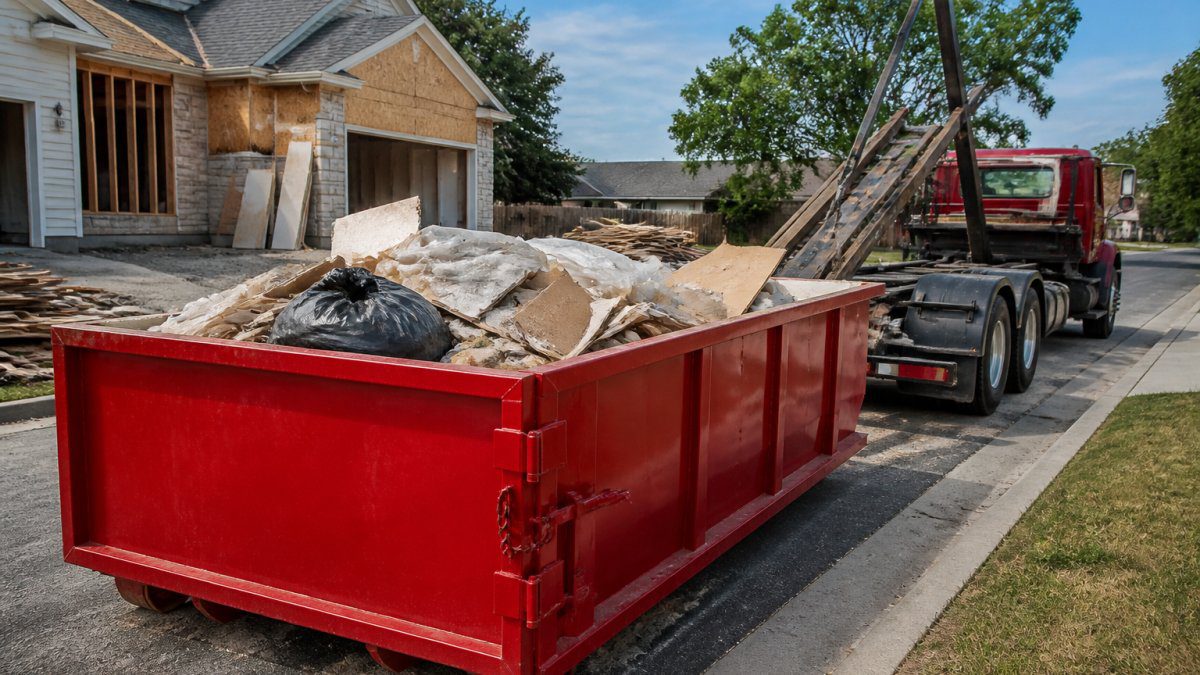
Roll-off dumpsters are large open-top containers delivered on a truck with a hydraulic lift.
Austex Dumpsters provides roll-off dumpster rentals in four sizes: 15-yard, 20-yard, 25-yard, and 30-yard containers. The right size prevents both underfilling (wasting money on unused capacity) and overfilling (triggering extra fees or multiple trips).
Choosing the Right Dumpster Size
Start by identifying your waste type. A 15-yard dumpster handles general household debris from cleanouts and modest renovations.
For mixed renovation debris from kitchen or bathroom remodels, a 20-yard dumpster accommodates drywall, flooring, cabinetry, and general construction waste.
When you’re uncertain, describe your project to our team.
Delivery and Pickup Timeline
Same-day delivery is available when you call early enough in the day; otherwise, most providers, including Austex Dumpsters, coordinate delivery within 24 hours.
Rental periods typically run seven to thirty days.
Pickup timing matters: a dumpster sitting in your driveway after the work ends costs money and blocks access.
Residential Waste Disposal Options
Homeowners face different waste challenges depending on the project: a kitchen renovation produces construction debris, a basement cleanout generates mixed household items, and yard work creates organic waste. Managing the accumulation of belongings during a major transition often requires the specialized logistical support found in estate cleanout services to ensure that every item is handled according to its proper disposal category.
Home Cleanouts and Renovations
Home cleanouts accumulate quickly, decades of items from attics, basements, garages, and storage areas fill containers fast.
Most providers accept furniture, appliances, flooring, drywall, and general household items.
Renovations generate specific debris: bathroom remodels produce tile, fixtures, and drywall; kitchen renovations add cabinetry and countertops; flooring projects create old wood, carpet, or tile.
Yard Waste and Landscaping Debris
Landscaping projects produce large volumes of material. Fallen trees, branches, mulch, soil, and old sod accumulate quickly.
Ask about yard waste policies: some facilities compost organic material separately, and a dedicated yard-waste container may be more cost-effective for significant debris.
Heavy landscaping materials like soil, mulch, and stone should go into a 15-yard dumpster.
How to Dispose of Construction Debris
Construction waste requires specific handling. Understanding the distinctions between materials prevents contamination, reduces costs, and ensures compliance with local disposal regulations.
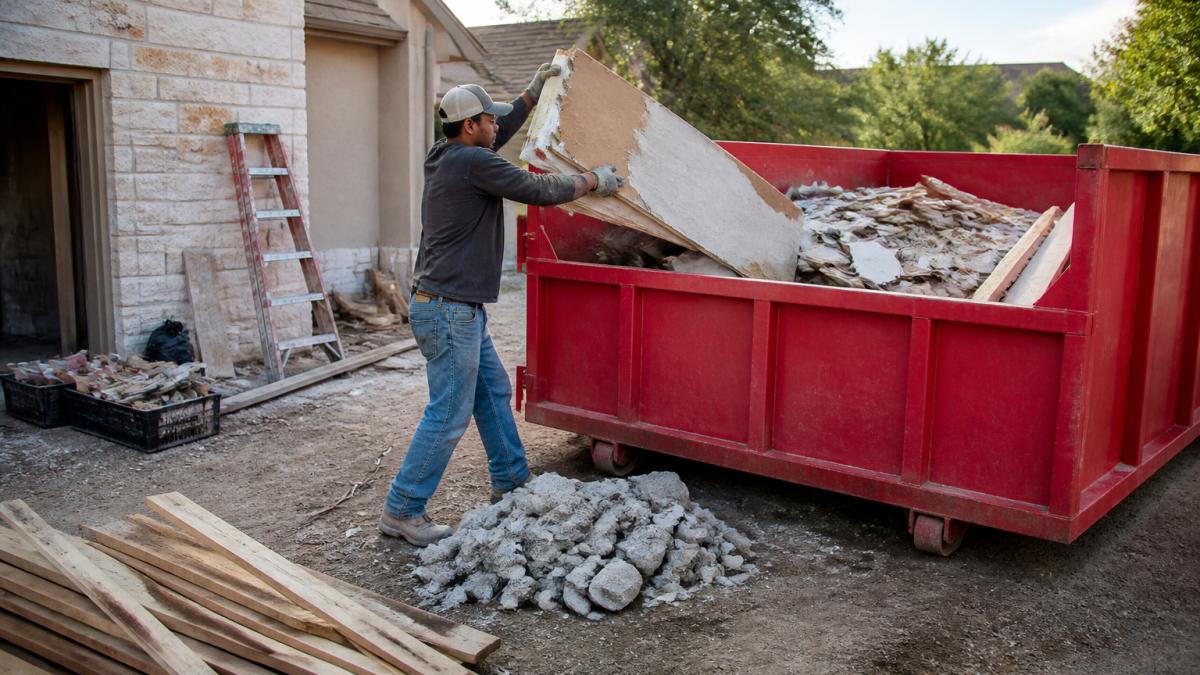
Heavy materials present the biggest challenge. Concrete, dirt, brick, and rock are dense and heavy, so large amounts of these materials must go in a 15-yard dumpster, never a 20-, 25-, or 30-yard container.
Heavy Materials and Special Handling
Concrete removal is common in renovation and demolition work.
Brick and masonry debris follow the same rule: old brick walls, chimneys, and masonry features generate heavy material that requires a 15-yard dumpster.
Dirt and soil from excavation, grading, or foundation work also require a 15-yard dumpster.
Rock and stone from landscaping or site preparation go into a 15-yard dumpster.
Preparing Your Load for Pickup
How you pack your dumpster affects cost and safety. Overloading creates transport hazards and triggers overage fees.
Keep hazardous materials separate: paint, solvents, batteries, and chemicals should not go into standard waste dumpsters.
Fill Out Form to Request Dumpster Rental →
Compress loose material like drywall, cardboard, and insulation to maximize space and avoid a second container.
| Waste Type | Best Container | Key Consideration |
|---|---|---|
| General household debris | 20-yard or 25-yard | Mixed items from cleanouts |
| Construction waste | 20-yard or 25-yard | Drywall, flooring, fixtures |
| Heavy materials (concrete, dirt, brick, rock) | 15-yard | Weight capacity and density |
| Yard waste and landscaping | 15-yard or 20-yard | Volume and material type |
| Appliances and fixtures | 20-yard or 25-yard | Confirm acceptance with provider |
Waste Recycling Services and Environmental Impact
“Recycling” on a service page usually means one of two very different things: material sorted at your curb, or material sorted at a facility after it’s mixed in a dumpster. Knowing which applies changes how you pack and what to expect.
What Happens After Pickup
Most waste follows one of four paths. It goes to a landfill, where it’s buried in lined cells and covered daily.
Which path your load takes depends on what’s in it and how the provider is set up. A mixed dumpster load generally heads to a transfer station or landfill, with recyclables recovered only if the receiving facility has sorting capability.
Source Separation Beats Sorting Every Time
Material that arrives at a facility already separated is far more likely to be recycled than material pulled out of a mixed load. Contamination is the reason: food residue on cardboard, plastic bags mixed into yard waste, and trash mixed into concrete all reduce recovery rates and can cause an entire load to be rejected.
Practical separation for a project:
- Metal, appliances, framing, pipe, and wire are among the highest-value recyclables and are widely accepted.
- Cardboard, flatten boxes to save volume; keep them dry and free of food residue.
- Clean wood, untreated lumber and pallets are often accepted separately from painted or treated wood.
The single highest-leverage habit is keeping heavy material clean. A 15-yard load of concrete or dirt with no trash mixed in is a different product than the same volume contaminated with debris, and it’s treated that way at the facility.
Materials That Need a Different Destination
Some items should never go in a standard waste container, both for safety and because facilities won’t accept them.
- Household hazardous waste, paint, solvents, pesticides, motor oil, and batteries require designated collection events or permanent drop-off sites, typically run by local solid waste authorities.
- Electronic waste, computers, monitors, and televisions contain both hazardous components and recoverable metals; most standard containers don’t accept them.
- Appliances, refrigerators, freezers, and units with refrigerant require recovery of the refrigerant before disposal; confirm acceptance with your provider.
Ask about these before your project begins. Discovering a restricted item halfway through loading means unloading it yourself or paying a contamination charge.
How to Evaluate a Sustainability Claim
Broad language about being “eco-friendly” is easy to print and hard to verify. A few concrete questions separate substance from marketing:
- Where does the material actually go, a named facility type, or just “a recycling center”?
- Does the provider sort mixed loads, and what’s the recovery rate at that facility?
- Are clean loads kept separate from contaminated ones, or is everything consolidated?
- Is there a documented destination for heavy material like concrete and dirt?
A provider that can describe the destination and the sorting process is giving you something checkable. One that can only repeat the word “green” is not.
Reducing Waste Before You Rent
The cheapest waste is the waste you never generate. Before ordering a container, consider whether usable furniture, appliances, and building materials can be donated or resold. Deconstruction, carefully removing cabinets, fixtures, and lumber for reuse, takes more time than demolition but reduces volume and keeps usable material in circulation.
Selecting a Waste Disposal Provider
Most people choose a waste disposal provider in a panic, the project starts Monday and the dumpster needs to be there. A short, deliberate process prevents the two most common outcomes: an undersized container mid-project and a bill that includes charges nobody explained upfront.
Step 1: Define Your Waste Stream Before You Call
Write down three things: what you’re throwing away, roughly how much volume it occupies, and whether any of it is heavy. Mixed household debris, construction debris, yard waste, and heavy material each point to a different container. If your project includes large amounts of concrete, dirt, brick, or rock, that material must go in a 15-yard dumpster regardless of how small the total volume looks, density, not square footage, drives that decision.
Step 2: Compare the Four Service Types
| Service type | Best for | Trade-off |
|---|---|---|
| Curbside collection | Ongoing household trash and recycling | Volume limits and item restrictions; not built for project debris |
| Roll-off dumpster rental | Renovations, cleanouts, demolition, landscaping | You load it yourself; rental period and weight limits apply |
| Drop-off site or transfer station | Small loads you can haul yourself | Your time, your vehicle, and per-load charges at the gate |
| Junk removal service | One-time hauling where you never touch the debris | Highest labor cost per load; least control over sorting |
For projects that generate debris over several days, a roll-off dumpster is usually the most efficient option because you fill it at your own pace and make one call for pickup. For a single truckload of debris, a drop-off site is often simpler.
Step 3: Match Container Size to the Project
Austex Dumpsters offers four roll-off sizes: 15-yard, 20-yard, 25-yard, and 30-yard. A 25-yard container suits larger home renovations or commercial office cleanouts.
When you’re unsure, describe the project rather than guessing. Square footage, the type of work, and whether heavy material is involved are the three questions that determine size most reliably.
Step 4: Ask These Questions Before You Sign
- What is the rental period, and what happens if the project runs long?
- What weight is included, and how is overage calculated, per ton or flat fee?
- What items are prohibited, and what triggers a contamination charge?
- Are delivery and pickup included in the quoted rate, or billed separately?
A provider that answers these clearly before you commit is a provider that won’t surprise you later. Vague answers about weight limits or prohibited items are the clearest warning sign in this industry.
Step 5: Prepare the Site and the Load
Confirm where the truck can physically place the container, a driveway with clear overhead clearance and a firm surface is ideal. Mark any sprinkler heads, utility lines, or fragile paving. On loading day, put heavy items in first and distribute weight evenly across the floor, keep debris below the container walls, and keep prohibited items out entirely.
Schedule pickup for the day after final cleanup. A container that sits empty in the driveway after the work ends adds rental days without adding value.
Avoiding Hidden Fees and Overage Charges
Overage fees are the most common surprise.
Contamination charges occur when prohibited items end up in the container, hazardous materials, electronics, and certain appliances are the usual culprits.
Delivery and pickup fees vary by provider and distance. Some bundle them into the base rate; others itemize. Get a complete quote in writing before you commit.
Frequently Asked Questions
How do I know what size dumpster I need for my project?
The best way to determine your dumpster size is to estimate the volume and weight of your waste. For general household cleanouts and light renovation debris, a smaller dumpster works well. For heavy materials like concrete, dirt, brick, or rock, a 15-yard dumpster is required regardless of volume. Consider the type of waste, how much space it occupies, and whether materials are heavy or light. Austex Dumpsters provides expert guidance on sizing to help you avoid paying for more capacity than you need or running short halfway through your project.
What types of waste can roll-off dumpster rental services handle?
Roll-off dumpster rental services typically accept general household debris, construction waste, yard waste, and bulk items. Heavy materials such as concrete, dirt, brick, and rock require specialized handling. Some materials like hazardous waste, electronics, and appliances may need separate disposal arrangements. Before booking, confirm what your waste disposal provider accepts, especially if your project includes unusual or regulated materials. Austex Dumpsters can advise on what fits in each dumpster size and what requires special handling.
Are there cost benefits to using a 15-yard dumpster for heavy materials?
Yes. When a 15-yard dumpster is filled with clean concrete, dirt, brick, or rock with no trash or other contamination, customers may receive a break on tonnage. This makes a 15-yard dumpster an efficient choice for heavy-material projects. Always confirm availability of this benefit with your provider before scheduling, as it applies specifically to uncontaminated heavy loads.
How should I prepare my waste for collection or dumpster pickup?
Sort your waste by type: separate recyclables, heavy materials, and general debris. For construction debris, break down large items if possible to maximize dumpster space. Keep hazardous materials separate and confirm your provider accepts them before loading. Distribute weight evenly in the dumpster to prevent overloading one side. Never mix contaminated materials with clean heavy debris if you want to qualify for tonnage breaks. Ask your waste disposal provider for specific preparation guidelines before your pickup date.