
Table of Contents
- Dumpster Rental for Roofing Shingles: What You Need to Know
- Quick Comparison: Dumpster Sizes for Roofing Projects
- Choosing the Right Dumpster Size for Your Roofing Project
- How to Estimate Shingle Waste for Your Roof
- Roofing Debris Disposal Regulations and Restrictions
- What Can Go in Your Roofing Dumpster
- Avoiding Overage Charges and Hidden Fees
- Getting Same-Day Delivery and Reliable Pickup Service
- Frequently Asked Questions
Last Updated: September 1, 2026
Dumpster Rental for Roofing Shingles: What You Need to Know
A roof replacement generates far more debris than most homeowners expect. Asphalt shingles, felt underlayment, flashing, gutters, and nails accumulate quickly, often filling a standard trash bin within hours. The right dumpster rental for roofing shingles keeps your project moving without delays, prevents overage charges, and ensures proper disposal of construction waste.
This guide from Austex Dumpsters covers everything you need to select the correct dumpster size, estimate your debris volume, understand local regulations, and avoid hidden fees. Whether you’re handling a DIY roof tearoff or managing a professional crew, understanding your roofing debris disposal options will save time, money, and stress.
Below, we’ll walk you through the specific dumpster sizes that work for roofing projects, how to calculate your waste, what materials are acceptable, and how to get reliable same-day delivery when you need it.
Most roofing projects generate 4-8 tons of debris depending on roof size and the number of existing layers ([peer-reviewed research](https://pmc.ncbi.nlm.nih.gov/articles/PMC9528882/)). Knowing this range helps you choose the right dumpster size before your project starts.
Quick Comparison: Dumpster Sizes for Roofing Projects
| Dumpster Size | Best For | Weight Capacity | Typical Roofing Projects |
|---|---|---|---|
| 15-yard | Heavy materials (concrete, dirt, brick, rock) | Varies by material | Single-layer tearoffs, small homes |
| 20-yard | Mixed roofing debris | Standard tonnage | Standard residential roofs, 1-2 layers |
| 25-yard | Larger residential projects | Standard tonnage | Multi-layer tearoffs, larger homes |
| 30-yard | Large commercial or multi-unit projects | Standard tonnage | Commercial roofing, multiple properties |
The 15-yard dumpster is specifically designed for heavy materials. If your roofing project involves large amounts of concrete, dirt, brick, or rock, a 15-yard dumpster is the correct choice, not a 20-, 25-, or 30-yard option. This distinction matters because weight limits and disposal fees differ significantly by material type.
Choosing the Right Dumpster Size for Your Roofing Project
Selecting the right dumpster size for roofing debris prevents costly mistakes. Too small, and you’ll need a second rental mid-project. Too large, and you’re paying for capacity you don’t use. The key is understanding what your specific roof tearoff will generate.
15-Yard Dumpsters: Heavy Materials and General Debris
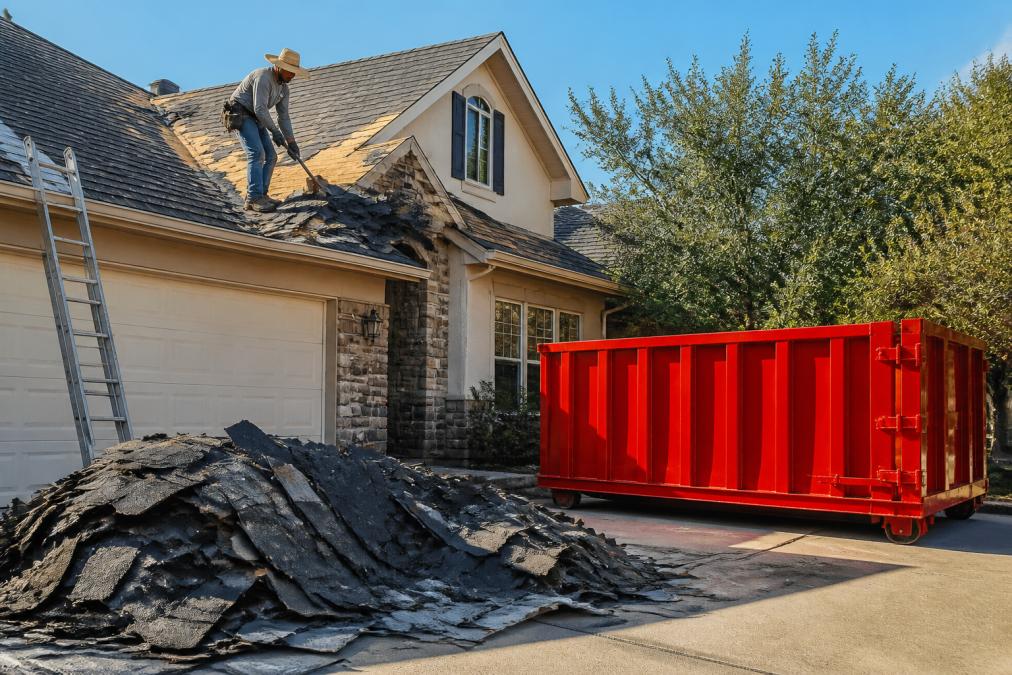
The 15-yard dumpster handles general roofing debris and is the only appropriate size for large amounts of heavy materials. If your tearoff involves concrete, dirt, brick, or rock, whether from foundation work, landscaping debris, or demolition, the 15-yard dumpster is designed for this load.
A 15-yard dumpster works well for single-layer roof tearoffs on small to medium homes. The footprint is compact enough to fit most residential driveways without requiring permits in many cases, though local regulations vary. Austex Dumpsters can advise on whether your project needs a permit.
One significant advantage: when a 15-yard dumpster is filled exclusively with clean concrete, dirt, brick, or rock, with no trash or other contamination mixed in, customers often receive a break on tonnage. This benefit applies only to the 15-yard size and only when materials are separated properly. Mixing contaminated materials eliminates this advantage, so sorting your debris during the tearoff pays off.
Never place concrete, dirt, brick, or rock in a 20-, 25-, or 30-yard dumpster. These heavy materials belong in a 15-yard dumpster only. Placing them in the wrong size dumpster can result in overage fees, refusal of pickup, or damage to the equipment.
20-Yard, 25-Yard, and 30-Yard Dumpsters: Larger Projects
The 20-yard dumpster is the most common choice for standard residential roof replacements. It accommodates typical single and two-layer tearoffs on homes up to 2,500 square feet. The 20-yard size balances capacity with affordability and fits most residential properties.
For larger homes or multi-layer tearoffs, the 25-yard dumpster provides additional capacity. A 25-yard dumpster handles three-layer tearoffs or projects where you’re also removing gutters, flashing, and fascia boards. This size works for homes over 2,500 square feet or when your roofing contractor is also removing and replacing soffit and other exterior elements.
The 30-yard dumpster is designed for commercial roofing projects, multi-unit residential buildings, or situations where you’re combining roofing debris with other construction waste. Contractors managing large commercial properties or multiple residential units typically choose the 30-yard option.
All three sizes, 20-yard, 25-yard, and 30-yard, are suitable only for standard roofing debris, not for heavy materials like concrete, dirt, brick, or rock. If your project includes these materials, choose the 15-yard dumpster instead.
How to Estimate Shingle Waste for Your Roof
Calculating roofing debris accurately prevents undersizing your dumpster. Most homeowners and contractors underestimate the volume until the tearoff begins.
Roofing squares and debris volume:
A roofing square equals 100 square feet of roof surface. Each square of asphalt shingles weighs approximately 200-250 pounds when installed (peer-reviewed research). During a tearoff, you’re removing shingles, felt underlayment, nails, and flashing, all of which add weight and volume.
Here’s a practical calculation method:
- Measure your roof’s total square footage (or ask your roofer)
- Divide by 100 to get roofing squares
- Multiply by 400-500 pounds per square for the total debris weight (accounting for underlayment, fasteners, and waste)
Example: A 2,000-square-foot roof equals 20 roofing squares. Multiply 20 by 450 pounds (average) = 9,000 pounds, or approximately 4.5 tons of debris.
Most single-layer residential tearoffs generate 3-6 tons. Multi-layer tearoffs (where old roofing remains and new layers are added over time) can reach 8-12 tons or more. The number of existing layers directly impacts your debris volume.
A practical rule: expect 400-500 pounds of debris per roofing square for a single-layer tearoff. For multi-layer tearoffs, add 200-300 pounds per additional layer.
This estimate helps you choose between a 20-yard (suitable for 3-6 tons) and a 25-yard (suitable for 6-10 tons) dumpster. If you’re uncertain, Austex Dumpsters offers expert guidance on sizing, call for a quick quote based on your roof dimensions and number of layers.
Roofing Debris Disposal Regulations and Restrictions
Local regulations govern what can and cannot go into landfills, and how roofing debris must be handled. Understanding these rules prevents violations and potential fines.
Most jurisdictions classify asphalt shingles as construction and demolition waste. This material is generally accepted at C&D facilities, but some regions have specific rules about mixed loads. Shingles contaminated with nails, tar, or other materials may require separation before disposal.
Some areas encourage or require shingle recycling. Asphalt shingles can be recycled into road base, roofing felt, or other products. If your area has a shingle recycling program, your disposal company may direct your load to a recycling facility rather than a landfill. Austex Dumpsters stays current with local disposal regulations and routes your debris appropriately.
Certain materials are prohibited from standard dumpsters and require special handling:
- Hazardous materials (asbestos, lead paint, chemical sealants)
- Treated wood or pressure-treated lumber
- Electrical wiring or metal components beyond standard flashing
If your roof was installed before 1980, have it tested for asbestos before tearoff begins (the EPA). Asbestos-containing materials require licensed disposal and cannot go into standard construction waste dumpsters. This testing is essential, it’s not optional.
Fill Out Form to Request Dumpster Rental →
Driveway protection is often required by local ordinances or homeowners’ associations. A protective mat or plywood prevents damage to asphalt or concrete.
What Can Go in Your Roofing Dumpster
Roofing dumpsters accept many materials generated during a typical tearoff. Understanding what’s permitted prevents delays and unexpected refusals at the disposal facility.
Materials that are always acceptable:
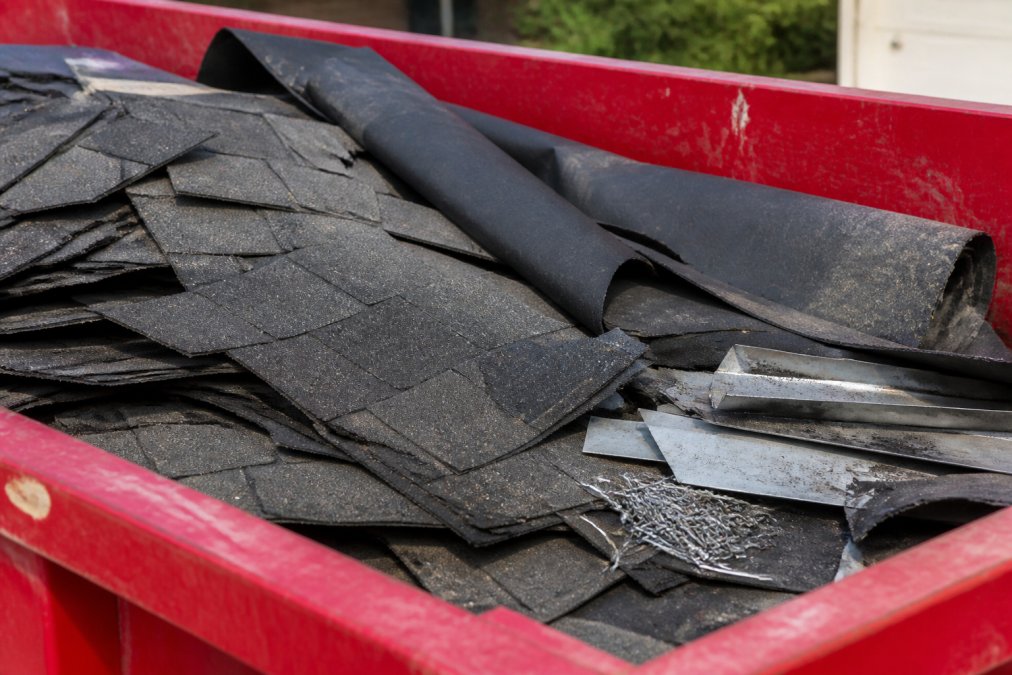
- Asphalt or composition shingles
- Felt or synthetic underlayment
- Metal flashing and trim
- Gutters and downspouts
- Roof decking (plywood or OSB)
- Nails, screws, and fasteners
- Tar paper and roofing cement residue
Materials that require special handling or may be prohibited:
- Concrete, dirt, brick, or rock (15-yard dumpster only)
- Treated or pressure-treated wood (check local regulations)
- Electrical wiring or conduit
- Insulation materials (some types require special disposal)
- Hazardous materials (asbestos, lead paint, chemical treatments)
Most roofing projects generate only materials in the “always acceptable” category. The exception is when you’re also removing concrete pads, brick chimneys, or landscaping debris, these heavy materials must go in a 15-yard dumpster, not in a 20-, 25-, or 30-yard dumpster.
When in doubt about a specific material, contact Austex Dumpsters before your project starts. Clarifying what’s acceptable upfront prevents surprises when the disposal facility inspects your load.
Avoiding Overage Charges and Hidden Fees
Overage charges are the most common complaint about dumpster rentals. Understanding how fees work prevents unexpected bills after your project ends.
Most dumpster rental companies quote a flat rate for a specific size and weight allowance. This rate typically includes delivery, pickup, and disposal of a certain tonnage. If your load exceeds the included tonnage, overage fees apply, often calculated per ton.
Here’s where sizing matters: undersizing your dumpster almost guarantees overage charges. A 20-yard dumpster quoted at a certain price might include 4 tons of debris. If your roofing project generates 5.5 tons, you’ll pay overage fees for the extra 1.5 tons.
The solution is accurate sizing upfront. Use the roofing square calculation method described earlier to estimate your debris weight. When in doubt, choose the larger size, the difference in rental cost is usually less than the overage fees you’d pay for exceeding weight limits.
Austex Dumpsters provides transparent pricing with no hidden fees. When you receive a quote, it specifies the included tonnage and what happens if you exceed it. This clarity helps you budget accurately and avoid surprises.
Request a quote that includes the weight allowance in writing. Knowing your included tonnage upfront lets you plan your debris management and avoid overage charges entirely.
Other fees to clarify before renting:
- Delivery and pickup fees, Usually included in the quoted rate, but confirm this
- Permit fees, Your municipality may require a permit for dumpster placement; confirm who pays
- Driveway protection, Protection mats or plywood prevent damage; factor this into your budget
- Extended rental period, If your project takes longer than the standard rental period, daily fees apply
- Hazardous material disposal, If your load contains prohibited materials, refusal fees may apply
Asking these questions before signing a contract prevents bill shock when your rental ends.
Getting Same-Day Delivery and Reliable Pickup Service
Timing is critical for roofing projects. Weather windows are narrow, and contractor schedules are tight. Same-day dumpster delivery can mean the difference between staying on schedule and losing days to project delays.
Austex Dumpsters offers same-day delivery when available. This service is most reliable when you call early in the day and confirm availability before committing to your project timeline. Same-day delivery depends on current demand, your location within the service area, and whether a dumpster of your requested size is available.
How to secure same-day delivery:
- Call Austex Dumpsters in the morning to check availability
- Confirm your address and confirm that dumpster placement won’t require a permit
- Provide accurate dimensions of where the dumpster will sit
- Be ready for delivery within the estimated time window (usually 4-6 hours)
Reliable pickup is equally important. Once your project is complete, you don’t want a dumpster sitting in your driveway for days, blocking your property and accumulating additional fees. Austex Dumpsters schedules pickups promptly after you call to indicate your load is ready.
For contractors managing multiple projects, recurring service is available. Rather than calling for each project, you can arrange standing pickup schedules or priority service for back-to-back jobs. This consistency keeps projects moving and simplifies billing.
Choosing the right dumpster rental for roofing shingles requires understanding your debris volume, local regulations, and what materials are acceptable. The difference between sizing correctly and undersizing is the difference between a smooth project and unexpected overage fees. Austex Dumpsters provides expert guidance on sizing your rental, transparent pricing with no hidden fees, and same-day delivery when you need it. Get started with Austex Dumpsters and keep your roofing project on schedule with reliable waste removal that fits your budget.
Frequently Asked Questions
What size dumpster do I need for roofing shingles?
The right dumpster size depends on your roof’s square footage and the number of layers being removed. A typical single-layer roof removal fits in a 20-yard dumpster, while multi-layer roofs often need a 25-yard or 30-yard dumpster. For heavy materials like concrete, dirt, brick, or rock, use a 15-yard dumpster. Austex Dumpsters provides expert guidance to match your project size, helping you avoid overage charges and unnecessary costs.
How do I estimate shingle waste for my roofing project?
Calculate your roof size in squares (one square equals 100 square feet). Multiply your roof’s total square footage by 1.5 to 2 pounds per square foot to estimate weight. A typical asphalt shingle tearoff weighs 2 to 3 tons per 1,000 square feet. If your roof has multiple layers or includes heavy materials, weight increases significantly. Austex Dumpsters can help you determine the exact dumpster size needed based on these calculations.
Are there weight limits for roofing debris in dumpsters?
Yes, each dumpster size has a weight limit included in your rental. Exceeding the limit triggers overage charges. Asphalt shingles and felt underlayment are relatively light, but when combined with flashing, gutters, and other materials, weight adds up quickly. Austex Dumpsters provides transparent pricing and helps you understand weight allowances upfront so you can avoid surprise fees.
Can I get same-day dumpster delivery for my roofing project?
Same-day delivery is available when possible, depending on your location and current demand. Austex Dumpsters prioritizes quick turnaround to keep your project on schedule. Contact Austex directly with your project date and location to confirm same-day availability. Reliable pickup service ensures your dumpster is removed promptly once your roofing work is complete, preventing extended rental charges.
What roofing debris disposal regulations apply to my project?
Roofing debris disposal is regulated at the local level. Most jurisdictions require proper sorting of materials, asphalt shingles often go to landfills or recycling facilities, while hazardous materials like lead-based paint (on older roofs) require special handling. Austex Dumpsters ensures compliant disposal by directing materials to appropriate facilities. Check with your local waste management authority for specific regulations in your area.
This article was written using GrandRanker