
Table of Contents
- Reliable Construction Debris Removal Services: What to Look For
- Dumpster Rental vs. Full-Service Hauling: Which Fits Your Jobsite?
- Dumpster Size Guide for Contractors: Matching Volume to Container
- Heavy Material Disposal Requirements: Concrete, Dirt, and Brick
- Construction Site Cleanup Best Practices for Safety and Efficiency
- How Construction Waste Disposal Works: A Step-by-Step Process
- Pricing Factors for Debris Removal and How to Avoid Hidden Fees
- Conclusion: Book Reliable Debris Removal and Keep Your Project Moving
- Frequently Asked Questions
Last Updated: September 8, 2026
Construction projects generate debris that can stall a schedule within days. A reliable construction debris removal services provider does more than drop off a container; they keep your jobsite safe, compliant, and moving forward. At Austex Dumpsters, we have helped contractors and homeowners across Austin manage everything from small remodels to full demolition tear-offs.
Reliable construction debris removal services start with the right container, the right pickup window, and a partner who understands your waste stream. Construction waste, demolition debris, drywall disposal, lumber hauling, and roofing materials each carry different handling rules. Below, we break down what separates a dependable provider from one that leaves you waiting on a pickup that never comes.
Reliable Construction Debris Removal Services: What to Look For
The most reliable debris removal services combine on-time delivery, transparent scheduling, and clear rules about what can go in each container. A provider that cannot tell you upfront how they handle concrete removal or hazardous materials is a liability on any jobsite.
Key markers of a dependable partner include same-day service when available, a licensed and insured operation, and straightforward communication about disposal fees and load limits. Ask how they handle landfill diversion and recycling. A provider who can document where your debris ends up adds real value to your project management.
Before you book, ask the provider to walk through their debris management plan for your specific project type. A contractor who asks about your materials before recommending a container size is one who understands compliance and site safety.
Dumpster Rental vs. Full-Service Hauling: Which Fits Your Jobsite?
For most construction and renovation projects, dumpster rental is the more practical choice because it keeps a container on site for the full duration of the work. Full-service hauling works better when the debris is already staged and you need a crew to load it.
Renting a roll-off container lets your crew dispose of bulk waste continuously rather than pausing work to wait for a pickup. Full-service hauling suits one-day cleanouts or sites where your team cannot handle the loading. Contractors handling recurring cleanouts typically prefer dumpster rental because it scales across multiple project phases.
| Option | Best For | Key Advantage | Key Limitation |
|---|---|---|---|
| Dumpster Rental | Ongoing construction, remodels, tear-offs | Container stays on site; crew loads as they work | Requires space for the container |
| Full-Service Hauling | One-day cleanouts, staged debris | Crew handles all loading and removal | Debris must be ready at pickup time |
Dumpster Size Guide for Contractors: Matching Volume to Container
Choosing the wrong container size is the most common cause of project delays. Rent too small and you will need a second dumpster mid-project. Rent too large and you pay for unused space. Austex Dumpsters offers roll-off dumpsters in 15-yard, 20-yard, 25-yard, and 30-yard sizes; the right fit depends on the scope of your work.
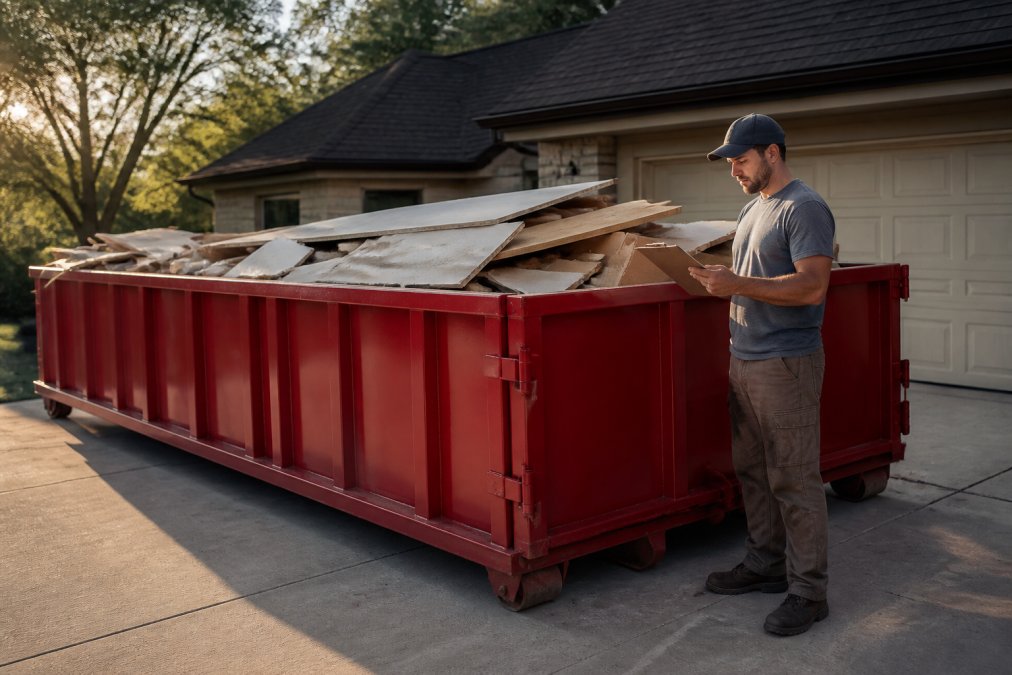
General guidance for matching volume to container is straightforward. A 15-yard unit handles smaller remodels and cleanouts (the EPA). For large demolition and new construction, the 25-yard and 30-yard sizes provide the capacity your crew needs without constant haul-away interruptions.
15-Yard vs. 20-Yard: Residential Remodels and Small Tear-Offs
Residential remodels and small tear-offs typically generate between 15 and 20 cubic yards of debris (the CDC). A 15-yard dumpster handles a single-room renovation, a garage cleanout, or a small deck removal.
25-Yard vs. 30-Yard: Large Demolition and New Construction
Large demolition projects and new construction generate debris faster than most crews expect. A 25-yard dumpster suits whole-home renovations, large additions, and commercial build-outs. The 30-yard container is the workhorse for full structural demolitions where concrete, lumber, and mixed waste fill containers rapidly.
Heavy Material Disposal Requirements: Concrete, Dirt, and Brick
Heavy materials require specific handling. Large amounts of concrete, dirt, brick, or rock must go in a 15-yard dumpster, never in a larger container (osha.gov). The weight of these materials makes them unsafe in bigger units, and exceeding weight limits creates liability for both the rental company and the jobsite.
Austex Dumpsters offers a specialized 15-yard dumpster for heavy material disposal requirements. When a 15-yard container is filled with clean concrete, dirt, brick, or rock with no trash or other contamination, customers may receive a break on tonnage. That incentive rewards proper sorting and keeps contaminated loads out of the waste stream.
Never mix heavy materials like concrete or brick with general construction waste in a larger dumpster. Contaminated loads can trigger overage fees and create unsafe conditions during transport. Keep clean loads clean to qualify for tonnage breaks.
Construction Site Cleanup Best Practices for Safety and Efficiency
A clean jobsite is a safe jobsite, but the stakes go beyond trip hazards. Post-demolition site safety protocols are a critical risk-management step that protects your crew, your liability exposure, and your project timeline. A reliable debris removal partner understands their role is integral to your site safety plan, not just a hauling service.
The Liability Chain: Why Proper Disposal is a Legal Safeguard
When you sign a contract for a construction or demolition project, you inherit the liability for the waste generated on that site. If a hauler disposes of your debris illegally, such as dumping in an unpermitted location or mishandling asbestos-containing materials, the responsibility often traces back to the waste generator, which is you.
To mitigate this risk, a reliable service provider should be able to provide proof of:
- Worker’s Compensation Insurance: Protects you from liability if a hauler’s employee is injured on your property.
- General Liability Insurance: Covers damage to your property or injuries to third parties caused by the hauling operation.
- Valid Permits and Licenses: Confirms the hauler is authorized to operate and dispose of waste in your jurisdiction.
Before any container is dropped, request a certificate of insurance. A reputable company will provide this documentation without hesitation. This is a non-negotiable step in protecting your business from a subcontractor’s negligence.
Post-Demolition Safety Protocols: A Step-by-Step Approach
The period immediately following a demolition or major tear-off is the most hazardous. Effective debris removal is the primary tool for controlling these hazards. Implement these protocols:
Fill Out Form to Request Dumpster Rental →
- Immediate Hazard Sweep: Before any large debris is moved, conduct a walkthrough to identify and remove immediate dangers: exposed nails, broken glass, sharp metal edges, and unstable structural elements.
- Designated Debris Staging Zone: Establish a specific, level area away from active work zones and pedestrian walkways for the roll-off container. This keeps the container accessible for loading while preventing it from becoming an obstacle.
- Segregation at the Source: Instruct crews to separate materials as they work. Pile clean concrete, dirt, brick, and rock separately from lumber, drywall, and general trash. This practice is essential for safety and cost-efficiency, as it allows for proper disposal and potential tonnage breaks.
- Progressive Fill Management: Assign a competent person to monitor the container’s fill level. Loading must stop when debris is level with the top of the container. Overfilled dumpsters are a severe safety hazard during transport and a liability issue for the site.
- Daily Site Walkdown: At the end of each workday, perform a final sweep of the area around the container. Blowing debris like insulation or plastic sheeting should be picked up immediately to prevent it from becoming a slip hazard or being tracked off-site.
The Role of a Reliable Partner in Site Safety
A dependable debris removal service is an extension of your safety team. They should be proactive about load limits, scheduling pickups before the container is overfull, and handling materials that require special consideration. When a provider asks about your project’s materials and waste stream, they are performing due diligence to ensure the safety and compliance of your site.
By integrating debris removal into your site safety plan, you transform a routine cleanup task into a critical control measure that protects your workers, your bottom line, and your reputation.
How Construction Waste Disposal Works: A Step-by-Step Process
Understanding the disposal process helps you plan and avoid surprises. For construction and demolition (C&D) debris, the journey from your jobsite to its final destination is more complex than a simple trip to the landfill. A reliable provider manages a multi-stage process that prioritizes safety, compliance, and environmental responsibility.
The Modern C&D Waste Stream: Beyond the Landfill
The construction industry is a major generator of waste, and the push for sustainable building practices has transformed how debris is handled. Most professional providers now operate as waste managers, not just transporters. They sort and divert materials to recycling facilities, aiming to keep as much waste as possible out of landfills.
The 6-Step Disposal Process
- Request a Quote and Waste Stream Analysis: The process begins with a detailed consultation. A reliable provider will not just ask for a dumpster size; they will ask about your project type, materials, and timeline. This analysis determines the correct container and the most appropriate disposal pathway for your waste stream.
- Container Delivery and Site Placement: The provider schedules a delivery window and places the correct container on your designated staging area. They will confirm the placement is safe, accessible, and compliant with any local permitting requirements.
- On-Site Loading and Segregation: Your crew loads the container. For cost efficiency and environmental compliance, segregation is key. Clean loads of concrete, dirt, brick, or rock are kept separate from mixed debris. This practice is critical because it allows for the material to be recycled or repurposed, rather than sent to a landfill.
- Pickup and Transport to a Sorting Facility: Once the container is full or the project is complete, the provider picks it up. The debris is then transported to a permitted transfer station or material recovery facility (MRF), not directly to a landfill. At the MRF, the load is weighed and inspected.
- Sorting, Recycling, and Diversion: At the facility, the debris is sorted. Metals are extracted for scrap recycling. Clean concrete, brick, and rock are crushed and recycled as aggregate for road base or new construction. Wood is chipped for mulch or biomass fuel. Gypsum from drywall can be recycled into new drywall or soil amendment. The goal is to maximize the diversion rate, the percentage of waste kept out of the landfill.
- Final Disposal and Documentation: Only the non-recyclable, non-recoverable fraction of the waste is sent to a landfill. A reliable provider will offer transparent documentation of this process. This documentation is not just for your records; it is often essential for project compliance and can contribute to points under the Leadership in Energy and Environmental Design (LEED) certification program.
The LEED Advantage: Turning Waste Management into a Project Asset
For contractors working on commercial or institutional projects, the disposal process is a direct pathway to earning LEED points. LEED v4.1, the most widely used green building rating system, rewards projects that divert a significant percentage of their construction and demolition waste from landfills.
To earn these points, you need a partner who can provide detailed documentation of waste diversion, including weight tickets from the recycling facility and a clear accounting of how each material stream was processed. By choosing a provider with established relationships with local recyclers, you can turn your debris removal process into a strategic advantage that helps you meet sustainability goals.
The Bottom Line: Process is a Promise
The step-by-step process is a promise of reliability. It ensures your debris is handled legally, safely, and responsibly. When a provider can walk you through this process and explain where your waste is going, they demonstrate a professionalism that protects your project from liability and positions you as a leader in sustainable construction.
Pricing Factors for Debris Removal and How to Avoid Hidden Fees
Pricing for construction debris removal depends on several variables: container size, debris type, weight, rental duration, and delivery distance. Transparent providers quote based on these factors and explain their disposal fees before you commit.
To avoid hidden fees, ask three questions upfront. First, what is included in the quoted rate? Second, how are overage charges calculated if you exceed the weight limit? Third, what materials are excluded from the container? A provider who answers these clearly is one you can trust. Austex Dumpsters offers straightforward pricing with expert guidance on sizing to prevent overage fees and delays.
Conclusion: Book Reliable Debris Removal and Keep Your Project Moving
Reliable construction debris removal services keep your project on schedule by pairing the right container size with dependable delivery and pickup. The cost of a stalled jobsite far exceeds the cost of proper waste management, and choosing a provider who understands heavy material requirements, site safety, and environmental responsibility protects your bottom line.
Austex Dumpsters serves homeowners, businesses, and contractors across Austin with same-day roll-off dumpster rental delivery when available, expert guidance on sizing, and efficient waste removal for various project types. Request a dumpster rental today and keep your project moving.
Frequently Asked Questions
How much does it cost to remove construction debris?
Pricing for construction debris removal depends on several factors: the dumpster size you rent, the weight of the material, your location, and how long you keep the container. Full-service hauling companies charge based on volume, while dumpster rentals charge a flat fee plus potential overage fees if you exceed the weight limit. For an accurate estimate, contact Austex Dumpsters directly. Their team can recommend the right size and provide straightforward pricing for your specific project.
What types of materials are prohibited in construction dumpsters?
Most construction dumpster services prohibit hazardous materials like asbestos, paint, solvents, and chemicals. Heavy materials such as concrete, dirt, brick, and rock also have specific rules. Austex Dumpsters requires large amounts of these heavy materials to go in a 15-yard dumpster only; they cannot be placed in 20-, 25-, or 30-yard containers. This prevents overloading and keeps hauling safe and legal. Ask your provider for a full list of prohibited items before you start loading.
How do I determine the right dumpster size for my construction site?
A simple rule: estimate the volume of debris in cubic yards. A 15-yard dumpster suits smaller remodels, heavy materials like concrete, or roofing tear-offs. For large demolition projects or new construction, a 25- or 30-yard dumpster provides the capacity you need. For projects with mixed debris, Austex Dumpsters offers expert guidance to help you choose the right size and avoid needing a second container.
What is the process for scheduling same-day dumpster delivery?
Same-day delivery starts with a phone call or online quote request. Confirm the dumpster size you need, the delivery address, and the drop-off location on your property. The provider checks availability and schedules your delivery, often within hours. Austex Dumpsters offers same-day delivery when available, which keeps your crew working without downtime. Have a clear, accessible spot ready for the roll-off container before the truck arrives.
Why is it important to separate heavy materials like concrete and brick?
Separating heavy materials protects the dumpster and the truck that hauls it. Concrete, brick, dirt, and rock add significant weight, which can exceed legal road limits if mixed with general trash in a large container. Austex Dumpsters requires these materials to be loaded into a 15-yard dumpster. When that dumpster contains only clean heavy material with no trash, customers may receive a break on tonnage. Clean separation also simplifies recycling.