
Table of Contents
- Dumpster Permit Requirements: Public Right-of-Way vs. Private Property
- How to Apply for a Dumpster Permit in Austin
- HOA and Neighborhood Association Restrictions
- Prohibited Items in Roll-Off Dumpsters and Hazardous Waste Rules
- Heavy Material Disposal Guidelines: Concrete, Dirt, Brick, and Rock
- Placement, Noise Ordinances, and Collection Schedule Rules
- Liability and Insurance for Contractors and Property Managers
- Conclusion
- Frequently Asked Questions
Last Updated: September 23, 2026
Dumpster Permit Requirements: Public Right-of-Way vs. Private Property
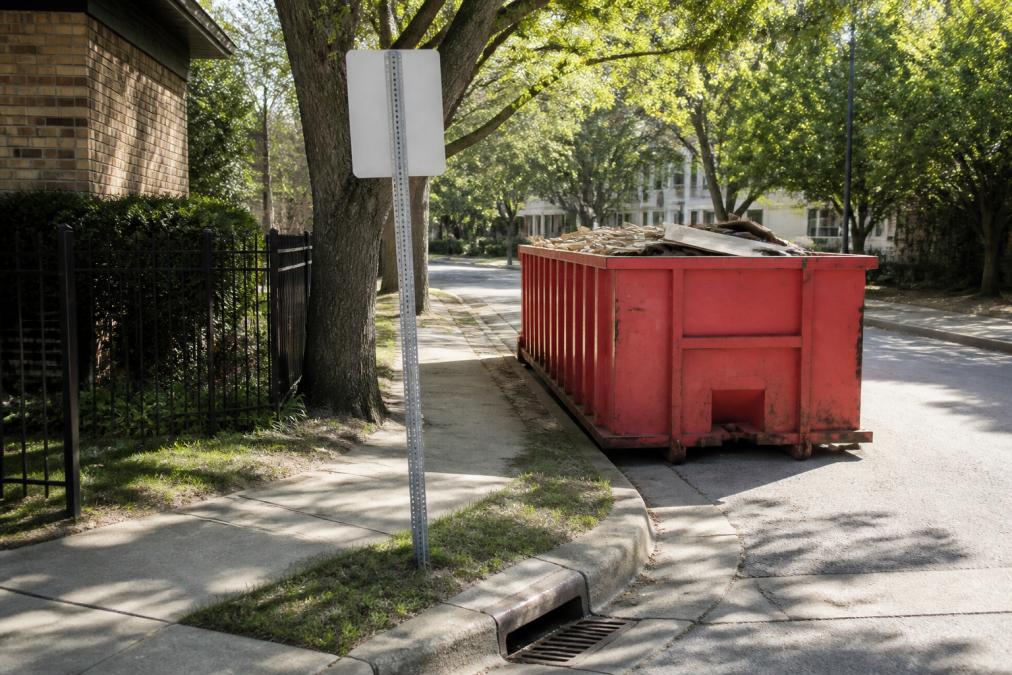
Dumpster rental restrictions in Austin come down to one question: where will the container sit? A roll-off dumpster on private property needs no city permit. A temporary waste container on a public street, alley, or sidewalk does.
Here’s the short version:
- Private driveway or yard: no permit needed
- Public street or right-of-way: permit required before delivery
- Apartment or HOA community: separate approval required
When You Need a Right-of-Way Permit in Austin
You need a right-of-way permit any time a dumpster sits on public property: streets, alleys, sidewalks, and the strip between the curb and the property line.
A few common situations that trigger the permit:
- A narrow driveway that can’t fit the container
- A home with no off-street parking
- A commercial job where the only staging space is the street
- Alley placement for a cleanout or demolition project
Placement on Private Property: No Permit Needed
Placement on private property needs no permit. Your driveway, side yard, or a gravel pad on your own land works in most cases.
Walk your placement spot before you book. Check for low branches, overhead wires, and a clear path from the street. Sending a photo of the spot to your hauler before delivery prevents most failed drop-offs.
How to Apply for a Dumpster Permit in Austin
The permit process is straightforward if you prepare the paperwork first. Most delays come from incomplete site plans, not the review.

Step-by-Step Permit Application Process
- Confirm your placement is actually in the right-of-way by checking your property survey or the city’s online parcel viewer
- Create an account on the city’s permitting portal and locate the right-of-way encroachment permit application
- Draw a site plan showing the container location, dimensions, and traffic flow
- List your hauler’s name, contact information, and certificate of insurance
- Submit the application and pay the required fee, the city publishes its current fee schedule on the Development Services website, and fees vary by encroachment type and duration
- Post the approved permit at the site in a visible location
- Schedule delivery only after approval is confirmed in writing
Review times vary by workload and application type. Residential encroachment permits often move faster than commercial ones, but build a buffer into your schedule rather than assuming same-day approval.
What to Include in Your Site Plan
A site plan is a simple drawing, not an engineering document. It shows reviewers where the container will sit and how traffic moves around it. Include:
- Property lines and the right-of-way boundary
- The exact container footprint and dimensions
- Distance from intersections, driveways, and fire hydrants
- Pedestrian detour routes if a sidewalk is blocked
- Reflective barricades or cones if required
- Overhead clearance notes if tree limbs or wires are nearby
Zone-Based Restrictions You Should Check Before You File
Not every right-of-way is treated the same. Certain areas carry additional review requirements or outright restrictions on container placement:
- Historic districts: Properties in designated historic districts may face additional design review or placement restrictions to protect streetscapes and mature trees. Check whether your address falls within a historic overlay before planning placement.
- Downtown and high-density corridors: Street-use permits in dense commercial zones often require traffic control plans, pedestrian detours, and proof of barricades, with longer review timelines.
- Residential permit parking areas: Some neighborhoods restrict non-residential vehicles and containers from parking lanes during certain hours. A dumpster in a permitted parking space may need additional sign-off.
- Fire lanes and emergency access routes: No permit will be issued for a container that blocks a fire lane, hydrant access, or an established emergency vehicle path.
Skipping the site plan or submitting a vague sketch is the most common reason applications get sent back. Each round of revisions can add days to your timeline. Confirm your zone classification before you file to avoid a second round of review.
HOA and Neighborhood Association Restrictions
HOA rules often matter more than city rules. A city permit does not override a private community’s guidelines, and many HOAs restrict dumpster placement, duration, and appearance.
Common HOA requirements include:
- Approval before delivery, not after
- Placement in a driveway or screened area, never the street
- Maximum rental duration, often 7 to 14 days
- Protective boards under the container to prevent staining
- A named point of contact for the property
- Proof of hauler insurance or a signed service agreement
How to Get HOA Approval for Your Dumpster: A Step-by-Step Checklist
Step 1: Pull your community’s governing documents. Find the section on temporary structures, nuisance rules, or architectural review, the restriction you need to address is usually listed there.
Sample Request Language You Can Adapt
Dear [Board / Architectural Committee],
I am requesting approval to place a [size]-yard roll-off dumpster at [address] from [drop-off date] to [pickup date]. The container will sit on my driveway at [specific location], with plywood underneath to protect the surface. Pickup is scheduled with [hauler name], and I have attached their service agreement. I will keep the container within the approved dates and ensure the area is clear after pickup.
Thank you for your consideration.
What to Do If Your HOA Says No
A denial is not always final. Common paths forward:
- Ask for the specific rule or bylaw cited, then address that concern in a revised request
- Offer a shorter rental window or a different placement spot
- Request a variance or exception if your community has a process for one
- Escalate to the property management company if the board’s decision conflicts with the governing documents
Get HOA approval in writing before you schedule delivery. A verbal okay from a board member will not help you if a neighbor files a complaint on day two. A one-page written request with dates, placement details, and hauler information clears most boards on the first pass.
Prohibited Items in Roll-Off Dumpsters and Hazardous Waste Rules
Some items can never go in a roll-off dumpster, no matter the size. These rules protect landfill workers, your neighborhood, and you. Prohibited items include:
- Paint, solvents, and motor oil
- Batteries of any kind
- Tires
- Refrigerants and appliances with coolant
- Electronics and televisions
- Medical waste
- Asbestos and other regulated building materials
Heavy Material Disposal Guidelines: Concrete, Dirt, Brick, and Rock
Heavy material changes the whole plan. Concrete, dirt, brick, and rock weigh far more per cubic yard than household clutter, and that weight decides which container you can use. Weight limits exist because the truck, container, and load all have to move safely.
Here’s how to match material to container:
| Material Type | Container to Use | Why It Matters |
|---|---|---|
| Concrete, dirt, brick, rock | 15-yard only | Heavy loads need the smaller footprint |
| Mixed renovation debris | 15, 20, 25, or 30-yard | Weight stays manageable |
| Roofing shingles | 15, 20, 25, or 30-yard | Heavy but spread across the load |
| Household cleanout items | 15, 20, 25, or 30-yard | Light material fills volume, not weight |
Fill heavy material first and level it as you go. Throwing concrete chunks on top of a soft load creates uneven weight that can damage the container and complicate pickup.
Placement, Noise Ordinances, and Collection Schedule Rules
Placement and timing rules exist for the same reason as permits: to keep the container safe and the neighborhood functional.
Driveway Protection and Weight Limits
A loaded container can crack concrete and leave rust stains. Put plywood or boards under the rails to spread the weight and protect the surface.
Noise Ordinance and Collection Hours
Delivery and pickup make noise, the truck, the hydraulic tilt, and the container sliding off the bed all generate sound that travels.
Leaving a loaded container on the street past your permitted window can trigger fines and a forced removal. Confirm your pickup date in writing when you book.
Liability and Insurance for Contractors and Property Managers
Contractors and property managers carry risks homeowners don’t. A container on a public street creates liability exposure, and the right coverage matters.
Ask these questions before you sign a service agreement:
- Does the hauler carry general liability insurance?
- Who is responsible if the container damages pavement or a vehicle?
- Does the permit need to list the contractor or the property owner?
- What happens if a third party is injured near the container?
Conclusion
Dumpster rental restrictions in Austin are manageable when you plan placement, permits, and material type before delivery day. The projects that stall are the ones that skip the paperwork or overload the wrong container.
Frequently Asked Questions
Do I need a permit to place a dumpster on the street in Austin?
Yes, if the dumpster will sit in the public right-of-way, such as a street, alley, or sidewalk, you need a right-of-way permit from the city. The application requires a site plan showing the dumpster’s location and dimensions. If you place the dumpster entirely on private property like a driveway or yard, no permit is required. Always confirm with the city before delivery to avoid fines or forced removal.
What items are prohibited in a roll-off dumpster?
Prohibited items in roll-off dumpsters include hazardous materials such as paint, solvents, motor oil, antifreeze, batteries, tires, and appliances containing refrigerants. Electronics, medical waste, and flammable liquids are also banned. These items require special disposal at a recycling drop-off center or household hazardous waste facility. Mixing them with regular debris can lead to extra fees, rejected loads, or environmental violations. Always ask your waste hauler for a complete list before you start loading.
How should I handle heavy debris like concrete or brick in a dumpster?
Large amounts of heavy material such as concrete, dirt, brick, or rock must go in a 15-yard dumpster. Never put these materials in a 20-, 25-, or 30-yard dumpster because the weight can damage the container or exceed hauling limits. Keep heavy debris separate from trash and other debris to avoid contamination. A clean load of concrete, dirt, brick, or rock may qualify for a tonnage break, so ask your rental provider about this benefit when you book.
How long can I keep a rented dumpster, and are there restrictions on collection hours?
If you need it longer, ask about extensions upfront to avoid daily fees. Collection and delivery must follow local noise ordinances, which usually restrict heavy truck activity to daytime hours on weekdays. In residential areas, some neighborhoods have additional quiet hours on weekends. Confirm the collection schedule with your hauler and notify neighbors if the dumpster will sit on the street.