
Table of Contents
- Step 1: Assess Your Project and Waste Type
- Step 2: Choose the Right Roll-Off Dumpster Size
- Step 3: Understand Dumpster Rental Weight Limits
- Step 4: Prepare Your Property for Dumpster Delivery
- Step 5: Schedule Delivery and Confirm Details
- Dumpster Rental for Concrete, Dirt, and Heavy Materials
- What You Can and Cannot Put in Your Rental Dumpster
- Avoiding Hidden Fees and Overage Charges
- Frequently Asked Questions
Last Updated: September 24, 2026
Step 1: Assess Your Project and Waste Type
The first step to rent a garbage dumpster is understanding exactly what you’re throwing away and how much of it you have. Different projects generate different types of waste, and some materials require special handling or specific dumpster sizes.
Start by walking through your space and identifying everything that needs to go. Are you clearing out a garage? Tearing off a roof? Demolishing a concrete patio? Hauling away landscaping debris? Each project type produces different waste volumes and material weights, which directly affects your dumpster choice.
Heavy materials like concrete, dirt, brick, and rock need careful consideration. These dense materials weigh significantly more than general household debris or construction scraps. If you’re dealing with large quantities of heavy material, you’ll need a properly sized dumpster to handle the load without running into weight limit issues later.
Before calling for a quote, take photos of your project area and make a quick list of what’s coming out. This helps you communicate clearly with Austex Dumpsters about your specific needs and ensures you get accurate sizing guidance.
Step 2: Choose the Right Roll-Off Dumpster Size
Choosing the right dumpster size is critical to avoiding extra trips, overage fees, and project delays. Austex Dumpsters offers four roll-off dumpster sizes, each designed for specific project types and waste volumes.
The 15-yard dumpster works well for general debris from smaller projects. However, if you’re dealing with large amounts of concrete, dirt, brick, or rock, the 15-yard is actually your best choice, not because it’s small, but because these heavy materials require a dedicated container to prevent weight complications.
For moderate renovation projects, roofing tearoffs, and mid-sized cleanouts, a 20-yard or 25-yard dumpster typically handles the job without excess capacity. The 30-yard dumpster suits major construction sites, large demolition projects, and commercial cleanouts where volume is the limiting factor rather than weight.
Size Comparison and Recommended Uses
| Dumpster Size | Best For | Typical Projects |
|---|---|---|
| 15-yard | Heavy materials; general small projects | Concrete, dirt, brick removal; garage cleanouts; small renovations |
| 20-yard | Moderate renovations; roofing projects | Kitchen remodels; roof tearoffs; deck removal; office cleanouts |
| 25-yard | Larger renovations; mixed debris | Major home renovations; commercial cleanouts; demolition prep |
| 30-yard | Large construction sites; volume-heavy projects | Full-scale demolition; major construction; large landscaping removal |
The most common mistake homeowners make is underestimating volume. You think you need a 20-yard, fill it completely, then realize halfway through your project that you need a second dumpster. When sizing, add 20-30% to your estimate to account for the reality that debris takes up more space than you initially expect.
The right dumpster size depends on two factors: the type of material (especially if it’s heavy) and the total volume. When in doubt, go up one size, the extra cost is far less than renting a second dumpster mid-project.
Step 3: Understand Dumpster Rental Weight Limits
Every dumpster has a weight limit, and exceeding it triggers overage charges that can quickly add up. Understanding these limits before you start loading prevents expensive surprises at pickup time.
Weight limits vary based on the dumpster size and the type of material you’re disposing of. General debris, drywall, wood, insulation, carpet, weighs less than dense materials like concrete or dirt. A 15-yard dumpster filled with general construction waste might hold 3-4 tons comfortably, but the same dumpster filled with concrete could max out the weight limit much faster.
This is where material type matters most. If you’re hauling concrete, dirt, brick, or rock in significant quantities, a 15-yard dumpster is specifically designed to handle these heavy loads. These materials should not go in larger dumpsters because the weight concentration exceeds safe disposal limits for those containers.
When you rent from Austex Dumpsters, the team provides clear weight allowances upfront so you know your limits. Staying within those limits keeps your project on budget and avoids the frustration of having a dumpster picked up before you’ve finished loading it.
Exceeding weight limits doesn’t just cost extra, it can delay your project timeline. If a dumpster is overweight, the hauler may refuse to pick it up until you remove material. Plan your loading carefully and ask about weight limits when you schedule your rental.
Step 4: Prepare Your Property for Dumpster Delivery
Before your dumpster arrives, take time to prepare your property. Proper site preparation ensures smooth delivery, protects your property, and prevents delays that could push back your entire project schedule.
First, identify where the dumpster will sit. You need a flat, level surface, ideally a driveway or parking area, that can support the weight of a loaded container. Avoid soft ground, gravel, or areas with underground utilities. Mark out the space clearly so the delivery driver knows exactly where to position the dumpster.
Check for overhead obstacles: power lines, tree branches, roof overhangs, and gutters. Roll-off dumpsters are tall, and even a low-hanging branch can prevent proper placement or damage your property during delivery. Clear at least 2-3 feet of clearance above the planned spot.
If your dumpster is going in a driveway, move vehicles out of the way well before delivery time. You’ll need a clear path for the delivery truck, which is larger than a standard garbage truck. Some areas require permits for dumpster placement on public streets or in front yards, check local regulations and secure any necessary permits before scheduling delivery.
Fill Out Form to Request Dumpster Rental →
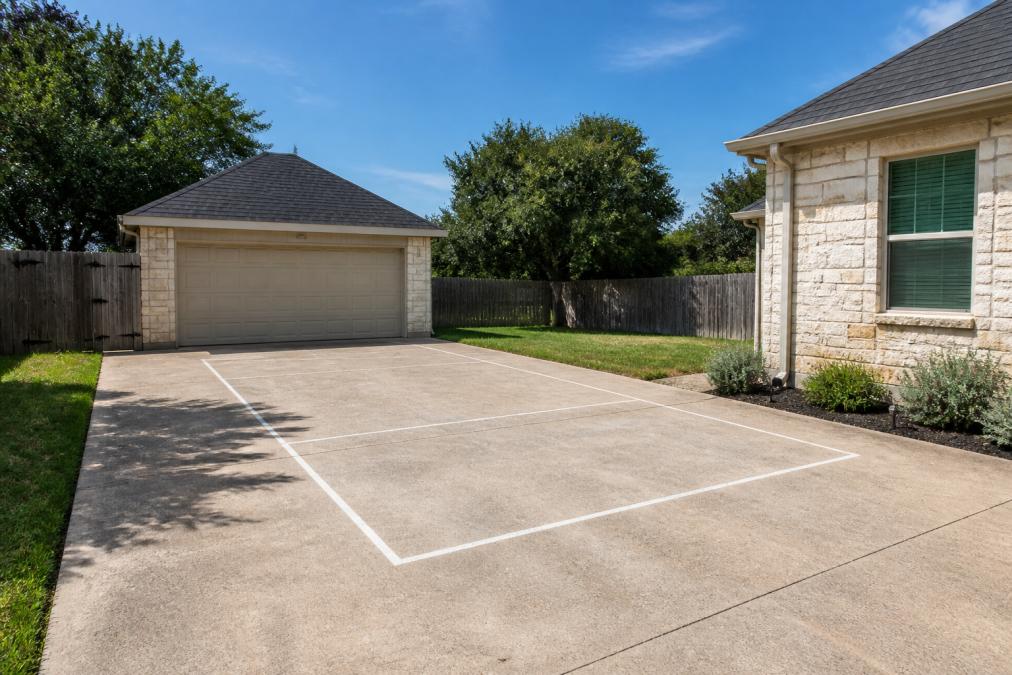
Remove any items that might be in the way: trash cans, decorative pots, garden hoses, parked cars, or outdoor furniture. The delivery crew needs a clean, unobstructed area to safely position the dumpster. Even small obstacles can cause delays or prevent proper placement.
Step 5: Schedule Delivery and Confirm Details
Once you’ve assessed your project, chosen your dumpster size, and prepared your property, it’s time to schedule your rental. Contact Austex Dumpsters with your project details: the dumpster size you need, your delivery address, and your preferred delivery date.
Austex Dumpsters offers same-day delivery when availability allows, which keeps your project moving without unnecessary delays. When you call, confirm the exact delivery time window and provide clear directions to your property. If you have specific placement instructions, driveway versus street, particular location on your lot, communicate those clearly to avoid confusion on delivery day.
Ask about the rental duration included with your dumpster. Most rentals include a standard timeframe, but your project timeline might require a longer rental period. Confirm pickup arrangements as well. Will you call when you’re done, or is pickup scheduled automatically after a certain number of days?
Clarify what materials are included and what’s prohibited. Some items like electronics, hazardous waste, or certain appliances require special handling. Knowing the rules upfront prevents the frustration of having material rejected at pickup time.
Write down your rental confirmation number, delivery date, time window, and dumpster size. Keep this information visible or easily accessible, you’ll need it when the delivery arrives and again when you schedule pickup.
Dumpster Rental for Concrete, Dirt, and Heavy Materials
If you’re managing a project involving concrete, dirt, brick, or rock removal, understanding how to handle these materials is essential. These heavy substances require specific dumpster sizing to stay within weight limits and avoid complications.
Heavy materials are best handled in a 15-yard dumpster. This size is engineered to accommodate the weight density of concrete, dirt, brick, and rock without exceeding safe load limits. Placing these materials in a 20-yard, 25-yard, or 30-yard dumpster creates weight concentration problems that trigger overage fees and potential pickup delays.
Here’s a practical example: a concrete patio removal might generate 8-10 cubic yards of broken concrete. That material weighs substantially more than the same volume of drywall or wood scraps. A 15-yard dumpster handles this load efficiently. Trying to fit it into a larger dumpster doesn’t give you extra capacity, it just means you’re paying for unused space while your heavy material hits weight limits.
When your heavy material is clean, concrete, dirt, brick, or rock with no trash or contamination mixed in, you may qualify for a tonnage break. This benefit recognizes that clean, recyclable heavy materials are more valuable in the waste stream than mixed demolition debris.
What You Can and Cannot Put in Your Rental Dumpster
Understanding what goes in your dumpster and what doesn’t prevents project delays and extra fees. Most standard construction and demolition waste is acceptable, but certain materials require special handling or are prohibited entirely.
Prohibited materials are prohibited because they require specialized handling. Trying to sneak them into a standard dumpster doesn’t save money, it creates liability, delays, and potential fines. Ask first, always.
Avoiding Hidden Fees and Overage Charges
Hidden fees frustrate customers and derail project budgets. Understanding the cost structure of your dumpster rental prevents surprises when the final bill arrives.
Frequently Asked Questions
What size dumpster do I need for a home cleanout?
The right size depends on how much debris you’re removing. A 15-yard dumpster works for small cleanouts and general household junk. A 20-yard handles moderate renovations, while 25-yard and 30-yard containers suit large-scale projects. When in doubt, discuss your project details with Austex Dumpsters, our team helps you avoid renting too small and needing a second haul, or paying for unused capacity.
Can I put concrete and heavy materials in any roll-off dumpster?
No. Large amounts of heavy materials like concrete, dirt, brick, and rock must go in a 15-yard dumpster specifically. These materials cannot be placed in 20-, 25-, or 30-yard containers. If your debris is clean concrete, dirt, brick, or rock with no trash mixed in, you may qualify for a tonnage break, so ask Austex Dumpsters about that benefit when you book.
How do I know what materials are prohibited in a rental dumpster?
Most rental dumpsters prohibit hazardous materials like paint, chemicals, batteries, propane tanks, and asbestos. Electronics, appliances with refrigerant, and certain metals may also be restricted. Always confirm the prohibited items list with Austex Dumpsters before loading. Putting banned materials in your dumpster can result in extra fees or your load being refused.
Is same-day dumpster delivery actually available?
Same-day delivery depends on current demand, your location, and what time you call. Austex Dumpsters offers same-day delivery when available, but scheduling as early as possible increases your chances. For time-sensitive projects, contact Austex directly to confirm availability rather than assuming same-day service will work for your specific date.