
Table of Contents
- Dumpster Rental vs. Junk Removal: Quick Comparison
- How Roll-Off Dumpster Rentals Work
- How Full-Service Junk Removal Works
- When to Choose a Dumpster Rental
- When to Choose Full-Service Junk Removal
- 15-Yard Dumpster for Heavy Debris and Weight Limits
- Key Differences in Cost, Permits, and Turnaround
- Frequently Asked Questions
Last Updated: September 27, 2026
Dumpster Rental vs. Junk Removal: Quick Comparison
Understanding dumpster rental vs junk removal shapes how your project unfolds. One puts you in control of the timeline and loading process. The other handles the heavy lifting but costs more per cubic yard. Understanding the real differences helps you avoid overpaying for services you don’t need or underpaying for convenience you do.
At Austex Dumpsters, we work with homeowners, contractors, and property managers across the region who face this exact decision. Some projects demand the flexibility of a roll-off dumpster. Others benefit from the hands-off approach of junk removal. Here’s how to tell which fits your situation.
| Service Type | Best For | Time Commitment | Physical Labor | Cost Model |
|---|---|---|---|---|
| Roll-Off Dumpster Rental | Multi-day projects, construction debris, high volume | You control timeline | You load the container | Per-rental, tonnage-based |
| Full-Service Junk Removal | One-time cleanouts, furniture/appliances, no labor | Quick turnaround | Crew handles everything | Volume-based or hourly |
How Roll-Off Dumpster Rentals Work
A roll-off dumpster is a large metal container delivered to your property on a flatbed truck. You load it at your own pace over several days, then we pick it up when you’re done. The container sits in your driveway or work area, accepting debris as your project generates it.
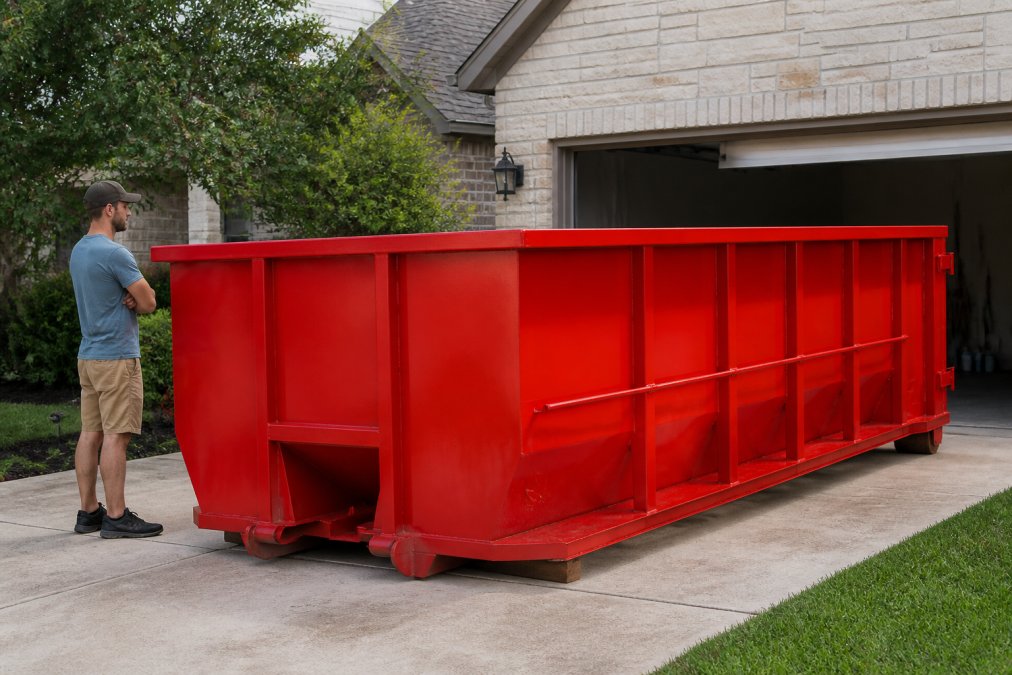
The rental period typically runs 3-7 days, though you can negotiate longer terms for larger projects. You fill the container yourself, which means no waiting for a crew to show up and no pressure to finish loading in a narrow time window. This flexibility makes dumpster rentals ideal for renovation work, demolition, landscaping cleanup, and construction debris removal.
Austex Dumpsters delivers the container to your location and picks it up when you call. Same-day delivery is available when scheduling allows, so you’re not waiting around to start your project. The container arrives empty and leaves full, straightforward and predictable.
If your project spans multiple days and you’re generating debris continuously, a dumpster rental keeps you productive without coordinating crew schedules. You load as you work, which prevents bottlenecks.
How Full-Service Junk Removal Works
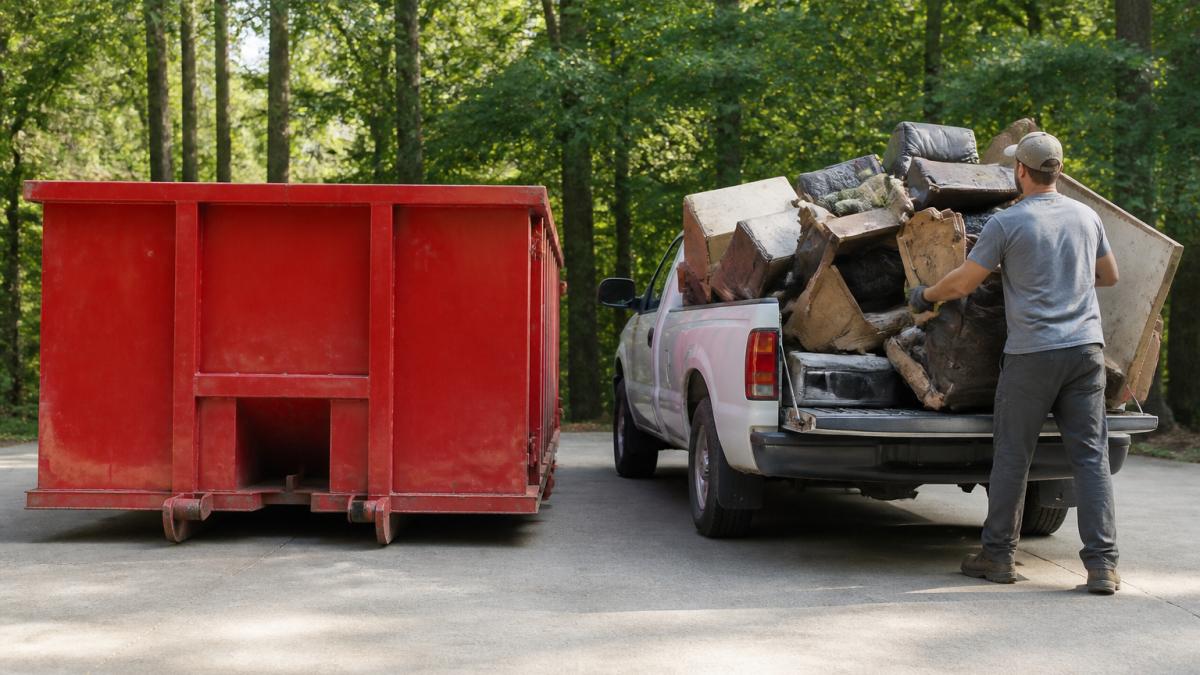
Full-service junk removal is fundamentally different. A crew arrives at your property, assesses what needs to go, loads everything into their truck, and hauls it away. You don’t touch a shovel. You don’t manage a timeline. You point, they load, they leave.
This works well for one-time cleanouts, clearing out a garage, removing old furniture after a move, hauling away appliances. The crew does all the physical work, which matters if you have mobility limitations, a small property, or simply don’t want to spend days loading a container.
They show up on your schedule, quote you based on the volume they see, and remove items same-day or within 24 hours in most cases. The trade-off: you’re paying for labor, not just disposal. Crews cost more per cubic yard than dumpster rentals because you’re buying their time and expertise.
Full-service removal works poorly for ongoing debris. If your project generates waste over several days, you’d need multiple pickups, which multiplies labor costs. A dumpster rental is far cheaper in this scenario.
When to Choose a Dumpster Rental
Pick a dumpster rental when you control the project timeline and can load debris yourself. These situations favor rental:
Renovation and remodeling projects. You’re removing old flooring, cabinets, drywall, or fixtures over days or weeks. A dumpster sits on-site, and you load debris as demolition happens. No scheduling conflicts, no crew waiting around.
Construction and demolition work. Contractors generate high volumes of mixed debris, wood, metal, concrete, brick. A dumpster handles it all in one place. You’re not coordinating multiple pickups or paying labor rates for each load.
Landscaping and yard cleanup. Large-scale tree removal, brush clearing, or landscape overhauls produce debris continuously. A dumpster lets you work at your pace without calling a crew every time you fill a truck.
Hoarding and estate cleanouts. These take time. A dumpster rental gives you days to sort, organize, and load at a manageable pace without pressure from a crew standing by.
Multi-day projects where you’re the labor. If you’re doing the work yourself, a dumpster is almost always cheaper than paying a crew to show up multiple times. You’re trading convenience for cost savings.
Austex Dumpsters serves all these scenarios with same-day delivery when available, expert guidance on sizing, and straightforward rental terms. You know the cost upfront, and there’s no surprise labor charges.
When to Choose Full-Service Junk Removal
Choose full-service junk removal when the convenience of a crew outweighs the cost premium. These situations favor removal services:
Fill Out Form to Request Dumpster Rental →
One-time cleanouts with no ongoing debris. You’re removing old furniture, appliances, or accumulated junk from a garage or basement. The crew shows up once, loads everything, and you’re done. No container sitting in your driveway for days. This is ideal for estate cleanouts, post-move purges, or clearing out a storage area where the debris volume is known upfront and won’t grow over time.
You don’t want to do physical labor. If mobility is limited, you’re elderly, or you simply don’t want to spend days loading a container, paying for labor makes sense. The crew handles all the heavy lifting. This applies to anyone with back issues, joint problems, or simply a preference for hands-off service.
Small volume, quick turnaround. A few items or a modest amount of junk that fits in one truck load. Scheduling a crew for a single pickup is more efficient than renting a dumpster for a week. Examples: removing an old couch and chair, hauling away a broken refrigerator, clearing out a shed.
General decluttering versus post-demolition cleanup. Junk removal excels at removing finished items, furniture, appliances, boxes of accumulated belongings. It’s less suited for construction debris from renovation work. If you’re doing a kitchen remodel and generating drywall, old cabinetry, flooring, and fixtures over several days, a dumpster is far more cost-effective. If you’re simply clearing out a cluttered garage or basement of old household items, junk removal is the right choice. The distinction matters: demolition debris is high-volume and ongoing; household junk is typically one-time and lower-volume. Understanding the scope of your project helps clarify whether you are managing a simple purge or a more complex transition between downsizing and decluttering.
You’re unsure what can and can’t be disposed. Junk removal crews know local landfill rules, recycling requirements, and hazardous material restrictions. They handle sorting and disposal compliance, which saves you research time. However, crews will refuse certain items: paint, chemicals, batteries, propane tanks, and other hazardous materials. If your cleanout includes these items, you’ll need to handle them separately. Many communities offer hazardous waste collection events or drop-off facilities. Contact your local solid waste authority or environmental department for schedules and locations. Junk removal crews can remove the bulk of your items, and you handle hazardous materials through proper channels.
Your property doesn’t accommodate a dumpster. Narrow driveways, limited parking, or HOA restrictions may prevent dumpster placement. A truck-based removal service is more flexible and doesn’t require a permit. The crew parks on the street or in a small space, loads quickly, and leaves.
The downside: you’re paying labor costs on top of disposal fees. For high-volume projects, this adds up quickly. If your project spans multiple days and generates debris continuously, a dumpster rental is almost always cheaper than multiple junk removal pickups.
15-Yard Dumpster for Heavy Debris and Weight Limits
If your project involves heavy materials, concrete, dirt, brick, or rock, the right container size matters significantly. A 15-yard dumpster is purpose-built for these materials.
Understanding Dumpster Rental Weight Limits
Dumpster rentals come with weight allowances. Exceeding the limit triggers overage fees that can surprise you if you’re not careful. Heavy materials like concrete, dirt, brick, and rock approach or exceed weight limits quickly because density matters more than volume.
A 15-yard dumpster filled with clean concrete, dirt, brick, or rock, with no trash or other contamination mixed in, may qualify for a tonnage break, reducing your overall cost.
Heavy materials (concrete, dirt, brick, rock) must go in a 15-yard dumpster. Larger containers aren’t designed to handle the weight, and you’ll face overage charges or refusal of the load.
Key Differences in Cost, Permits, and Turnaround
Several practical factors separate dumpster rentals from junk removal services beyond the core service model. Understanding these differences prevents costly mistakes and scheduling delays.
Frequently Asked Questions
Is it cheaper to rent a dumpster or hire junk removal?
Dumpster rentals are generally more cost-effective for large-volume or multi-day projects where you load items at your own pace. Junk removal costs more per cubic yard but eliminates labor costs and is better for one-time cleanouts. Your choice depends on project size, timeline, and whether you want to handle loading yourself. Contact Austex Dumpsters for a quote to compare with junk removal pricing in your area.
What are the weight limits for dumpster rentals?
Weight limits vary by dumpster size and material type. A 15-yard dumpster for heavy debris like concrete, dirt, brick, or rock has specific weight allowances, while lighter general debris allows higher volumes. Exceeding weight limits can result in overage fees. Austex Dumpsters provides expert guidance on weight limits during sizing to prevent surprise charges and ensure your project stays on budget.
Can I put concrete in a 20-yard dumpster?
No. Heavy materials such as concrete, dirt, brick, and rock must go in a 15-yard dumpster. A 20-, 25-, or 30-yard dumpster is not designed for these materials. If you have a large amount of concrete or similar heavy debris, a 15-yard dumpster is the correct choice. Austex Dumpsters can help you understand your heavy material disposal options and may offer tonnage rate breaks for clean, uncontaminated loads.
How do I know which dumpster size I need for my project?
Size depends on your project type and debris volume. Heavy materials like concrete require a 15-yard dumpster. Roofing projects, landscaping, and construction sites have different capacity needs. Austex Dumpsters offers expert guidance on sizing to ensure you get the right container without overpaying for unused space or needing a second rental mid-project.
Does junk removal include labor for loading?
Yes. Full-service junk removal includes on-site labor, the crew handles all lifting, loading, and hauling. This eliminates physical work on your part but costs more than dumpster rental. Junk removal works best for one-time cleanouts of furniture, appliances, and clutter. Dumpster rental is better if you prefer to load items yourself over several days or manage ongoing construction debris.