
Table of Contents
- Assess Your Moving Boxes Before You Dispose of Them
- Where to Recycle Cardboard Boxes
- Where to Donate Moving Boxes
- How to Dispose of Large Cardboard Boxes
- Moving Box Pickup Services and Removal Options
- Sell or Give Away Used Moving Boxes
- Repurpose Moving Boxes Around Your Home
- Create Your Post-Move Cleanup Plan
- Frequently Asked Questions
Last Updated: October 8, 2026
Assess Your Moving Boxes Before You Dispose of Them
The first step to getting rid of moving boxes is understanding what you have. Not all cardboard is equal, so sort before you commit to a removal plan.
Check box condition and quantity
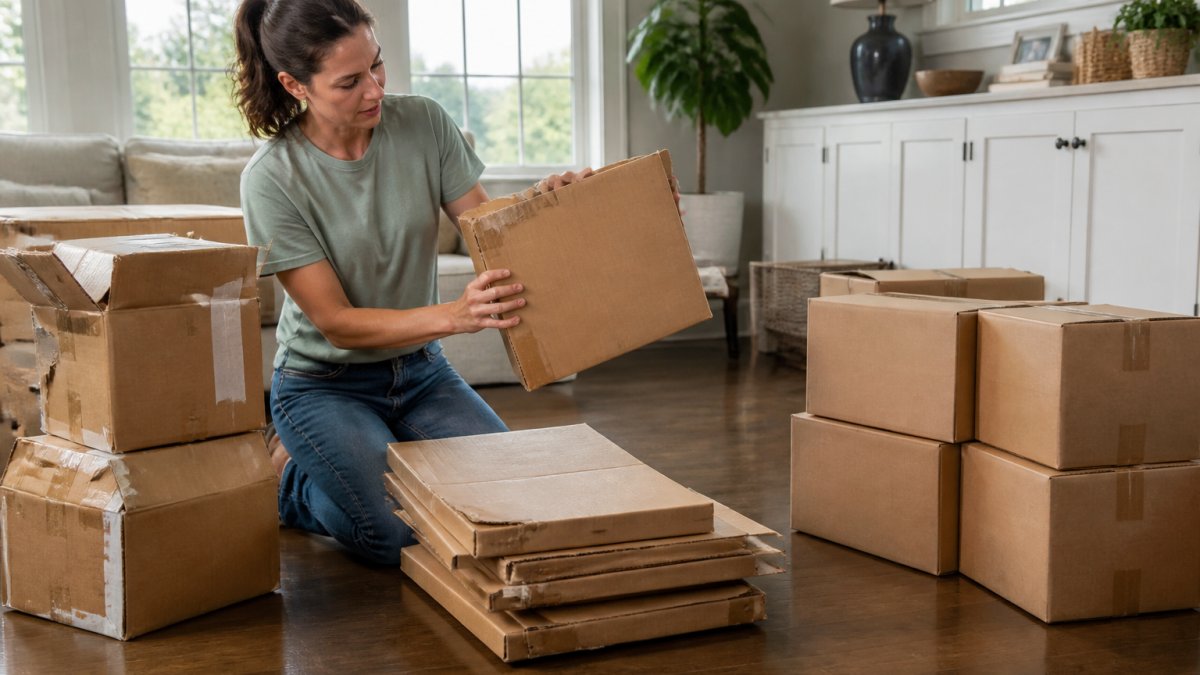
Count your boxes and stack them in one area, disposal options change based on quantity. Then examine each box’s condition:
- Sturdy boxes with no damage, These are candidates for donation, resale, or reuse
- Boxes with minor wear, Still usable for storage or donation, depending on contents
- Crushed, wet, or heavily taped boxes, Better for recycling or trash
Wet cardboard is often rejected by recycling centers, so check the bottoms and corners.
Sort boxes by material and contamination
Many moving boxes contain plastic windows, foam inserts, or plastic tape, and recycling centers have strict rules. Sort into these groups:
- Clean cardboard only, No tape, no plastic, no food residue
- Boxes with packing tape or labels, Still recyclable, but tape should be removed
- Boxes with plastic windows or foam, Remove these materials before recycling
This step prevents wasted trips: recycling facilities reject contaminated loads, and donation centers won’t take damaged boxes.
Where to Recycle Cardboard Boxes
Recycling is one of the most straightforward ways to get rid of moving boxes, but a single greasy pizza box or a box full of packing peanuts can contaminate an entire load. The goal is clean, dry, flattened cardboard, nothing else.
Curbside recycling programs
Curbside pickup is the default for most households, but rules vary by municipality and hauler. Check your provider’s website for three things: whether cardboard is accepted, whether it must be flattened and bundled, and whether there is a size or weight limit per collection day.
Prepare boxes for curbside recycling by following these steps:
- Flatten all boxes completely. Break them down so they fit the cart or bundle rules.
- Remove packing tape, labels, and staples. Tape and adhesive can clog sorting equipment.
- Remove plastic inserts, foam, and packing peanuts. These contaminate the cardboard stream and belong in the trash.
- Keep cardboard dry. Wet or mildewed cardboard is often rejected because it jams equipment.
- Bundle or bin according to your provider’s rules. Some want it loose in the cart; others want it tied.
- Set it out on your regular pickup day.
Curbside programs are free and convenient for a moderate number of boxes. With dozens of boxes, curbside may take several weeks to clear them all.
If your provider offers a bulky-item or overflow collection, ask whether flattened cardboard qualifies. Some municipalities schedule a separate pickup for large quantities at no extra charge.
Local recycling centers and drop-off locations
If you have too many boxes for curbside pickup, or your provider does not accept cardboard, a local recycling center or drop-off site is the next step. These facilities accept bulk cardboard and often have dedicated drop-off areas, ideal for a one-trip clear-out. To find one:
- Search “cardboard recycling near me” or “recycling center” in your area.
- Check your county or city waste management website for a list of accepted materials and hours.
- Visit Earth911’s recycling search tool to locate facilities that accept cardboard.
Most municipal recycling centers are free to residents, and drop-off is quick: you unload, flatten if needed, and leave, ideal for a large volume of boxes you want gone in one trip.
Do not assume every recycling center takes cardboard. Some accept only certain grades, and some are closed to non-residents. A two-minute phone call prevents a wasted trip.
Preparing cardboard for recycling
Recycling centers are strict about contamination: a single box with food residue, grease, or plastic can ruin an entire load. Follow these steps:
- Inspect each box for stains, food, or grease. Greasy cardboard is not recyclable.
- Remove all packing tape. Use a utility knife to scrape it off; tape does not break down in the recycling process.
- Remove plastic window inserts, foam padding, and packing peanuts. These must go in the trash.
- Remove labels and stickers where practical. It keeps the stream cleaner.
- Flatten boxes completely. Stack them neatly so they are easy to transport.
- Secure the stack. Use a bungee cord or rope so boxes do not shift during transport.
Clean cardboard recycles into new boxes, paper products, and insulation; contaminated cardboard ends up in a landfill. If you have a large quantity of clean, flattened cardboard and no convenient recycling option, a roll-off dumpster can consolidate the load for a single pickup, and if you are also clearing out heavy materials like concrete, dirt, brick, or rock, those must go in a 15-yard dumpster, where clean loads may qualify for a tonnage break.
Where to Donate Moving Boxes
Donating boxes keeps them out of the waste stream and helps someone else. Many organizations actively seek used moving boxes because they’re expensive to buy new.
Nonprofit organizations and charities
Nonprofits that help people move or relocate often need boxes. Goodwill, Salvation Army, and local homeless shelters frequently accept them for packing donations or storage.
Call ahead before dropping off:
- Ask if they accept used moving boxes
- Confirm box condition requirements (most want sturdy, clean boxes)
- Ask about drop-off hours and location
Some nonprofits pick up large quantities if you can’t transport them.
Schools and community centers
Schools use boxes for art projects, storage, and classroom activities. Community centers, after-school programs, and youth organizations often welcome donated cardboard.
Contact local schools and ask for the facilities manager or activities coordinator; many accept clean, sturdy boxes immediately.
How to Dispose of Large Cardboard Boxes
Sometimes boxes are too damaged to donate or recycle, or you simply have too many for standard channels. Then trash disposal or dumpster rental becomes practical.
Flatten and break down boxes for trash
For a small to moderate number of damaged boxes, breaking them down for regular trash works, but it takes effort and multiple collection cycles:
- Use a utility knife to cut along seams, This makes boxes easier to flatten
- Remove all tape and plastic, These items don’t break down
- Stack flattened cardboard neatly, Organize by size so they pack efficiently
- Distribute across multiple trash days, Most trash services have size or weight limits
- Check your service limits, Some providers charge extra for oversized items
This method is free but time-consuming; with more than 10-15 boxes, another option is usually faster.
Bulk waste removal and dumpster rental
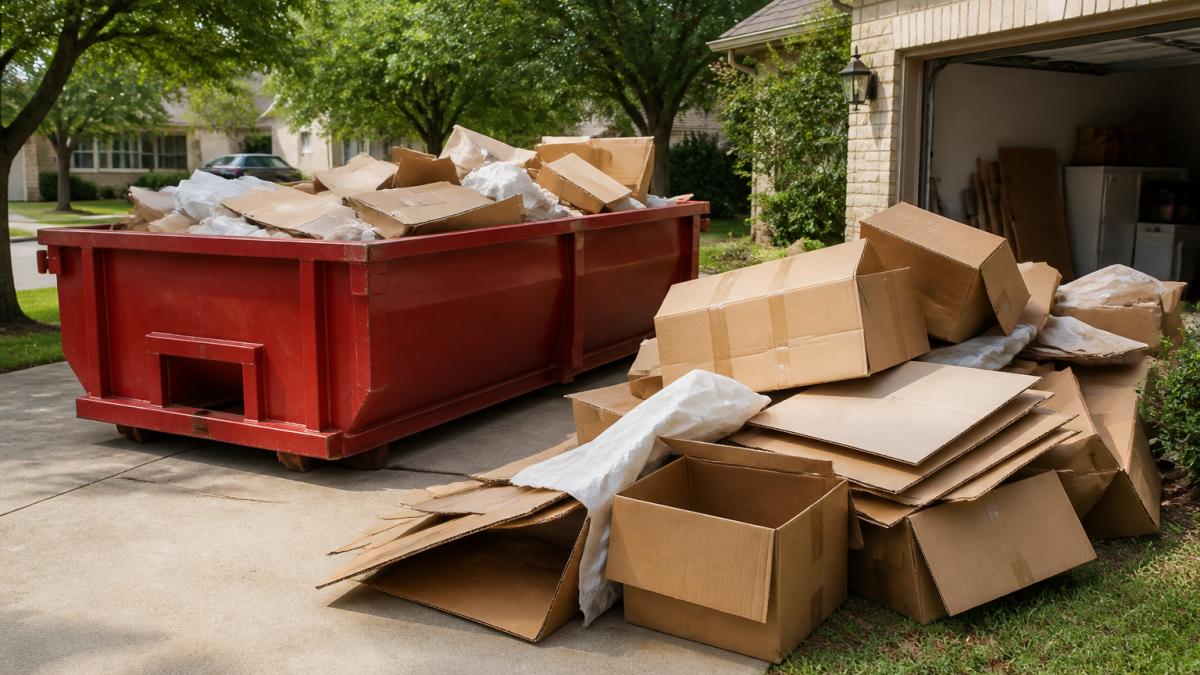
For large quantities of boxes or mixed debris, bulk waste removal or dumpster rental is the most efficient solution. A roll-off dumpster lets you load everything at once and have it hauled away in a single pickup.
At Austex Dumpsters, we offer 15-yard, 20-yard, 25-yard, and 30-yard roll-off dumpsters.
Fill Out Form to Request Dumpster Rental →
The process is straightforward:
- Request a dumpster, Call or fill out a form to schedule delivery
- Load your boxes, Break them down and load at your own pace
- Schedule pickup, We pick up on your timeline
- Debris is hauled away, No additional work required
Dumpster rental is ideal if you’re also disposing of other moving debris like packing materials, bubble wrap, or styrofoam: one container handles everything.
Moving Box Pickup Services and Removal Options
Some companies pick up used moving boxes directly from your home, saving you the time and effort of hauling them yourself.
How pickup services work
Pickup services fall into three categories:
- Charity and nonprofit pickups. Organizations such as Goodwill, Salvation Army, and local shelters may collect donated boxes if you have a large quantity. Eligibility varies: some require a minimum number of boxes, some only pick up in certain areas, and some schedule pickups weeks out. Call ahead and ask whether they collect boxes, what condition they require, and whether there is a minimum.
- Community and neighborhood pickups. Buy Nothing groups, Freecycle, and neighborhood apps often connect you with someone who will come to your home for free boxes. It is fast and keeps boxes in use.
- Commercial junk and debris removal. Some haulers offer curbside or in-home pickup of cardboard and moving debris for a fee, but availability, volume limits, and exclusions vary.
What to ask before you schedule
Before you book any pickup, confirm these details:
- What they accept. Some take only clean, flattened cardboard; others take mixed moving debris.
- Condition requirements. Most want boxes dry, free of food residue, and free of packing material.
- Quantity limits. Ask whether there is a minimum or maximum, and whether oversized boxes are accepted.
When pickup is the right call
Pickup services are most useful with a large quantity of boxes, limited transportation, or a tight timeline. With only a few boxes, scheduling and minimums can make them slower than curbside recycling.
If you are also disposing of other moving debris, packing materials, bubble wrap, styrofoam, or broken furniture, a roll-off dumpster is often the most efficient single solution.
Pickup services are best for large quantities or when you cannot transport boxes yourself. For mixed debris or a one-and-done clear-out, a roll-off dumpster lets you load at your own pace and schedule a single pickup.
Sell or Give Away Used Moving Boxes
If your boxes are in good condition, selling or giving them away is an excellent option. Moving boxes cost money to buy new, so people actively search for used ones.
Online marketplaces and local listings
Post your boxes on popular resale platforms:
- Facebook Marketplace, Large local audience, easy to use
- Craigslist, Established platform for local sales
- Nextdoor, Community-focused, good for local pickup
When posting, include:
- Number of boxes and sizes (small, medium, large)
- Box condition and any damage
- Photos of the boxes
Price used moving boxes at 25-50% of new box cost. If you want them gone quickly, offer them free, most people will pick them up within days.
Community groups and word of mouth
Tell friends, family, and coworkers that you have boxes available. Post in community Facebook groups or neighborhood apps. People planning moves or organizing storage actively seek free or cheap boxes.
A simple post like “Free moving boxes available for pickup this weekend” generates interest fast.
Repurpose Moving Boxes Around Your Home
Before you dispose of moving boxes, consider keeping a few sturdy ones for storage or creative projects:
- Storage in closets or basements, Organize seasonal items or off-season clothing
- Pet beds, Cut an opening and line with blankets for a cozy pet space
- Garden planters, Line with plastic and fill with soil for small plants
Keep only boxes in good condition and limit storage to what you actually need, excess boxes become clutter.
Create Your Post-Move Cleanup Plan
The key to getting rid of moving boxes is having a plan before you start:
- Few boxes in good condition? Donate or sell them
- Many boxes, all clean? Recycle through curbside or drop-off
- Damaged or contaminated boxes? Trash or dumpster rental
Set a timeline. Most people complete box disposal within 2-3 weeks of moving; the longer you wait, the more likely boxes become damaged or forgotten.
At Austex Dumpsters, we make bulk disposal simple. Whether you need a 15-yard dumpster for boxes alone or a larger container for mixed moving debris, our team sizes your rental correctly so you pay only for what you need.
Frequently Asked Questions
Can I put moving boxes in the garbage?
Most curbside trash programs do not accept large cardboard boxes because they take up too much space in trucks and bins. Instead, flatten and break down boxes into smaller pieces, or use curbside recycling if your program accepts cardboard. For large quantities of boxes, consider a dumpster rental or bulk waste pickup service to avoid multiple trash trips.
Where can I donate used moving boxes?
Local nonprofits, schools, community centers, and charities often accept reusable boxes. Contact organizations like Goodwill, The Salvation Army, or local food banks to ask if they need packing boxes. Churches and libraries sometimes accept boxes for storage or community events. Call ahead to confirm they accept boxes and check any size or quantity limits they may have.
Can I recycle moving boxes with tape and labels on them?
Most recycling programs accept boxes with tape and labels still attached. Remove any non-paper packing materials like bubble wrap or foam, but packing tape and labels are fine. Break down or flatten boxes before dropping them off. Check your local recycling center’s guidelines to confirm, as some facilities have specific requirements for cardboard preparation.
What’s the fastest way to get rid of a large quantity of moving boxes?
For bulk quantities, a dumpster rental or junk removal service is fastest. Flatten boxes to maximize space and reduce the number of trips. If boxes are in good condition, post them free on community marketplaces or contact local moving companies and small businesses that may reuse them. Bulk pickup services in your area may also haul away cardboard for free or a small fee.
Getting rid of moving boxes doesn’t have to be complicated. Whether you choose recycling, donation, resale, or dumpster rental depends on your box quantity, condition, and timeline. For homeowners managing large-scale cleanouts or mixed debris removal, Austex Dumpsters provides expert guidance on sizing, reliable same-day delivery when available, and straightforward pricing with no hidden fees. Fill out a form to request your dumpster rental and keep your post-move cleanup on schedule.