
Table of Contents
- Why a Dumpster Matters for Flood Damage Cleanup
- What to Throw Away After a Flood
- Flood Cleanup Checklist to Stay Organized
- Flood Cleanup Safety Precautions You Cannot Ignore
- Dumpster Rental for Flood Damage Cleanup: Sizing and Planning
- How a Dumpster Keeps Your Cleanup on Track
- Frequently Asked Questions
Last Updated: October 13, 2026
Why a Dumpster Matters for Flood Damage Cleanup
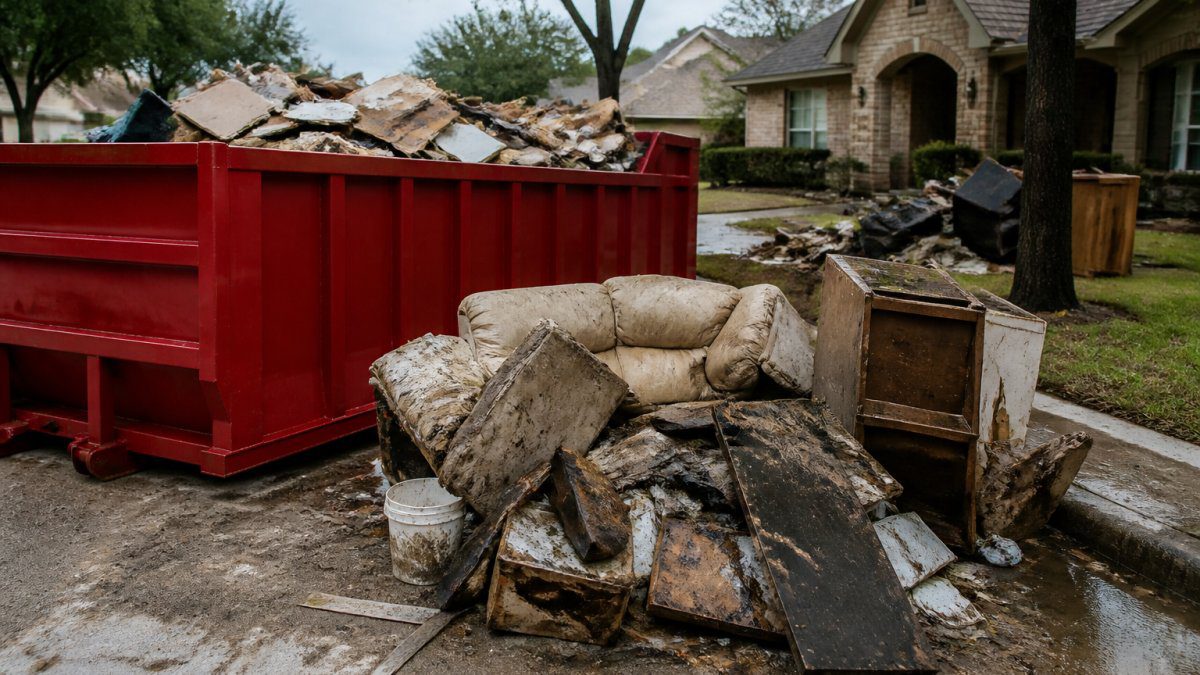
Flood damage generates enormous amounts of waste: soaked drywall, waterlogged flooring, broken appliances, ruined furniture, and contaminated insulation pile up fast.
At Austex Dumpsters, we’ve helped homeowners and contractors manage flood cleanup projects of all sizes. The answer to why you need a dumpster for flood damage cleanup comes down to three things: containment, efficiency, and safety.
What to Throw Away After a Flood
Flood damage destroys materials that can’t be salvaged. Knowing what goes into your dumpster helps you plan container size and avoid delays.
Soaked Flooring and Building Materials
Water-damaged flooring is one of the largest waste streams in flood cleanup. Carpet breeds mold within 24 to 48 hours, hardwood warps and buckles, and vinyl or tile may hide moisture that causes structural problems later. Wet drywall grows mold inside the material and can’t be dried out safely, while insulation traps moisture and becomes a health hazard.
Ruined Furniture and Household Belongings
Upholstered furniture and mattresses cannot be safely restored after flooding, water penetrates deep into padding and foam, where mold thrives even if the surface dries. Wooden furniture swells and warps, particleboard disintegrates, and electronics and appliances with fabric or foam components become waste. Personal items like books, documents, and clothing are hard to discard, but if submerged they’re contaminated by mold spores and bacteria and unsafe to keep.
Broken Appliances and Heavy Debris
Flooded refrigerators, washing machines, dishwashers, and HVAC units are typically beyond repair, water damage to electrical components creates safety hazards and makes restoration uneconomical. Heavy debris includes broken concrete, floodwater-contaminated dirt, brick, and displaced rock, which require proper disposal and take up significant space.
Flood Cleanup Checklist to Stay Organized
Staying organized prevents you from missing contaminated materials and helps you track what needs to go.
- Document all damage with photos and video for insurance claims
- Turn off electricity to affected areas before entering
- Remove standing water with pumps or wet vacuums
- Pull up and discard all water-damaged flooring
Flood Cleanup Safety Precautions You Cannot Ignore
Floodwater is not just dirty water. It typically carries sewage, agricultural runoff, industrial chemicals, and pathogens, and the CDC classifies it as Category 3 (“black water”), the most contaminated category.
Protective Equipment That Actually Matters
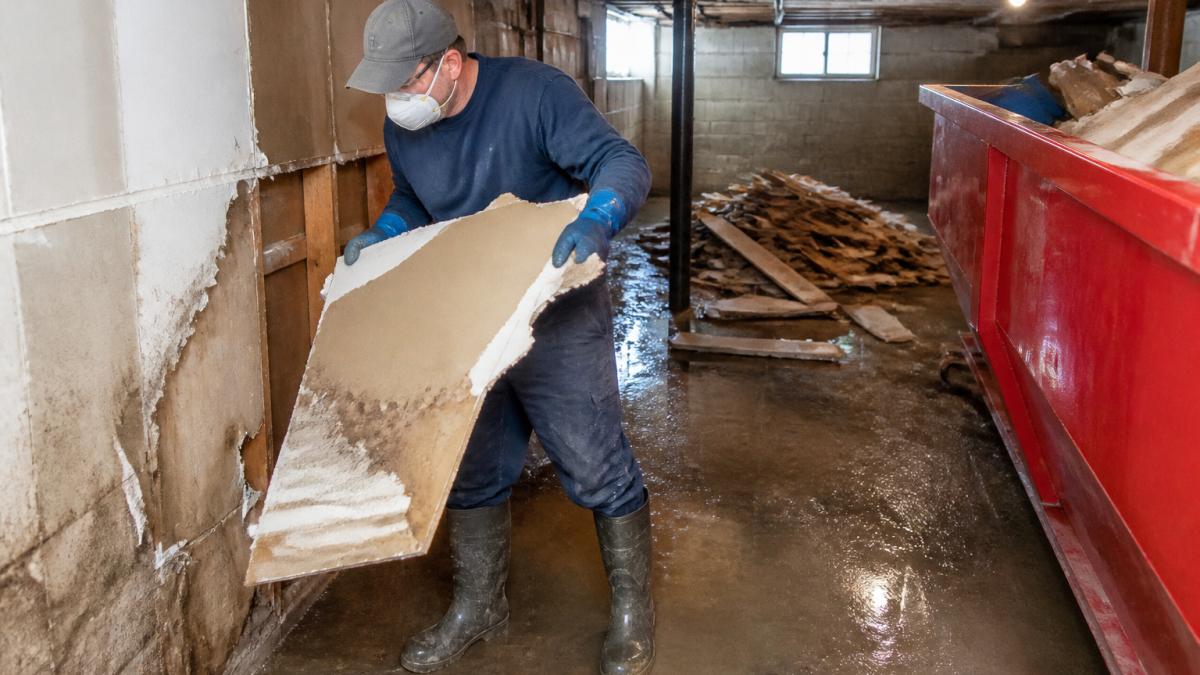
Never enter a flooded home without proper protection. At minimum:
- Waterproof, cut-resistant gloves (not latex exam gloves)
- An N95 or P100 respirator, mold spores and dust become airborne the moment you start pulling materials
- Rubber boots with traction and a steel or composite toe
- Eye protection (goggles, not just glasses)
If the water may have contacted sewage or chemicals, add a Tyvek-style coverall and consider a half-face respirator with cartridges. Change out of contaminated clothing before entering the rest of the home, and wash separately in hot water.
Mold: The 24-to-48-Hour Window
Mold begins growing within 24 to 48 hours of water exposure. Porous materials, drywall, insulation, carpet, ceiling tiles, upholstered furniture, cannot be reliably cleaned once mold colonizes them and should be removed rather than dried in place.
If you see visible mold covering more than roughly 10 square feet, or smell a persistent musty odor after materials are removed, stop work and call a professional mold remediation company.
Structural and Electrical Hazards
Floodwater weakens wooden support beams, drywall, and floor joists. Before removing materials, check for soft spots, sagging floors, or visible cracks, and have a contractor inspect if you suspect structural compromise.
Water conducts electricity. Even with the main breaker off, standing water may still be energized by damaged wiring, a generator backfeed, or a downed service line.
Hazardous Materials That Do Not Belong in a Standard Dumpster
This is the biggest reason homeowners get stuck with a container they cannot legally fill. Certain flood-damaged items are regulated waste and must be separated before disposal:
- Refrigerators, freezers, and AC units contain refrigerant and compressor oil. Many states require refrigerant recovery before the appliance is scrapped, so confirm with your hauler whether appliances are accepted and whether they must be tagged as evacuated.
- Electronics (TVs, computers, monitors, printers) are covered by state e-waste bans in many areas and cannot go in a general debris container.
- Propane tanks, gas cans, and aerosol cans are explosion hazards in a compactor truck and are almost universally prohibited.
- Paints, solvents, pesticides, pool chemicals, and automotive fluids are household hazardous waste. Contact your county or municipal solid waste authority for the HHW drop-off schedule, most run periodic collection events.
- Asbestos-containing materials (older floor tile, pipe insulation, popcorn ceilings, some siding) and lead paint debris require testing and licensed abatement. If your home was built before the mid-1980s, assume these materials are present until proven otherwise.
Mixing regulated items into a general debris load can get the entire container rejected at the landfill, which means the load comes back to you, and you pay for the trip either way. Sort first, load second.
Physical Safety During the Haul-Out
Heavy lifting causes a large share of flood-recovery injuries, because wet drywall, soaked carpet, and waterlogged furniture weigh far more than the same materials dry.
When in doubt about any material, photograph it, set it aside, and ask before you toss it. A quick call to your hauler or local solid waste office is cheaper than a rejected load.
Fill Out Form to Request Dumpster Rental →
Dumpster Rental for Flood Damage Cleanup: Sizing and Planning
Choosing the right dumpster size is critical. Too small and you need a second rental; too large and you pay for unused space. Flood debris is both bulky and heavy, and those two limits rarely run out at the same time.
Understanding Dumpster Capacity and Weight Limits
Dumpster capacity is measured in cubic yards: a 15-yard dumpster holds about 15 cubic yards, a 20-yard holds 20, a 25-yard holds 25, and a 30-yard holds 30. Each size also has a weight limit, and that limit is what catches people off guard. Drywall, carpet, and insulation are light when dry but absorb enormous amounts of water, a sheet of drywall weighing roughly 50 pounds dry can weigh two to three times that when saturated, so a load can exceed its weight allowance before the container looks half full.
When you are estimating, assume flood-damaged porous materials weigh roughly double their dry weight until they have had a chance to drain. If you are pulling materials the same day they got wet, assume more.
A Room-by-Room Sizing Framework
Use these rough ranges as a starting point, then adjust for ceiling height, square footage, and furniture volume:
- Single bathroom or small laundry room (drywall to 4 feet, flooring, vanity, toilet): typically fits in a 15-yard container.
- One bedroom (carpet and pad, drywall to 4 feet, closet contents, one mattress): typically a 15- to 20-yard container.
- Kitchen (cabinets, countertops, flooring, appliances, drywall): typically a 20-yard container, more if appliances are included.
- Finished basement, 800-1,200 sq ft (drywall, carpet, drop ceiling, furniture, some appliances): typically a 20- to 30-yard container, and often more than one load.
- Whole-house first-floor flood (multiple rooms, kitchen, bath, furniture, appliances): plan on multiple 30-yard containers staged over the course of the project rather than one oversized drop.
If you are unsure, size up rather than down, unused space is almost always less costly than a second delivery and pickup window.
Heavy Materials Require Proper Container Selection
Heavy debris from flood damage, concrete, dirt, brick, and rock, is dense and adds weight fast, so a small pile of broken concrete can hit a weight limit long before it fills the container.
Large amounts of heavy material such as concrete, dirt, brick, or rock must go in a 15-yard dumpster.
If your cleanup involves both heavy and bulky debris, separate them: put concrete, dirt, brick, and rock in a 15-yard container, and drywall, carpet, furniture, and general debris in a larger container sized to your volume.
Clean concrete, dirt, brick, or rock with no trash or other contamination may qualify for a break on tonnage when it goes in a 15-yard dumpster. Keeping heavy loads clean and separated is the easiest way to capture that benefit, confirm qualifying materials and terms with your hauler before delivery.
Planning the Drop and the Pickup
A few logistics decisions before delivery will save you time later:
- Placement. The container needs a firm, level surface, a driveway or compacted gravel pad. Soft ground after a flood will not support a loaded truck, and a container that sinks or tips is a safety problem.
- Access. Confirm the truck can reach the placement spot without crossing a septic field, low utility lines, or a damaged driveway. Flood-damaged pavement may not survive the weight of a loaded truck.
- Permits. Many jurisdictions require a right-of-way permit if the container sits on a public street. Check before you place it.
- Sequence. Schedule the drop after standing water is pumped out and the electrical system is confirmed safe, but before demolition begins, so debris goes straight from the house into the container.
- Pickup timing. Do not let a loaded container sit through a rain event. Wet loads get heavier, and some materials, especially anything that has already been contaminated, should not be left to sit.
Coordinating With Insurance and Restoration Crews
Before anything leaves the property, document it. Photograph each room, damaged item, and pile of debris, and keep a written inventory with approximate replacement values.
If a restoration company is handling remediation, coordinate the dumpster schedule with their work plan. Demolition, drying, and debris removal happen in a specific order, and a container that arrives too early blocks equipment; one that arrives too late stalls the crew.
Austex Dumpsters provides same-day delivery when available, so your cleanup can start immediately.
How a Dumpster Keeps Your Cleanup on Track
Debris containment prevents materials from scattering across your yard, where loose debris creates tripping hazards. Restoration crews also work faster when they don’t have to navigate piles of debris, with a dumpster on-site, materials go straight from your home into the container instead of a staging area that needs clearing later. Neighbors appreciate contained cleanup, since flood damage affects entire neighborhoods and keeping debris off the street prevents complaints.
Frequently Asked Questions
Why do you need a dumpster for flood damage cleanup?
A dumpster provides a centralized, safe place to contain large volumes of flood-damaged materials, soaked flooring, ruined furnishings, broken appliances, and debris, without cluttering your property or creating tripping hazards for restoration crews. It keeps cleanup organized, prevents material from spreading to neighboring properties, and speeds up the entire recovery process by consolidating waste in one location for efficient removal.
What items should not go in a dumpster after a flood?
Do not dispose of hazardous materials such as chemicals, paints, batteries, or propane tanks in a standard dumpster. Appliances containing refrigerants (refrigerators, air conditioners) often require special handling. Electronics and items with electrical components may have restrictions depending on local regulations. Always check with your dumpster rental provider about prohibited items before loading, and contact your local waste disposal authority for guidance on hazardous materials specific to your area.
How do you safely clean up a flooded home?
Wear protective gear including gloves, boots, and a mask to avoid contact with contaminated water and mold. Turn off electricity to affected areas if safe to do so. Remove standing water first, then open windows and doors for ventilation. Discard items that cannot be salvaged, soaked drywall, carpet, and insulation trap moisture and promote mold growth. Use a dumpster to contain all contaminated debris separate from recyclables, and document everything for insurance purposes.
What size dumpster is best for flood cleanup?
Dumpster size depends on the extent of damage and the types of materials you’re removing. A 15-yard dumpster works for light to moderate cleanup, while a 20-yard or larger is better for extensive water damage affecting multiple rooms. Heavy materials like concrete, dirt, and brick require a 15-yard dumpster. Contact Austex Dumpsters for expert guidance on sizing, our team can assess your specific cleanup needs and recommend the right container to avoid overfilling or needing a second rental.
Flood damage cleanup is overwhelming, but proper planning makes it manageable. A dumpster is the foundation of an organized, safe, and efficient cleanup process. Austex Dumpsters offers expert guidance on sizing, same-day delivery options, and straightforward pricing so you can focus on restoring your home. Fill out a form to request your dumpster rental and get your flood cleanup project back on track today.