
Table of Contents
- How Dumpster Rental Cost for Concrete Disposal Is Calculated
- Roll-Off Dumpster Size Requirements for Heavy Debris
- Weight Limits for Concrete Dumpsters and Overage Fees
- Clean Concrete Disposal: Why Separating Loads Saves You Money
- Contamination Penalties: What Happens When Trash Mixes With Concrete
- DIY vs. Professional Concrete Removal: Which Costs Less?
- Permits, Scheduling, and Rental Duration for Concrete Projects
- Frequently Asked Questions
Last Updated: September 22, 2026
How Dumpster Rental Cost for Concrete Disposal Is Calculated
Dumpster rental cost for concrete disposal is calculated differently than general debris pricing. Concrete is heavy, so most haulers base the price on weight capacity and tonnage limits rather than volume alone. This guide from Austex Dumpsters breaks down what drives the final invoice, where hidden charges come from, and how to keep your concrete removal project on budget.
Concrete isn’t like old furniture or yard clippings. A single cubic yard of broken concrete can weigh well over a ton. That weight, not the space it fills, is what determines your bill. According to EPA guidance on construction and demolition debris, concrete is one of the heaviest and most recyclable materials in the construction waste stream, which is why separating it matters for both cost and disposal.
Here’s the core tension most homeowners and contractors miss: a dumpster that looks half empty can still be over its weight limit. That’s the single biggest source of surprise charges in concrete disposal.
Flat Rate vs. Weight-Based Charges
Flat rate pricing means you pay one set price for the container, a defined rental period, and a set weight allowance included. Weight-based charges add per-ton fees once you exceed that allowance.
Most roll-off rentals blend the two. You get a flat rate for the dumpster and the rental window, plus a tonnage allowance. Go over the allowance, and overage charges apply per ton.
- Flat rate: predictable, best when you know your debris weight
- Weight-based: flexible, but risky if you underestimate
- Hybrid (most common): flat container rate plus a tonnage cap
The takeaway: always ask what weight is included before you book. Austex Dumpsters offers straightforward pricing and guidance on sizing, so you know what you’re getting before the container lands.
Roll-Off Dumpster Size Requirements for Heavy Debris
For concrete, dirt, brick, and rock, size works differently than it does for general debris. Austex Dumpsters requires heavy materials to go in a 15-yard dumpster, regardless of how much space you think you need.
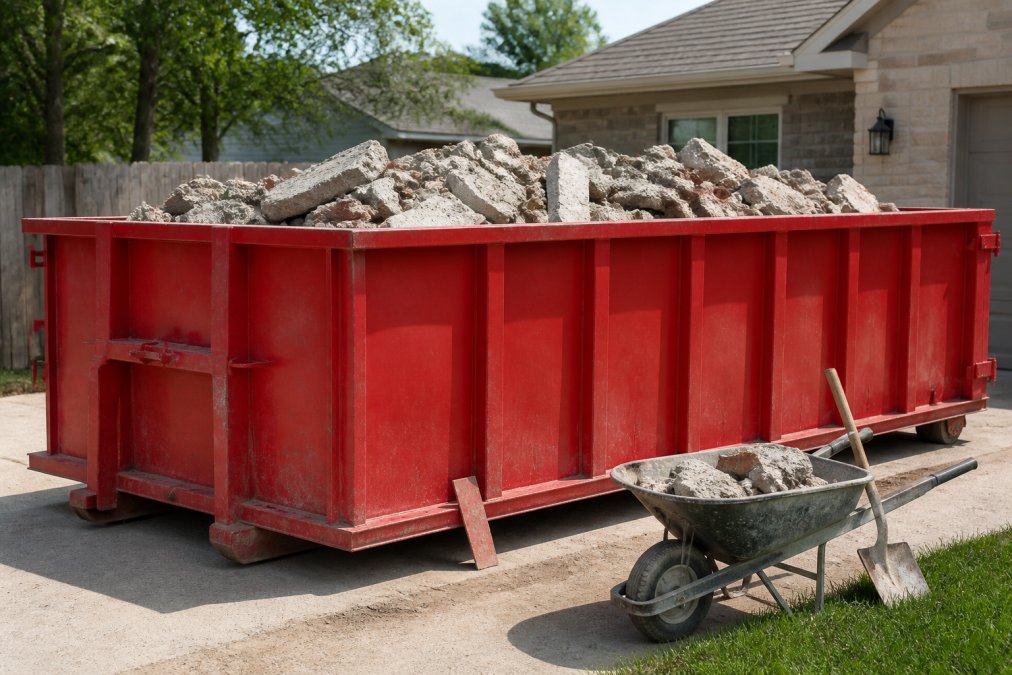
Why the 15-yard rule? Weight capacity. A larger container filled with concrete can exceed the legal hauling weight for the truck and the landfill’s load restrictions. Keeping heavy debris in a 15-yard container protects you from overage charges and keeps the load legal on the road.
For general debris like wood, drywall, or household cleanout material, the 20-, 25-, and 30-yard options make sense. For concrete, stick with the 15-yard. It’s the right tool for a dense load.
Putting concrete, dirt, brick, or rock in a 20-, 25-, or 30-yard dumpster can trigger overage fees, rejected loads, or both. The container may look fine, but the weight can exceed what the hauler is permitted to transport. Keep heavy material in the 15-yard.
Weight Limits for Concrete Dumpsters and Overage Fees
Weight limits for concrete dumpsters exist because haulers and landfills cap how much tonnage a truck and disposal site can legally handle. Exceed the included allowance, and you pay overage charges per ton.
Those charges add up fast. A few extra tons of concrete can turn a manageable bill into a painful one. This is where the DIY approach often goes wrong: people estimate by volume, not weight, and blow past the limit.
Weigh your load mentally before you fill. A standard wheelbarrow holds roughly 300 to 400 pounds of broken concrete. If you’re hauling dozens of loads, you’re likely closer to the tonnage cap than the container looks. Ask about your included allowance before you start.
The fix is simple: know your allowance, track your loads, and call for a pickup before you exceed it. Austex Dumpsters builds tonnage guidance into the booking process so you can avoid the surprise.
Clean Concrete Disposal: Why Separating Loads Saves You Money
Clean concrete disposal means keeping your concrete, dirt, brick, or rock load free of trash, wood, plastic, and other contamination. When a 15-yard dumpster is filled with clean concrete and no other debris, customers may qualify for a break on tonnage.
That’s the financial upside of separation. Recyclers want clean material because it can be crushed and reused as aggregate. Mixed loads go to the landfill, where tipping fees are higher and contamination penalties can apply.
| Load Type | What Goes In | Disposal Path | Cost Impact |
|---|---|---|---|
| Clean concrete | Concrete, dirt, brick, rock only | Recycling facility | May qualify for tonnage break |
| Contaminated load | Concrete mixed with trash, wood, plastic | Landfill | Higher tipping fees, possible penalties |
| General debris | Wood, drywall, household items | Landfill | Standard rate, use larger container |
The practical move: keep a separate bin or pile for trash, and load only clean masonry into the 15-yard. It takes a few extra minutes and can save real money.
Fill Out Form to Request Dumpster Rental →
Contamination Penalties: What Happens When Trash Mixes With Concrete
Contamination penalties are the hidden cost most guides skip. When trash mixes with concrete, the entire load can be reclassified as mixed waste, which means landfill tipping fees instead of recycling rates. That reclassification is the mechanism that turns a clean-concrete discount into a full-price, or premium-price, disposal.
Here’s how the financial chain works.
What counts as contamination?
- Wood, drywall, and insulation
- Plastic, cardboard, and packaging
- Food waste and household trash
- Painted or treated materials that recyclers won’t accept
- Shingles, pallets, and other construction debris that isn’t masonry
Once a load is tagged as contaminated, the reclassification applies to the entire dumpster, not just the contaminated portion. There’s no partial credit. One bag of trash can change the disposal path for every ton in the container.
If you’re renting a 15-yard dumpster for clean concrete, dirt, brick, or rock, the tonnage break only applies when the load arrives at the facility free of trash and other contamination. That’s the financial reason separation matters: it’s not just good practice, it’s the difference between recycling rates and landfill rates on your entire load.
DIY vs. Professional Concrete Removal: Which Costs Less?
Here’s a decision framework most guides don’t provide.
Choose DIY with a 15-yard rental when:
- The project is a single slab, a small patio, or a few steps, roughly what fits in one 15-yard container without exceeding the tonnage allowance
- You have ground-level access for wheelbarrows or a chute
- You can keep the concrete, dirt, brick, or rock separated from trash and other debris
- You have the labor available and a free weekend or two
Choose professional removal when:
- You’re tearing out a driveway, foundation, or large patio where volume and weight climb quickly
- Access is tight, stairs, narrow gates, or a backyard with no driveway approach
- You can’t guarantee a clean load, or you’re mixing concrete with other demolition debris
- Your time is better spent elsewhere, and you want the weight-limit risk off your plate
Before you commit to DIY, ask about the included tonnage allowance on the 15-yard container. If your estimated weight is close to the cap, plan for a second container or schedule an early pickup rather than risk overage charges on a single overloaded load.
For most homeowners tackling a major renovation, the hybrid route balances cost and risk best. You control the labor, and the hauler handles the part that triggers surprise fees.
Permits, Scheduling, and Rental Duration for Concrete Projects
Permit requirements and rental duration vary by project and location, so confirm both before you book. Many areas require a permit when a dumpster sits on a public street or right-of-way, though a driveway placement often avoids that step.
On rental duration:
- Short projects often fit a standard weekly rental
- Larger tear-outs may need a longer window or a swap-out
- Ask about pickup timing so the container doesn’t linger after the job
Frequently Asked Questions
How much does concrete disposal cost?
Concrete disposal cost depends on the container size, the weight of the load, rental duration, and local landfill or recycling tipping fees. Because concrete is dense, a small container can hit its weight limit long before it looks full, so the tonnage allowance matters more than the container’s volume. Austex Dumpsters provides straightforward pricing with no hidden per-ton surprises, and clean concrete loads may qualify for a tonnage break. Request a quote for current rates.
What are the weight limits for concrete in a roll-off dumpster?
Weight limits for concrete dumpsters are set by the hauler because concrete weighs roughly 4,000 pounds per cubic yard. A container that holds 15 cubic yards of light debris cannot legally carry 15 cubic yards of concrete on public roads. That is why heavy material like concrete, dirt, brick, and rock must go in a 15-yard dumpster, which is engineered and permitted for that density. Exceeding the limit triggers overage charges billed per ton.
What happens if I mix trash with concrete in a dumpster?
Mixing trash with concrete turns a clean load into a contaminated one. Contaminated loads lose any tonnage break for clean concrete, may be rejected at the recycling facility, and can be routed to a landfill where tipping fees are higher. You may also pay a contamination penalty on top of the standard disposal cost. Keep concrete, brick, and rock separated from wood, drywall, and household trash to protect your rate.
Can I put brick and rock in the same dumpster as concrete?
Yes. Brick, rock, and concrete are all heavy masonry materials with similar density, so they can share a 15-yard dumpster. Austex Dumpsters allows clean concrete, dirt, brick, and rock together in a 15-yard container, and a load free of trash or other contamination may qualify for a tonnage break. Never place these heavy materials in a 20-, 25-, or 30-yard dumpster, since those sizes are not rated for that weight.
How do I keep concrete disposal costs down?
Separate clean concrete from general construction waste so the load qualifies for a tonnage break. Order the right container the first time to avoid a second rental, and schedule delivery and pickup tightly so you are not paying for idle days. Break large slabs into manageable pieces so the container loads evenly and legally. Austex Dumpsters offers expert sizing guidance and same-day delivery when available to keep your project on schedule.