
Table of Contents
- Why Roofing Projects Fall Behind Schedule
- Roll-Off Dumpster Rental for Roofing: The Foundation of On-Time Completion
- Heavy Material Disposal for Roofers: Planning for Tearoffs and Debris
- Automating Scheduling and Job Tracking
- Roofing Project Management Software and Real-Time Visibility
- Coordinating Crew, Materials, and Weather
- Post-Installation Inspections and Handoff Workflows
- Conclusion
- Frequently Asked Questions
Last Updated: September 25, 2026
Keeps Projects on Schedule for Roofing Contractors
Roofing projects slip behind schedule when debris management gets overlooked until it becomes a crisis. A crew finishes tearing off old shingles with nowhere to put the materials, work stops, and the schedule suffers. At Austex Dumpsters, we’ve watched this pattern repeat across dozens of roofing jobs, and the solution is simpler than most contractors realize.
Keeping projects on schedule for roofing contractors requires three moving parts: efficient debris disposal, real-time job tracking, and coordinated crew logistics.
Why Roofing Projects Fall Behind Schedule
Most roofing delays stem from reactive planning and lack of visibility. A crew starts work, materials pile up faster than expected, and no one planned for disposal. The dumpster arrives late or is the wrong size. Work stops while everyone figures out logistics. Without a system to track debris volume, weather windows, material delivery timing, and crew coordination in real time, delays compound.
Weather adds complexity: a rain delay shifts material delivery, idles the crew, and cascades into rescheduled inspections and handoffs.
Heavy material disposal requires dedicated planning. Roofing tearoffs produce thousands of pounds of shingles, underlayment, and wood debris that need specific handling.
Roll-Off Dumpster Rental for Roofing: The Foundation of On-Time Completion
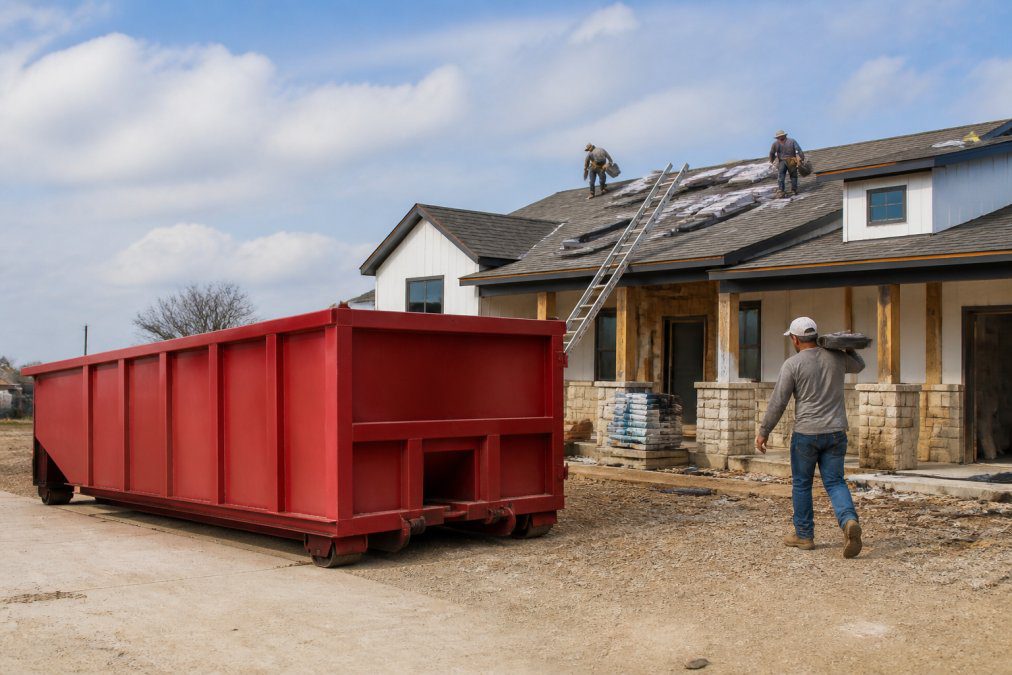
A properly sized roll-off dumpster is the foundation that keeps projects on schedule for roofing contractors. Without it, every other planning effort falls apart.
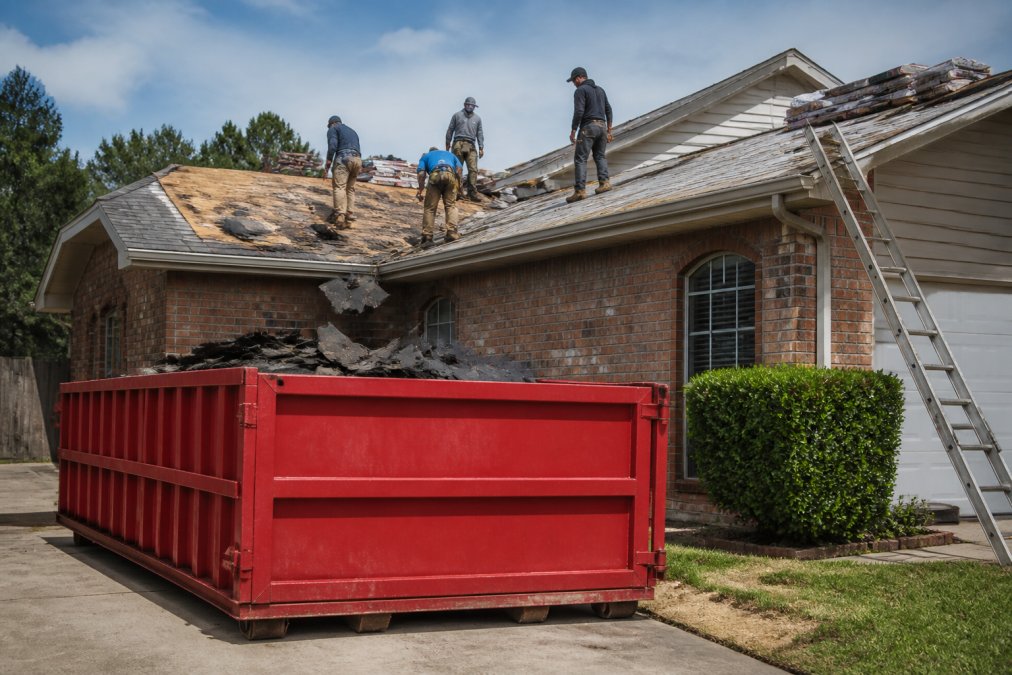
Roofing jobs generate debris continuously. If your dumpster is undersized, you’ll fill it before tearoff is complete; if oversized, you’re paying for unused space. A 15-yard dumpster works for many residential tearoffs and general debris removal. For larger commercial roofs or jobs with significant additional demolition, a 20-yard, 25-yard, or 30-yard dumpster may be necessary.
Timing matters as much as size. Same-day or next-day delivery ensures the dumpster is on site when work begins, debris flows directly into the container, and no work stoppages occur. Austex Dumpsters delivers roll-off containers quickly and sizes them correctly for roofing work, helping you avoid both undersizing and overpaying.
Heavy Material Disposal for Roofers: Planning for Tearoffs and Debris
Heavy material disposal is where many roofing projects derail. Tearoffs produce concrete, brick, and other dense materials that require specific handling.
A 15-yard dumpster is the right choice for large amounts of heavy material like concrete, dirt, brick, or rock. Do not place heavy materials in a 20-, 25-, or 30-yard dumpster, as those are not rated for the concentrated weight of these materials.
When a 15-yard dumpster is filled exclusively with clean concrete, dirt, brick, or rock (with no trash or other contamination mixed in), you may qualify for a tonnage break. This benefit rewards clean, sorted material and keeps disposal costs predictable.
Planning for heavy material disposal means identifying what’s coming off the roof upfront, sorting materials on site to qualify for tonnage breaks, scheduling a 15-yard dumpster for heavy materials, and confirming delivery timing before tearoff begins.
Automating Scheduling and Job Tracking
Once debris disposal is locked in, the next layer of keeping projects on schedule for roofing contractors is automating job tracking and quantifying what delays cost. Manual scheduling creates bottlenecks: crew texts foreman, foreman updates spreadsheet, office calls supplier. By the time information reaches everyone, decisions are delayed and costs mount.
Automated scheduling software eliminates friction and makes financial impact visible. The crew logs in on arrival, the system records completed work, material delivery updates in real time, and weather delays are logged automatically. The system flags when delays trigger idle crew time or overlap with the next job, enabling financial decisions: accelerate the current phase, reschedule the next job, or absorb the cost.
This visibility prevents cascading delays. If a crew finishes tearoff early, you can accelerate the next phase or move material delivery up. If weather pushes work back, you adjust schedules before conflicts arise.
Roofing Project Management Software and Real-Time Visibility
Project management software gives you the visibility that keeps projects on schedule for roofing contractors. Real-time visibility means the office, crew, and supply chain see the same project status. A crew member photos the completed tearoff, the office schedules the inspector, and the material supplier is alerted to deliver on the confirmed date. Software centralizes timelines, change orders, inspections, material specifications, and crew assignments, coordination impossible with phone calls and spreadsheets.
Fill Out Form to Request Dumpster Rental →
Coordinating Crew, Materials, and Weather
Keeping projects on schedule for roofing contractors depends on coordinating three variables that often work against each other: crew availability, material delivery, and external disruptions, which include both weather and supply chain risk.
Crew coordination starts with clear communication. Each crew member needs to know their role, sequence of work, and daily schedule. A weather delay shifts everything; without clear communication, crew members show up expecting to work on a postponed phase, wasting time and compounding delays. The same friction occurs when material shipments are delayed and crews aren’t notified before arrival.
Material logistics are equally critical, and more fragile than most contractors assume. New roofing materials must arrive after the tearoff is complete but before the crew is ready to install. Too early, and they sit on the driveway exposed to weather. Too late, and the crew waits. But the real risk isn’t timing, it’s supply chain disruption.
Material shortages and supplier delays are schedule killers that weather delays often mask.
Weather is the variable you can’t control, but you can plan for it. A rain delay of one day requires rescheduling material delivery and crew schedules. If you don’t have a contingency plan, that one-day delay becomes a three-day delay as everything cascades.
Effective weather contingency planning involves:
- Weekly crew briefings with weather forecasts, Confirm the week’s schedule and any weather impacts. If rain is forecast for Wednesday, can the crew finish the tearoff by Tuesday? If not, reschedule material delivery.
- Flexible crew scheduling, Have backup indoor tasks or secondary jobs crews can shift to if weather delays the primary job.
- Material delivery windows with weather buffers, Schedule deliveries for 1-2 days after the crew is expected to finish tearoff, not the same day. This absorbs minor weather delays.
- Subcontractor vs. in-house crew management, Clarify who’s responsible for what and when. Subcontractors often have multiple jobs and less flexibility than in-house crews. If a weather delay pushes your job back, your subcontractor may already be committed to another job. Communicate delays immediately and confirm they can still make the rescheduled date.
Post-Installation Inspections and Handoff Workflows
The project isn’t finished when the new roof is installed. Post-installation inspections and final handoff are where many roofing projects lose momentum.
A final inspection should happen before the crew leaves the site. The inspector walks the roof, checks for manufacturer specifications compliance, and confirms the work meets code. If issues are found, the crew addresses them immediately. If the crew has already left, callbacks are expensive and slow.
The handoff workflow includes:
- Final walkthrough, Crew and homeowner or property manager inspect the completed work together.
- Documentation, Photos of the completed roof, warranty information, and maintenance instructions.
- Cleanup verification, Confirm that all debris is removed and the site is clean.
- Dumpster pickup, Schedule final removal once cleanup is complete.
- Payment and closeout, Final invoice, warranty registration, and project closure.
A clear handoff workflow keeps the project moving. When the crew knows exactly what’s expected at the end, they complete it efficiently. When the homeowner knows what to expect, there are no surprises.
Conclusion
Keeping projects on schedule for roofing contractors comes down to three essentials: efficient debris removal, real-time job visibility, and coordinated logistics. A roll-off dumpster sized correctly and delivered on time removes the biggest bottleneck. Project management software gives you the visibility to catch delays before they cascade. Coordinated crew, material, and weather planning ensures every phase flows into the next.
Austex Dumpsters handles the debris removal piece with same-day delivery options and expert sizing guidance. The 15-yard dumpster works for most roofing tearoffs, with tonnage breaks available for clean, heavy materials. When your debris disposal runs smoothly, the rest of the project follows. Ready to keep your next roofing project on track? Fill out a form to request a roll-off dumpster rental and get expert guidance on sizing for your specific job.
Frequently Asked Questions
What’s the most common reason roofing projects get delayed?
Material delivery delays and debris management bottlenecks are the top culprits. When old roofing materials pile up on site without a proper disposal plan, crews lose workspace and efficiency drops. Scheduling a roll-off dumpster rental for roofing in advance eliminates this bottleneck. Weather also plays a major role, rain and wind can halt work for days, so building buffer time into your project schedule is essential.
How do I choose the right dumpster size for a roofing tearoff?
A standard residential roof tearoff generates roughly 2-4 tons of shingles, underlayment, and debris. Many roofing projects fit comfortably in a 15-yard dumpster. However, if your tearoff includes structural repairs or you’re removing multiple layers, you may need a larger size, such as a 20-yard, 25-yard, or 30-yard dumpster. Contact Austex Dumpsters for expert guidance, they’ll ask about your roof square footage and scope to recommend the right size and ensure same-day or next-day delivery fits your schedule.
What’s included in heavy material disposal for roofers?
Heavy material disposal for roofers covers shingles, underlayment, flashing, insulation, and structural waste like plywood or decking. A 15-yard dumpster is designed to handle these materials safely and efficiently. If your project involves large volumes of concrete, dirt, brick, or rock (common in foundation or structural work alongside roofing), those heavy materials must go in a dedicated 15-yard dumpster. Clean loads of these materials may qualify for tonnage breaks, reducing your overall costs.
Can roofing project management software really prevent schedule slippage?
Yes, when paired with real-world logistics. Roofing project management software tracks job status, automates work orders, and flags resource gaps before they become delays. The software shows you bottlenecks like material lead times or crew availability in real time. However, software only works if your physical operations, material delivery, debris removal, weather contingencies, are solid. Combining automated scheduling with reliable roll-off dumpster rental ensures your software insights translate into actual on-time completions.