
Table of Contents
- Will a Couch Fit in a Dumpster? Quick Answer
- How to Measure a Couch for Dumpster Disposal
- How to Break Down a Couch for Disposal
- Sectional Sofa Disposal: Special Considerations
- What Fits in a 15-Yard Dumpster
- Choosing the Right Dumpster Size for Furniture
- Loading Your Couch Safely and Efficiently
- Alternatives to Dumpster Disposal
- Frequently Asked Questions
Last Updated: October 14, 2026
Will a Couch Fit in a Dumpster? Quick Answer
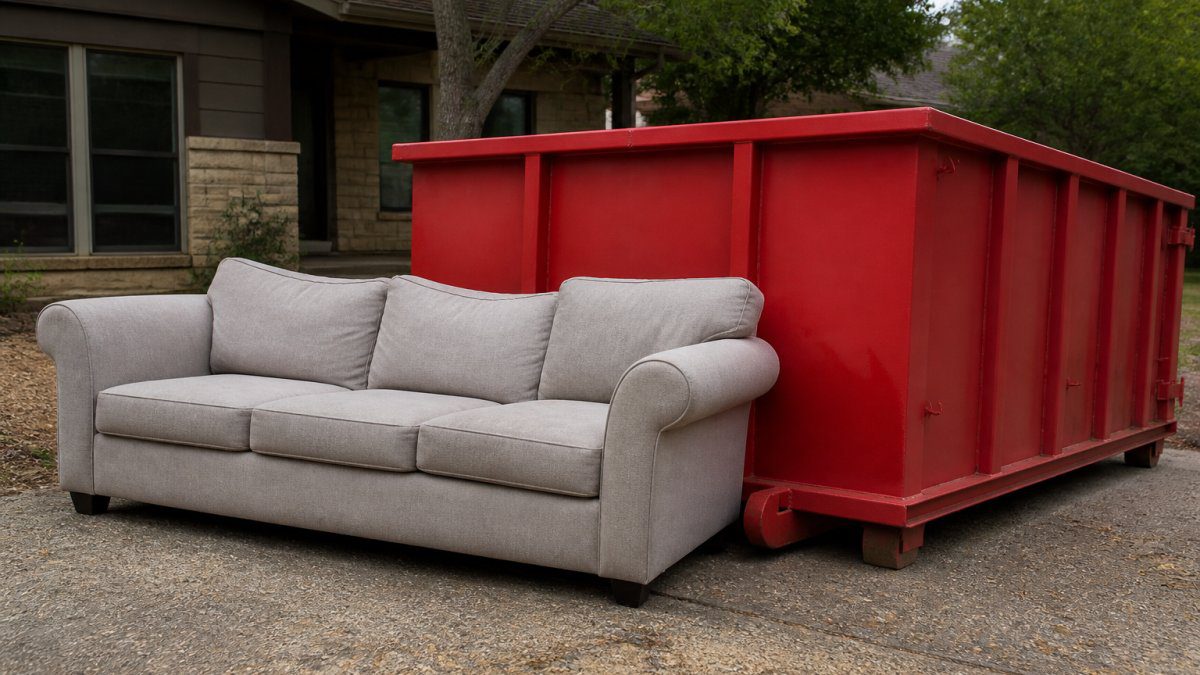
The short answer: no standard couch fit dumpster in a small container. At Austex Dumpsters, we recommend a 15-yard roll-off dumpster for furniture disposal, especially if you’re removing a couch along with other household items.
A 15-yard dumpster gives you enough space for a full-size couch fit dumpster scenario plus additional debris. If you have a sectional sofa or multiple pieces of furniture, you may need a 20-yard, 25-yard, or 30-yard dumpster depending on the total volume.
The key is knowing your dumpster’s dimensions and your couch’s measurements. Let’s walk through how to measure and choose the right container.
How to Measure a Couch for Dumpster Disposal
Before you rent a dumpster, measure your couch carefully. You need three dimensions: width, depth, and height.
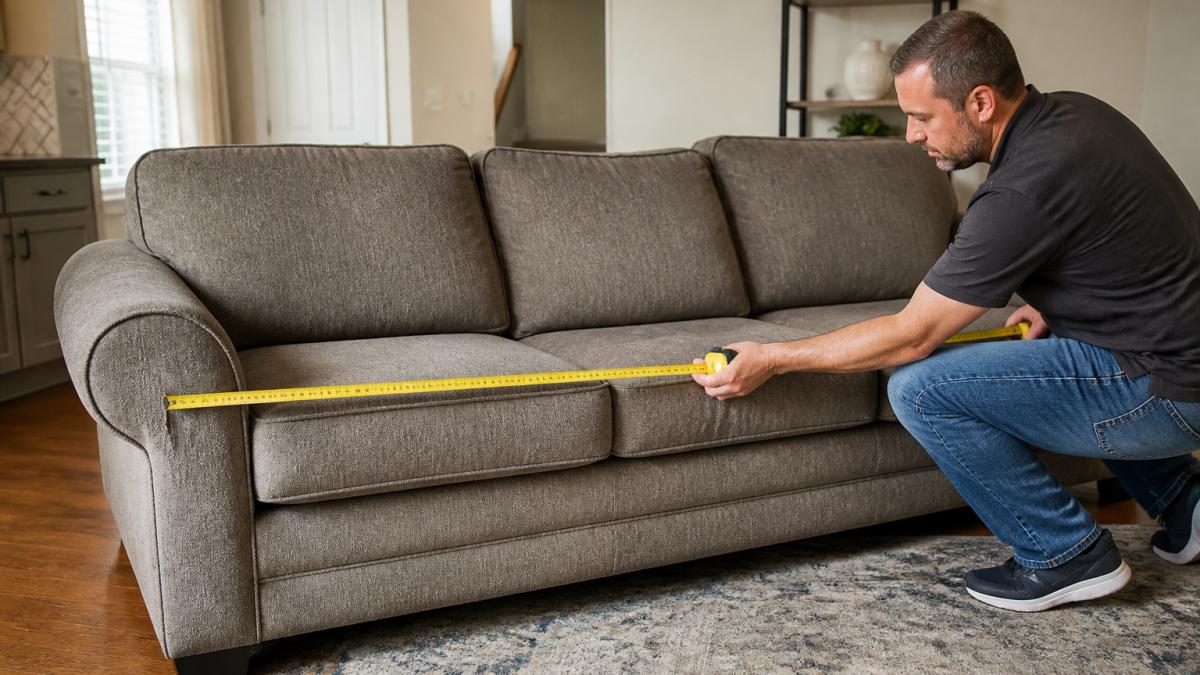
Width is the distance from one armrest to the other.
Write these numbers down. They matter when deciding if your couch will fit through doorways, down staircases, and into your dumpster.
Also measure the diagonal if your couch has a curved back or unusual shape. A rounded profile can need more space than a boxy design of the same width.
Pro Tip: Photograph your couch from multiple angles with a ruler or known-size object for reference. This helps when you call Austex Dumpsters for sizing guidance.
Measure twice, rent once. An extra five minutes of measurement saves you from renting the wrong size container and wasting time and money.
How to Break Down a Couch for Disposal
Breaking down your couch makes disposal much easier. Most couches can be disassembled into legs, frame, cushions, and upholstery.
Next, remove the cushions. Lift the seat cushions straight up; most come free easily.
Separate the frame from the upholstery. On many couches, the fabric is stapled to the wooden frame.
Cut the upholstery into manageable sections. Once the fabric is loose, cut it into strips with a utility knife.
Breaking down your couch reduces its volume by 40 to 60 percent, giving you more room for other items.
Wear gloves and eye protection when removing staples and cutting fabric. Staples have sharp edges and can cause cuts. Utility knives are sharp, keep your fingers clear of the blade path.
Sectional Sofa Disposal: Special Considerations
Sectional sofas present unique challenges because they’re made of multiple pieces that may or may not separate.
Check if your sectional is modular. Some sectionals disconnect with bolts or clips.
Modular sectionals are easier to dispose of. Disconnect each piece and break it down like a standard couch.
Non-modular sectionals are bulkier. If your sectional doesn’t separate, you’ll need a larger dumpster. A 20-yard or 25-yard dumpster is more appropriate for a complete sectional plus other household items.
Chaise lounges and recliners that are part of a sectional also take significant space. Account for each piece when estimating your dumpster size.
When you call Austex Dumpsters, describe your sectional in detail: modular or not, how many pieces, and what else you’re throwing away.
What Fits in a 15-Yard Dumpster
A 15-yard roll-off dumpster measures approximately 14 feet long, 8 feet wide, and 4 feet tall. That’s 448 cubic feet of space.
A standard couch fits comfortably in a 15-yard dumpster, with room for additional items like:
- One or two armchairs
- A coffee table and side tables
- Broken lamps and small furniture
- Boxes of household items
- General household debris
15-yard dumpsters are ideal for:
- Single furniture removal projects
- Small home cleanouts
- Bedroom or living room remodels
- Garage cleanouts with some furniture
A 15-yard dumpster works well for general debris removal. However, large amounts of heavy material such as concrete, dirt, brick, or rock must go in a 15-yard dumpster.
A 15-yard dumpster is the minimum size for couch disposal. It gives you breathing room for additional items without forcing you to pay for space you won’t use.
Choosing the Right Dumpster Size for Furniture
Your dumpster size depends on three factors: couch dimensions, total debris volume, and material weight. Volume is the easy part. Weight is where most people get surprised, so plan both before you book.
For a couch alone: A 15-yard dumpster is sufficient.
For a couch plus other furniture: Consider a 20-yard dumpster. It gives you room for a couch, multiple chairs, tables, and boxes of household items without cramming everything in.
For a complete home cleanout or major remodel: A 25-yard or 30-yard dumpster is appropriate. These sizes handle large volumes of mixed debris, multiple pieces of furniture, and construction materials.
Here’s a quick sizing guide:
Fill Out Form to Request Dumpster Rental →
| Project Type | Recommended Size | Why |
|---|---|---|
| Single couch removal | 15-yard | Fits one couch with room for small items |
| Couch plus chairs and tables | 20-yard | Accommodates multiple furniture pieces |
| Full room cleanout | 20-yard or 25-yard | Handles furniture, boxes, and general debris |
| Whole-house cleanout | 25-yard or 30-yard | Maximum capacity for large projects |
A Room-by-Room Sizing Framework
Most furniture cleanouts are really room cleanouts. Use this framework to estimate volume before you call:
- Living room: One couch, one or two armchairs, a coffee table, two end tables, a media console, and a rug. This is a 15-yard project, or a 20-yard project if you’re adding a second seating piece.
- Bedroom: A mattress and box spring, a bed frame, a dresser, a nightstand, and a desk. Mattresses are bulky but light; they eat volume fast. A 15-yard container handles one bedroom comfortably.
- Home office: A desk, a chair, shelving, and boxes of paper. Paper is heavier than it looks when stacked in boxes, so keep boxes low and distributed.
- Garage or basement: Mixed debris, often including shelving, tools, and stored furniture. This is usually a 20-yard project because the volume adds up quickly.
If you’re clearing more than two rooms, step up one size from the largest single-room recommendation. It’s cheaper to have unused space than to schedule a second pickup.
Why Weight Planning Matters More Than Volume
Roll-off dumpsters are priced with a tonnage allowance, and anything above it is billed as overage. The trap is that heavy debris doesn’t look heavy. A few wheelbarrows of dirt, a stack of broken concrete, or a soaked couch can push a container over its allowance while it still looks half empty.
A few rules of thumb that practitioners use:
- Wet materials weigh more than dry ones. A couch that sat in floodwater or a leak can be substantially heavier than the same couch dry. Let it drain and dry before loading when you can.
- Heavy material goes in the 15-yard. Large amounts of concrete, dirt, brick, or rock must go in a 15-yard dumpster.
- Keep heavy and light debris separate. If you have both, plan two containers or sequence the project so the heavy material goes out first in a 15-yard.
- Ask about the tonnage allowance before you load. Knowing it up front lets you decide whether to break down furniture, dry out wet items, or split the load.
Size for volume, but plan for weight. A 15-yard dumpster is the right home for heavy material like concrete, dirt, brick, or rock, and a 15-yard filled with clean concrete, dirt, brick, or rock with no trash or other contamination may qualify for a break on tonnage. Ask when you book.
When you’re unsure, call Austex Dumpsters. Describe your project and we’ll recommend the right size, keeping your project on schedule and preventing surprise overage fees.
Loading Your Couch Safely and Efficiently
How you load your couch affects how much other debris fits and how safely the dumpster sits.
Load the heaviest items first. Place the couch frame or broken-down pieces on the bottom. This creates a stable base.
Fill gaps with smaller debris. Use boxes, lamps, and miscellaneous items to fill empty spaces.
Don’t overfill. The dumpster should not bulge above the sides.
Keep the load level. Don’t create peaks or lean the pile to one side. An uneven load can shift during transport.
If you’re breaking down your couch on-site, do that work before the dumpster arrives and have all pieces ready to load.
Break down your couch into the smallest pieces possible. Smaller pieces pack more efficiently and allow you to fit more debris in the same dumpster size.
Alternatives to Dumpster Disposal
Renting a dumpster isn’t the only way to get rid of a couch.
Donation: If your couch is in good condition, donate it to a local charity or nonprofit.
Selling: Platforms like Facebook Marketplace, Craigslist, or Nextdoor let you sell used furniture.
Bulk trash pickup: Some communities offer bulk item pickup as part of regular trash service.
Junk removal services: Companies that specialize in junk removal will haul away your couch for a fee.
Curbside placement: In some areas, you can leave bulk items at the curb for pickup. Check local regulations first, this isn’t legal everywhere.
Not Everything Goes in the Same Pile
A couch is one item. A cleanup is usually dozens. Before you rent anything, sort your debris into four streams, because each one has different disposal rules:
- Ordinary household waste and furniture: Couches, mattresses, tables, clothing, and boxed household goods. These can go in a roll-off dumpster.
- Appliances and electronics: Refrigerators, freezers, washers, dryers, TVs, and computers often contain refrigerants, capacitors, or other regulated components. Many states and municipalities require separate handling or a special pickup. Check with your local solid waste authority before tossing them in a mixed load.
- Chemicals and hazardous items: Paint, solvents, pesticides, motor oil, batteries, and propane tanks are not accepted in a standard roll-off dumpster. Most communities run household hazardous waste collection events or drop-off sites. Use them.
- Construction and demolition debris: Drywall, lumber, flooring, and roofing. These are fine in a roll-off dumpster, but keep heavy material like concrete, dirt, brick, or rock in a 15-yard container and separate from the rest.
If you’re not sure whether an item is restricted, call your local waste authority before you load it. Pulling a prohibited item back out of a dumpster is far more expensive than asking first.
Document Before You Dispose
If any damaged items could be part of an insurance claim, photograph and inventory them before they leave your property.
Keep the documentation with your claim file, and coordinate debris removal timing with your adjuster or restoration professional so nothing is hauled away before it’s reviewed.
A dumpster rental makes sense when you have multiple items to dispose of or other options aren’t available. For a full home cleanout or renovation, a roll-off dumpster from Austex Dumpsters keeps everything in one place and makes the job faster.
Frequently Asked Questions
Will a standard couch fit in a 15-yard dumpster?
Yes, a standard couch will fit in a 15-yard dumpster with room to spare. A 15-yard dumpster measures roughly 15 feet long, 8 feet wide, and 4 feet deep, providing ample space for a typical three-seater sofa. If you’re disposing of multiple furniture pieces or other household items alongside the couch, a 15-yard dumpster remains a practical choice for most residential cleanouts.
How do I measure a couch before renting a dumpster?
Measure your couch’s length, width, and height with a tape measure. Record the longest dimension (usually length), then note the depth and height. Don’t forget to account for armrests and any protruding feet. If the couch is L-shaped or sectional, measure each section separately. These measurements help you confirm fit and determine whether you need a 15-yard or larger dumpster if disposing of additional items.
Can I break down a couch to make it fit better in a dumpster?
Yes, disassembling a couch can free up space. Remove legs, detach cushions, and separate the frame into sections if possible. Removing legs and arms can reduce height significantly, making the couch easier to load and creating room for other debris. However, breaking down a couch requires tools and effort, weigh whether disassembly saves enough space to justify the time investment for your specific project.
What’s the difference between a standard couch and a sectional for dumpster disposal?
Sectional sofas take up more floor space than standard couches because they’re designed in connected modules. A sectional may require a larger dumpster or careful arrangement to maximize space. The advantage is that sectional pieces can often be separated and arranged more flexibly inside the container. If you have a large sectional, confirm the total dimensions of all sections combined before selecting your dumpster size.
Disposing of a couch doesn’t have to be complicated. Measure your furniture, understand your dumpster options, and plan your loading strategy. A 15-yard dumpster from Austex Dumpsters handles a standard couch with room to spare. Our team provides expert guidance on sizing to match your specific project, same-day delivery when available, and straightforward pricing so you know what to expect. Request a dumpster rental today and keep your cleanup project on schedule.