
Table of Contents
- How to Estimate Dumpster Size for Decluttering
- Austex Dumpster Sizes: Quick Comparison
- Will a Couch Fit in a 15-Yard Dumpster?
- What Can Fit in a 20-Yard Dumpster
- How Long to Rent a Dumpster for a Home Cleanout
- Heavy Materials: Why Size Matters
- Choosing Your Dumpster: Key Considerations
- Frequently Asked Questions
Last Updated: October 20, 2026
How to Estimate Dumpster Size for Decluttering
Choosing the right dumpster size is crucial, and understanding the right dumpster sizes for home decluttering is one of the most important decisions you’ll make before renting. Get it wrong, and you’re either paying for capacity you don’t use or scrambling for a second container halfway through your project.
The key is thinking room-by-room rather than guessing at total square footage. A typical bedroom generates roughly 1-2 cubic yards of debris when fully decluttered. A garage can easily produce 3-5 cubic yards. A basement or attic? Often 5-10 cubic yards or more. Once you’ve mentally sorted through each space, you can match that volume to the right container size.
One critical factor many overlook: weight. If your decluttering involves heavy materials like concrete, dirt, brick, or rock, those items require a 15-yard dumpster specifically. Lighter general debris, furniture, clothing, household items, fits into larger containers. We’ll walk you through exactly how to size your project and which container works best for your situation.
Start by listing every room or area you’re decluttering. Estimate the volume for each space (small = 1-2 cubic yards, medium = 3-5, large = 5-10). Add them up, then round to the nearest dumpster size. This method beats guessing by a wide margin.
Austex Dumpster Sizes: Quick Comparison
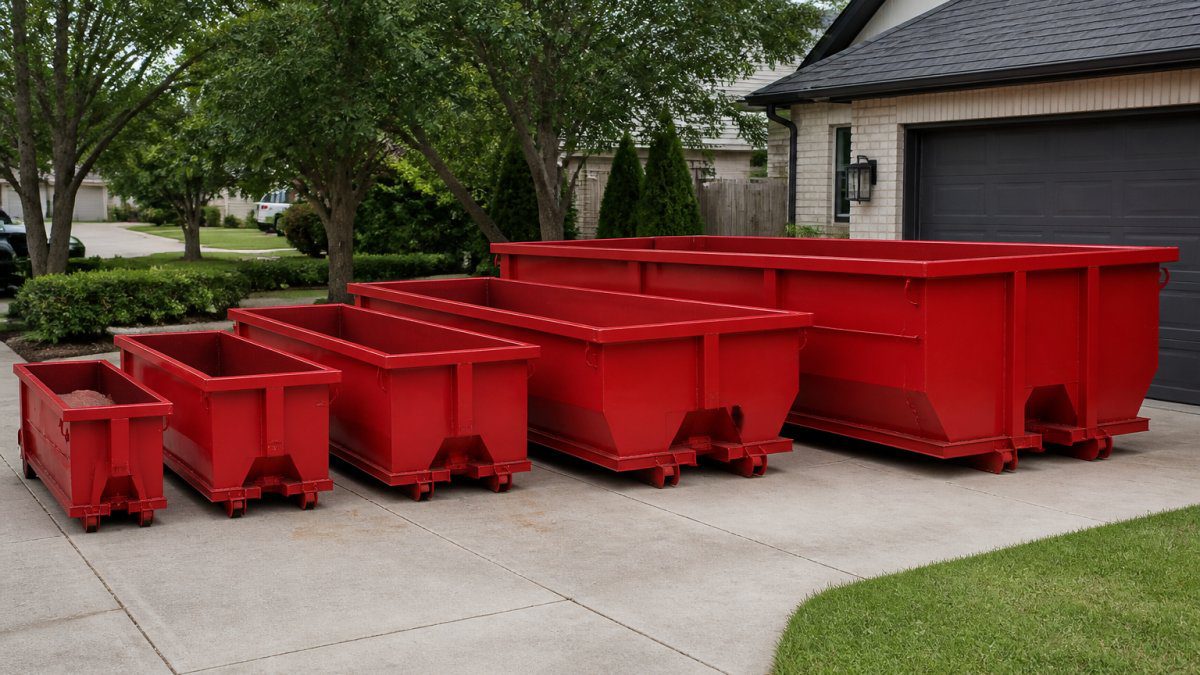
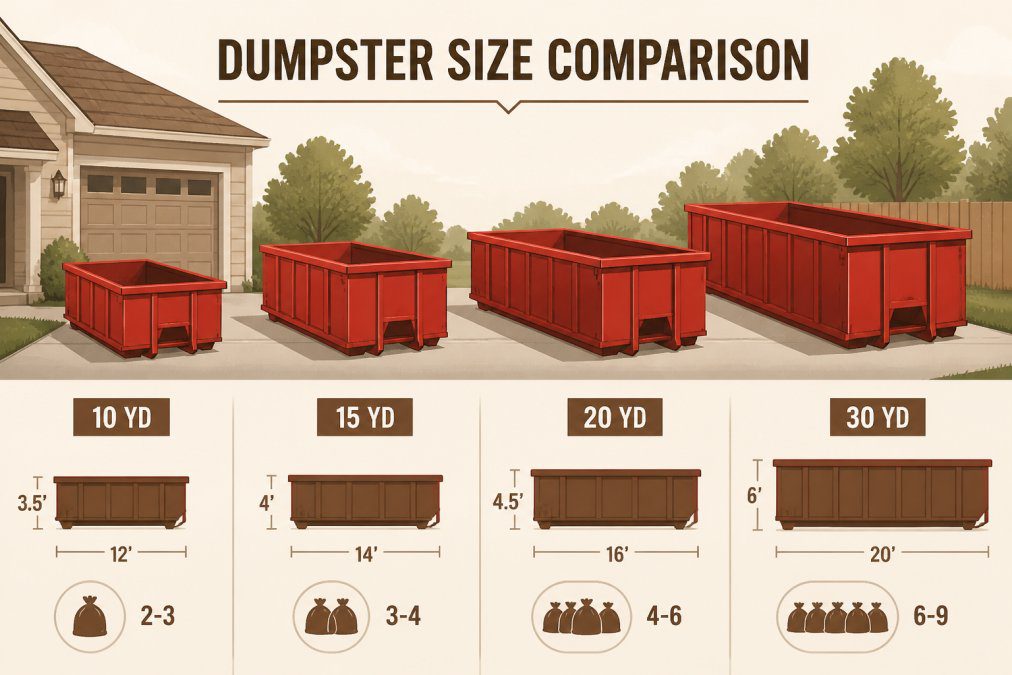
We offer four roll-off options designed to fit different project scopes. Each container is engineered for efficient loading and hauling, with same-day delivery available when your timeline is tight. Here’s how they stack up:
| Dumpster Size | Best For | Typical Projects | General Capacity |
|---|---|---|---|
| 15-Yard | Small projects, heavy materials | Garage cleanouts, light renovations | ~3-4 truckloads of general debris |
| 20-Yard | Medium home cleanouts | Bedroom/bathroom renovations, moderate decluttering | ~5-6 truckloads of general debris |
| 25-Yard | Larger general debris projects | Multi-room cleanouts, kitchen remodels | ~7-8 truckloads of general debris |
| 30-Yard | Whole-home cleanouts, major renovations | Complete house decluttering, large construction projects | ~9-10 truckloads of general debris |
15-Yard Dumpster: Small Projects and Heavy Materials
The 15-yard container is our most versatile size, and it’s the only option for heavy materials. If your decluttering involves large amounts of concrete, dirt, brick, or rock, this is your dumpster. For clean loads of these materials with no trash or other contamination mixed in, you may qualify for a break on tonnage, which can add real savings to your project.
Beyond heavy materials, the 15-yard works well for smaller residential projects: a single garage cleanout, a bedroom renovation, or spring cleaning that doesn’t require a larger footprint. The container is manageable in most residential driveways and doesn’t require extensive access considerations. Homeowners often pair this size with projects where space is limited or the debris volume is modest.
The trade-off is capacity. If you’re decluttering multiple rooms or expect significant volume, you’ll likely need to step up to a 20-yard or larger. Think of the 15-yard as your precision tool, ideal when you know exactly what’s coming out and it’s either heavy materials or a focused, smaller-scope project.
20-Yard Dumpster: Medium Home Cleanouts
The 20-yard dumpster is our most popular size for residential decluttering. It handles the typical medium-sized home cleanout, think one or two bedrooms, a bathroom, and some kitchen items, without forcing you to rent a larger container than you need. This size strikes the balance between capacity and cost-efficiency for most homeowners.
A 20-yard container works especially well for renovations that generate steady debris: flooring removal, cabinet replacement, or moderate demolition work. It’s large enough to absorb unexpected finds during a cleanout but not so massive that you’re paying for wasted space. Many contractors and property managers choose this size as their go-to because it covers the majority of residential scenarios.
One important note: do not use a 20-yard dumpster for large amounts of heavy materials like concrete, dirt, brick, or rock. Those items must go in a 15-yard container. The 20-yard is designed for general household debris, construction waste, and renovation materials.
25-Yard Dumpster: Larger General Debris
When a single room or two won’t cover your project, the 25-yard dumpster steps in. This size handles larger home cleanouts, multiple bedrooms, a full basement, or an attic, without requiring the footprint of our largest option. It’s the bridge between medium and large-scale decluttering.
The 25-yard works well for whole-home spring cleaning that generates substantial volume, kitchen and bathroom renovations combined, or estate cleanouts where you’re sorting through decades of accumulated items. It gives you breathing room if your estimate is slightly off, reducing the risk of needing a second container partway through your project.
Like the 20-yard, the 25-yard is for general debris only. Heavy materials require the 15-yard dumpster.
30-Yard Dumpster: Whole-Home Cleanouts
Our largest option, the 30-yard dumpster, is built for comprehensive home decluttering or major renovation projects. If you’re cleaning out an entire house, tackling a large-scale remodel, or managing a significant construction site, this container delivers the capacity you need without multiple pickups.
The 30-yard is particularly valuable when you’re uncertain about total volume and want to avoid the hassle and cost of a second rental. It’s also the choice for contractors managing demolition work, roofing tearoffs, or large-scale debris removal. The trade-off is driveway space, you’ll need room to accommodate a larger footprint.
Again, the 30-yard handles general debris only. Heavy materials go in the 15-yard.
Will a Couch Fit in a 15-Yard Dumpster?
Yes, a couch will fit in a 15-yard dumpster. Most standard couches are roughly 3-4 feet wide and 2-3 feet deep, which easily fits through the container opening and occupies manageable space inside. The real question isn’t whether it fits, it’s whether you should pair a single couch with a 15-yard rental.
If you’re decluttering a single room or doing a focused project where a couch is the primary large item, a 15-yard works fine. But if you’re removing a couch as part of a broader home cleanout, you’ll likely generate enough additional debris to justify moving up to a 20-yard or larger. Furniture takes up volume quickly when combined with other household items.
One practical tip: break down the couch if possible. Remove legs, disassemble the frame, and separate cushions. This compresses the footprint significantly and makes loading easier. Many homeowners are surprised how much space they reclaim by deconstructing furniture before loading.
What Can Fit in a 20-Yard Dumpster
A 20-yard dumpster holds roughly 5-6 truckloads of general household debris. In practical terms, that translates to the contents of a typical bedroom plus bathroom, or a moderate kitchen renovation with cabinetry and appliances. The container accommodates most standard furniture pieces, couches, dressers, tables, chairs, along with boxes of miscellaneous items, broken drywall, flooring, and construction waste.
Fill Out Form to Request Dumpster Rental →
What you can fit depends partly on how efficiently you load. Bulky items like furniture take up more space than densely packed boxes. If your project leans toward lightweight clutter, clothing, books, household goods in boxes, you can often fit more volume than if you’re removing large appliances and furniture.
What you cannot fit: large amounts of heavy materials. Concrete, dirt, brick, and rock belong in a 15-yard dumpster only. Mixing heavy materials into a 20-yard, 25-yard, or 30-yard container isn’t an option with our service.
Never overload a dumpster beyond the rim. Overfilled containers create safety hazards during transport and may result in additional fees. Load strategically, break down bulky items, and be honest about whether you need a larger size.
How Long to Rent a Dumpster for a Home Cleanout
Most residential decluttering projects take 3-7 days from start to finish. A typical rental period covers that timeframe comfortably, giving you buffer room if unexpected items surface or loading takes longer than anticipated. For larger whole-home cleanouts, 7-10 days is more realistic.
The rental duration depends on your project scope and how quickly you can sort, load, and haul. A focused garage cleanout might finish in a day or two. A multi-room home decluttering often stretches across a week. If you’re managing the project part-time around work or other commitments, build in extra days rather than rushing.
Our team can discuss your specific timeline when you request a rental. Same-day delivery is available when your schedule is tight, and flexible rental periods mean you’re not forced into an artificial deadline. The goal is keeping your project on schedule without unnecessary stress or rushed decisions about what to keep or discard.
Heavy Materials: Why Size Matters
This is where many homeowners make a costly mistake. Large amounts of concrete, dirt, brick, or rock must go in a 15-yard dumpster, not the 20-yard, 25-yard, or 30-yard. This isn’t a suggestion or a preference. It’s a requirement based on weight and container engineering.
Heavy materials are dense. A cubic yard of concrete weighs roughly 1.5 tons. A cubic yard of dirt or brick can weigh 1-1.5 tons as well. When you multiply that across multiple cubic yards, the total weight climbs fast. Placing heavy materials in a larger dumpster designed for lighter general debris creates imbalance during transport and violates weight regulations.
The 15-yard dumpster is engineered to handle that load safely. If your decluttering project involves removing a concrete patio, a brick fireplace, or significant landscaping debris, the 15-yard is your only option. And here’s the silver lining: if your load is clean concrete, dirt, brick, or rock with no trash or contamination mixed in, you may qualify for a tonnage break, which can offset the cost of the rental.
Heavy materials require the 15-yard dumpster. This protects the integrity of the container, ensures safe transport, and keeps your project compliant. It’s a hard line, not a gray area.
Choosing Your Dumpster: Key Considerations
Beyond size, a few practical factors shape your decision:
Access and Placement, Where will the dumpster sit? You’ll need a reasonably level, stable surface, your driveway, a parking area, or an open lot. Soft ground, gravel, or sloped terrain can complicate placement. Our team can advise on access requirements when you call for a quote.
Project Timeline, Are you working around a specific deadline? Same-day delivery can keep your project on schedule. If you have flexibility, standard delivery windows work fine and may offer cost advantages.
Volume Uncertainty, If you’re unsure whether you’ll fill a 20-yard or need a 25-yard, it’s often smarter to rent the larger size.
Material Type, This is non-negotiable. Heavy materials go in a 15-yard. General debris goes in 20-, 25-, or 30-yard containers. Mixing them creates problems and may incur additional fees.
Overage Fees, Understanding the pricing structure upfront prevents surprises. Our straightforward pricing means no hidden charges or unexpected tonnage fees. We’ll explain the terms clearly before you commit.
When you’re ready to move forward, our team at Austex Dumpsters can walk you through sizing based on your specific project.
Decluttering projects stall when you’re stuck waiting for the right dumpster or scrambling to fit overflow into an undersized container. Austex Dumpsters offers expert guidance on sizing and same-day delivery options that keep your project moving.
Frequently Asked Questions
What size dumpster is best for a home cleanout?
The right dumpster size depends on the scope of your cleanout. A 15-yard or 20-yard dumpster works for small to medium residential cleanouts, while a 25-yard or 30-yard dumpster suits larger projects or whole-home decluttering. Austex Dumpsters offers expert guidance to help you match your project to the right roll-off dumpster size, preventing overage fees and rental delays.
How do I estimate dumpster size for decluttering?
Start by listing what you’re removing: furniture, appliances, general household junk, yard waste, or construction debris. A 15-yard dumpster handles small room cleanouts; a 20-yard works for multiple rooms; a 25-yard or 30-yard suits whole-home projects. If you’re unsure, Austex Dumpsters provides expert sizing guidance to ensure you choose the right container capacity without overpaying or running short.
Will a couch fit in a 15-yard dumpster?
Yes, a couch fits in a 15-yard dumpster, though it takes up significant space. A typical sofa occupies roughly 60 cubic feet. Since a 15-yard container holds 405 cubic feet, you have room for the couch plus other household items. However, if your cleanout includes heavy materials like concrete, brick, dirt, or rock, a 15-yard dumpster is required for those materials by Austex Dumpsters.
What can fit in a 20-yard dumpster?
A 20-yard dumpster holds approximately 540 cubic feet and handles multiple couches, appliances, flooring, cabinets, and general household debris from medium-sized cleanouts or renovations. It’s ideal for garage, basement, or attic cleanouts, as well as roofing shingles and light construction waste. Austex Dumpsters does not recommend placing large amounts of concrete, dirt, brick, or rock in a 20-yard container.