
Table of Contents
- Alternatives to Dumpster Rental for Small Projects: Overview
- Junk Removal vs Dumpster Rental: Which Fits Your Project
- Dumpster Bags and Portable Containers for Small Cleanouts
- Bulk Trash Pickup: Municipal and Curbside Options
- Construction Debris Disposal Without a Roll-Off Dumpster
- Yard Waste Removal: Alternatives for Landscaping Projects
- Self-Hauling to a Landfill or Transfer Station
- How to Choose the Right Option for Your Project Size
- Frequently Asked Questions
Last Updated: October 10, 2026
Alternatives to Dumpster Rental for Small Projects: Overview
Not every cleanup requires a roll-off dumpster. For smaller jobs, a kitchen remodel, yard cleanup, or office declutter, renting a full dumpster often feels like overkill.
Alternatives to dumpster rental for small projects range from junk removal services to municipal bulk-waste pickup, each with distinct advantages depending on your timeline, budget, and debris type.
The choice comes down to three factors: debris volume, timeline, and whether you want to haul it yourself or hire help.
Junk Removal vs Dumpster Rental: Which Fits Your Project
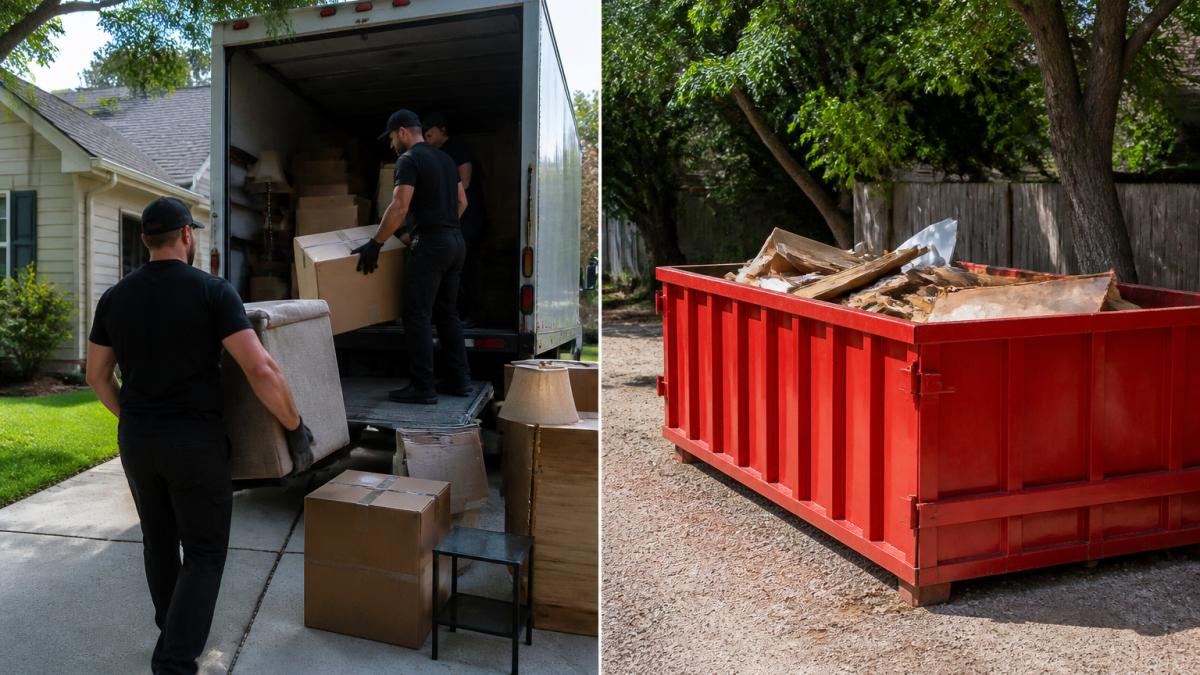
Junk removal services send a crew to haul away debris, furniture, and unwanted items, no loading required.
The trade-off is control: junk removal crews handle sorting and loading, while a dumpster rental lets you load at your own pace over days or weeks.
Junk removal works best for one-time cleanouts like garage clearing or estate sales. For ongoing construction or renovation debris, a dumpster rental offers more flexibility.
Choose junk removal for immediate removal; choose a dumpster rental if you’re working over several days and want to manage the pace.
Dumpster Bags and Portable Containers for Small Cleanouts
Dumpster bags offer a middle ground: a heavy-duty bag is delivered, you fill it, and the company picks it up when done.
This works for smaller projects where you load yourself but don’t need a full dumpster.
Dumpster bags suit moderate-volume projects like home renovations and basement cleanouts. However, they have weight and volume limits; once full, you need an additional bag for more debris.
For projects with large amounts of concrete, dirt, brick, or rock, a 15-yard dumpster is necessary. When filled with clean heavy materials and no trash contamination, a 15-yard dumpster may qualify for a tonnage break.
Bulk Trash Pickup: Municipal and Curbside Options
Many municipalities offer free curbside bulk-waste pickup on designated days, the most affordable option when available.
Limitations are significant: municipal pickup accepts only certain items (furniture, appliances, yard waste) within strict size and weight limits, and you’re bound by the city’s schedule.
Curbside pickup works for smaller, occasional cleanouts with accepted materials. For ongoing projects or mixed debris, it’s less practical.
Check your local municipality’s guidelines for what qualifies and when pickup occurs. Some areas offer monthly bulk-waste pickup; others are quarterly or by request. Planning around these schedules is essential if you’re relying on curbside removal as your disposal method.
Construction Debris Disposal Without a Roll-Off Dumpster
Construction debris requires proper disposal, but not all alternatives handle it effectively or legally.
Understanding Local Construction Debris Rules
Before choosing an alternative, confirm your local rules on accepted materials, hazardous-material handling, contamination restrictions, and weight/volume limits. Heavy materials like concrete, brick, and rock often incur surcharges that may exceed dumpster rental costs.
Self-Hauling to a Transfer Station: When It Works
Self-hauling to a transfer station eliminates rental costs but requires your time, vehicle, and fuel.
For a single small load, transfer-station fees are often minimal.
Why Self-Hauling Fails for Larger Projects
Dumpster Bags: Limited for Construction Debris
Dumpster bags have strict limits: weight caps (typically 3,300 pounds), volume limits (3-4 cubic yards), and material restrictions.
A 15-Yard Dumpster: The Right Choice for Heavy Construction Materials
Fill Out Form to Request Dumpster Rental →
Junk Removal Services: Rarely Suitable for Construction Debris
Junk removal services typically don’t handle construction debris; if they do, expect premium pricing.
Decision Guide for Construction Projects
- Small, light debris (1-3 cu. yd.): Dumpster bag or one transfer-station trip.
- Moderate debris (4-8 cu. yd.): Transfer station (2-3 trips) or dumpster bag (2-3 bags).
- Large debris with heavy materials (9+ cu. yd., includes concrete/brick/rock): 15-yard dumpster. Austex Dumpsters can confirm whether your debris qualifies for a tonnage break on clean heavy materials.
- Hazardous materials present (asbestos, lead paint): Hire a certified hazardous-waste removal contractor.
For any construction project, confirm local disposal rules and material restrictions before choosing an alternative.
Yard Waste Removal: Alternatives for Landscaping Projects
Yard waste has dedicated disposal channels. Many municipalities offer free yard-waste collection on a separate schedule; you bundle branches and bag leaves for curbside pickup.
For larger landscaping projects, ask whether your landscaper includes debris removal. Chipping services can reduce volume if you have a place to use the chips.
For projects generating significant yard waste volume, a 20-yard, 25-yard, or 30-yard dumpster handles large-scale landscaping cleanouts efficiently.
Self-Hauling to a Landfill or Transfer Station
Self-hauling to a transfer station works for small volumes (one truck bed or trailer load). Transfer stations accept most materials but have restrictions on hazardous waste, electronics, and certain appliances. For a single trip with a small load, it’s efficient; for multiple trips or large volumes, accumulated time and fuel can be significant.
How to Choose the Right Option for Your Project Size
Selecting the right disposal method requires matching three factors: debris volume, project duration, and material type.
Debris Volume Estimates
Understanding how much space your debris occupies helps you avoid undersizing or overpaying for capacity you don’t need.
- Small cleanout (1-3 cubic yards): Single room declutter, garage purge, or minor appliance removal. Fits in a dumpster bag or one transfer-station trip. Examples: clearing a bedroom closet, removing an old refrigerator, hauling away a couch.
- Medium project (4-8 cubic yards): Bathroom renovation, kitchen cabinet replacement, or yard debris from seasonal cleanup. Requires multiple dumpster bags or 2-3 transfer-station trips, or one junk removal appointment. Examples: bathroom remodel with tile and fixtures, deck staining with old boards, landscaping cleanup after storm damage.
- Large project (9-15 cubic yards): Full kitchen renovation, whole-room demolition, or significant yard work. A 15-yard dumpster is appropriate, especially if the debris includes heavy materials like concrete, dirt, brick, or rock. Examples: kitchen gut renovation, basement finishing with drywall removal, tree removal and stump grinding.
- Major project (16+ cubic yards): Whole-house renovation, major construction, or large-scale demolition. A 20-yard, 25-yard, or 30-yard dumpster is necessary. Examples: roof tearoff, addition framing, commercial renovation, estate cleanout of a large property.
Material Type Determines Usability
Not all alternatives accept all materials. Before choosing an option, verify what your debris includes:
- General household items and furniture: Accepted by junk removal, curbside pickup (where available), dumpster bags, and transfer stations. Most flexible option set.
- Yard waste (leaves, branches, grass clippings): Accepted by municipal yard-waste pickup (often free), landscaper debris removal, and dumpster rentals. Transfer stations often accept it but may charge separately. Dumpster bags may accept it depending on the provider.
- Construction debris (drywall, lumber, roofing, flooring): Accepted by transfer stations and dumpster rentals. Junk removal services sometimes accept it but often charge premium rates. Curbside pickup rarely accepts large volumes. A 15-yard dumpster is the most practical for ongoing construction projects.
- Heavy materials (concrete, dirt, brick, rock): Must use a 15-yard dumpster. Transfer stations accept these but charge by weight, which can exceed dumpster rental costs for large volumes. Self-hauling multiple trips becomes labor-intensive. Junk removal typically does not handle heavy materials. When a 15-yard dumpster is filled with clean concrete, dirt, brick, or rock with no trash contamination, you may qualify for a tonnage break, making it cost-effective for heavy-material projects.
- Electronics, appliances, hazardous materials (paint, batteries, fluorescent bulbs): Require specialized disposal. Transfer stations often accept these but at designated drop-off areas with separate fees. Curbside pickup rarely accepts them. Junk removal may accept some items but charges premium fees. Check local rules before assuming any alternative will take these materials.
Project Duration and Loading Pace
How quickly you need the debris gone affects which option works:
- One-time, immediate removal (1-3 days): Junk removal service. A crew arrives, loads everything, and hauls it away. No waiting for pickup schedules. Best for estate cleanouts, office relocations, or emergency debris removal.
- Flexible, multi-day loading (3-14 days): Dumpster bag or dumpster rental. You load on your schedule; pickup occurs when you call or on a scheduled date. Ideal for renovation projects where debris accumulates as you work.
- Scheduled municipal pickup (1-4 weeks): Curbside bulk-waste or yard-waste pickup. Free or included in trash service, but you must wait for the city’s collection day. Works only if your timeline allows the wait.
- Self-hauling on your schedule (1-7 days): Transfer-station drop-off. You control timing but must make trips yourself. Best for small loads and flexible schedules; impractical for large volumes or time-sensitive projects.
Decision Matrix: Material Type + Volume + Timeline
| Debris Type | Volume | Timeline | Best Option | Why |
|---|---|---|---|---|
| Household items, furniture | 1-3 cu. yd. | Flexible | Curbside pickup or dumpster bag | Low cost; no rush |
| Household items, furniture | 4-8 cu. yd. | Flexible | Dumpster bag or junk removal | Moderate volume; one-time or gradual |
| Household items, furniture | 9+ cu. yd. | Flexible | 20-yard, 25-yard, or 30-yard dumpster | Large volume; ongoing loading |
| Yard waste | 1-5 cu. yd. | Flexible | Municipal yard-waste pickup | Free; seasonal |
| Yard waste | 6+ cu. yd. | Flexible | 20-yard, 25-yard, or 30-yard dumpster | Large volume; efficient hauling |
| Construction debris | 1-3 cu. yd. | Flexible | Transfer station or dumpster bag | Small volume; manageable |
| Construction debris | 4-8 cu. yd. | Flexible | Dumpster rental (15-yard if heavy) | Moderate volume; multiple trips otherwise |
| Construction debris | 9+ cu. yd. | Flexible | 15-yard dumpster (if heavy); 20-yard, 25-yard, or 30-yard (if mixed) | Large volume; heavy materials require 15-yard |
| Heavy materials (concrete, dirt, brick, rock) | Any volume | Flexible | 15-yard dumpster only | Transfer stations charge by weight; self-hauling requires multiple trips; other services don’t accept |
| Electronics, appliances, hazardous waste | Any volume | Any | Specialized facility or junk removal (with premium fee) | Standard alternatives don’t accept; requires dedicated disposal |
Local Rules and Availability
Before committing to an alternative, verify local constraints:
- Curbside pickup: Not all municipalities offer it. Check your city or county waste department website for accepted materials, pickup frequency, and size/weight limits.
- Transfer stations: Confirm operating hours, accepted materials, current fees, and whether heavy materials (concrete, dirt) incur surcharges.
- Yard-waste collection: Verify whether your area offers separate yard-waste pickup and whether it’s free or fee-based.
- Dumpster bag providers: Confirm service availability in your zip code and weight/volume limits before ordering.
When in doubt, contact your local solid-waste management authority or visit their website to confirm what’s available and what restrictions apply to your project’s debris type.
Frequently Asked Questions
What are the best alternatives to dumpster rental for a small project?
For small projects, your main alternatives to dumpster rental include junk removal services, dumpster bags, curbside bulk-waste pickup, and self-hauling to a landfill or transfer station. Junk removal offers hands-off convenience, dumpster bags work well for modest amounts of debris, and municipal pickup is free for qualifying items. Self-hauling saves money if you have time and transportation. The best choice depends on your project size, debris type, and how much labor you want to handle yourself.
Is junk removal cheaper than renting a dumpster?
Junk removal and dumpster rental have different cost structures. Junk removal charges for labor and hauling, while dumpster rental charges for the container and disposal by weight. For very small cleanouts, junk removal may be a suitable option. For larger projects with heavy materials, a dumpster rental can be efficient. Compare quotes from both services for your specific project to determine the best fit.
Can I take construction debris to a landfill myself?
Yes, you can self-haul construction debris to a landfill or transfer station. Most facilities accept wood, drywall, metal, concrete, and mixed construction waste. You’ll need to transport the debris yourself, pay a per-ton or per-visit fee, and may need to make multiple trips if your debris volume is large. This option saves on rental fees but requires your own vehicle, time, and physical effort. Call your local landfill or transfer station first to confirm accepted materials and current fees.
When should I use a junk removal service instead of a dumpster?
Choose junk removal when your project is small, you have limited space for a dumpster, or you don’t want to load debris yourself. Junk removal works well for one-time cleanouts, estate sales, and minor home renovations. Use a dumpster rental when you have a large volume of debris, a longer project timeline, or heavy materials like concrete and dirt. Junk removal is more convenient for certain projects; a dumpster is better for volume and long-term projects.
How do construction debris disposal and yard waste removal differ?
Construction debris includes wood, drywall, metal, concrete, and roofing materials from renovation or demolition work. Yard waste consists of leaves, branches, grass clippings, and tree trimmings from landscaping. Many municipalities accept yard waste through separate green-waste programs or curbside pickup, often free or low-cost. Construction debris typically requires a dumpster, landfill drop-off, or junk removal service. Check your local waste management rules, as some facilities accept both, while others require separate disposal streams.