
Table of Contents
- Assess and Document Your Storm Debris
- Separate and Sort Your Debris by Type
- Hurricane Debris Cleanup Safety: What You Need to Know
- How to Move Debris from Your Property to the Curb
- City of Austin Storm Debris Collection and Pickup
- Roll-Off Dumpster Rental for Storm Cleanup
- Recycling and Disposal Options for Storm Debris
- When to Seek Professional Help
- Frequently Asked Questions
Last Updated: October 16, 2026
Assess and Document Your Storm Debris
Walk your property and identify all debris types. Photograph the damage for insurance before you dispose storm debris and cleanup begins.
Storm debris typically falls into several categories:
- Tree limbs and branches
- Fallen trees and large logs
- Roof shingles and building materials
- Yard waste and brush
- Household items and furniture
Adjusters need visual proof, and the photos help you plan disposal by material type.
Take photos from multiple angles and include recognizable landmarks (your house, street) so the adjuster can verify the damage location. This speeds up claims and helps you remember exactly what needs to go.
Separate and Sort Your Debris by Type
Sort by material type: each has a different route, recycling, city pickup, or dumpster.
Start by creating separate piles for each material category:
- Branches and brush: Small limbs under 4 inches diameter
- Large tree limbs: Pieces over 4 inches that won’t fit in yard waste bins
- Shingles and roofing materials: Asphalt shingles, felt, nails, flashing
- Wood debris: Lumber, plywood, drywall
- Metal: Gutters, downspouts, metal framing
Sorting takes time, but mixed loads are often rejected at drop-off, forcing a second haul. Separated materials move faster.
Never mix contaminated materials with clean ones. A pile of concrete mixed with dirt and trash loses its value for recycling. Keep heavy materials separate and uncontaminated if you want to avoid extra fees.
Hurricane Debris Cleanup Safety: What You Need to Know
Hurricane cleanup involves real hazards: falling branches, sharp metal, nails, glass, and contaminated water. Gear up before moving anything.
Wear the right protective gear:
- Work gloves rated for heavy debris handling
- Steel-toed boots or sturdy work shoes
- Safety glasses to protect eyes from flying debris
- Long sleeves and pants to protect skin
- Respirator or N95 mask if mold or dust is heavy
Watch for these dangers:
- Downed power lines: Never touch or move debris near lines. Call the utility to de-energize first.
- Unstable trees: Split trunks, hanging branches, or lifted roots can drop limbs without warning. Stay clear; hire a professional if it looks unsafe.
- Sharp objects: Nails, glass, and jagged metal hide in piles. Watch your step and hands.
- Heavy lifting: Wet wood is heavier than it looks. Bend your knees, not your back, and get help with large pieces.
- Contaminated water: Floodwater carries sewage, chemicals, and bacteria. Avoid contact and wash thoroughly if exposed.
If you feel unsafe, stop and call a professional crew. Your health matters more than saving on labor.
How to Move Debris from Your Property to the Curb
Once sorted, move debris from where it fell to the curb or a staging area.
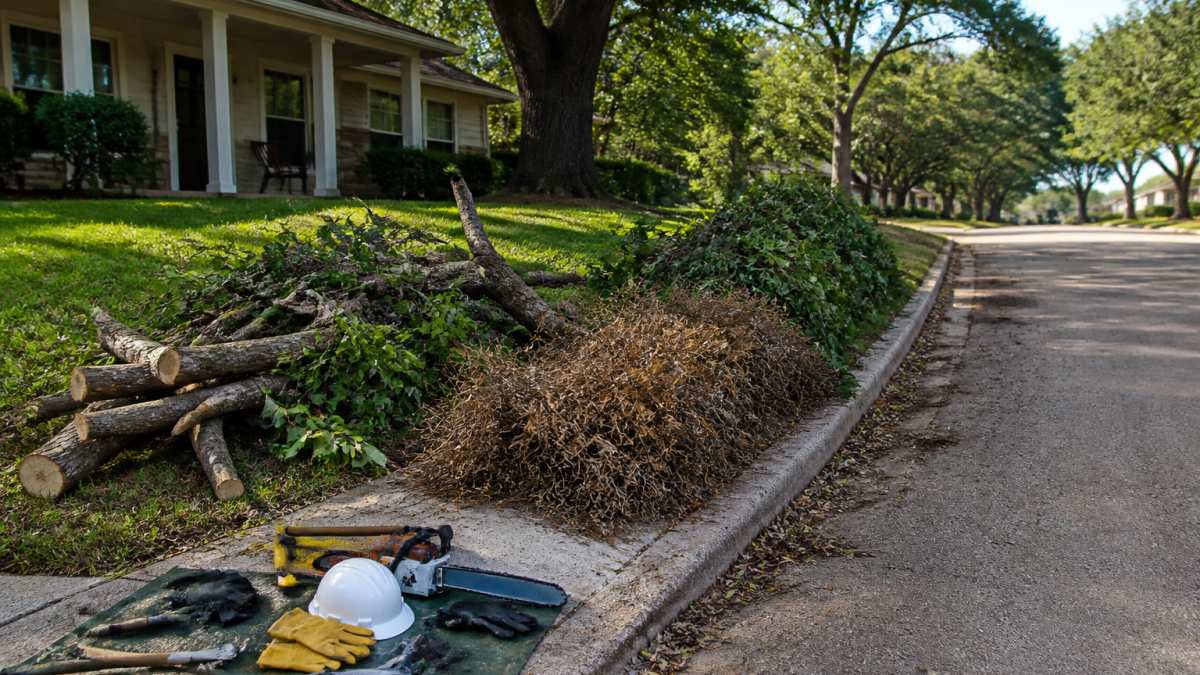
Start with the heaviest items and work in stages; fatigue leads to injuries.
For brush and branches:
- Gather small branches into bundles no larger than 4 feet long and 2 feet in diameter
- Tie bundles with twine or rope so they don’t scatter
- Stack bundles parallel to the curb, not blocking the street
- Leave space for traffic to pass safely
For larger limbs and logs:
- Cut pieces to manageable lengths if you have a chainsaw
- Stack parallel to the curb in a single row
- Do not pile higher than 4 feet (easier for collection crews to grab)
- Keep at least 6 feet from storm drains and mailboxes
For bulky items like furniture or roofing materials:
- Place at the curb in a separate pile from yard debris
- Stack flat items (plywood, shingles) neatly so they don’t shift
- Keep them away from tree debris piles
- Mark hazardous items (nails, sharp edges) with bright tape if possible
Curbside placement rules vary by neighborhood. Check with your city or HOA about exact setback distances and pile height limits before you start moving debris to the curb.
City of Austin Storm Debris Collection and Pickup
After a hurricane, the city, county, utility, and disaster agencies each handle different materials under different rules.
Who handles what:
- City solid waste and emergency debris crews: Curbside collection of storm-generated tree limbs, brush, and yard waste, and in some events bulky items, within the city service area. This is the program most residents mean when they say “city pickup.”
- County and regional programs: Unincorporated areas and some neighborhoods outside city limits may be served by county debris contracts or regional drop-off sites rather than city crews. Confirm which jurisdiction your address falls in.
- Utility crews: Downed lines, poles, and transformers are the utility’s responsibility, not a debris program. Never move debris touching a line; report it and wait.
- Disaster-response programs: After a federal or state declaration, additional debris contracts and reimbursement programs can activate. These often run on their own timeline and may use separate staging sites.
How city collection actually works:
City storm-debris collection is triggered by a storm event and runs in phases, starting with the hardest-hit areas.
To confirm your status:
- Check the city’s emergency management and solid waste pages for the current collection phase and any suspended regular services.
- Call 311 to confirm your address is in an active collection zone and to get the estimated window for your area.
- Ask which materials are being accepted in your zone, because accepted items can change between phases.
- Report missed piles through 311 rather than re-piling, so crews can log the address.
Separation rules that decide whether your pile gets picked up:
Crews use separate trucks and separate passes for different materials, so a mixed pile is often skipped. Keep these in distinct piles at the curb:
Fill Out Form to Request Dumpster Rental →
- Vegetative debris: Limbs and brush, cut to length and stacked parallel to the curb, not bagged unless the city says otherwise.
- Construction and demolition debris: Roofing, siding, drywall, and lumber from storm damage, kept apart from brush.
- Bulky items: Furniture, appliances, and mattresses, separated from both of the above.
- Household hazardous waste: Never at the curb; route to a hazardous waste program.
Placement matters as much as sorting. Keep piles off the street and sidewalk, clear of storm drains, mailboxes, hydrants, poles, and meters, and out of the path of crews and equipment.
Do not mix regular household trash, renovation debris, or hazardous materials into a storm-debris pile. Contamination is the most common reason a pile is left behind, and crews are not required to sort it for you.
When city pickup is not the answer:
City collection covers storm-generated vegetative debris but generally does not take construction debris from renovations, appliances, hazardous materials, or large amounts of concrete, dirt, brick, or rock that you need to dispose storm debris from. Austex offers 15-, 20-, 25-, and 30-yard containers; heavy materials like concrete, dirt, brick, and rock must go in a 15-yard dumpster, and clean loads of those materials with no trash mixed in may qualify for a break on tonnage.
Roll-Off Dumpster Rental for Storm Cleanup
When city collection is delayed, unavailable, or your debris doesn’t qualify, a roll-off dumpster is the fastest solution.
Austex Dumpsters offers four sizes that fit different cleanup scales:
- 15-yard dumpster: Best for general storm debris from smaller properties or single-tree damage. Also ideal for large amounts of heavy materials like concrete, dirt, brick, or rock, these materials perform best in a 15-yard dumpster.
- 20-yard dumpster: Handles moderate debris loads from larger yards or multiple fallen trees
- 25-yard dumpster: Works for significant storm damage across multiple properties or mixed debris types
- 30-yard dumpster: Largest option for major hurricane cleanup or commercial properties
If you’re unsure which size fits, our team helps you choose correctly the first time. Same-day delivery is available when you need to start immediately.
Customers who fill a 15-yard dumpster with clean concrete, dirt, brick, or rock with no trash mixed in may receive a break on tonnage charges.
Recycling and Disposal Options for Storm Debris
City pickup and dumpster rental are not the only routes. The right path depends on the material, how clean it is, and how fast you need it gone.
Route by debris type:
- Branches, brush, and leaves: Curbside yard-waste collection if regular service has resumed; otherwise a municipal drop-off center that grinds brush into mulch, or a roll-off dumpster for volume too large for bins.
- Large limbs and trunks: Curbside storm-debris collection during an active event, a tree-service company that chips on site, or a dumpster if the wood is mixed with other debris.
- Clean wood (lumber, plywood): Recycling or mulch operations when uncontaminated; landfill or dumpster when painted, treated, or mixed with roofing.
- Roofing shingles and felt: Generally landfill or construction-debris disposal; most recycling centers will not take asphalt shingles, so keep them out of brush piles.
- Metal (gutters, flashing, framing, appliances): Scrap-metal recyclers usually accept these and may pay by weight, which can offset other costs.
How fees actually work at drop-off sites:
Most transfer stations and landfills charge by weight with a minimum per load, and many add fees for tires, appliances with refrigerant, and mattresses.
During a declared disaster, some facilities waive fees for storm debris for a limited window or accept it only at designated sites. Rules change quickly, so confirm three things before you load the truck: whether your material is accepted, whether the storm-debris waiver is still active, and the current hours. City of Austin Solid Waste Services
Call the facility before you drive. Ask specifically whether they are accepting storm debris that day, what the per-ton rate and minimum charge are, and whether they require proof of residency. A five-minute call prevents a wasted trip with a full truck.
When recycling is not worth the trip:
If your debris is one mixed pile, or the nearest accepting facility is far and you’d need multiple trips, a roll-off dumpster is usually simpler and cheaper than repeated drop-off runs.
When to Seek Professional Help
Recognizing when to hire professionals protects your health and speeds recovery.
Hire a professional crew for:
- Downed power lines near debris: Never touch or move anything near power lines. Call the utility company first, then professionals for cleanup.
- Large trees requiring cutting: Chainsaw work is dangerous. Arborists have the right equipment and training.
- Roof damage requiring removal: Climbing on damaged roofs risks falls and injuries. Roofing contractors do this safely.
- Extensive flooding or contamination: Mold and bacterial growth require specialized cleanup. Professional remediation prevents health risks.
- Debris too heavy to move safely: If you can’t lift it with proper form, get help rather than injure yourself.
Professionals work faster and reduce injury risk, making them worth it for major storm damage.
Storm cleanup after a hurricane requires planning: sorting materials, understanding city collection rules, and choosing between free municipal pickup and faster private solutions. Austex Dumpsters provides roll-off dumpster rentals that fit any cleanup scale, with same-day delivery when time matters.
Frequently Asked Questions
How should I separate storm debris before pickup?
Sort debris into distinct categories: yard waste (leaves, grass, small branches), wood and tree limbs, construction materials (if applicable), and household items. Keep heavy materials like concrete or brick separate from lighter debris. This separation allows collection crews to process materials efficiently and ensures recyclable items reach the right facilities. Check your local guidelines for specific sorting requirements before placing debris at the curb.
When should I rent a dumpster instead of waiting for curbside collection?
Rent a roll-off dumpster if you have large volumes of debris, heavy materials like concrete or dirt, mixed debris types that don’t fit standard curbside guidelines, or if collection delays extend beyond your cleanup timeline. Dumpsters are also ideal for contractors and property managers handling multiple cleanup sites. Austex Dumpsters offers 15-yard, 20-yard, 25-yard, and 30-yard options sized to match your debris volume.
Is debris removal covered by homeowners insurance?
Many homeowners insurance policies include debris removal coverage as part of your dwelling coverage, but limits vary widely. Review your policy or contact your insurance agent to confirm coverage and any claim requirements. Document all debris and damage with photos before cleanup begins, as insurers often require evidence for reimbursement. Keep receipts for any professional removal or rental services you hire.
Where can I find current storm debris collection instructions for my area?
Contact the City of Austin or your local solid waste management office for official collection schedules, accepted materials lists, and curbside placement guidelines. Collection rules may change based on storm severity and service capacity. Visit the city’s website or call their non-emergency line for updates on collection delays, suspension notices, or special instructions specific to hurricane cleanup in your neighborhood.