
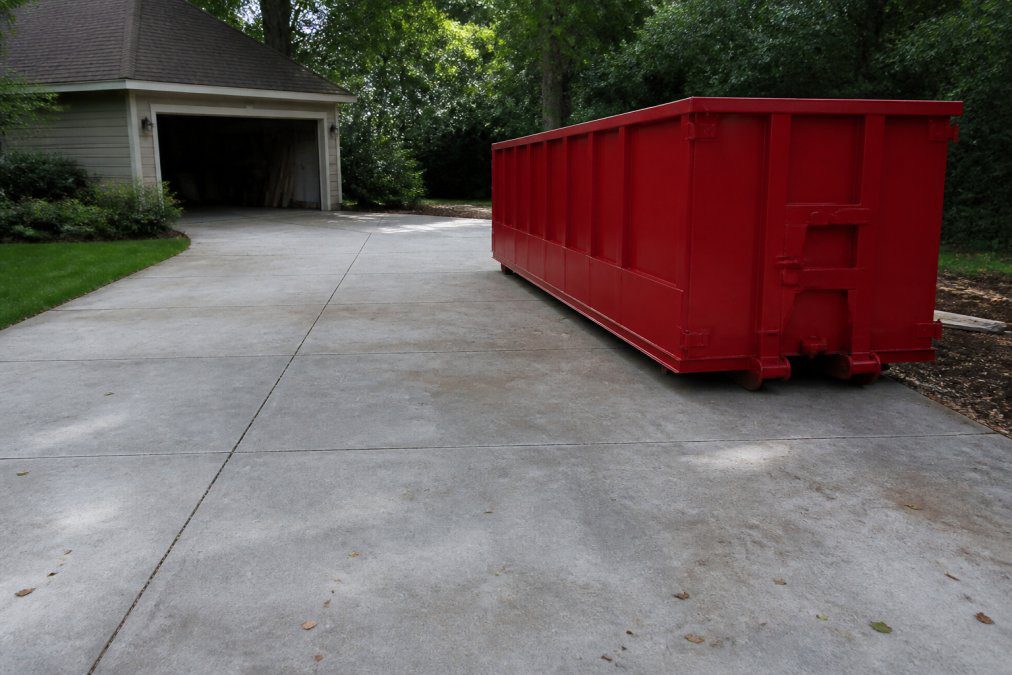
Table of Contents
- Why Driveway Prep Prevents Costly Damage
- Step 1: Measure Your Driveway and Choose the Drop-Off Spot
- Step 2: Check Dumpster Delivery Clearance Requirements
- Step 3: Protect Your Driveway Surface with Plywood
- Step 4: Inspect for Structural Issues and Level Ground
- Dumpster Rental Driveway Protection for Heavy Loads
- Step 5: Secure Permits and Clear the Delivery Path
- Post-Removal Driveway Maintenance and Weather Prep
- Frequently Asked Questions
Last Updated: September 9, 2026
Why Driveway Prep Prevents Costly Damage
Most driveway damage from dumpster rentals happens before the container ever arrives. The weight of a loaded roll-off dumpster, combined with the steel rails pressing down on a single line of contact, can crack concrete, gouge asphalt, or sink a soft shoulder in minutes. Taking thirty minutes to prepare driveway for dumpster delivery prevents costly repairs.
Step 1: Measure Your Driveway and Choose the Drop-Off Spot
Choose the drop-off spot before the truck arrives. You need a location that is level, within reach of the truck’s cable, and far enough from your home’s foundation to avoid any risk of contact. Roll-off trucks need roughly 60 feet of straight-line access to maneuver, and the container requires about 22 feet of linear space once placed (osha.gov). Mark your intended spot with cones or spray paint. Place the container on the firmest, flattest section of the driveway, typically the center strip, and keep at least 3 feet of clearance from walls, fences, and parked vehicles.
Step 2: Check Dumpster Delivery Clearance Requirements
Overhead Clearance and Utility Lines
Dumpster delivery clearance requirements start with what is above the driveway. The roll-off truck raises the container vertically, so low-hanging branches, roof overhangs, and utility lines pose a hazard.
You need at least 22 feet of vertical clearance with no obstructions (osha.gov). Trim any branches that hang lower than this and note overhead service lines. If a utility line crosses your driveway, tell the rental company when you book.
Trucks also need horizontal room to swing the container into place. Sharp curves or narrow gates can make delivery impossible regardless of surface preparation.
Width and Turning Radius for Truck Access
The delivery truck is roughly 8 feet wide and needs a turning radius of about 40 feet (fmcsa.dot.gov). If your driveway is narrow, choose a spot closer to the street where the truck has more room to maneuver.
Gate openings are a common failure point. Measure the actual opening and confirm it is wider than the truck’s clearance needs. If the truck cannot reach your spot, the driver may place the container on the street or lawn instead.
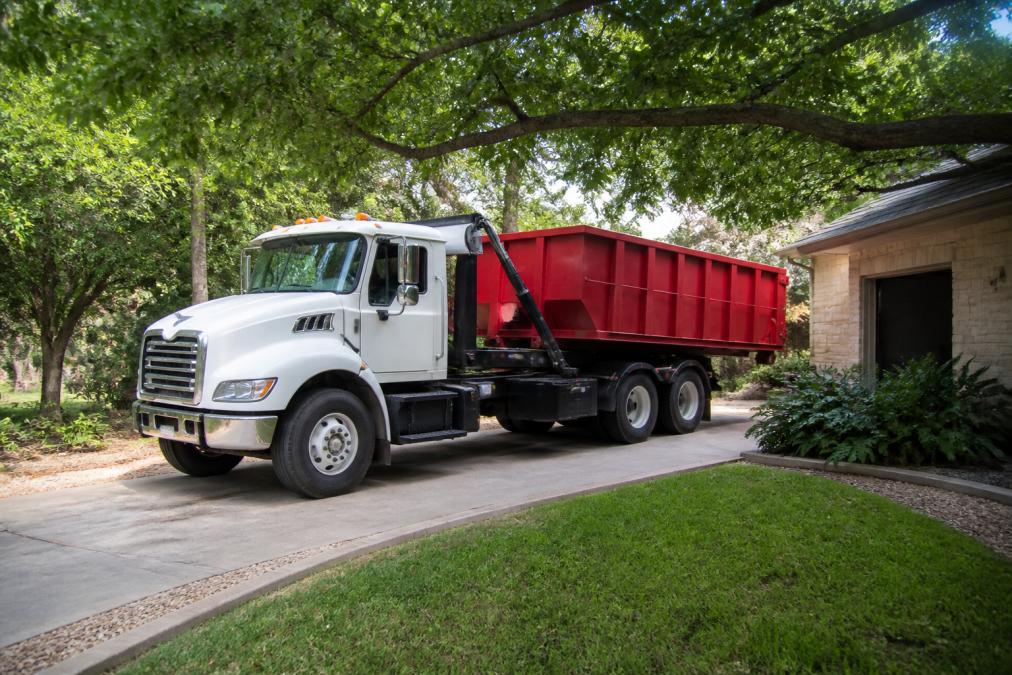
Step 3: Protect Your Driveway Surface with Plywood
Plywood protection is the single most effective measure to prevent driveway damage. The container’s steel rails concentrate thousands of pounds onto a narrow contact strip, and plywood spreads that weight across a wider area.
Use 3/4-inch plywood boards cut into 2-foot by 8-foot strips, placed lengthwise under where the container rails will sit. Position two parallel strips spaced to match the rails’ width and extend them slightly beyond the container’s footprint at both ends.
Cut your plywood strips a few inches longer than the dumpster on each end. When the driver sets the container down, the rails often shift slightly forward or backward. Extra board length keeps the steel on plywood even with that movement.
Asphalt Driveways: Heat Softening and Groove Prevention
Asphalt is the most vulnerable surface for dumpster placement. It softens in direct summer heat, and the steel rails can sink in, leaving permanent grooves. For asphalt driveways, plywood is essential. Use full 3/4-inch boards, never OSB or particle board, which can delaminate under pressure. Extend the boards at least 6 inches beyond the container footprint. If your asphalt is older than 10 years or shows alligator cracking, add a second layer of plywood. Schedule delivery for the coolest part of the day during summer months, and check the contact points mid-rental for sinking if the container remains for more than a week.
Concrete Driveways: Joint Bridging and Crack Protection
Concrete handles compressive weight well but fails under flexural stress. The risk points are expansion joints, control joints, and existing hairline fractures. When a rail crosses a joint, each slab flexes independently, causing cracks. Place plywood so it bridges these joints rather than resting on top of them, and position the container so the rails run parallel to the joints rather than perpendicular. Do not place a dumpster on concrete that has been poured or sealed within the last 30 days; concrete continues curing for up to 28 days, and a loaded container can cause surface dusting, scaling, or micro-cracks.
Paver Driveways: Edge Restraint and Sand Bed Protection
The weight of a loaded container can displace the sand bedding layer beneath pavers, causing units to settle unevenly. For paver surfaces, use wider boards than for asphalt or concrete. A 2-foot by 8-foot board is the minimum; 4-foot by 8-foot sheets cut in half lengthwise spread the load across multiple paver units so no single paver bears the full rail load. Check the edge restraints before delivery; if the edge restraint is loose or missing, reinforce it with stakes or temporary lumber before the truck arrives.
Gravel Driveways: Base Compaction and Matting
Gravel driveways are often assumed to be immune to damage, but the container’s weight can push gravel into the soil base, creating a depression that collects water. Lay a double layer of plywood on gravel surfaces, with the bottom layer running perpendicular to the top, to create a semi-rigid mat that distributes the weight across a wider footprint. Alternatively, use heavy-duty interlocking driveway mats. If your gravel driveway has a fabric underlayment, verify it is intact before delivery and patch any damage before the container arrives.
Curb and Shoulder Considerations
Regardless of surface type, the driveway edge is the weakest point. Keep the container at least 2 feet away from any uncurbed edge. If your driveway has a concrete curb, confirm it is reinforced and in good condition before allowing the truck to drive over it.
Step 4: Inspect for Structural Issues and Level Ground
Before delivery day, walk the entire driveway and look for existing damage. Cracks wider than a quarter-inch, sinking or spongy areas, and previously patched sections are warning signs that the base may be compromised. If you find soft spots, do not place the dumpster over them; choose a different location or ask about alternative placement options. Level ground matters for safety, if your driveway slopes more than a few degrees, request that the driver use cribbing or blocks to level the container.
Seasonal Ground Condition Assessment
Driveway structural integrity changes with the seasons. The soil beneath expands and contracts with moisture content, and its load-bearing capacity varies dramatically by time of year.
Winter and Frozen Ground: Frozen soil is stronger than thawed soil in most cases. The risk comes during freeze-thaw cycles, when the upper layer becomes saturated and weak while the deeper layer remains frozen, causing sudden settlement under load. If scheduling delivery during late winter or early spring, check ground conditions in the days before arrival. If daytime temperatures have been above freezing but nights are still cold, wait for consistent temperatures or choose a spot that drains well.
Fill Out Form to Request Dumpster Rental →
Spring Thaw and Saturation: The most dangerous time for dumpster placement is during spring thaw. Snowmelt and rain saturate the soil, and water has nowhere to go if the ground is still frozen below. This saturated layer can lose up to 50 percent of its load-bearing capacity. Walk across the driveway and feel for spring or give under your feet; if the surface moves noticeably, the base is saturated. Postpone delivery until the ground has dried out, typically 3 to 5 days of dry weather.
Summer Drought and Shrinkage: Clay soils shrink as they dry, pulling away from the underside of concrete slabs and creating voids. A concrete driveway that looks solid may have hollow spots beneath it, and a loaded container can crack the slab from lack of support. Tap the driveway surface with a hammer; a hollow sound indicates a void. Mark these areas and avoid placing the container over them.
Rainy Season and Drainage Patterns: The area where water pools after rain is the weakest spot on your surface. Even if the driveway looks dry on delivery day, the soil beneath a poorly drained area may still be saturated. If a downspout discharges onto the driveway near your intended placement spot, redirect it before delivery, as constant water flow undermines the base.
Subsurface Utility Lines and Irrigation
Before marking your placement spot, confirm what lies beneath the driveway. Underground utility lines, irrigation pipes, and septic systems can be damaged by the weight of a loaded container. Call your municipality’s utility locator service at least 3 business days before delivery. Irrigation systems are a common oversight, many homes have sprinkler lines running beneath driveways, and a loaded container can crush these lines. Check the plans or contact the installer to confirm line locations.
Testing for Soft Spots
A systematic soft spot test takes about 10 minutes. Walk the full length of the driveway in a grid pattern, applying firm pressure with your heel, and mark any spongy or springy areas with spray paint. For a more rigorous test, use a steel rod to probe the ground at the driveway edges; if it sinks easily more than 6 inches, the base is likely weak.
Never place a dumpster on a driveway during active rain or immediately after heavy precipitation. Saturated soil beneath the surface loses its structural integrity, and the weight of a loaded container can cause the entire section to sink or shift. This applies to all surface types, including concrete, which relies on soil support for its structural strength.
Cribbing and Leveling Requirements
If your driveway has a slope greater than 2 degrees, the driver will need to level the container using cribbing blocks, typically 4×4 or 6×6 lumber stacked to create a level platform, placed under both rails at the low side of the slope. Check that the cribbing material is in good condition before delivery; cracked or rotted lumber can fail under load. If providing your own cribbing, use pressure-treated lumber rated for ground contact. For driveways with slopes greater than 5 degrees, discuss placement options with the rental company before delivery day.
Dumpster Rental Driveway Protection for Heavy Loads
Dumpster rental driveway protection becomes critical when the load itself is heavy. Certain materials require special handling to protect your surface and comply with safety standards.
Use a 15-Yard Dumpster for Concrete and Dirt
Large amounts of heavy material such as concrete, dirt, brick, or rock must go in a 15-yard dumpster.
Austex Dumpsters offers 15-yard, 20-yard, 25-yard, and 30-yard roll-off dumpsters, and our team will help you match the right size to your project. For tearing out a patio, excavating a flower bed, or removing an old brick walkway, the 15-yard unit is your option for the heavy stuff.
Customers may receive a break on tonnage when a 15-yard dumpster is filled with clean concrete, dirt, brick, or rock with no trash or other contamination. Keep heavy loads pure to qualify.
Step 5: Secure Permits and Clear the Delivery Path
Check with your local municipality about whether a permit is required before placing a dumpster on your property. Some jurisdictions require one even for containers on private driveways. Your rental company can typically advise on local requirements, but obtaining the permit is usually your responsibility; failure to secure it can result in fines and may force you to move the container mid-project. Clearing the delivery path is the final step, move vehicles, trash cans, potted plants, and lawn furniture out of the way, and confirm that any gates can be opened fully and will stay open during delivery.
| Preparation Task | Time Needed | Frequency | Impact of Skipping |
|---|---|---|---|
| Measure driveway and mark drop spot | 15 minutes | Once per rental | Truck cannot position container |
| Check overhead and width clearances | 10 minutes | Once per rental | Delivery refusal or line damage |
| Lay plywood under rail contact points | 20 minutes | Once per rental | Cracks or gouges in surface |
| Inspect for soft spots and level ground | 10 minutes | Once per rental | Surface collapse under load |
| Secure permits and clear path | Varies | Before delivery | Fines or forced container move |
Post-Removal Driveway Maintenance and Weather Prep
The job is not done when the truck hauls the empty container away. Post-removal maintenance catches any damage early while it is still repairable. After pickup, inspect the area where the container sat for hairline cracks, slight indentations, or displaced gravel. Small issues caught immediately are far cheaper to fix than structural problems discovered months later. Weather preparation matters on both ends of the rental: in hot weather, asphalt softens, so schedule deliveries for cooler morning hours; in cold weather, freezing and thawing cycles can widen existing cracks, so seal problem areas before the container arrives.
Never place a dumpster on a driveway during active rain or immediately after heavy precipitation. Saturated soil beneath the surface loses its structural integrity, and the weight of a loaded container can cause the entire section to sink or shift.
It takes under an hour to prepare driveway for dumpster rental, but it prevents damage that can cost thousands to repair. Measure your space, confirm clearances, lay down plywood protection, and inspect for weak spots before the truck arrives. For heavy loads like concrete, dirt, or brick, request a 15-yard dumpster and keep the load free of contamination to qualify for a tonnage break. Austex Dumpsters offers same-day roll-off dumpster delivery with expert guidance on sizing and placement. Fill out the form to request a dumpster rental and get the right container for your job.
Frequently Asked Questions
Does a dumpster ruin your driveway?
A dumpster can damage a driveway if the surface is weak or the ground is soft. The main risks are cracks from the weight and scrapes from the metal container. Placing 3/4-inch plywood boards under the dumpster’s contact points spreads the load and prevents most damage. Inspect your driveway for existing cracks or sinking areas before delivery. If you see significant structural issues, ask the rental company about placing the dumpster on the street instead.
What should I put under a dumpster to protect my driveway?
Use 3/4-inch thick plywood boards under the dumpster’s rails and where the truck’s tires will roll. The boards distribute the concentrated weight across a larger surface area, which protects asphalt from indentations and concrete from stress cracks. Place at least two boards side by side in the drop-off spot. This simple step is the most effective dumpster rental driveway protection method for both asphalt and concrete surfaces.
How much space do I need for a dumpster delivery?
You need about 60 feet of straight-line access for the delivery truck and a drop-off area roughly 10 feet wider than the dumpster itself. For a 20-yard dumpster, plan for a clear space about 22 feet long and 8 feet wide. The truck also needs 14 feet of vertical clearance for the overhead arm. Check for low-hanging tree branches, utility lines, or eaves before scheduling delivery.
Can a 15-yard dumpster for concrete be placed on my driveway?
Yes, a 15-yard dumpster for concrete and other heavy materials like dirt, brick, or rock is the only size recommended for driveway placement with these loads. The smaller footprint concentrates weight less than larger containers filled with the same material. Always use plywood protection underneath. Customers may also receive a break on tonnage when the 15-yard dumpster contains only clean concrete, dirt, brick, or rock with no trash mixed in.