
Table of Contents
- Start With a Plan: Sort Your Debris First
- Load Heavy Debris First to Build a Stable Base
- How to Pack a Dumpster for Maximum Space
- Understanding Dumpster Weight Limits and Overage Fees
- Know the Prohibited Dumpster Items
- Safety First: Gear, Lifting, and Loading Techniques
- Final Checks Before You Schedule a Pickup
- Efficient Dumpster Loading Starts With the Right Rental
- Frequently Asked Questions
Last Updated: September 5, 2026
Renting a dumpster is only half the battle; knowing how to load dumpster efficiently separates a smooth, affordable project from one plagued by overage fees. This guide from Austex Dumpsters walks you through proven methods to maximize every square foot of space while staying safe.
An efficient load means you fit more debris in a single container, keep the weight within legal limits, and avoid a refused pickup. Below, we cover the planning phase, the physical loading sequence, common mistakes, safety gear, and rules about what can go in your rental.
Start With a Plan: Sort Your Debris First
The most common mistake is treating the container like a trash can. Instead, sort your debris into piles before you start throwing anything. This step dictates your entire loading sequence.
Create distinct piles for heavy materials, bulky items, general waste, and anything that is recyclable or prohibited. For example, separate clean concrete or dirt from mixed construction debris. This matters because many providers, including Austex Dumpsters, offer a break on tonnage when a 15-yard dumpster is filled with clean concrete, dirt, brick, or rock with no trash or other contamination. Mixing materials can disqualify you from that benefit and make the load heavier than necessary.
Load Heavy Debris First to Build a Stable Base
Heavy items always go in first. This protects the structural integrity of the container and creates a flat, stable platform for lighter waste. Start with materials like concrete chunks, bricks, dirt, or old pavers.
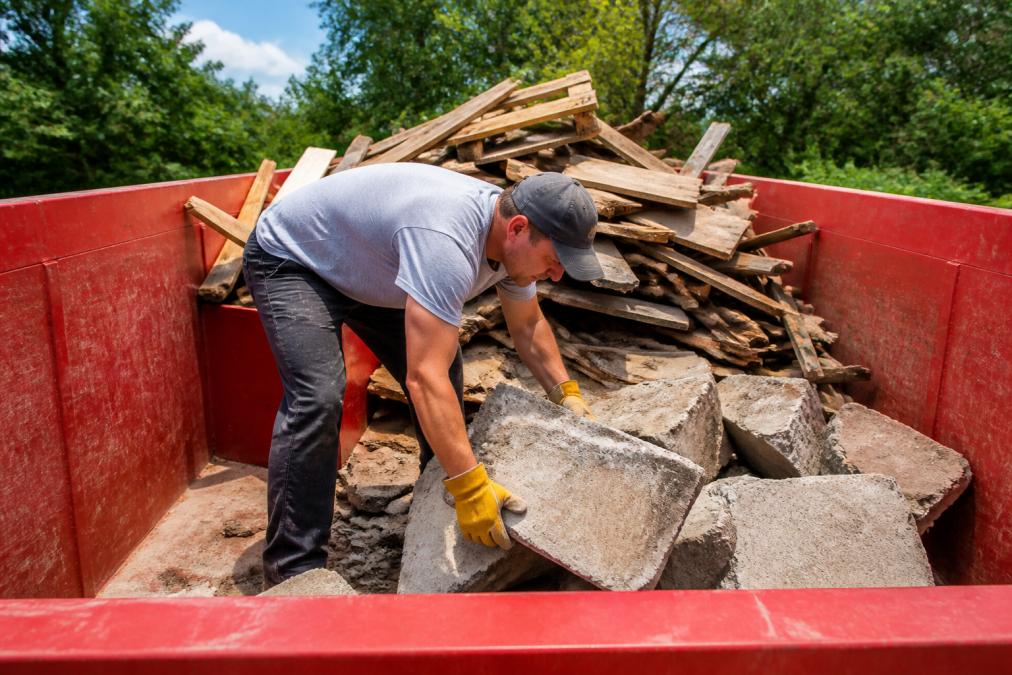
Place these dense materials directly on the floor, distributing weight evenly across the base to avoid stressing the frame. This base layer acts as ballast, preventing shifting. Remember, large amounts of heavy material such as concrete, dirt, brick, or rock must go in a 15-yard dumpster; they are not suitable for larger containers due to weight limits.
How to Pack a Dumpster for Maximum Space
Once your heavy base is set, the goal shifts to eliminating void space. Packing a dumpster for maximum space is a game of Tetris with your debris, creating a solid, level mass with no air pockets. The rules change depending on what you are loading. Here is how to approach the most common material categories.
Break Down Bulky Items Before Loading
Bulky items are the biggest space wasters. A single sofa can consume the volume of dozens of smaller boxes. Disassemble items before they go in: remove table legs, take doors off hinges, and break down cardboard boxes flat.
For construction debris, pry apart framed lumber where possible. For household junk, cut up old mattresses or break down particleboard furniture into stackable pieces. This compacting significantly reduces volume and is one of the most effective ways to maximize space.
Material-Specific Loading Strategies
Furniture and Bulky Waste: The primary enemy here is trapped air. Always remove drawers from dressers and stack them separately. For sofas and recliners, if you can remove the legs and any metal frames, do so. When loading, place these items upside down to create a flat surface, allowing you to stack other items on top. Do not toss a couch in upright; it creates a massive, unusable void underneath.
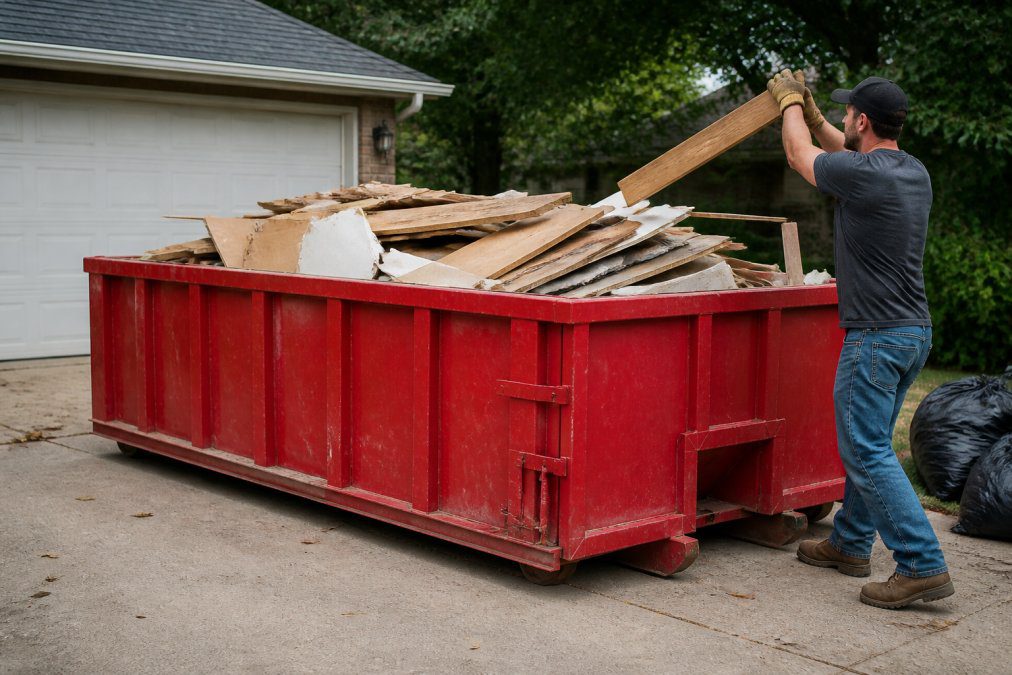
Drywall and Lumber: These materials are long and flat, making them ideal for creating level surfaces. Lay drywall sheets flat on top of a layer of smaller debris to create a new ‘floor’ within the dumpster. Do not lean drywall against the sides of the container; it leaves a triangular void at the bottom and can be damaged by heavier items placed against it. For lumber, stack it in a crisscross pattern at the ends to create a stable, interlocking grid that prevents shifting.
Concrete, Brick, and Rock: These materials are governed by weight, not volume. Large amounts must go in a 15-yard dumpster and should form the base layer, not sit on top of lighter debris. Break up large slabs into pieces no larger than 12 inches across so they settle more densely. A 15-yard dumpster filled with clean concrete, dirt, brick, or rock with no trash or other contamination may qualify for a break on tonnage, so keep these materials pure.
Mixed Household Junk: This is where the ‘fill as you go’ rule is most critical. After placing a bulky item, immediately fill the gaps around it with loose boxes, clothing, or smaller debris. This prevents the smaller items from sifting down later and creating voids at the top of the load.
Fill Gaps and Voids as You Go
As you load, you will notice gaps between larger objects. Do not wait until the end to fill them. Adopt a practice of filling voids as you go, using smaller, loose debris like scrap wood, drywall pieces, or yard waste. This creates a denser, more stable load and prevents shifting during transport.
Think of the process in layers. After placing a layer of bulky items, sweep smaller debris into the gaps to create a new, flatter surface. Then, add the next layer of bulky items. This technique of flat-loading ensures you are using the full cubic yard capacity of the container, rather than leaving a pyramid of waste with wasted space at the top corners.
A common pattern among professional loaders is to keep a ‘filler bucket’ nearby. As you work, toss small, loose debris into a dedicated bucket. When you finish placing a large item, use the bucket to immediately fill the surrounding voids instead of making a separate trip to a debris pile.
Understanding Dumpster Weight Limits and Overage Fees
Efficient loading is not just about volume; it is about weight. Every dumpster rental has a tonnage allowance, and exceeding it triggers overage fees. A dumpster can look full while still under its weight limit, or be half-full and dangerously overweight. Here is the practical math that prevents a surprise invoice.
Why Weight Limits Vary by Container Size
The weight limit is determined by container size and debris type. A 15-yard dumpster filled with heavy debris like concrete will reach its weight limit long before it is full, which is why large amounts of heavy material must go in a 15-yard dumpster. Conversely, a 30-yard dumpster filled with light household junk might reach capacity before it comes close to the weight limit.
How to Estimate Your Debris Weight Before Loading
To avoid surprises, estimate your debris weight before the dumpster arrives. The most reliable method is to use standard weight-per-cubic-yard averages for your material types. These are not exact, but they provide a critical reality check.
- Mixed Construction Debris: A cubic yard of mixed construction debris (wood, drywall, metal scraps, packaging) typically weighs between 300 and 500 pounds (the EPA). If your project is a full demolition, lean toward the higher end.
- Household Cleanout Junk: A cubic yard of mixed household goods (furniture, clothing, toys, general trash) is significantly lighter, often falling between 150 and 250 pounds per cubic yard.
- Concrete, Brick, and Rock: This is the outlier. A single cubic yard of broken concrete can weigh over 1,500 pounds (nist.gov). This is why a 15-yard dumpster filled with clean concrete will hit its weight limit long before the container is visually full.
The Calculation Method:
- Estimate Volume: Look at your debris piles and estimate their volume in cubic yards. A standard pickup truck bed holds about 2 cubic yards. A small pile (4ft x 4ft x 4ft) is roughly 2.5 cubic yards.
- Apply the Weight Factor: Multiply your estimated volume by the weight-per-yard factor for your dominant material.
- Add a Buffer: Add 10-15% to your final number to account for moisture (wet debris is heavier) and small items you may have missed.
The ‘Clean Load’ Advantage for Heavy Materials
For projects with large amounts of concrete, dirt, brick, or rock, the strategy changes. These materials must go in a 15-yard dumpster, and there is a financial advantage to keeping the load pure: customers may receive a break on tonnage when a 15-yard dumpster is filled with clean concrete, dirt, brick, or rock with no trash or other contamination. Do not toss in old lumber or household trash, as mixing disqualifies you from that benefit. If you have a mixed project, consider a separate container for heavy materials.
The ‘Looks Full’ Trap
A common mistake is judging fullness by eye. A 20-yard dumpster filled with light furniture might look full but weigh well under its limit, while a 15-yard dumpster half-filled with dirt and concrete could be at maximum capacity. Do not assume that space at the top means you can keep loading heavy items. Ask your rental provider for guidance on weight limits.
Never attempt to ‘compact’ a load by driving a vehicle over it or pushing down with heavy equipment. This can damage the dumpster’s structure and create a load that is impossible to haul safely. The only safe compaction is the kind you do by hand, breaking down items and filling voids.
Know the Prohibited Dumpster Items
Even the most efficient loading plan fails if you include prohibited items. Most hazardous materials and liquids are banned to protect waste management workers and the environment.
Common prohibited dumpster items include paints, solvents, oils, and other flammable liquids (the EPA). Tires, batteries, and electronics (e-waste) are also typically banned due to specific recycling requirements. Asbestos, medical waste, and untreated biohazards are strictly forbidden. Placing these items in your dumpster can result in your load being rejected at the disposal site, leading to delays and additional fees. Check with your local waste management provider for the full list, as regulations can vary by municipality. When in doubt, ask your dumpster company before you toss an item in.
Safety First: Gear, Lifting, and Loading Techniques
Loading a dumpster is physical work. At a minimum, wear heavy-duty work gloves to protect against sharp metal and broken glass. Steel-toed boots protect your feet from falling debris, and safety glasses shield your eyes from dust.
When lifting heavy items, use safe lifting techniques: bend at the knees, keep your back straight, and lift with your legs. Never twist your torso while carrying a load. For items that are too heavy to lift alone, use a wheelbarrow or ask for help. A common safety hazard is walking on top of the debris to compact it. While some stepping is necessary, be aware of unstable footing and never climb onto a load that is more than halfway full. The higher you climb, the greater the risk of a serious fall.
Final Checks Before You Schedule a Pickup
Before you call for a pickup, a final inspection prevents costly delays. Check the load line, which indicates the maximum fill level. Overfilling is a safety hazard and most companies will refuse to pick up an overfilled container. A well-packed dumpster will be level, while a poorly packed one will have a mound in the center.
Second, walk around the dumpster and remove any items sticking out over the edges. This is called tarping readiness. If you have lightweight debris at the top, ensure it is contained so it does not blow out during transit. Finally, confirm that no prohibited items have accidentally been mixed in. A quick visual scan can save you from the frustration of a rejected load. Once these checks are done, you can schedule your pickup with confidence.
Efficient Dumpster Loading Starts With the Right Rental
Mastering the techniques above will save you time and money, but even the best loading strategy cannot overcome the wrong container. Renting a container that is too small risks overage fees; renting one that is too large means you pay for unused space.
At Austex Dumpsters, we offer roll-off dumpsters in 15-yard, 20-yard, 25-yard, and 30-yard sizes to match projects of any scale. Our team provides expert guidance on dumpster sizing so you select the right container the first time. We also provide competitive and straightforward pricing, so there are no surprise charges, and our same-day delivery keeps your project on schedule. If you are taking on a major renovation or cleanout, get the right dumpster from the start and load it with the confidence that comes from a plan.
Frequently Asked Questions
How high can I fill a dumpster rental?
Fill the dumpster only to the top edge of the walls. Debris must stay level with the sides and must not stick up above the rim. Overfilling creates a safety hazard during transport and will trigger overage fees. If you have more waste than fits level, schedule a second pickup or swap for a larger dumpster size. Austex Dumpsters offers 15-, 20-, 25-, and 30-yard options to match your project volume.
What is the most efficient way to load a dumpster?
The most efficient method is layering. Start with a flat base of heavy debris like concrete or dirt, then stack bulky items and fill gaps with loose waste. Break down furniture and construction materials to eliminate empty space. Load flat and level rather than building a pile in one corner. This approach maximizes usable volume and helps you stay within dumpster weight limits, preventing costly overage fees.
What items are prohibited from being placed in a dumpster?
Hazardous materials like paint, solvents, chemicals, asbestos, and batteries are prohibited in roll-off dumpsters. Tires, electronics, and appliances containing refrigerants also require special disposal. Check with your rental provider for the full list before loading. Putting prohibited items in your dumpster can result in fines or refusal of pickup, delaying your project. When in doubt, ask Austex Dumpsters about proper disposal for specific materials.
What are common dumpster rental mistakes to avoid?
The most common mistakes are overfilling the dumpster, placing prohibited items inside, and loading heavy materials like concrete into the wrong dumpster size. Heavy debris should go in a 15-yard dumpster, where you may receive a break on tonnage for clean loads. Another frequent error is poor weight distribution, which makes the dumpster unsafe to haul. Load heavy items first and spread weight evenly across the base.
Getting the most out of your rental comes down to preparation and technique. Whether you are tackling a home cleanout or managing a construction site, the principles of sorting, layering, and breaking down debris will help you avoid overage fees and delays. Austex Dumpsters offers the reliable roll-off dumpster rental services and expert guidance you need to keep your project moving. Request a dumpster rental today and see how easy efficient waste removal can be.
This article was written using GrandRanker