
Last Updated: October 22, 2026
Quick Summary
You need a permit for a dumpster on the street because the street is public right-of-way, and cities require review before any container takes a traffic lane, parking spot, or sidewalk out of public use. That is why do I need a permit for a dumpster on the street: placement on public property needs city approval, while a container kept entirely on private property usually does not.
- Public property includes the street, sidewalk, alley, curb, and the grass strip between sidewalk and road.
- The property owner or licensed contractor usually files the street dumpster permit application with public works or transportation.
- Ordering a dumpster before the permit is approved can force immediate removal at your expense.
- Permits expire on a fixed date, so request an extension before it lapses rather than starting over.
- Driveway placement usually avoids city review, but HOAs and property managers may still set their own rules.
Table of Contents
- Why a Dumpster on the Street Requires a Permit
- Dumpster Permit Requirements: Public Property vs. Private Property
- The Street Dumpster Permit Application: Who Applies and Who Issues It
- Dumpster Permit Duration, Renewals, and Extensions
- Driveway Dumpster Permit: When Private Placement Still Needs Approval
- Placement Alternatives When a Street Permit Isn’t Available
- Conclusion
- Frequently Asked Questions
Why a Dumpster on the Street Requires a Permit
If you have ever asked why do I need a permit for a dumpster on the street, the answer starts here: the street belongs to everyone, so a container placed there needs a permit.
The logic is simple once you see it. A dumpster on private property is your business. A dumpster on a public street is everyone’s business.
That is the short answer to why do I need a permit for a dumpster on the street. At Austex Dumpsters, we walk customers through this question on nearly every street placement, and the details matter more than most people expect.
Below, we break down when a permit applies, who issues it, and what to do when a street spot is not an option.
Dumpster Permit Requirements: Public Property vs. Private Property
Dumpster permit requirements hinge on one question: where does the container sit? If any part of it lands on public property, expect a permit.
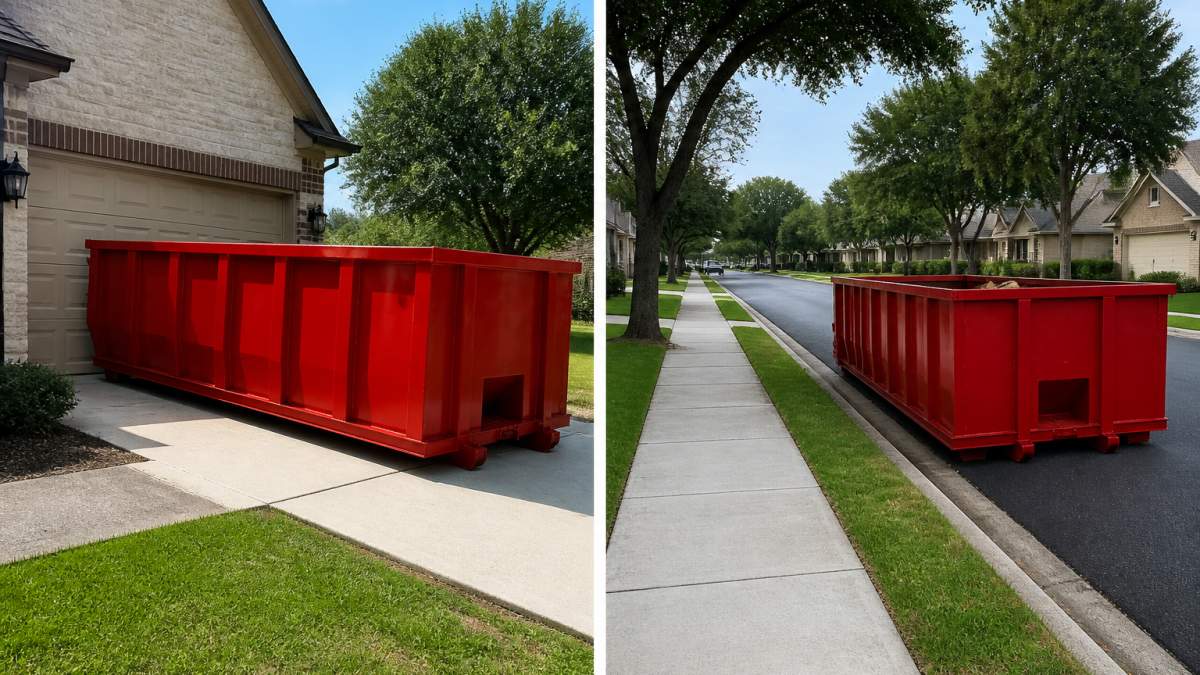
Public property includes the street, the sidewalk, the alley, the curb, and the strip of grass between the sidewalk and the road.
Private property means your driveway, your yard, a parking lot, or a construction site behind the fence line.
The Public Right-of-Way: Street, Sidewalk, and Alley
The public right-of-way is the strip of land a city controls for streets, sidewalks, alleys, and utilities.
A construction dumpster in the street blocks traffic flow and parking. One on the sidewalk blocks pedestrian access, which matters for people using wheelchairs, strollers, or walkers.
Most municipal rules require the container to carry reflective markings or cones so drivers see it at night. Some ask for a specific placement distance from intersections.
Placement on a Private Driveway
A driveway dumpster permit is usually not needed. Put the container on your own driveway and you avoid the public review process entirely.
This is the easiest path for most homeowners. It also keeps the container close to the work. The trade-off is space: a driveway placement can block a car or crowd a garage entrance. Measure before delivery.
Before you order, walk your property line with your city’s parcel map open. The strip between the sidewalk and the curb often looks private but is not. Knowing that boundary ahead of time saves you a permit surprise on delivery day.
The Street Dumpster Permit Application: Who Applies and Who Issues It
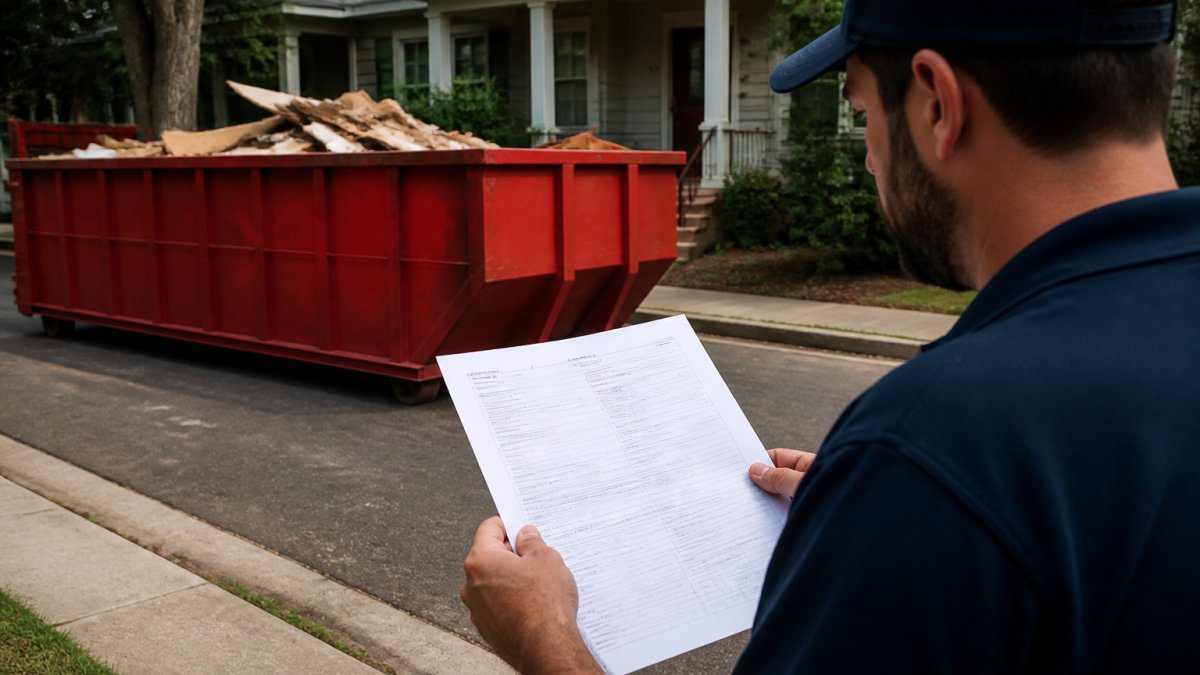
A street dumpster permit application goes to the city department that controls the right-of-way, not to the dumpster company. In most places that is public works, transportation, or a dedicated right-of-way office. The property owner or the licensed contractor usually files it.
Who applies depends on the project. For a homeowner renovation, the homeowner can often apply. For a construction site, the general contractor typically handles it.
Finding the Right City Department
Start with your city’s website and search for “right-of-way permit,” “street use permit,” or “encroachment permit.” If nothing comes up, call the main city line and ask which department handles temporary occupancy of the street. The correct office is usually one of these:
- Public works for street and sidewalk occupancy
- Transportation department for traffic lane and parking impacts
- Permit office or development services for construction-related placements
- Fire department in some cities, for access and safety review
A common pattern is that the department named on the form is not the one that signs off. Ask two questions when you call: which office issues the permit, and which offices must review it before issuance. Get the name of the person you speak with and the exact form number. That one detail prevents a rejected application later.
Municipal right-of-way and street use permit resources
Documents, Timelines, and the Contractor’s Role
Most applications ask for the same core items. Having them ready speeds up review:
- Property address and the exact placement location, including distance from the curb and nearest intersection
- A simple site plan showing the container footprint, adjacent traffic lanes, and pedestrian path
- Start and end dates for the placement
- Name of the dumpster provider and container identification number
- Proof of insurance from the hauler, if required
Timelines vary by city and by season. A common pattern is a few business days for a simple residential placement and longer during peak construction season or when a traffic-control review is triggered. Apply before you schedule delivery, not after. Build the permit lead time into your project schedule the same way you build in inspection windows.
Fill Out Form to Request Dumpster Rental →
Ordering a dumpster before the permit is approved is a common and costly mistake. If the container arrives and the permit is not in place, the city can require it removed immediately, and you pay for a delivery and pickup you did not get to use.
Verifying Requirements Before You File
Rules can vary by street, not just by city. A downtown block with metered parking, a residential street with a school zone, and an alley shared with utility easements may each carry different conditions. Before you file, confirm three things with the issuing office: whether the specific address is eligible for street placement, what identification or reflective marking the container must carry, and whether the permit must be posted on site.
Dumpster Permit Duration, Renewals, and Extensions
Dumpster permit duration is set by the city and tied to the project schedule. A short renovation might get a permit for a few weeks. A longer construction job may get several months.
Renewals are usually possible but not automatic. Most cities require you to request an extension before the permit lapses. The distinction that matters: an extension keeps the existing permit alive, while a lapsed permit often means starting over with a new application, a new review, and a new wait.
Tracking the Expiration Date
Track the expiration date like any other project deadline. Put it on the same calendar as your inspections and material deliveries, and set a reminder at least one week before it lapses. When the work runs long, request the extension early rather than waiting until the last week. A common pattern is that extension requests are reviewed by the same office that issued the permit, so the earlier you file, the more room the reviewer has to approve it.
The permit expires on a fixed date, not when your project ends. If the job slips, the permit does not slip with it. Request the extension before the expiration date to avoid a gap in coverage.
What Happens If the Permit Lapses or You Skip It
This is the part most guides skip. Enforcement varies by city, but the practical consequences follow a recognizable pattern:
- Citation or fine. Many cities treat an unpermitted container in the right-of-way as a code violation and can issue a citation to the property owner or the party that placed it.
- Removal order. The city can require the container removed, sometimes on short notice, and the removal cost falls on whoever placed it.
- Project delay. A stop-work or removal order can halt the job until the container is gone and the permit is resolved.
- Liability. If an unpermitted container is involved in a collision or injury, the lack of a permit can complicate insurance and shift responsibility toward the party that placed it.
None of these outcomes is guaranteed, and the specifics depend on local rules. The safe assumption is that an unpermitted street container is a violation waiting to be reported, often by a neighbor, a parking officer, or a delivery driver who cannot get through.
Keeping the Permit Valid Through the Job
A permit is not a one-time checkbox. Keep the container within the approved footprint, maintain the required reflective markings or cones, and keep the permit posted if the city requires it. If the project scope changes, a longer timeline, a different container size, a new placement spot, tell the issuing office. A change that moves the container or extends the schedule can invalidate the original approval, and catching it early is far cheaper than catching it during an inspection.
Driveway Dumpster Permit: When Private Placement Still Needs Approval
A driveway dumpster permit is rarely required, but private placement is not always free of rules. Homeowner associations, apartment complexes, and some commercial properties set their own placement terms.
HOAs often limit how long a container can sit in a driveway and where it can be seen from the street. Property managers may require advance notice before a container arrives.
There is a practical side too. A container in the driveway keeps the street clear, which avoids neighbor complaints and city enforcement.
Placement Alternatives When a Street Permit Isn’t Available
Sometimes a street permit is denied, delayed, or simply not worth the wait. You still have options.
Use the driveway or yard. The most reliable alternative. No city review, no expiration date tied to a right-of-way.
Choose the right container size. Austex Dumpsters offers 15-yard, 20-yard, 25-yard, and 30-yard roll-off containers.
Plan around heavy material. Large amounts of concrete, dirt, brick, or rock must go in a 15-yard dumpster.
Homeowners and contractors who cannot get a street permit quickly and need debris removal to stay on schedule without waiting on city review.
Conclusion
The permit question comes down to location. A container on public property needs city approval. A container on private property usually does not.
If you are planning a renovation, cleanout, or construction job and need a container placed correctly from the start, Austex Dumpsters can help.
Fill out our form to request dumpster rental and get the right container to your site.
Frequently Asked Questions
Why do I need a permit to put a dumpster on the street?
A dumpster on a public street occupies space that belongs to everyone, so cities require a permit to control it. The permit lets the local department confirm the container won’t block traffic lanes, pedestrian access, or sightlines, and that it carries proper identification. It also creates a record of who is responsible for the container and when it will be removed. Without that oversight, a debris container could sit in the right-of-way indefinitely and create safety and liability problems for the neighborhood.
What can happen if I put a dumpster on the street without a permit?
Cities can issue citations, require immediate removal, or have the container towed at the owner’s expense. Enforcement varies by jurisdiction, but the practical consequences are the same: project delays, added costs, and possible fines. A licensed contractor or dumpster provider may also refuse to place a container in a spot that lacks approval. Before delivery, confirm whether your placement location touches a public street, sidewalk, or alley, because that is the line that triggers permit requirements.
Does a dumpster on a driveway need a permit?
In most cases, a container placed entirely on private property such as a driveway does not need a street use permit, because it isn’t occupying public right-of-way. That said, some neighborhoods, HOAs, or municipal rules restrict driveway placement or set setback distances. Check local regulations and any homeowner association rules before delivery. If the container extends past the curb or blocks the sidewalk, it likely crosses into public space and a driveway dumpster permit or street permit may apply.
How long can a dumpster stay on the street with a permit?
Dumpster permit duration depends on the issuing city department, and most permits are written for a set window tied to the project. If work runs long, you typically need to request a renewal or extension before the permit expires. Placing a container beyond the approved period can lead to fines or forced removal. Ask your dumpster provider and the permitting authority about the allowed timeframe, renewal steps, and any conditions like reflective markings or weekly pickup schedules.