
Table of Contents
- How Dumpster Rental Pricing Models Work
- Flat-Rate Pricing: What’s Included and What Isn’t
- Haul-Plus-Disposal Pricing: Understanding Variable Rates
- Roll Off Dumpster Size Guide and Its Impact on Cost
- Dumpster Rental Weight Limits and Overage Charges
- Dumpster Rental Hidden Fees and How to Avoid Them
- Cost Negotiation Strategies and Smart Rental Decisions
- Conclusion
Last Updated: August 18, 2026
How Dumpster Rental Pricing Models Work
Understanding dumpster rental pricing models is essential for budgeting your project accurately and avoiding surprise charges. Dumpster rental pricing falls into two primary categories: flat-rate pricing, which bundles delivery, pickup, and disposal into a single upfront cost, and haul-plus-disposal pricing, which charges separately for transportation, tipping fees, and rental period.
The size of your dumpster, the weight of your debris, your geographic location, and rental duration all feed into the final calculation. Some providers build these variables into transparent quotes; others hide them behind vague estimates that spike once the work begins.
The real difference between pricing models is predictability. Flat-rate pricing lets you know your maximum exposure upfront. Haul-plus-disposal pricing requires you to estimate tonnage accurately, or you’ll face overage charges that can easily double your initial quote.
The waste management industry uses tonnage allowances as a built-in revenue mechanism. Your rental includes a certain weight limit, typically between 2 and 4 tons depending on dumpster size, and anything beyond that triggers per-ton overage fees.
Flat-Rate Pricing: What’s Included and What Isn’t
Flat-rate dumpster rental pricing bundles delivery, pickup, and a set tonnage allowance into one transparent price. This model appeals to homeowners and contractors who want certainty and prefer not to track weight during their project.
Flat-rate pricing typically includes delivery, a defined tonnage allowance (often 2-4 tons), pickup and hauling to the disposal facility, and tipping fees. The rental period is usually set at 7 or 10 days, with daily overage charges if you keep the container longer.
What flat-rate pricing does NOT include often surprises renters. Permit fees for placing the dumpster on public property are rarely bundled in. Fuel surcharges, environmental impact fees, and recycling surcharges may apply separately. Some providers also exclude specific material types like hazardous waste, electronics, and appliances, which require special handling.
The strength of flat-rate pricing is simplicity and direct comparison across providers. The weakness is that it penalizes accuracy; if you underestimate your debris volume, overage fees can quickly erase any savings.
Many renters exceed their tonnage allowance by 10-20% without realizing it. A single cubic yard of concrete weighs roughly 1.5 tons, far more than the equivalent volume of drywall or wood. Miscalculate your debris mix, and your “flat” rate becomes anything but flat.
For projects with predictable, light debris like kitchen remodels or general cleanouts, flat-rate pricing works well. For heavy-material projects like concrete removal, you’re better off with a pricing model that accounts for weight upfront.
Haul-Plus-Disposal Pricing: Understanding Variable Rates
Haul-plus-disposal pricing breaks your rental cost into separate line items: the haul charge (transportation and delivery), the disposal charge (tipping fees), and sometimes a rental period fee. This model is transparent about cost drivers but requires you to estimate tonnage accurately.
Under haul-plus-disposal pricing, you’re charged based on actual weight delivered to the landfill. The provider weighs your load, calculates overage fees if you exceed your allowance, and bills you accordingly. The appeal is fairness, you pay for what you use. The risk is that miscalculation can result in steep overage fees.
Distance from the landfill also affects haul-plus-disposal pricing. Providers in rural areas or regions far from disposal facilities often charge higher haul fees to offset longer drive times.
Haul-plus-disposal pricing rewards accuracy. If you can estimate your debris weight within 10-15%, this model typically costs less than flat-rate pricing. If you’re uncertain about tonnage, the variable-rate risk isn’t worth the potential savings.
For contractors who understand their debris profiles, haul-plus-disposal pricing offers cost control and transparency. For one-off homeowner projects, the uncertainty often makes flat-rate pricing the better choice.
Roll Off Dumpster Size Guide and Its Impact on Cost
The size of your dumpster directly determines your rental cost. Austex Dumpsters offers 15-yard, 20-yard, 25-yard, and 30-yard roll-off containers, each suited to different project scales and debris types.
A 15-yard dumpster holds approximately 15 cubic yards of material and is ideal for small to medium projects like bathroom renovations and garage cleanouts. It’s also the required size for large amounts of heavy materials such as concrete, dirt, brick, or rock. If your project involves substantial concrete removal or soil excavation, a 15-yard dumpster is your only option, regardless of total volume, because heavier materials require a smaller container to stay within safe weight limits.
The 20-yard dumpster accommodates medium-sized projects like kitchen remodels and roof replacements. It’s the sweet spot for most residential projects because it balances capacity with cost.
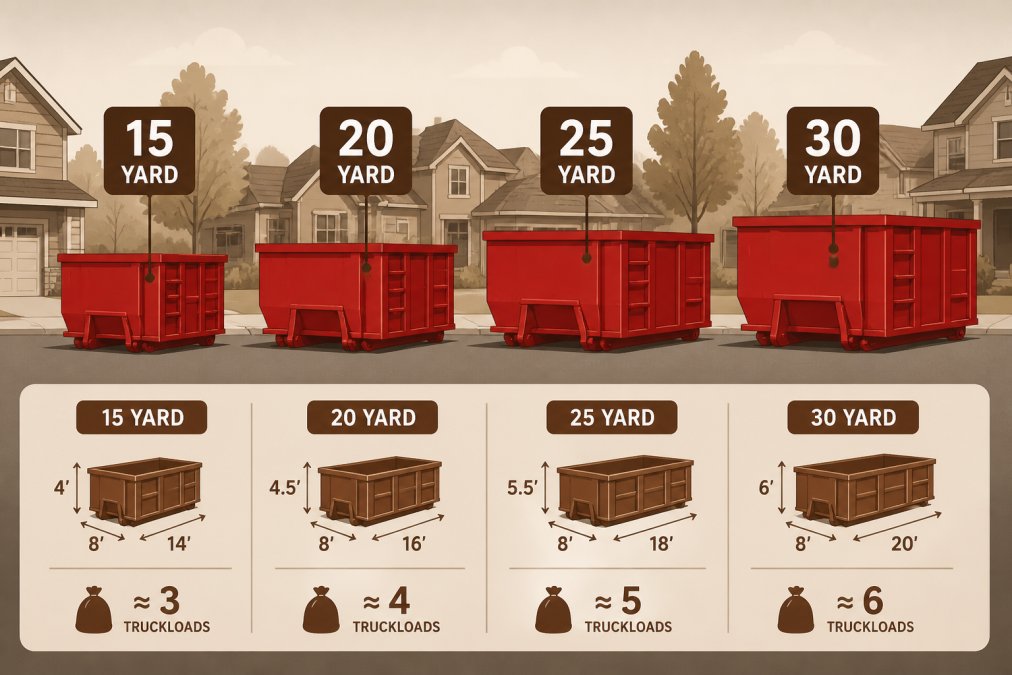
The 25-yard and 30-yard containers handle large-scale projects like whole-home renovations and commercial cleanouts. These larger sizes cost more per day but spread your rental cost across more cubic yardage, sometimes reducing your per-yard expense.
Choosing a dumpster that’s too small forces you to rent a second container mid-project, doubling your delivery and pickup fees. Choosing one that’s too large wastes money on unused capacity. Heavy materials compress less and weigh more per cubic yard than light materials, so understanding your debris type matters as much as understanding volume.
Dumpster Rental Weight Limits and Overage Charges
Every dumpster rental includes a tonnage allowance, a maximum weight before overage fees apply. Standard allowances range from 2 to 4 tons depending on dumpster size. Exceeding this limit triggers per-ton overage charges that can range significantly depending on local landfill fees.
Fill Out Form to Request Dumpster Rental →
Heavy materials are the primary driver of overage fees. Concrete weighs approximately 1.5 tons per cubic yard. Brick and stone run 1.2-1.5 tons per cubic yard. Soil and dirt range from 1-1.3 tons per cubic yard. Wood and drywall weigh only 0.3-0.5 tons per cubic yard. A project mixing heavy demolition debris with lighter framing waste can easily surprise you with tonnage.
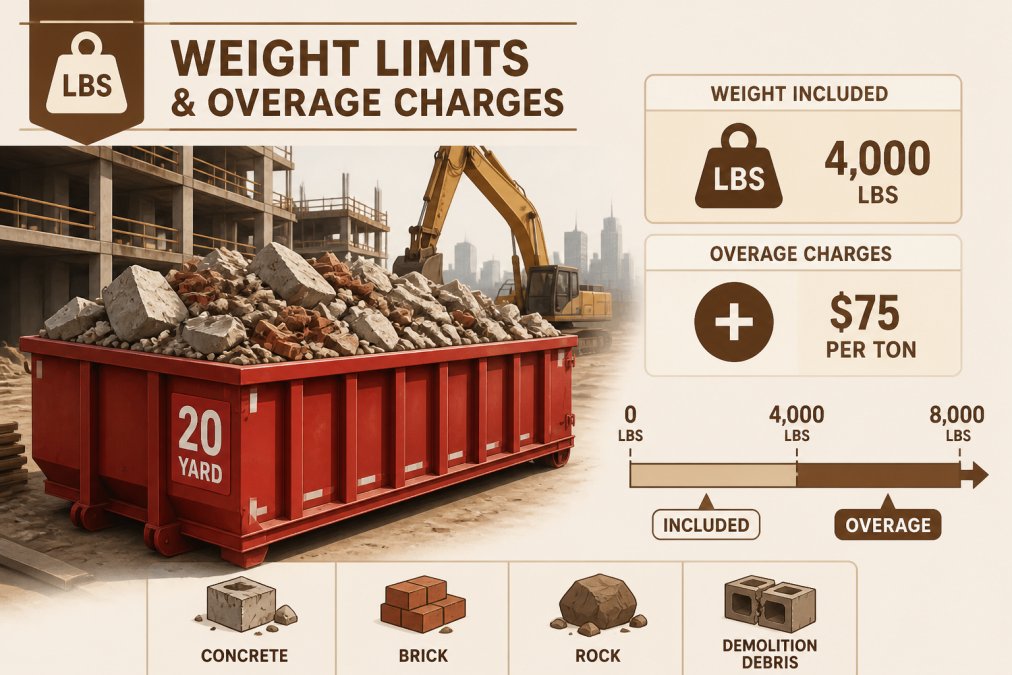
One significant benefit for customers using Austex Dumpsters: if your 15-yard dumpster is filled with clean concrete, dirt, brick, or rock with no trash or other contamination, you may receive a break on tonnage. This incentivizes proper material separation and rewards customers who manage their debris carefully.
Many renters assume “a full dumpster” means they’re within weight limits. A visually full container can be 20-30% over weight limit if packed with dense materials. Always ask your provider for weight estimates before finalizing your debris list.
To avoid overage charges, weigh your debris before loading when possible, or ask your provider for weight estimates based on material type and volume.
Dumpster Rental Hidden Fees and How to Avoid Them
Hidden fees are the primary complaint renters voice about dumpster rental pricing. These charges appear on your final invoice despite not being mentioned in your initial quote.
Common hidden fees include permit fees for placing the dumpster on public streets. Many municipalities require permits, and the cost varies depending on your location and duration. Environmental surcharges and recycling fees are increasingly common and can add 5-15% to your total cost. Fuel surcharges fluctuate with diesel prices and are often applied as a percentage of your base rental cost.
Overage fees for keeping the dumpster beyond your rental period accumulate quickly. Prohibited material fees apply when you dispose of items the provider charges extra to handle, such as electronics, appliances, tires, and hazardous materials.
To avoid hidden fees, request an itemized quote that explicitly lists delivery, pickup, tonnage allowance, rental period, and any surcharges. Ask about permit requirements for your specific location. Confirm which materials are prohibited and which cost extra. Get everything in writing before signing.
The best protection against hidden fees is asking your provider: “What’s NOT included in this quote?” Most providers will disclose additional charges when directly asked.
Cost Negotiation Strategies and Smart Rental Decisions
Dumpster rental pricing isn’t always fixed. Providers have operational margins built into their quotes, and there’s often room to negotiate, especially for larger projects or recurring rentals.
For single projects, negotiate on the rental period and tonnage allowance. If a provider quotes a 7-day rental but you need 10 days, ask if extending adds cost proportionally or if they’ll bundle it into a slightly higher flat rate. Many providers prefer longer rentals because it reduces scheduling complexity.
If you’re confident about your tonnage, negotiate the overage fee rate. Ask if they’ll lock in a lower rate in exchange for a commitment to stay within your allowance. For contractors managing multiple projects, recurring rental agreements offer significant savings. Providers often discount repeat business because it guarantees volume and scheduling predictability.
Location matters in negotiations. In dense urban areas with multiple providers, use that competition. Get quotes from at least three providers and use the lowest quote to negotiate with your preferred provider. Understanding the cost drivers, haul distance, landfill tipping fees, permit costs, debris type, gives you negotiating credibility.
Providers with the lowest advertised prices aren’t always the cheapest when you factor in hidden fees and overage rates. Focus your negotiation on total cost of ownership, what you’ll actually pay from delivery to final pickup.
For projects with uncertain scope, build contingency into your budget. If you’re unsure about tonnage, rent a size one step larger than you think you need. If you’re unsure about duration, add a few days to your rental period upfront rather than paying daily overages.
Conclusion
Dumpster rental pricing models are more transparent and competitive than ever, but understanding the mechanics, flat-rate versus haul-plus-disposal, tonnage allowances, hidden fees, and negotiation strategies, is what separates renters who budget accurately from those who face invoice shock.
Austex Dumpsters simplifies this process with straightforward pricing and expert guidance on dumpster sizing. Our 15-yard, 20-yard, 25-yard, and 30-yard roll-off containers are designed to match your project’s actual needs, and our team helps you avoid the tonnage overages and surprise fees that plague other rentals. When you’re ready to rent, fill out a form to request a dumpster rental and get a transparent quote tailored to your project.
Frequently Asked Questions
What are the main differences between flat-rate and variable-rate dumpster rental pricing models?
Flat-rate pricing includes delivery, pickup, and disposal fees in one upfront cost, with a specified tonnage allowance included. Variable-rate (haul-plus-disposal) pricing charges separately for hauling and tipping fees, which can fluctuate based on landfill costs, fuel, and market conditions. Flat-rate pricing offers predictability and protects you from market fluctuations, while variable-rate pricing may be cheaper for lighter loads but carries more uncertainty. Choose flat-rate if you want simplicity; choose variable-rate if you're confident about your load weight and want to avoid paying for unused tonnage allowance.
How do weight limits and tonnage affect my dumpster rental pricing?
Most dumpster rental agreements include a tonnage allowance (typically 2-5 tons) in the base price. If your debris exceeds this limit, you'll pay an overage fee per additional ton. This is why understanding your dumpster rental weight limits upfront is critical. Heavy materials like concrete, dirt, brick, and rock consume tonnage quickly, a single cubic yard of concrete weighs roughly 1.5 tons. Before renting, estimate your load weight by material type. If you're uncertain, ask your provider for guidance. Heavy material placed in a 15-yard dumpster may qualify for tonnage breaks if it's clean and uncontaminated.
What hidden fees should I watch for in a dumpster rental agreement?
Common dumpster rental hidden fees include permit fees (if required in your area), fuel surcharges, distance fees (based on proximity to landfills), environmental surcharges, and overage tonnage charges. Some providers charge extra for difficult access or placement on uneven ground. Always request an itemized quote and ask specifically about each potential charge. Read the rental agreement carefully, legitimate providers disclose these in writing. Ask whether the quoted price includes delivery, pickup, dump fees, and your tonnage allowance. Providers offering transparent, flat-rate pricing typically eliminate most surprises, making budget planning easier.
How do I calculate the total cost of a dumpster rental for my project?
Start with the base rental fee (either flat-rate or haul-plus-disposal). Add any applicable permit fees, fuel surcharges, or distance fees. Estimate your debris weight by material type and volume to determine if you'll incur overage charges. If renting for longer than the standard period (usually 7-10 days), calculate daily overage fees. Get a detailed quote that breaks down each component. Most providers offer same-day or next-day quotes online or by phone. For construction debris, roofing materials, or heavy cleanouts, contact your provider directly to discuss your specific load and get an accurate total before committing.
This article was written using GrandRanker