
Table of Contents
- How Same-Day Dumpster Delivery Works
- Understanding Roll-Off Dumpster Sizes and Capacities
- Heavy Material Disposal Guidelines for Concrete, Dirt, and Brick
- Residential Dumpster Rental Requirements and Permits
- Step-by-Step: How to Order Your Same-Day Dumpster
- What You Can and Cannot Put in Your Dumpster
- Pricing, Rental Duration, and What to Expect
- Common Mistakes to Avoid When Renting a Dumpster
Last Updated: August 22, 2026
How Same-Day Dumpster Delivery Works
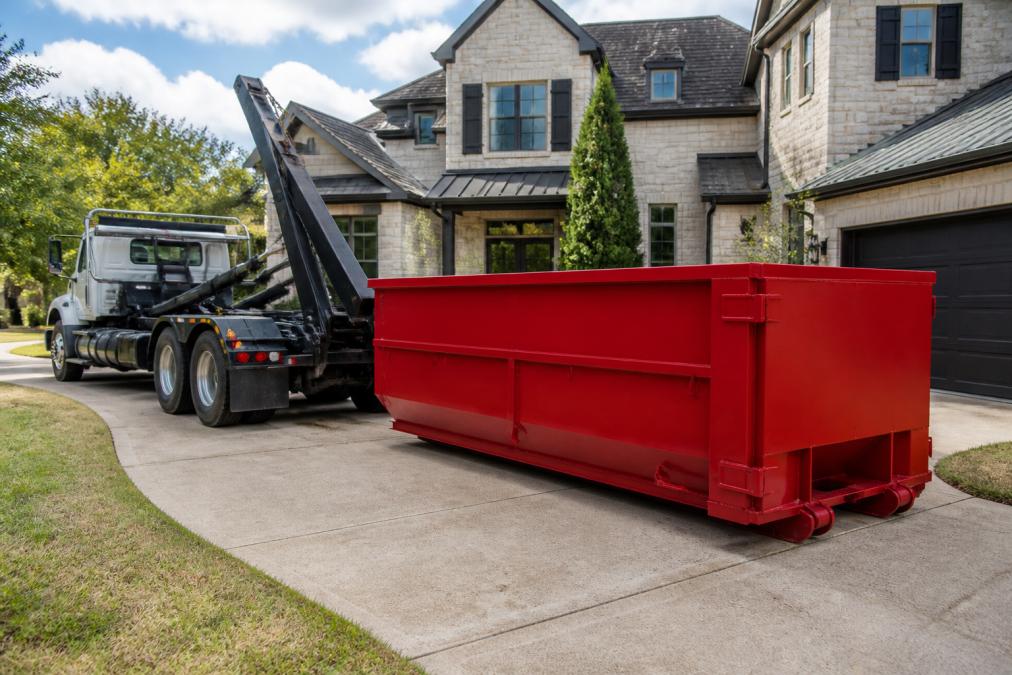
Same-day dumpster delivery is exactly what it sounds like: you call in the morning, and your roll-off dumpster arrives the same day, ready to handle whatever debris your project generates. This service eliminates typical long waits that can come with standard rental schedules, which means your renovation, cleanout, or construction project stays on track without unexpected delays.
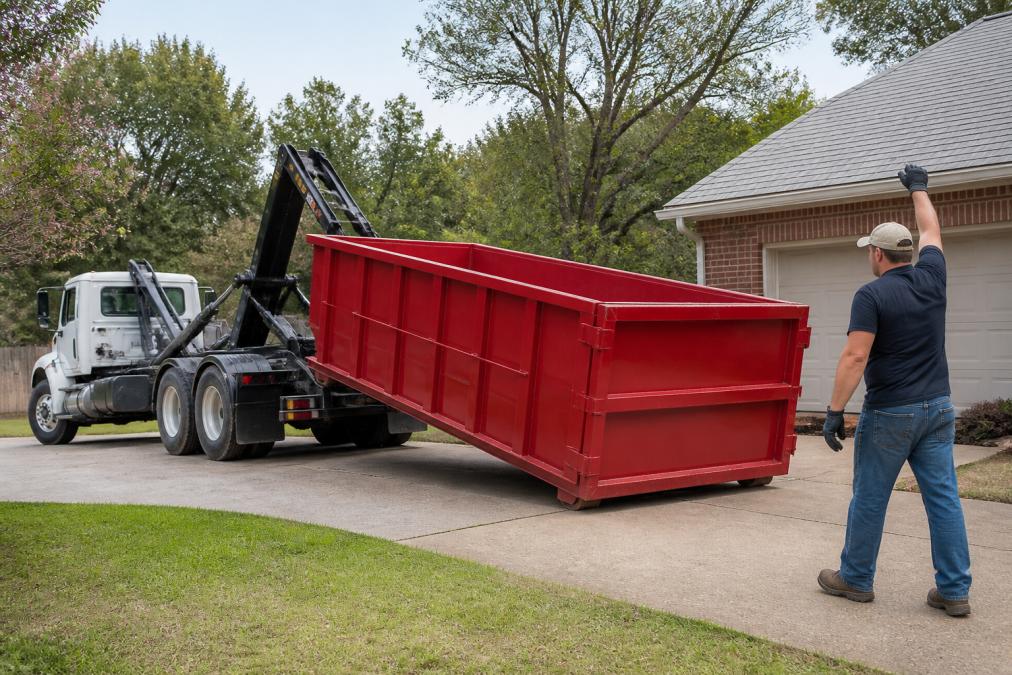
The process works because waste management companies like Austex Dumpsters maintain flexible delivery schedules and available inventory throughout the service area. When you contact them with your project details, they assess current demand and confirm whether same-day delivery is feasible for your location and timeframe. If it is, a driver brings the dumpster to your specified address, places it where you need it (driveway, street, or job site), and leaves you with clear instructions on what can go inside.
The real advantage isn’t just speed. It’s peace of mind. You’re not scrambling to store debris in your yard or paying contractors to sit idle while waiting for a container. Your team loads material as the work happens, and when you’re done, you schedule the pickup. For homeowners managing major renovations or contractors juggling multiple jobs, same-day dumpster delivery removes one more variable from an already complex timeline.
Understanding Roll-Off Dumpster Sizes and Capacities
Roll-off dumpsters come in four standard sizes, each designed for different project scopes and debris types. Understanding the distinction between them is critical because ordering the wrong size wastes money, creates logistical headaches, or forces you to rent a second container mid-project.
Choosing Between 15-Yard, 20-Yard, 25-Yard, and 30-Yard Options
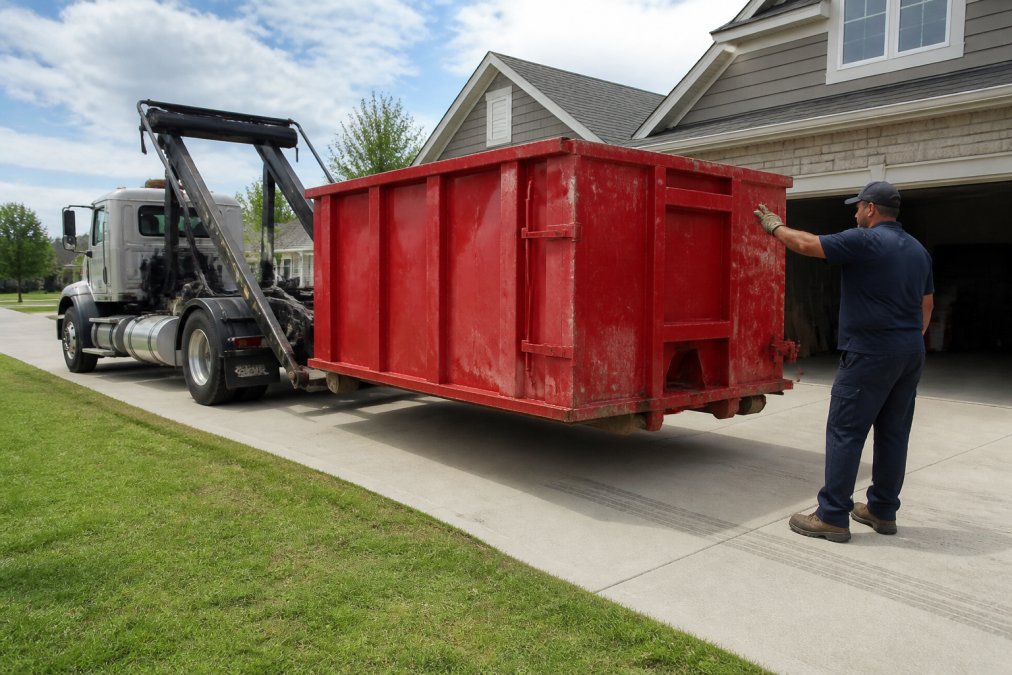
The 15-yard dumpster is the entry-level option, holding approximately 15 cubic yards of material. This size works well for smaller residential projects like garage cleanouts, attic purges, or modest bathroom renovations. A 15-yard container typically accommodates debris from a single room renovation or a yard cleanup project.
The 20-yard dumpster doubles the capacity and suits medium-scale projects. Think kitchen renovations, basement cleanouts, or roofing jobs where you’re removing old shingles and underlayment. Many contractors choose this size because it handles most residential work without excessive overage, and it fits on standard driveways.
The 25-yard dumpster bridges the gap between residential and commercial projects. This size handles larger home renovations, whole-house cleanouts, or small commercial office purges. It requires more space on your property and may need permit approval for street placement, depending on local regulations.
The 30-yard dumpster is the largest option, designed for major construction demolition, large commercial cleanouts, or significant landscaping projects. This size demands dedicated space and almost always requires permit approval if placed on a public street.
When you contact Austex Dumpsters for same-day dumpster delivery, be honest about your project scope. Underestimating leads to overflow and additional rental costs. Overestimating wastes money on unused capacity. Most teams find that starting with a realistic assessment of debris volume prevents both mistakes.
Heavy Material Disposal Guidelines for Concrete, Dirt, and Brick
Heavy materials like concrete, dirt, brick, and rock require special handling because of weight limits on standard dumpsters. This is where many people make costly mistakes, either by overloading a container or renting the wrong size entirely.
Here’s the critical rule: large amounts of heavy material, concrete, dirt, brick, or rock, must go in a 15-yard dumpster, not a 20-, 25-, or 30-yard container. This seems counterintuitive since those larger dumpsters hold more volume, but the weight distribution is the issue. A 15-yard dumpster is engineered to handle the density of these materials without exceeding truck weight limits or damaging the equipment.
When you fill a 15-yard dumpster exclusively with clean concrete, dirt, brick, or rock (with no trash or other contamination mixed in), you may qualify for a tonnage break on your rental. This discount recognizes that clean, uniform material is easier to process at the landfill and diverts waste more efficiently. However, the moment you mix in other debris, wood, drywall, insulation, or general trash, you lose this benefit and the material gets charged at standard rates.
The practical implication: if your project involves significant concrete removal, a foundation excavation, or a brick teardown, plan to rent a 15-yard dumpster specifically for that material. Don’t try to cram it into a larger container. Austex Dumpsters can guide you through this decision when you call, but understanding the constraint upfront prevents ordering mistakes.
Residential Dumpster Rental Requirements and Permits
Renting a dumpster for residential use involves more than just placing a container on your property. Local regulations, neighborhood rules, and street placement restrictions all factor into the logistics.
Most residential areas allow dumpsters on private driveways without permits. If your driveway is wide enough and your project doesn’t require street placement, you can typically arrange same-day dumpster delivery with minimal bureaucracy. The dumpster sits on your property, you load it, and you schedule pickup when you’re done.
Permit Guidance for Street Placement
Street placement is where permit requirements kick in. If your driveway is too narrow, blocked by vehicles, or simply unavailable, you’ll need to place the dumpster on the street or in a parking lot. This requires a permit from your local municipality.
Permit processes vary by neighborhood and city jurisdiction. Some areas issue permits quickly (sometimes same-day), while others require advance notice or have specific placement restrictions. Common requirements include marking the dumpster with reflectors or lights if it’s placed overnight, maintaining clearance from fire hydrants or mailboxes, and limiting placement duration.
When you call Austex Dumpsters for same-day dumpster delivery and mention street placement, ask whether they handle permit coordination or if you need to secure one independently. In some cases, they may recommend waiting one business day to secure the permit rather than rushing a same-day delivery that violates local rules.
The key: don’t assume your driveway situation until you’ve measured it. A dumpster is roughly 15 feet long, 8 feet wide, and 4-5 feet tall (the FDA). If your driveway is narrower than 12 feet or blocked by parked cars, street placement becomes necessary, and permit lead time may extend your delivery timeline.
Step-by-Step: How to Order Your Same-Day Dumpster
Ordering a same-day dumpster delivery follows a straightforward process, but timing and accuracy matter. Here’s how to navigate it without delays.
Step 1: Assess Your Project and Debris Volume
Before you call, know what you’re throwing away and roughly how much of it you have. Walk through your space and identify the debris type: construction waste, household items, yard debris, or a mix. Estimate the volume by thinking in terms of rooms, not cubic yards. One bedroom’s worth of stuff, or a full garage, or a kitchen renovation.
This assessment takes 15 minutes and prevents the most common ordering mistake: underestimating volume and needing a second dumpster mid-project. If you’re uncertain, err on the side of a larger container. The difference in cost between a 20-yard and 25-yard dumpster is typically modest compared to the headache of running out of space.
Step 2: Contact Austex Dumpsters for Availability
Call Austex Dumpsters and provide your project details: project type, debris volume estimate, desired delivery date and time window, and whether you need driveway or street placement. Be specific about your address and any access restrictions (locked gates, narrow driveways, overhead power lines).
The team will confirm whether same-day delivery is available for your location and timeframe. Same-day service depends on current demand, delivery truck availability, and your address proximity to their service area. Morning calls are more likely to secure same-day delivery than afternoon requests.
If same-day delivery isn’t available, ask about next-day options or whether you can schedule a specific time window that works for your project.
Fill Out Form to Request Dumpster Rental →
Step 3: Confirm Delivery Details and Placement
Once you’ve booked, confirm the exact delivery window (usually a 2-4 hour window), the dumpster size, and placement location. Discuss any obstacles: overhead lines, narrow gates, or soft ground that might complicate placement.
If you need street placement, clarify whether Austex Dumpsters handles permit coordination or if you’re responsible for securing it. Confirm the rental duration and pickup scheduling process. Some companies charge daily rental fees after a certain period; others include a set rental window (typically 7 days).
Step 4: Load Your Dumpster and Schedule Pickup
When the dumpster arrives, the driver will position it and explain weight limits and prohibited items. Load your debris systematically, breaking down large items to maximize space. Avoid overfilling, material shouldn’t extend above the dumpster walls.
When you’re finished loading, call Austex Dumpsters to schedule pickup. Most companies offer flexible scheduling, allowing you to keep the dumpster for a few days or a full week depending on your needs. Confirm the pickup date and any final instructions.
What You Can and Cannot Put in Your Dumpster
Knowing what’s allowed prevents costly overage charges, environmental violations, and project delays when a hauler refuses a contaminated load.
Most dumpsters accept general construction debris, household items, yard waste, and demolition material. Concrete, brick, wood, drywall, insulation, roofing material, and appliances are typically permitted. Austex Dumpsters can confirm specifics for your project type.
Prohibited items universally include hazardous materials: paint, solvents, batteries, fluorescent bulbs, refrigerants, asbestos, and anything labeled "hazardous waste (the EPA)." Electronics like TVs and computers are often restricted due to environmental regulations (the EPA). Tires, propane tanks, and medical waste are almost always banned.
Some materials fall into gray areas. Dirt and concrete are allowed but must be clean (no trash mixed in) and typically require a 15-yard dumpster due to weight. Roofing material is usually accepted, but asbestos-containing shingles (common in older homes) are prohibited and require special disposal.
When you order, mention any materials you’re unsure about. Austex Dumpsters will clarify what goes in your dumpster and what requires separate disposal. It’s far better to ask upfront than to have a hauler reject your load or charge contamination fees.
Pricing, Rental Duration, and What to Expect
Dumpster rental costs depend on several factors: dumpster size, debris type, rental duration, delivery location, and local disposal fees. Rather than guessing at pricing, contact Austex Dumpsters for a transparent quote based on your specific project.
Rental duration typically ranges from same-day service (if you need a dumpster for just a few hours) to standard weekly rentals. Most companies include a set rental period (often 7 days) in their base price, with additional daily fees if you keep the dumpster longer.
Weight limits vary by dumpster size and debris type. A 15-yard dumpster filled with heavy material like concrete may have a lower weight allowance than one filled with light household items. Exceeding weight limits incurs overage fees, which can be substantial. This is another reason to be honest about your project scope when ordering.
When you receive a quote from Austex Dumpsters, confirm what’s included: delivery, pickup, basic rental period, and any tonnage allowance. Ask about potential additional charges so there are no surprises when the invoice arrives.
Common Mistakes to Avoid When Renting a Dumpster
Understanding what goes wrong helps you avoid the most expensive and frustrating rental errors.
The biggest mistake is underestimating debris volume. Contractors and homeowners consistently guess too low, then scramble mid-project to rent a second dumpster or make multiple trips to the landfill. Overestimate slightly; the extra rental cost is negligible compared to project delays.
Mixing prohibited items into your dumpster is another costly error. A single bucket of paint, a few old batteries, or a load of contaminated soil can trigger rejection fees or hazardous-material handling charges. When in doubt, ask Austex Dumpsters before loading.
Overfilling is tempting but problematic. Material stacked above the dumpster walls can blow onto streets during transport, creating safety hazards and liability issues. Fill to the rim, not beyond.
Placing a dumpster on a street without a permit invites fines from local code enforcement. If street placement is necessary, secure the permit before delivery. Austex Dumpsters can advise on local requirements.
Waiting too long to schedule pickup extends your rental costs unnecessarily. Call as soon as you’re finished loading to minimize rental duration fees.
Finally, not clarifying the rental agreement upfront leads to billing surprises. Confirm the rental period, weight allowance, overage fees, and pickup scheduling before the dumpster arrives. A 5-minute conversation prevents frustration later.
Coordinating a major project, whether it’s a home renovation, construction demolition, or large-scale cleanout, requires reliable waste removal that keeps pace with your timeline. Austex Dumpsters provides same-day dumpster delivery with expert guidance on sizing, transparent pricing, and flexible scheduling. Their team helps you select the right container, navigate local permit requirements, and avoid costly rental mistakes. Get started with Austex Dumpsters and keep your project moving forward without waste management delays.
Frequently Asked Questions
How soon can I get same-day dumpster delivery?
Same-day delivery depends on availability and timing of your request. Call early in the morning for the best chance of same-day service. Austex Dumpsters works to accommodate urgent timelines whenever possible. Availability varies by day and current demand, so confirm with the team before scheduling. For guaranteed next-business-day delivery, book in advance.
What size roll-off dumpster do I need for my project?
Size depends on your project type and debris volume. A 15-yard dumpster suits small cleanouts and light debris. For medium construction projects, a 20-yard or 25-yard works well. Large-scale demolition or commercial cleanouts typically require a 30-yard. Austex Dumpsters provides expert guidance to help you choose correctly and avoid overfilling or undersizing.
Do I need a permit to place a dumpster on my property?
Permit requirements depend on your location and whether the dumpster sits on your private driveway or in a public street. Many residential driveways do not require permits, but street placement often does. Austex Dumpsters can provide guidance on local permit requirements and help you understand what applies to your project. Contact the team to confirm before delivery.
What happens if I fill my dumpster before my project is done?
If you need additional capacity, Austex Dumpsters offers swap-out service, where a full dumpster is replaced with an empty one. This prevents project delays and keeps you on schedule. Discuss your project timeline when ordering so the team can help you avoid overage fees and plan for potential additional pickups if needed.
This article was written using GrandRanker