
Table of Contents
- Why Certain Items Are Prohibited in Roll-Off Dumpsters
- Hazardous Waste Disposal Regulations and Dumpster Rules
- Hazardous Materials You Cannot Put in a Dumpster
- Heavy Materials and Weight Limits in Dumpster Rentals
- What Is Considered Clean Concrete and Heavy Debris
- Other Prohibited Items and Common Mistakes
- Safe Disposal Alternatives for Prohibited Materials
- Frequently Asked Questions
Last Updated: August 31, 2026
Why Certain Items Are Prohibited in Roll-Off Dumpsters
Not every piece of waste can go into a standard roll-off dumpster. Understanding what’s allowed and what’s banned saves you time, money, and serious legal consequences. Hazardous materials pose risks to landfill workers, contaminate soil and water supplies, and violate federal and state environmental laws. Heavy materials can exceed truck weight limits and damage equipment. Electronics contain toxic components requiring specialized recycling. At Austex Dumpsters, we help homeowners, contractors, and property managers understand their disposal options before problems arise.
Hazardous Waste Disposal Regulations and Dumpster Rules
The EPA classifies hazardous waste based on four characteristics: ignitability, corrosivity, reactivity, and toxicity (the EPA). Materials meeting any of these criteria cannot be disposed of in standard municipal landfills. Dumpster rental companies are legally liable for container contents, which is why they enforce strict prohibited materials lists. If hazardous materials are discovered in your dumpster, you could face fines from environmental agencies, cleanup costs, and potential criminal liability. Hazardous waste requires specialized disposal through licensed facilities.
Hazardous Materials You Cannot Put in a Dumpster
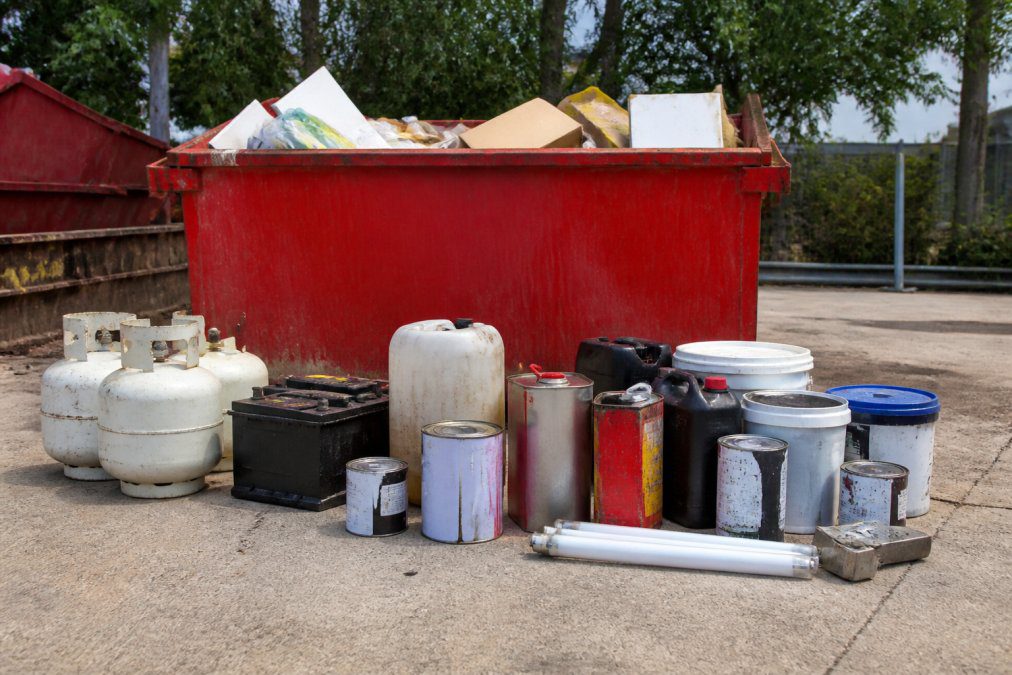
Hazardous materials represent the largest category of prohibited items in dumpster rentals and require specialized handling at licensed facilities.
Chemicals, Solvents, and Flammable Liquids
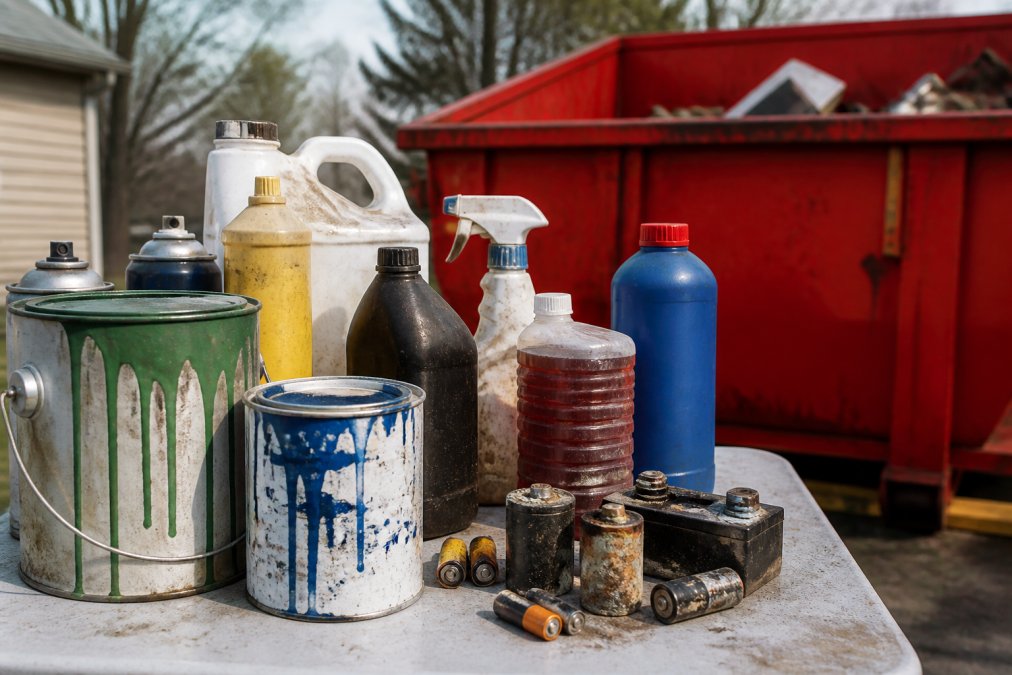
Never place solvents, paint thinners, acetone, or chemical solvents in a roll-off dumpster. These materials are flammable and corrosive, posing serious fire hazards during transport and at the landfill. Paint cans, even partially empty ones, lacquers, and resins cannot be disposed of in standard dumpsters. Antifreeze, motor oil, transmission fluid, pesticides, herbicides, and fertilizers contaminate groundwater and soil. Aerosol cans present dual hazards: flammable propellants and potentially toxic contents. Cleaning products containing bleach, ammonia, or other corrosive chemicals cannot go in your dumpster.
Placing flammable liquids or corrosive chemicals in a dumpster can cause fires during transport or at the landfill, endanger workers, and result in criminal charges for improper hazardous waste disposal.
Batteries and Electronics
Batteries contain heavy metals like lead, mercury, and lithium that leach into soil and water supplies. Lead-acid batteries from vehicles, lithium-ion batteries from power tools, and alkaline batteries require specialized recycling. Electronics and e-waste contain hazardous components including lead solder, mercury in screens, and cadmium in circuit boards. Computers, monitors, televisions, printers, and cell phones must go to certified e-waste recyclers. Many retailers and manufacturers offer take-back programs for old electronics.
Asbestos and Lead-Based Materials
Asbestos was widely used in insulation, floor tiles, roofing materials, and pipe wrapping until the 1980s. If your home was built before 1990, assume any insulation, floor tiles, or roofing materials may contain asbestos. Disturbing asbestos releases microscopic fibers that cause mesothelioma and lung cancer. Lead-based paint, common in homes built before 1978, cannot be scraped and discarded in a dumpster (the EPA). Lead dust contaminates soil and poses severe neurological risks to children. Both asbestos and lead materials require certified disposal through specialized facilities.
If your renovation involves materials from a home built before 1990, contact your local environmental agency to determine whether asbestos or lead testing is required before disposal.
Heavy Materials and Weight Limits in Dumpster Rentals
Roll-off dumpsters have weight limits based on truck capacity and landfill regulations. Heavy materials like concrete, dirt, brick, and rock are extremely dense. A cubic yard of concrete weighs approximately 4,000 pounds. Dirt and gravel weigh 2,500-3,000 pounds per cubic yard.
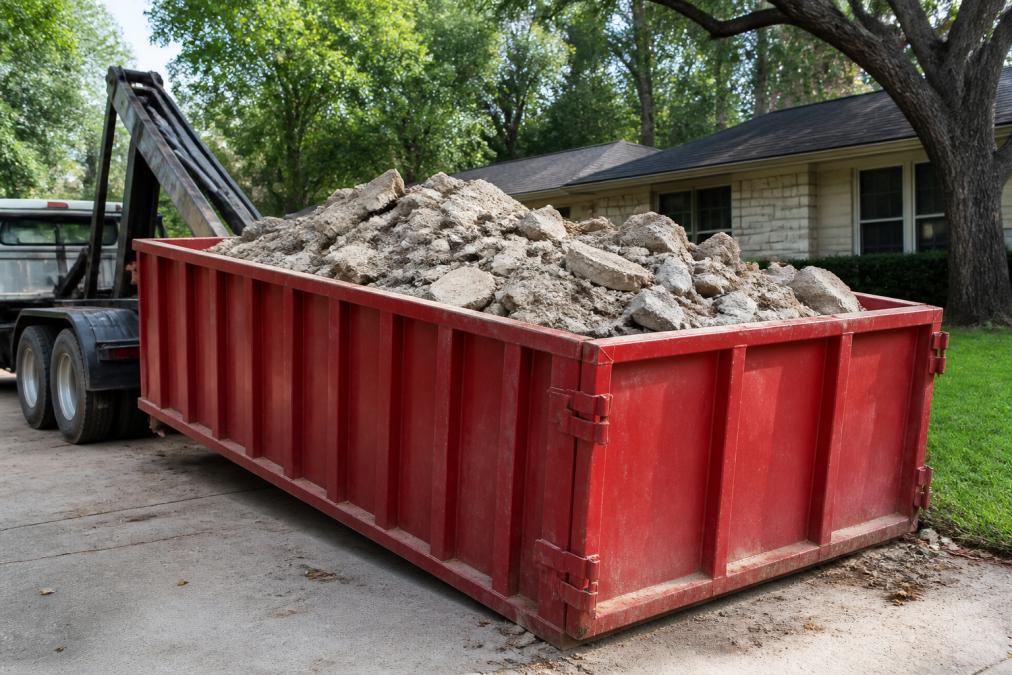
A 15-yard dumpster is specifically designed for heavy debris. If you’re disposing of large quantities of concrete, brick, dirt, or rock, a 15-yard dumpster is the appropriate choice. Never attempt to put heavy materials in a 20-, 25-, or 30-yard dumpster, as these sizes are not designed for the concentrated weight of dense materials.
Heavy materials like concrete, dirt, brick, and rock must go in a 15-yard dumpster only. Never place large quantities of heavy debris in larger dumpster sizes.
What Is Considered Clean Concrete and Heavy Debris
Clean concrete, dirt, brick, and rock refer to materials free from contamination, no mixed trash, soil, or other substances. The distinction matters because clean, uncontaminated heavy materials can be processed and recycled more efficiently. Many facilities crush concrete for use as aggregate in new construction. Clean dirt can be reused for grading or landscaping.
When you fill a 15-yard dumpster exclusively with clean concrete, dirt, brick, or rock with no trash, wood, metal, or other contamination mixed in, you may receive a break on tonnage fees. This benefit reflects the lower processing cost for recyclable materials. If you’re doing concrete removal or excavation work, keep that debris separate from other project waste to protect your tonnage rates and ensure proper material handling.
| Material Type | Best Dumpster Size | Contamination Risk | Recyclability |
|---|---|---|---|
| Clean concrete | 15-yard | None, solid chunks only | High, crushed for aggregate |
| Dirt and gravel | 15-yard | Must be free of trash | High, reused for grading |
| Brick and rock | 15-yard | No mixed materials | High, recycled in construction |
| Mixed demolition debris | Any size | Higher contamination likely | Lower, requires sorting |
Other Prohibited Items and Common Mistakes
Beyond hazardous materials and weight concerns, several other item categories are commonly prohibited in roll-off dumpsters.
Tires
Tires cannot go in standard dumpsters because they take 500-1,000 years to decompose in landfills and trap water, creating breeding grounds for disease-carrying mosquitoes (the EPA). Most states ban whole tires from municipal landfills entirely. Disposal options include tire retailers (who accept old tires when you purchase replacements), tire recycling facilities, and scrap yards. If tires are found in a dumpster, the entire load may be refused.
Appliances and White Goods
Refrigerators, freezers, air conditioning units, washing machines, dryers, and dishwashers contain refrigerants, compressor oils, and other hazardous components that cannot be disposed of in standard landfills. Refrigerants like R-22 (Freon) are ozone-depleting substances regulated under the Clean Air Act. Disposal options include retailer haul-away services, licensed appliance recyclers, and some scrap metal yards.
Yard Waste and Organic Materials
Yard waste, grass clippings, leaves, branches, and tree stumps, may be prohibited or restricted depending on your jurisdiction. Large quantities decompose in the dumpster, creating odors, attracting pests, and generating methane gas. Disposal options include curbside yard waste collection, community composting centers, mulching services, and brush pickup programs.
Treated Wood and Railroad Ties
Railroad ties and pressure-treated lumber contain creosote or other wood preservatives that are toxic to soil and groundwater. Treated wood requires disposal at licensed wood recyclers or hazardous waste facilities.
Soil Contamination and Suspect Materials
Soil from industrial properties, gas stations, dry cleaners, or properties with unknown history may be contaminated with heavy metals or petroleum products. If your property has any industrial history or you suspect soil contamination, contact your state environmental agency or local health department for guidance on testing requirements before disposal.
Common Mistakes That Lead to Dumpster Refusal
- Mixing prohibited items with acceptable debris: A single paint can, battery, or tire mixed into an otherwise compliant load can trigger refusal of the entire dumpster.
- Underestimating project volume: Renters rent a dumpster that’s too small, then attempt to compress materials or add prohibited items to fit everything.
- Assuming items are acceptable without confirming: Always confirm with your dumpster company before adding questionable materials.
- Failing to disclose heavy materials upfront: If you’re disposing of large quantities of concrete, dirt, brick, or rock, disclose this when renting. A 15-yard dumpster is the appropriate choice.
If prohibited materials are discovered in your dumpster, the rental company may refuse the entire load, leaving you responsible for proper disposal at significantly higher cost. Always confirm what’s acceptable before filling your dumpster.
Safe Disposal Alternatives for Prohibited Materials
Understanding what you cannot put in a dumpster is only half the solution. Knowing where to dispose of prohibited materials ensures your project stays on schedule and compliant.
Hazardous Household Waste Collection Events
Most county environmental agencies sponsor hazardous waste collection days, typically held once or twice per year. These events accept paint, solvents, batteries, electronics, pesticides, fluorescent bulbs, and other hazardous household items at no cost or for a nominal fee. To find an event near you, visit your county or city solid waste management website, call your local environmental health department, or check Earth911.com, a national database of recycling and hazardous waste facilities searchable by zip code and material type.
Retailer Take-Back Programs
Many retailers that sell products accept them back for recycling or proper disposal:
- Electronics: Best Buy accepts computers, monitors, televisions, printers, keyboards, and cables. Apple Stores accept old Apple devices.
- Paint: Home Depot and Lowe’s accept unopened or opened paint cans at customer service desks. Sherwin-Williams and Benjamin Moore stores also accept paint for recycling.
- Batteries: Best Buy accepts rechargeable batteries and battery packs. Home Depot accepts alkaline batteries at some locations.
- Tires: Tire retailers (Discount Tire, Firestone, Goodyear, etc.) accept old tires when you purchase replacements.
- Appliances: Local appliance retailers often offer haul-away services when you purchase a replacement refrigerator, washer, dryer, or air conditioning unit.
Always call ahead to confirm acceptance.
Specialized Recycling and Demolition Centers
For large quantities of construction debris, heavy materials, or mixed waste, specialized C&D (construction and demolition) recycling centers handle materials more efficiently than standard dumpster services. C&D recycling centers accept concrete, brick, wood, drywall, metal, and mixed demolition debris. Search “C&D recycling near me” or contact your local solid waste authority for a list of certified facilities.
Licensed Hazardous Waste Disposal Facilities
For materials not accepted at collection events or retailers, licensed hazardous waste disposal facilities handle all prohibited items. To find a licensed facility, contact your state environmental protection agency, use the EPA’s Waste and Cleanup Search tool at epa.gov, or call your local solid waste management office for referrals.
Actionable Next Steps for Your Project
Before renting a dumpster, sort your waste into three categories:
- Materials that go in the dumpster: General debris, wood, drywall, mixed demolition waste (non-hazardous).
- Materials requiring special disposal: Hazardous chemicals, batteries, electronics, appliances, tires, asbestos, lead paint.
- Heavy materials: Concrete, dirt, brick, rock (these require a 15-yard dumpster if large quantities are involved).
Once you’ve identified prohibited items, contact your county environmental agency or use Earth911.com to locate the nearest collection event or facility. Schedule your dumpster rental for the materials that actually belong in it. This approach prevents rental refusals, avoids unexpected fees, keeps you compliant with environmental law, and often costs less overall.
At Austex Dumpsters, we help customers navigate these options. When you call for a rental quote, describe your project and materials. We can recommend appropriate dumpster sizes and disposal alternatives based on what you’re actually discarding. Our team understands local regulations and can guide you toward the most cost-effective and compliant solution for your specific waste stream.
Frequently Asked Questions
Q: What prohibited items are most commonly misplaced in dumpsters?
A: The most common mistakes are disposing of paint, motor oil, batteries, and electronics in roll-off dumpsters. Homeowners often don’t realize these hazardous materials require special handling. Aerosol cans, antifreeze, and solvents are also frequently placed in dumpsters despite being prohibited. Always check your dumpster rental agreement before loading to avoid violations and potential environmental compliance issues.
Q: Why are hazardous materials prohibited in dumpsters?
A: Hazardous materials are banned because they pose serious environmental and safety risks. When toxic substances reach landfills, they can contaminate groundwater and soil. Flammable materials create fire hazards during transport and at disposal sites. Corrosive chemicals damage equipment and endanger workers. Environmental compliance regulations exist to protect both public health and the environment from chemical contamination and remediation costs.
Q: What is considered clean concrete for dumpster disposal?
A: Clean concrete means concrete rubble with no attached materials, soil, or trash. It should be free from rebar, wood, metal, asphalt, or other contaminants. When you fill a 15-yard dumpster with clean concrete, dirt, brick, or rock with no other waste mixed in, you may qualify for a tonnage break. Always confirm with your service provider that your load meets clean material standards before disposal.
Q: Are there weight limits for roll-off dumpsters?
A: Yes, dumpster rental weight limits vary by dumpster size and local regulations. Overloading creates safety hazards during transport and can result in additional fees. A 15-yard dumpster designed for heavy materials like concrete can handle substantial weight, while other sizes have different capacity limits. Your service provider will outline specific weight restrictions in your dumpster rental agreement to prevent overages and compliance violations.
Disposing of project waste correctly protects your investment, keeps your team safe, and ensures environmental compliance. When you’re unsure whether something belongs in a dumpster, ask before placing it. Austex Dumpsters offers expert guidance on sizing and material restrictions for every project type. Contact us to discuss your specific needs and get a quote for reliable, hassle-free roll-off dumpster service that keeps your project moving forward.
This article was written using GrandRanker