
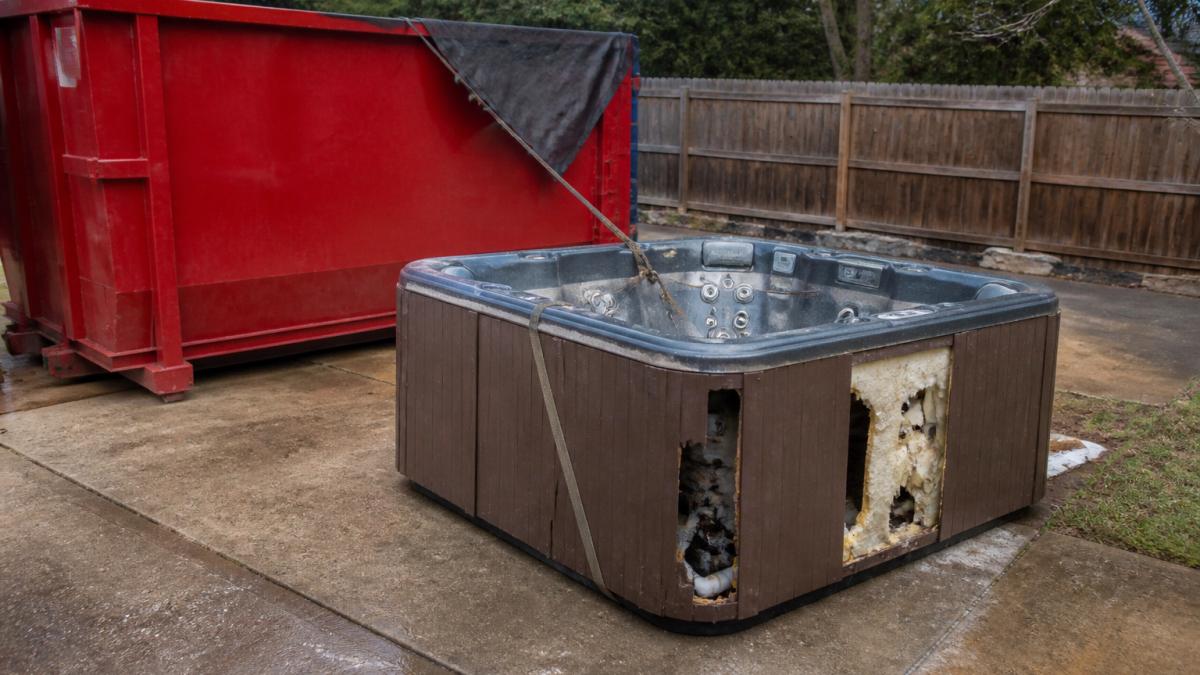
Table of Contents
- Why Hot Tub Disposal Is Different From Other Junk Removal
- How to Break Down a Hot Tub: A Step-by-Step Guide
- Roll-Off Dumpster Rental: The Fastest Way to Clear a Hot Tub
- What Hot Tub Materials Can Go in a Dumpster (and What Can’t)
- Eco-Friendly Disposal and Scrap Metal Recycling Options
- Local Regulations and Permit Requirements for Spa Disposal
- Cost Factors and Booking Your Hot Tub Removal
- Frequently Asked Questions
Last Updated: September 28, 2026
Why Hot Tub Disposal Is Different From Other Junk Removal
Learning how to dispose of an old hot tub in Austin starts with one hard truth: a spa is not normal junk. It is a heavy, awkward shell full of water, wiring, and plumbing that most haulers will not touch without a plan.
Never drain a hot tub into a storm drain or street. Most municipalities require you to drain it slowly into your own yard or a sanitary sewer line. Dumping it in the street can trigger a fine and a messy cleanup.
How to Break Down a Hot Tub: A Step-by-Step Guide
Most homeowners finish a spa teardown in two to four hours with the right tools. The goal is to reduce the tub into pieces light enough to lift into a container.
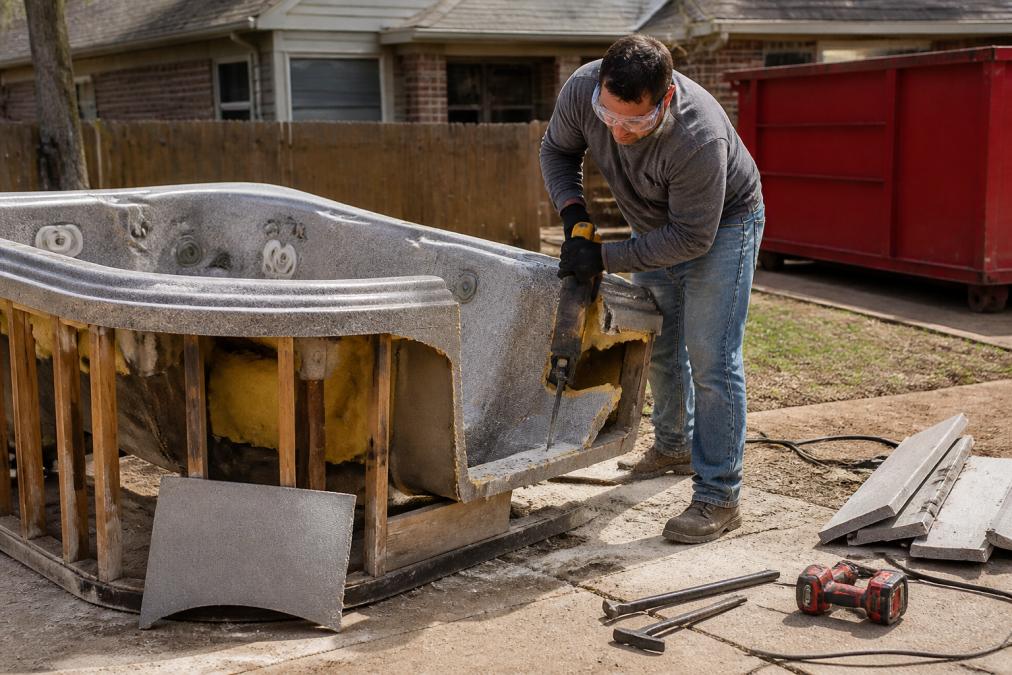
What you’ll need:
- Reciprocating saw with a bimetal or carbide blade for fiberglass and metal
- Pry bar and a hammer or mallet
- Adjustable wrench, nut driver set, and a screwdriver set (spa cabinets use a mix of Phillips, square-drive, and hex-head screws)
- Utility knife for foam and plumbing
- Work gloves, safety glasses, and an N95 mask for foam and fiberglass dust
- A hand truck or dolly, plus plywood sheets to roll across grass
- A garden hose long enough to reach a sanitary drain or a spot in the yard
Step 1: Kill the Power and Confirm It’s Dead
A hot tub runs on a dedicated 240-volt circuit that stays live until you kill it at the panel.
- Turn off the breaker at your main panel and, if the spa has a separate disconnect box nearby, open it and pull the disconnect.
- Confirm the spa is dead with a non-contact voltage tester at the control pack terminals.
- Shut off the water supply line feeding the spa.
- Disconnect the pump, heater, and control pack wiring, photographing it first as a record.
- Cap or tape any open plumbing lines.
Step 2: Drain the Spa Slowly
A typical 6- to 7-person spa holds 400 to 500 gallons, roughly 3,300 to 4,200 pounds of water, more than the empty shell, frame, and equipment combined.
- Hook a submersible pump or long garden hose to the drain fitting. A 500-gallon spa drains in 30 to 60 minutes with a hose, faster with a pump.
- Send the water to a sanitary sewer cleanout, a utility sink, or a gradual soak into your own yard. Never dump it into a storm drain or the street.
- If the water is chemically treated, let it sit a few days after you stop adding chemicals, or check with your wastewater utility on discharge rules.
- Tilt the shell and use a wet/dry vac to pull the last gallons out of the footwell. Every gallon left behind is 8.3 pounds you are hauling.
Step 3: Strip the Cabinet and Equipment Bay
- Remove the cabinet panels. Most are held by screws along the bottom rail and top lip; some older spas use clips you can pop with a flat bar.
- Pull the pump, heater, and control pack, the heaviest metal items and the best scrap candidates.
- Disconnect the pump unions by hand or with channel locks; do not cut them if you plan to sell the equipment.
- Pull the foam insulation. Closed-cell foam comes out in sheets; spray foam must be pried or cut out in chunks. Bag it so it does not blow around.
Step 4: Cut the Shell Into Sections
- Mark cut lines with painter’s tape or a grease pencil. Aim for four to six pieces, not dozens, fewer, larger pieces load faster.
- Cut with the reciprocating saw using a bimetal blade. Let the blade do the work; pushing hard heats the blade and dulls it fast.
- Keep cuts in straight lines. Curved cuts bind the blade.
- Watch for embedded plumbing and wiring inside the shell walls. If the blade grabs, stop and check what you hit.
- Wear the N95 while cutting. Fiberglass and acrylic throw fine dust you do not want in your lungs.
Step 5: Break Down the Frame
Wooden frames come apart with a pry bar and hammer. Metal frames are usually bolted or screwed, use the nut driver and set the hardware aside for scrap. Pressure-treated lumber can go in the container with the shell.
Step 6: Move the Pieces Out
This is where most DIY jobs stall. A cut shell section can still weigh 80 to 150 pounds, and a wet, foam-lined piece is heavier.
- Lay plywood sheets across grass or gravel to roll the hand truck instead of dragging.
- Two people per shell section is the safe minimum; one person on a heavy panel is how backs get hurt.
- If the spa sits behind a fence or in a tight side yard, measure your gate before cutting. Cut sections to fit the gate.
- Stack shell pieces flat in the container and put the frame and cabinet panels on top to fill the gaps.
Cut the shell into four to six pieces, not dozens. Fewer, larger pieces load faster and reduce the number of trips you make to the dumpster.
Roll-Off Dumpster Rental: The Fastest Way to Clear a Hot Tub
Renting a roll-off dumpster is the fastest route for most homeowners: one container dropped in your driveway and hauled away when you are done.
| Dumpster Size | Best For | Hot Tub Fit |
|---|---|---|
| 15-yard | Heavy debris, spa shells, concrete, dirt | Best choice for a spa teardown |
| 20-yard | Hot tub plus deck or patio debris | Good for larger clearouts |
| 25-yard | Full backyard renovation | Room to spare |
| 30-yard | Multi-room or construction cleanouts | Overkill for one spa |
Match the dumpster to the debris, not to the biggest number. A 15-yard container handles most hot tub jobs and keeps heavy loads where they belong.
What Hot Tub Materials Can Go in a Dumpster (and What Can’t)
Most hot tub parts are dumpster-friendly. The shell, cabinet panels, frame, and plumbing lines can all go in a roll-off container:
Safe to toss:
- Fiberglass or acrylic shell (cut into pieces)
- Wood and metal cabinet framing
- PVC and flexible plumbing lines
- Insulation and foam
Keep out:
- The pump, heater, and control pack (recycle these as e-waste or scrap)
- Refrigerant or chemical residues
- Any standing water left in the shell
Eco-Friendly Disposal and Scrap Metal Recycling Options
Recycling is where a smart hot tub disposal plan pays off. The metal frame, pump housing, and heater are prime scrap metal candidates, many scrap yards pay by weight for clean metal, so pull those parts before you load the shell. The shell itself is harder to recycle: fiberglass and acrylic usually go to a landfill, though some recycling centers accept them. Call ahead before you haul.
Fill Out Form to Request Dumpster Rental →
How to sort your spa for recycling:
- Pull all metal parts and set them aside.
- Remove the pump and heater for e-waste drop-off.
- Cut the shell into manageable pieces.
- Load non-recyclable material into the dumpster last.
Local Regulations and Permit Requirements for Spa Disposal
Most hot tub disposal in the metro area does not require a permit, but the rules that do apply are specific. Here is what governs a spa teardown.
Drainage Rules
Spa water is treated water and does not belong in the storm system. The standard rule is:
- Drain to a sanitary sewer cleanout, a utility sink, or a hose bib that feeds the sanitary line.
- Or drain slowly into your own yard, spread across a large area so it soaks in rather than pooling.
- Never send it to a storm drain, curb inlet, or the street. Storm drains discharge to creeks and waterways without treatment, and most municipal codes treat that as an illegal discharge.
Bulky Item and Curbside Rules
Curbside bulky-item pickup is the first thing most people try, and it is almost always the wrong tool for a spa.
- Municipal bulky-item programs are built for furniture, mattresses, and appliances, items a two-person crew can lift. A spa shell, even cut down, usually exceeds their size and weight limits.
- Many programs exclude construction and demolition debris, which is how a cut-up fiberglass shell is classified.
- Even where a program takes it, you typically schedule weeks out, and the item must be at the curb. Getting a 300-pound shell section there is its own project.
Landfill and Transfer Station Rules
Landfills and transfer stations set their own acceptance rules, which vary by facility:
- Fiberglass and acrylic shells are usually accepted as bulky waste, but some facilities require them separated from household trash.
- Foam insulation may need to be bagged so it does not blow out of the working face.
- Pumps, heaters, and control packs are often pulled out as e-waste or scrap metal rather than landfilled.
- Tires, refrigerant-containing equipment, and liquids are typically banned outright.
HOA and Property Rules
- Many HOAs restrict where a container can sit and for how long. A driveway placement is usually fine; a street placement often needs approval.
- If you rent, get written permission from the property owner before you cut or haul anything, spa removal can count as an alteration.
- If the spa sits on a deck or in a screened enclosure, check whether the structure must come down first; that changes the scope and container size.
When You Do Not Need a Permit
For a standard residential spa teardown, you generally do not need a demolition, electrical, or plumbing permit, unless you are reconnecting or rerouting lines. You do need a licensed electrician to properly decommission the 240-volt circuit at the panel. A quick call to your local waste management office clears up the rest.
Cost Factors and Booking Your Hot Tub Removal
Hot tub removal costs depend on container size, debris weight, and how much labor the job takes.
What drives the price:
- Container size: A larger dumpster costs more than a smaller one.
- Weight: Heavy debris like concrete or dirt can add tonnage charges.
- Access: A spa in a tight backyard takes more labor to remove.
- Timing: Same-day or weekend delivery may cost more than a weekday drop.
- Labor: Full-service removal costs more than a drop-and-haul rental.
Photograph your debris pile before you call. A quick photo helps the team size your container correctly and prevents a second delivery.
Frequently Asked Questions
How do I get rid of my old hot tub in Austin?
You have three main options: hire a full-service removal company, rent a roll-off dumpster and break the tub down yourself, or schedule a bulky waste pickup through your local waste provider. Most Austin homeowners choose a dumpster rental because it handles the fiberglass shell, wood frame, and metal components in one load. If you break the tub into manageable pieces first, a 15-yard dumpster can typically hold the entire unit.
Can I put hot tub parts in a standard dumpster?
Yes, most hot tub parts can go in a roll-off dumpster, but you need to separate materials. The fiberglass shell, wood framing, and plastic components are fine in a general debris dumpster. The metal heater, pump, and plumbing fittings should go to a scrap metal recycler for a better return. Never put the old tub in a curbside bin. It is too large and heavy for standard collection.
Do I need a permit to dispose of a hot tub in Austin?
In most cases, you do not need a special permit to dispose of a residential hot tub on your own property. However, if the tub is being removed as part of a larger renovation or if you are placing a dumpster on a public street or right-of-way, you may need a right-of-way permit from the city. Check with your homeowners association as well, since some neighborhoods have rules about temporary dumpsters.
How do I safely disconnect a hot tub from electricity and plumbing?
Turn off the breaker at your main electrical panel before touching any wiring. For plumbing, shut off the water supply and drain the tub completely using a hose or submersible pump. Disconnect the union fittings on the heater and pump. If you are not comfortable working with 240-volt wiring, hire a licensed electrician. Once disconnected, cap the wires and store them safely before you begin breaking down the shell.