
Table of Contents
- Quick Comparison: Dumpster Sizes for Garage Cleanouts
- What Size Dumpster Do I Need to Clean Out a Garage
- The 15-Yard Dumpster: Best for Heavy Materials
- The 20-Yard Dumpster: Popular Choice for Mid-Size Cleanouts
- The 25-Yard and 30-Yard Dumpsters: Large-Scale Cleanouts
- What Can You Put in a Dumpster
- How to Load a Roll-Off Dumpster
- How Long to Rent a Dumpster for Your Project
- Making the Right Size Choice for Your Garage Cleanout
- Frequently Asked Questions
Last Updated: October 4, 2026
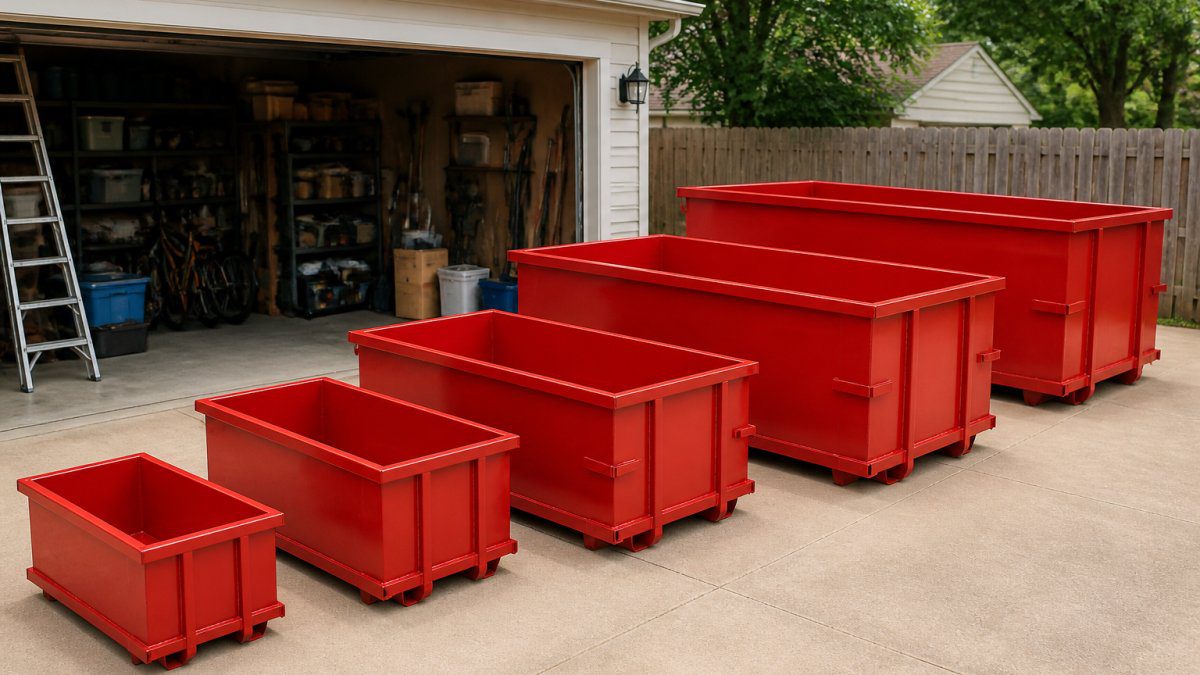
Quick Comparison: Dumpster Sizes for Garage Cleanouts
Choosing the right dumpster size for a garage cleanout determines whether you’ll finish efficiently or face frustrating delays and extra costs. At Austex Dumpsters, we’ve helped hundreds of homeowners and contractors select the perfect container for their specific project needs. The difference between a well-sized dumpster and an undersized one isn’t just convenience, it’s the difference between completing your project on schedule and paying for a second rental.
This guide covers dumpster sizes for garage cleanout projects, from smaller jobs to large-scale overhauls. We’ll walk you through how to estimate your debris volume, understand weight restrictions, and avoid the hidden costs that catch most people off guard.
Quick Overview:
- 15-yard dumpster: Best for heavy materials like concrete, dirt, brick, and rock
- 20-yard dumpster: Popular choice for mid-size garage cleanouts with general debris
- 25-yard dumpster: Larger capacity for substantial household junk and bulky items
- 30-yard dumpster: Best for whole-house cleanouts or major renovation debris
| Dumpster Size | Best For | Typical Project Type | Key Consideration |
|---|---|---|---|
| 15-yard | Heavy materials (concrete, dirt, brick, rock) | Garage with demolition debris | May qualify for tonnage break on clean heavy materials |
| 20-yard | Mid-size cleanouts with general debris | Average garage with furniture and boxes | Popular for balanced projects |
| 25-yard | Larger cleanouts with bulky waste | Spacious garage or multi-room cleanout | Requires adequate driveway space |
| 30-yard | High-volume debris removal | Whole-house cleanout or renovation | Largest Austex option for residential projects |
What Size Dumpster Do I Need to Clean Out a Garage
The right dumpster size depends on three factors: the volume of debris, the type of materials, and your driveway space. Most homeowners underestimate how much stuff accumulates in a garage over decades. That pile of old boxes, broken tools, outdated furniture, and forgotten equipment takes up far more space than you’d expect when it’s loose in a container.
Estimating Your Debris Volume
Start by visualizing your garage contents in terms of pickup truck loads. A standard pickup truck holds roughly 2.5 to 3 cubic yards of debris when filled level with the bed. This gives you a practical reference point.
Walk through your garage and mentally group items:
- Small items (boxes, tools, light fixtures): Stack these mentally to estimate height
- Medium items (shelving, chairs, small appliances): Count how many you have
- Large items (workbenches, cabinets, old equipment): These take up significant space
If your garage is a typical two-car space (about 400 square feet) and it’s moderately full, you’re looking at 15 to 20 cubic yards of debris. If it’s packed to the ceiling or includes heavy materials like concrete flooring or brick, you may need 20 to 25 cubic yards.
A practical rule: if you could fit the contents into 6 to 8 pickup truck loads, a 15-yard or 20-yard dumpster will handle it. If you’re approaching 10 or more truck loads, move up to a 25-yard or 30-yard option.
Garage Access and Placement Considerations
Before selecting a size, confirm that the dumpster will fit in your driveway or on your property. A roll-off dumpster requires a clear, level space with adequate turnaround room for the delivery truck. Most residential driveways can accommodate a 20-yard or 25-yard container, but a 30-yard dumpster needs more space and may overhang into the street in some neighborhoods.
Check for overhead obstacles like power lines, tree branches, or roof eaves. The delivery driver needs clearance to set the container down safely. If your driveway is narrow, steep, or blocked by parked cars, communicate this upfront, it affects placement options and may influence which size works best for your situation.
The 15-Yard Dumpster: Best for Heavy Materials
The 15-yard dumpster is the workhorse for garage cleanouts involving heavy debris. This size handles general household junk, but it’s specifically designed for projects with large amounts of concrete, dirt, brick, or rock.
For heavy materials like concrete or brick, the volume is lower because weight fills the container first. This is where the 15-yard size shines: it’s engineered to handle dense, heavy loads that would overweight a larger container.
One major benefit: if you fill a 15-yard dumpster exclusively with clean concrete, dirt, brick, or rock (no trash or other contamination mixed in), you may qualify for a break on tonnage fees.
The 15-yard option is also ideal if your driveway space is limited. It’s the smallest roll-off container we offer, making it easier to fit in tight residential areas while still providing substantial capacity for serious cleanout work.
The 20-Yard Dumpster: Popular Choice for Mid-Size Cleanouts
The 20-yard dumpster is the most frequently rented size for garage cleanouts, and for good reason. It strikes the right balance between capacity and manageability for most residential projects.
A typical scenario: your garage is full of decades of accumulated items, old tools, broken furniture, stacks of boxes, defunct appliances, and miscellaneous equipment. You’re not doing demolition work, but you’re clearing everything out.
The 20-yard dumpster fits comfortably in most standard residential driveways. It requires adequate space, but it’s not so large that it creates neighborhood concerns or parking complications.
One important note: the 20-yard dumpster is not suitable for large quantities of heavy materials like concrete, dirt, brick, or rock. If your cleanout includes significant demolition debris or landscape materials, the 15-yard dumpster is the correct choice.
The 25-Yard and 30-Yard Dumpsters: Large-Scale Cleanouts
The 25-yard and 30-yard dumpsters are designed for substantial projects. A 25-yard container holds approximately 12 to 15 pickup truck loads of debris. The 30-yard dumpster, our largest option, holds roughly 15 to 18 truck loads.
These sizes are appropriate for whole-house cleanouts, large garage cleanouts combined with attic or basement clearing, or renovation projects generating significant waste.
The 25-yard and 30-yard dumpsters require more driveway space and may not fit in every residential setting. Your Austex Dumpsters team can assess your property and advise on whether a larger container will work for your situation.
Like the 20-yard option, these sizes are not designed for large quantities of heavy materials. If your project involves substantial concrete, brick, dirt, or rock removal, the 15-yard dumpster remains the appropriate choice, even if it means scheduling multiple pickups.
Fill Out Form to Request Dumpster Rental →
What Can You Put in a Dumpster
Understanding what’s allowed in your dumpster prevents delays, extra fees, and disposal complications. Most household items from a garage cleanout are acceptable: furniture, boxes, general debris, broken appliances, old tools, and miscellaneous junk.
Prohibited items typically include hazardous materials, paint, solvents, batteries, propane tanks, and other chemicals. Electronics like old computers, televisions, and monitors often require special handling. Tires, refrigerators, and air conditioning units have disposal restrictions in most areas.
Heavy materials deserve special attention. Concrete, dirt, brick, and rock are permitted, but they must go in a 15-yard dumpster. Do not place these materials in a 20-, 25-, or 30-yard container.
How to Load a Roll-Off Dumpster
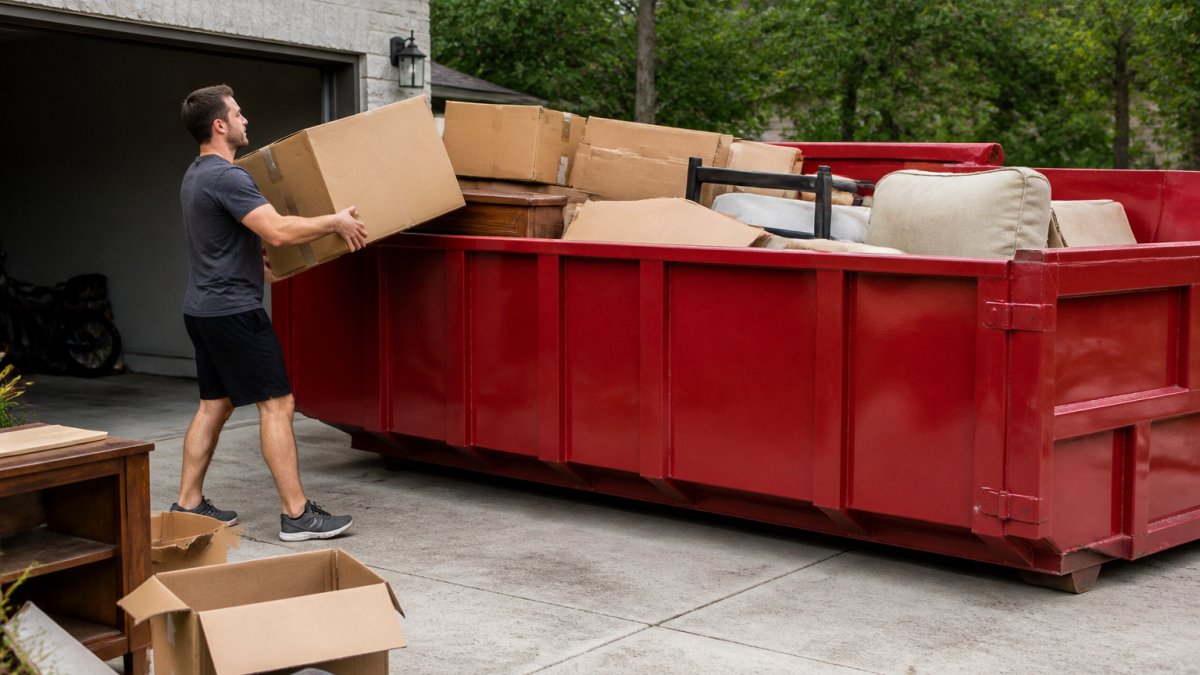
Proper loading maximizes your dumpster’s capacity and prevents safety issues.
Break down large items when possible. Disassemble furniture, flatten boxes, and cut up old wood or cardboard.
Load heavier items toward the center and sides of the dumpster. Avoid stacking everything in the middle, which creates an unstable, top-heavy load.
Fill the dumpster level with the top edge, but don’t overfill. Debris hanging over the sides creates hazards during transport and may violate local regulations.
If you have a mix of heavy and light materials, load heavy items first, then fill around them with lighter debris.
How Long to Rent a Dumpster for Your Project
Most garage cleanout projects take 3 to 7 days from start to finish. You’ll need the dumpster on-site before you begin loading and should schedule pickup within a few days of completing the work.
If you’re coordinating with contractors or multiple helpers, build in a buffer day. Weather delays, unexpected discoveries of additional junk, or scheduling conflicts can extend your timeline.
For larger projects, whole-house cleanouts or renovation debris, plan for 10 to 14 days. This allows time for sorting items, arranging donations or sales of usable goods, and systematic loading without stress.
Same-day or next-day delivery is often available, which means you can start your project immediately. Confirm availability when you request your quote. Pickup scheduling is equally straightforward, coordinate a time that works for your schedule once your project is complete.
Making the Right Size Choice for Your Garage Cleanout
The best dumpster size balances your debris volume, material types, available space, and budget. Start by estimating your debris in pickup truck loads. If you’re uncertain, err on the side of slightly larger, running out of space mid-project is far more frustrating than paying for a bit of unused capacity.
Remember the critical rule: heavy materials like concrete, dirt, brick, and rock must go in a 15-yard dumpster. If your cleanout includes any significant quantity of these materials, don’t consider a 20-, 25-, or 30-yard container.
Austex Dumpsters provides expert guidance on sizing to ensure you select the right container for your specific project. Our team understands garage cleanouts, knows the typical debris volumes, and can help you avoid oversizing or undersizing.
When estimating your garage cleanout volume, count the number of large furniture pieces (tables, cabinets, workbenches) first. These take up the most space. Then add boxes and smaller items. Most homeowners are surprised how quickly a 15-yard or 20-yard dumpster fills when they start loading.
Never place large quantities of concrete, dirt, brick, or rock in a 20-, 25-, or 30-yard dumpster. These materials will exceed weight limits and trigger expensive overage fees. Use a 15-yard dumpster for heavy materials, even if it means scheduling multiple pickups.
Frequently Asked Questions
What size dumpster do I need to clean out a garage?
The right dumpster size depends on your garage’s contents and the type of debris. If your project involves large amounts of concrete, dirt, brick, or rock, you’ll need a 15-yard dumpster specifically, as these heavy materials cannot go in larger sizes. For general debris, a 20-yard dumpster suits larger cleanouts with bulky items. Estimate your debris volume by comparing it to pickup truck loads: a 20-yard holds 6-8 loads, and larger sizes hold even more.
Can I put concrete, dirt, brick, or rock in a roll-off dumpster?
Heavy materials like concrete, dirt, brick, and rock must go in a 15-yard dumpster only. These materials cannot be placed in 20-yard, 25-yard, or 30-yard dumpsters. If your load contains only clean concrete, dirt, brick, or rock with no trash or other contamination, you may qualify for a tonnage break, reducing your overall rental cost. Always confirm the contents of your load with your rental provider before disposal.
How long should I rent a dumpster for a garage cleanout?
Most garage cleanouts take 3 to 7 days to complete, so a standard rental period of 5 to 7 days is typical. However, the exact duration depends on your project scope, the number of people working, and how quickly you can sort and load debris. Austex Dumpsters offers flexible rental periods, and you can request same-day delivery when available. Contact Austex for current rental terms and to discuss your specific timeline.
How do I estimate how much space my garage junk will take up?
A practical method is to compare your debris to pickup truck loads. A standard pickup truck holds roughly 1 cubic yard of household items. A 20-yard holds 6-8 loads, and a 25-yard holds 8-10 loads. Walk through your garage and mentally count how many truck trips it would take to haul everything away. If you estimate 5-7 loads, a 15-yard or 20-yard dumpster is likely sufficient. For larger or bulkier items like furniture, the volume may increase, so consider going up a size if you’re uncertain.
What happens if I fill my dumpster too full?
Overfilling a dumpster creates safety hazards during transport and can result in overage charges or additional fees. Most dumpsters should be filled level with the top edge; materials should not extend above the sides. If you miscalculate and realize you need more space, contact your rental provider immediately. Austex Dumpsters offers straightforward pricing and expert guidance on sizing to help you avoid these situations. When in doubt, choosing the next size up is often more cost-effective than paying overage fees.
Ready to start your garage cleanout? Fill Out Form to Request Dumpster Rental and let Austex Dumpsters handle the waste removal. Our team provides expert guidance on sizing, competitive pricing, and same-day delivery when available. We’ll keep your project on schedule and help you avoid costly mistakes. Contact us today for a quote tailored to your specific project needs.