
Table of Contents
- Dumpster Rental vs. Going to the Dump: Quick Comparison
- Understanding Dump Fees and Self-Hauling Costs
- Cost to Haul Trash to the Dump: Hidden Expenses Beyond Gate Fees
- Dumpster Rental Pricing: What You Actually Pay
- Dumpster Weight Limits and Overage Charges
- Dumpster Rental for Home Cleanout: When Renting Makes Sense
- Break-Even Analysis: How Many Dump Trips Equal One Rental?
- Conclusion
- Frequently Asked Questions
Last Updated: October 12, 2026
Dumpster Rental vs. Going to the Dump: Quick Comparison
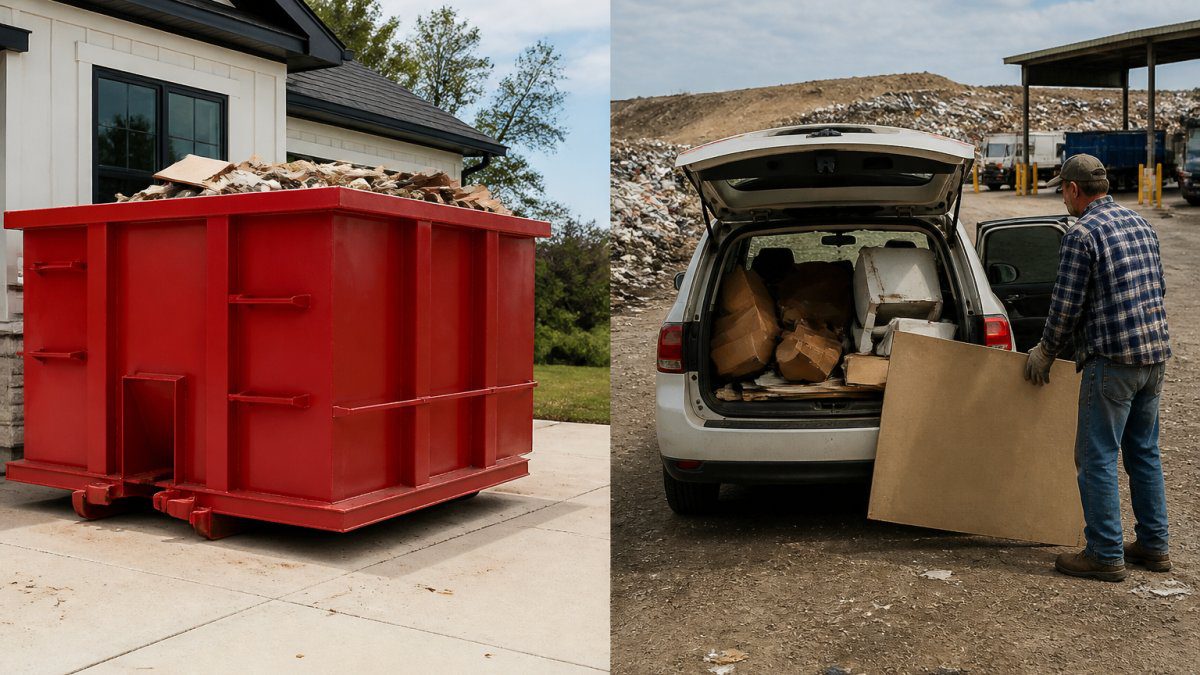
The decision between renting a dumpster and hauling waste to the dump yourself comes down to more than just the immediate dumpster rental dump cost. At Austex Dumpsters, we’ve helped hundreds of homeowners and contractors work through this exact calculation, and the answer depends on project size, debris type, your time, and how many trips you’re willing to make.
Dumpster rental vs. going to the dump isn’t always the obvious choice. A small cleanout might make sense to haul yourself. A major renovation almost always favors rental. The real question is where your project falls in between, and what “cheaper” actually means when you factor in labor, fuel, and the wear on your vehicle.
Below, we’ll break down the hidden costs of both options, show you exactly when each makes sense, and help you calculate the break-even point for your specific situation.
| Comparison Factor | Dumpster Rental | Self-Hauling to Dump |
|---|---|---|
| Upfront Cost | One flat fee (varies by size, location, dates) | Gate fee per visit + fuel |
| Labor | Included in rental | Your time and effort |
| Vehicle Wear | None | Mileage, fuel, potential damage |
| Convenience | Delivered and picked up | Multiple trips required |
| Best For | Large projects, heavy debris, multiple days | Small loads, single trip |
| Hidden Costs | Weight overage fees (if exceeded) | Trip count, fuel accumulation |
Understanding Dump Fees and Self-Hauling Costs
Going to the dump isn’t free, and that’s where many people underestimate the true cost of self-hauling. Most municipal landfills and private disposal facilities charge a gate fee per visit, and that fee varies widely depending on your location and what you’re disposing of.
The typical dump fee structure works like this: you pay an entry fee (often $5 to $25 per visit), then sometimes an additional charge based on the weight or volume of material. Some facilities bundle these together; others charge separately. Hazardous materials like paint, electronics, or certain chemicals may incur surcharges or be refused altogether.
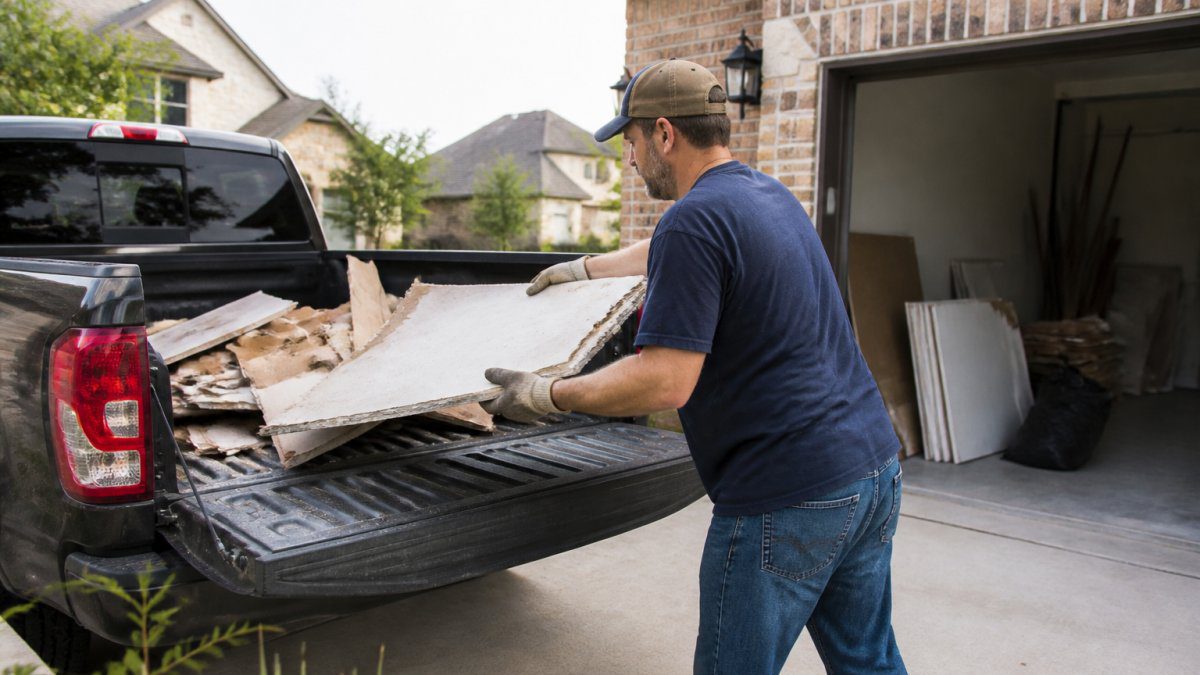
Here’s what makes self-hauling deceptive: you’re not just paying one gate fee. If your project generates more debris than fits in a single truck load, you’re making multiple trips. Each trip means another gate fee, more fuel, more time off work, and more wear on your vehicle. A project that seems “small enough for one trip” often balloons into two or three once you start loading.
Call your local landfill or disposal facility before you start your project and ask three things: (1) What’s the gate fee per visit? (2) Do they charge by weight, volume, or both? (3) Are there surcharges for specific materials like concrete, drywall, or roofing debris?
Cost to Haul Trash to the Dump: Hidden Expenses Beyond Gate Fees
The dump fee is just the beginning. When you calculate the true cost to haul trash to the dump, you need to account for expenses that don’t show up on the landfill receipt.
Fuel costs add up fast. If the dump is 15 miles away and you’re making three trips, you’re burning through fuel quickly.
Vehicle wear and tear is real. Hauling heavy loads, especially concrete, dirt, brick, or rock, puts stress on your suspension, brakes, and tires. Over time, that damage costs money in repairs. A heavily loaded truck also increases the risk of mechanical failure during transport.
Your time has value. If each dump run takes 45 minutes to an hour (including drive time, waiting in line, unloading, and driving back), and you’re making three trips, that’s nearly a full workday spent on waste disposal. If you’re taking time off work, that’s lost income.
Disposal restrictions create problems. Many dumps won’t accept certain materials, or they’ll charge premium fees for them. Roofing shingles, treated lumber, asbestos-containing materials, and large appliances often trigger surcharges or outright refusal.
For heavy materials like concrete, dirt, brick, or rock, the math becomes even more complicated. These materials are dense and heavy, which means fewer loads per trip, but more trips overall.
If your debris includes hazardous materials (paint, batteries, electronics, asbestos), the dump may refuse it entirely or charge substantial fees. Check disposal rules BEFORE you start your project, or you’ll end up with waste you can’t legally dispose of.
Dumpster Rental Pricing: What You Actually Pay
A dumpster rental typically involves a base rental fee that covers delivery, pickup, and a set rental period (usually 7 days, though terms vary). Some companies include a tonnage allowance in that fee; others charge overage fees if you exceed the weight limit.
The pricing depends on several factors: dumpster size (15-yard, 20-yard, 25-yard, or 30-yard), your location, the type of debris, how long you need it, and current demand.
What you’re paying for with a dumpster rental is convenience and certainty. You know the cost upfront. You don’t make multiple trips. You don’t worry about disposal restrictions because the rental company handles that. You’re also paying for the ability to fill the dumpster on your schedule, not the dump’s hours.
One significant advantage: if you’re disposing of clean concrete, dirt, brick, or rock with no trash or contamination mixed in, customers may receive a break on tonnage charges. That can meaningfully reduce your total cost on heavy-material projects.
The key to smart dumpster rental pricing is right-sizing. Renting a 30-yard dumpster when a 20-yard would work wastes money. Renting a 15-yard when you actually need a 25-yard means either paying for a second rental or overage fees. Austex Dumpsters provides expert guidance on sizing so you avoid both mistakes.
Dumpster Weight Limits and Overage Charges
Every dumpster has a weight limit, and exceeding it triggers overage charges. A typical 15-yard dumpster might have a weight limit of 3 to 4 tons, depending on the debris type. A 20-yard might allow 4 to 5 tons. Heavier materials like concrete, dirt, brick, and rock fill up a dumpster’s weight capacity faster than lighter debris like drywall or general household items.
Here’s where many people get surprised: a dumpster can look half-empty but be at or over its weight limit. A 15-yard dumpster filled with concrete can weigh significantly more than the same dumpster filled with cardboard. That’s why material type matters as much as volume.
Overage charges typically run $50 to $150 per ton (or per partial ton) depending on the company and location. If you exceed the limit by even a small amount, you’ll pay the overage. That’s why Austex Dumpsters emphasizes getting the sizing right from the start, it prevents those unexpected charges and keeps your project on budget.
Fill Out Form to Request Dumpster Rental →
For projects involving heavy materials like concrete, dirt, brick, or rock, a 15-yard dumpster is often the right choice because it’s designed to handle the weight of dense debris. Using a larger dumpster for this material doesn’t always make sense because you’ll hit the weight limit before filling the space.
The single biggest mistake people make with dumpster rentals is underestimating debris weight. Concrete, dirt, brick, and rock are deceptively heavy. Right-sizing prevents overage fees and keeps your project on schedule.
Dumpster Rental for Home Cleanout: When Renting Makes Sense
A home cleanout, whether you’re clearing out a basement, attic, garage, or an entire house, is one scenario where dumpster rental almost always beats self-hauling. Here’s why.
A typical home cleanout generates far more debris than most people expect. Old furniture, boxes of accumulated items, broken appliances, and general junk fill up quickly. If you try to haul this yourself, you’re looking at multiple trips, and each trip requires loading heavy items into your vehicle, driving to the dump, unloading, and returning.
With a dumpster rental, everything goes into one container. You load it on your schedule, the rental company picks it up, and you’re done. For a home cleanout, that convenience is worth the rental cost.
The debris from a home cleanout is also typically mixed, furniture, electronics, textiles, general household items. Some of these materials incur surcharges at the dump or are refused outright. A dumpster rental company handles those restrictions for you, so you don’t have to sort materials or make special trips for items the dump won’t accept.
Home cleanouts also tend to take longer than a single day. If you’re renting a dumpster for a 7-day period, you can work at your own pace without worrying about dump hours or making multiple trips in a single day.
Break-Even Analysis: How Many Dump Trips Equal One Rental?
This is the calculation that matters: at what point does renting a dumpster become cheaper than self-hauling?
The break-even point depends on three variables: the dumpster rental dump cost, the dump gate fee per visit, and fuel costs for each trip. Let’s work through a realistic scenario.
Assume a dump gate fee of $15 per visit, fuel costs of $8 per round trip, and a total travel and wait time of one hour per trip.
A dumpster rental for a modest project might cost less than that, especially when you factor in the convenience of not making three separate trips.
The real break-even point for your specific project depends on local dump fees, fuel prices, how far the dump is from your location, and what materials you’re disposing of.
For projects involving heavy materials like concrete, dirt, brick, or rock, the break-even point shifts even further toward rental. These materials are dense and heavy, which means fewer loads per trip and more trips overall.
Dumpster rental makes the most sense for projects requiring more than 2-3 dump trips, projects with heavy debris (concrete, dirt, brick, rock), or any cleanout where your time and convenience matter as much as the direct cost.
Conclusion
The answer to whether it’s cheaper to rent a dumpster or go to the dump isn’t always obvious, but the calculation becomes clearer when you account for all the hidden costs of self-hauling: multiple gate fees, fuel accumulation, vehicle wear, your time, and the risk of disposal restrictions.
For small, single-load projects, self-hauling might save money. For anything larger, or for projects with heavy materials like concrete, dirt, brick, or rock, dumpster rental typically wins on both cost and convenience.
At Austex Dumpsters, we help you right-size your rental so you avoid overage fees and get the waste removal solution that keeps your project on schedule. Our same-day delivery option means you can start your project without delay, and our expert guidance on sizing ensures you’re not paying for more dumpster than you need. Request a dumpster rental quote and let us handle the waste removal while you focus on finishing your project.
Frequently Asked Questions
How many dump trips would make a dumpster rental worthwhile?
The break-even point depends on your local dump fees, vehicle capacity, and fuel costs. Most homeowners find that three to five trips to the dump equal the cost of a single dumpster rental. For large projects generating significant debris, a dumpster rental typically saves money and eliminates the time burden of multiple trips. Calculate your specific scenario by estimating load volume, local disposal fees, and vehicle fuel consumption.
What fees should I compare when choosing between a dumpster and the dump?
For dump fees, factor in the per-ton or per-visit gate fee, plus fuel and vehicle wear-and-tear for each trip. For dumpster rental, compare delivery fees, pickup fees, the base rental period cost, and potential overage charges if your debris exceeds weight limits. Material-specific surcharges may apply at either location for hazardous or restricted items. Request a detailed quote from your rental provider to ensure no hidden costs surprise you.
Is a dumpster rental worth it for a home cleanout?
For most home cleanouts, a dumpster rental saves time, physical effort, and money compared to multiple dump trips. A single rental handles the entire project in one convenient delivery and pickup, eliminating the need to load and unload your vehicle repeatedly. This is especially true for large cleanouts involving furniture, appliances, or significant debris volume. Smaller cleanouts may be cost-effective via self-hauling if your local dump fees are low and you have adequate vehicle capacity.
What happens if I exceed the weight limit on a rented dumpster?
Exceeding the weight limit on a rented dumpster typically results in overage charges. These fees vary by rental provider and can add significantly to your total cost. To avoid overages, discuss your project scope with your rental provider upfront so they can recommend the appropriate dumpster size. Many providers offer expert guidance on sizing to prevent miscalculation. Understanding dumpster weight limits before you rent helps you choose the right size and avoid surprise fees.