
Table of Contents
- What Causes Dumpster Overage Fees in Austin?
- Dumpster Rental Sizing Guide: Start With the Right Bin
- Heavy Material Disposal Guidelines: Concrete, Dirt, and More
- How to Load a Roll-Off Dumpster to Maximize Space
- Weight Limits, Tonnage Allowances, and Rain
- Local Austin Landfill Rules and Seasonal Factors
- Disputing Fees: What to Check Before You Pay
- Frequently Asked Questions
Last Updated: September 6, 2026
Overage fees are the single most common surprise on a dumpster rental invoice, and in Austin they catch many homeowners and contractors off guard. Avoiding dumpster overage fees in Austin starts with understanding that these charges stem from two core issues: exceeding the agreed tonnage allowance or overfilling the container past the rim. At Austex Dumpsters, we see the same mistakes repeat on residential and commercial jobs, and nearly all of them are preventable with upfront planning. This guide breaks down the real causes of overage charges, how to pick the right bin the first time, and the loading techniques that keep your final invoice predictable.
What Causes Dumpster Overage Fees in Austin?
Dumpster overage fees are charges added to your final invoice when your load exceeds the weight limit or the fill level specified in your rental agreement. Most providers quote a flat rate that includes a set tonnage allowance, and you pay extra for every ton beyond that threshold. The second trigger is an overloaded container, where debris sits above the rim and forces the haul-away service to either refuse the load or charge a repack fee.
The most common culprits are deceptively heavy materials. A load that looks half full can weigh more than a container packed to the top with light household junk. Construction debris like shingles and concrete carry far more density than most people estimate, and moisture from rain adds significant weight to materials like drywall and untreated wood. Understanding what drives the scale is the first step toward controlling your costs.
Dumpster Rental Sizing Guide: Start With the Right Bin
Choosing the correct dumpster size is the most effective way to prevent overage charges, because a larger container does not increase your tonnage allowance proportionally. A dumpster rental sizing guide helps you match the bin to the waste stream you are actually producing. For most Austin home renovations and cleanouts, a 15-yard dumpster handles general debris well, while larger projects such as full remodels or roofing tear-offs typically need a 20-yard, 25-yard, or 30-yard container.
The risk of undersizing is obvious: you run out of space mid-project and need a second dumpster. The less obvious risk is oversizing, which tempts you to fill the larger bin with heavy material and blow past the weight limit. A practical rule is to estimate your debris volume in cubic yards first, then consider the material type. If your project involves substantial concrete, dirt, or brick, the weight constraint matters more than the volume, and that changes the sizing decision entirely.
| Project Type | Recommended Size | Primary Waste Stream |
|---|---|---|
| Garage or attic cleanout | 15-yard | Household junk, light debris |
| Kitchen or bath remodel | 15-yard or 20-yard | Cabinets, drywall, fixtures |
| Roofing tear-off | 20-yard or 25-yard | Shingles, felt, nails |
| Full home renovation | 25-yard or 30-yard | Mixed construction debris |
| Heavy material removal | 15-yard only | Concrete, dirt, brick, rock |
Heavy Material Disposal Guidelines: Concrete, Dirt, and More
Heavy material disposal guidelines exist because most people underestimate how quickly concrete, dirt, brick, and rock add up on the scale. These materials must go in a 15-yard dumpster, and they should not be mixed into larger containers where the weight will exceed the tonnage allowance. A small concrete patio demolition can easily produce several tons of debris, so the bin choice and the weight limit must be aligned from the start.
Do not place large amounts of heavy material such as concrete, dirt, brick, or rock into a 20-yard, 25-yard, or 30-yard dumpster. The container may have the volume, but the weight will trigger significant [overage charges](/avoiding-hidden-dumpster-rental-fees/) on your final invoice.
One useful benefit to know: when a 15-yard dumpster is filled with clean concrete, dirt, brick, or rock with no trash or other contamination, customers may receive a break on tonnage. That means keeping the load pure, without mixing in lumber, drywall, or household waste, can lower your effective cost per ton. It is worth asking your provider about this option before you start loading.
How to Load a Roll-Off Dumpster to Maximize Space
Loading technique directly affects both your tonnage and your ability to avoid a second rental. How to load a roll-off dumpster properly comes down to breaking down bulky items and distributing weight evenly across the floor of the container. Start with flat, heavy materials at the bottom to create a stable base, then layer lighter debris on top. Break down furniture, pallets, and framing lumber so they lie flat rather than trapping air pockets.
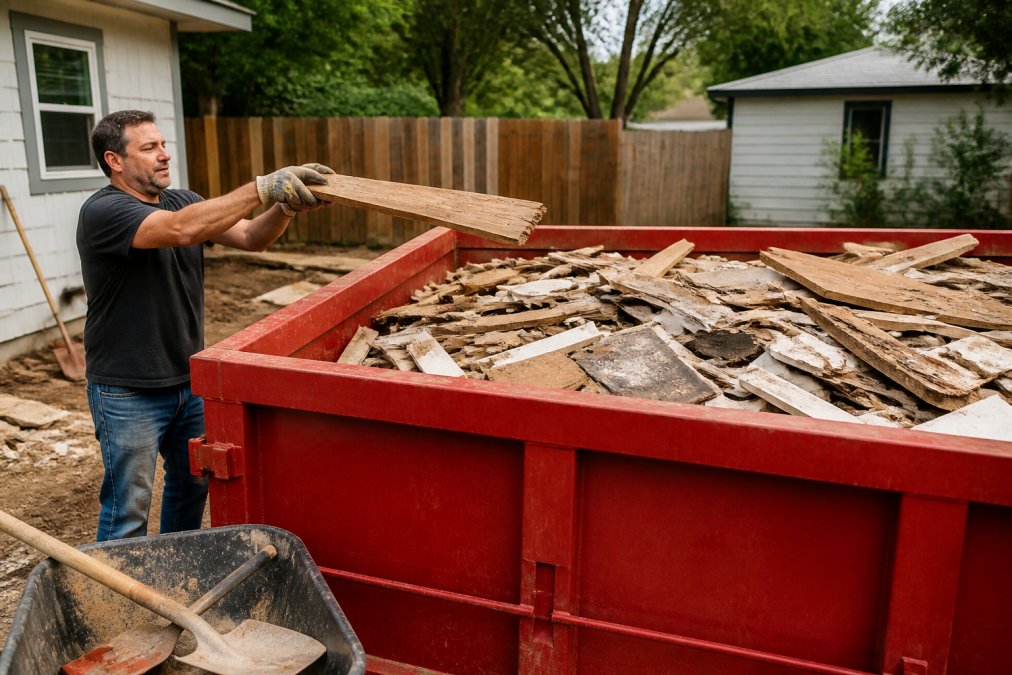
Load level is the critical visual cue. The waste line should never rise above the top edge of the dumpster, because haul-away trucks cannot legally or safely transport an overloaded container. Walk the load down periodically as you work, compacting materials by foot or with a heavy tool. A common mistake is tossing large items in randomly, which wastes up to a third of the usable space and forces an early second pickup.
Weight Limits, Tonnage Allowances, and Rain
Every dumpster rental includes a weight limit that corresponds to the container capacity, and exceeding it is the primary source of dumpster overage fees. The tonnage allowance is the number of tons included in your flat-rate quote, and overage charges apply per ton beyond that figure. Because the allowance varies by provider and by bin size, always confirm the number before you sign the rental agreement.
Estimating Your Load Weight: A Visual Guide
The most reliable way to avoid an overage fee is to estimate your debris weight before you fill the container. Use the following figures as a practical benchmark for common materials. These are approximate weights for a single cubic yard of material, which is about the size of a standard washing machine.
| Material | Approximate Weight per Cubic Yard |
|---|---|
| Mixed household junk (furniture, clothes, toys) | 150 – 300 lbs |
| Construction debris (drywall, lumber, fixtures) | 400 – 600 lbs |
| Asphalt shingles | 700 – 800 lbs |
| Concrete, brick, or rock | 1,200 – 1,500 lbs |
| Dirt or fill | 1,000 – 1,200 lbs |
To use this table, estimate the volume of your debris in cubic yards. A standard 15-yard dumpster holds roughly 15 cubic yards of material when filled level (the EPA). If you are removing a small concrete patio that is 10 feet by 10 feet and 4 inches thick, that is about 1.2 cubic yards of concrete, which will weigh approximately 1,500 to 1,800 pounds. A 15-yard dumpster filled with clean concrete, dirt, brick, or rock can reach its tonnage limit well before the container is physically full.
The Rain Factor in Central Texas
Rain is the hidden variable that pushes many loads over the limit. A soaking rain can add hundreds of pounds to drywall, carpet, and untreated lumber. In Austin, where sudden downpours are common, this is a real risk. A single cubic yard of drywall can absorb up to 50 pounds of water, and a full load of wet drywall can easily add 500 pounds or more to your total weight (peer-reviewed research).
If your project spans several days and storms are forecast, consider covering the dumpster with a tarp between work sessions. This simple step prevents moisture weight from turning a compliant load into an overage invoice. Also, be mindful of the season. Austin’s spring and fall often bring heavy rain events, so plan your loading schedule around the forecast.
The Heavy Material Exception
For projects involving substantial amounts of heavy material like concrete, dirt, brick, or rock, the weight constraint is the primary concern. These materials must go in a 15-yard dumpster, and they should not be mixed into larger containers where the weight will exceed the tonnage allowance. A small concrete patio demolition can easily produce several tons of debris, so the bin choice and the weight limit must be aligned from the start.
Do not place large amounts of heavy material such as concrete, dirt, brick, or rock into a 20-yard, 25-yard, or 30-yard dumpster. The container may have the volume, but the weight will trigger significant overage charges on your final invoice.
One useful benefit to know: when a 15-yard dumpster is filled with clean concrete, dirt, brick, or rock with no trash or other contamination, customers may receive a break on tonnage. That means keeping the load pure, without mixing in lumber, drywall, or household waste, can lower your effective cost per ton. It is worth asking your provider about this option before you start loading.
Local Austin Landfill Rules and Seasonal Factors
Austin landfill regulations shape what you can dispose of and how much it costs at the tipping scale. The City of Austin and Travis County facilities classify waste streams and apply tipping fees based on material type, so separating your debris matters. Prohibited materials such as paints, solvents, tires, and certain electronics must go to designated drop-off sites rather than into a roll-off dumpster, and mixing them in can result in rejection of the entire load.
Seasonal factors also influence waste disposal in Central Texas. Spring and fall renovation surges mean higher demand for dumpsters and tighter delivery windows. Summer heat accelerates curing and drying, which can work in your favor by reducing moisture weight, while winter storms can delay pickups and leave containers sitting longer than planned. Booking early and confirming same-day delivery availability keeps your schedule on track during peak seasons.
Disputing Fees: What to Check Before You Pay
Finding an unexpected overage charge on your final invoice is frustrating, but it is not the end of the conversation. Most overage disputes are rooted in a misunderstanding or a simple clerical error. The key is to approach the dispute with evidence and a clear, factual script rather than emotion. Here is a step-by-step process to challenge a charge effectively.
Step 1: Audit Your Rental Agreement and the Weight Ticket
Before you make a call, pull out your rental agreement and locate the exact tonnage allowance and the per-ton overage rate you agreed to. Next, request the weight ticket from the disposal facility. This document shows the gross weight of the truck when it was weighed at the landfill. The actual weight of your debris is the gross weight minus the tare weight (the weight of the empty truck) (nist.gov). Ask the provider for both figures. A common error is being billed based on the gross weight rather than the net weight of your load.
Step 2: Use a Script for Your Dispute Call
When you call, a structured conversation gets results faster than a frustrated one. Use this framework to guide your discussion:
- State your intent: “I am calling about the overage fee on invoice [Number]. I believe there may be an error, and I would like to review the documentation.”
- Reference the agreement: “My rental agreement states a tonnage allowance of [X] tons. The weight ticket shows a net weight of [Y] tons. Can you confirm these figures are correct?”
- Ask for a recalculation: “If the net weight is correct, can you please recalculate the fee based on the per-ton rate in my contract?”
- If the fee is valid: “I see the weight was over the limit. Is there any flexibility on this charge given the circumstances?” (This is where a calm, polite tone can sometimes lead to a partial credit or waiver, though it is never guaranteed.)
Step 3: Document Everything
Your own records are your best defense. If you have a photo of the dumpster at pickup showing it was level and not overfilled, mention it. If you have an itemized list of what you loaded, use it to estimate the weight and compare it against the ticket. For example, a standard 15-yard dumpster filled with mixed construction debris from a kitchen remodel will weigh far less than one filled with dirt and concrete. Having a rough estimate of your load’s weight helps you spot a billing error immediately.
Step 4: Know the Local Disposal Context
In the Austin area, disposal facilities charge tipping fees based on the material type and weight. If your load was mixed, the facility may have classified it in a higher-cost waste stream, which can inflate the bill. Ask your provider if the load was classified as mixed C&D (construction and demolition) debris or as a cleaner stream like concrete or dirt. A misclassification can lead to a higher charge that is worth disputing.
A calm, evidence-based conversation resolves most disputes. If the provider is unresponsive, your next step is to escalate to a manager and reference your documentation. Most reputable companies would rather correct an error than lose a customer over a disputed fee.
Frequently Asked Questions
What causes dumpster overage fees?
Dumpster overage fees are typically triggered by two things: exceeding the weight limit outlined in your rental agreement or overfilling the container beyond the load line. Heavy materials like concrete, dirt, and roofing shingles add weight fast. Rain-soaked debris also becomes significantly heavier. Most Austin dumpster rentals include a set tonnage allowance, and you pay extra per ton once you pass it. Checking your rental agreement for the exact weight limit and understanding the material you are disposing of is the first step to avoiding surprise charges.
How can I estimate the weight of my debris?
A good rule of thumb is to know your material. A 15-yard dumpster filled with general household junk or construction debris from a remodel will weigh far less than one filled with concrete or dirt. For heavy loads, remember that a 15-yard dumpster is the only size recommended for large amounts of heavy material like concrete, brick, or rock. If you are disposing of roofing shingles, ask your rental company about the weight per square. When in doubt, ask for guidance before you fill the container, as visual estimates are often off by a ton or more.
What happens if I overfill my dumpster?
Overfilling your dumpster is a safety hazard and will often result in additional charges. Debris must be level with the top of the container walls, not piled above them. Haul-away service can be refused if the load is unsafe or exceeds legal limits for the truck. This can delay your project and add fees. To avoid this, load heavy items first and place them flat, then add lighter materials on top. If you think you have more waste than the container can hold, contact your provider about a second dumpster before you start piling debris over the rim.
Are there specific rules for heavy materials like concrete in Austin?
Yes. While a 15-yard dumpster can handle general debris, large amounts of heavy materials such as concrete, dirt, brick, or rock must go in the 15-yard dumpster. These materials should not be placed in larger containers because the weight becomes too much for safe hauling. Some companies offer a break on tonnage when a 15-yard dumpster is filled with clean concrete, dirt, brick, or rock with no trash mixed in. Always separate these materials from general waste to ensure proper disposal and to avoid potential fees.
Overage fees are avoidable when you understand the weight limits, choose the right bin, and load with intention. Austex Dumpsters helps Austin homeowners and contractors prevent these surprises through expert guidance on sizing, straightforward pricing, and same-day delivery when available. Request a rental today and keep your project on schedule without hidden costs.