
Table of Contents
- Why Contractors Need a Reliable Dumpster Rental Alternative
- Dumpster Rental Sizing Guide for Contractors: Getting It Right
- Heavy Debris Disposal Requirements: What Goes Where
- Local vs. National Dumpster Rental Companies: Key Differences
- Same-Day Service and Scheduling Reliability
- Transparent Pricing and Hidden Fee Avoidance
- How to Choose the Right Dumpster Rental Partner
- Conclusion
Last Updated: August 19, 2026
Why Contractors Need a Reliable Dumpster Rental Alternative
Choosing the right dumpster rental alternative can make or break a project timeline. When site cleanup stalls due to unreliable service, delayed pickups, or miscalculated container sizing, costs spiral fast. The difference between contractors who keep projects on schedule and those facing operational downtime often comes down to one decision: which waste management partner handles the job.
Many contractors have experienced frustration with national platforms that treat every job identically, ignoring local construction debris types, permit requirements, and same-day scheduling needs. A dumpster rental alternative that understands your market, material types, and timeline becomes a project partner rather than just a vendor.
Austex Dumpsters has built its reputation on this principle. Rather than forcing contractors into inflexible national systems, the team provides expert guidance on sizing, transparent pricing without hidden fees, and same-day delivery when your project demands it. For homeowners tackling major renovations, general contractors managing construction sites, roofing professionals handling tearoffs, property managers coordinating office cleanouts, and landscaping crews processing yard waste, having a local partner who knows your specific waste disposal challenges makes the entire process smoother.
Dumpster Rental Sizing Guide for Contractors: Getting It Right
Getting your container size right matters more than most contractors realize. Order too small and you’ll face the cost and hassle of a second pickup mid-project. Order too large and you’re paying for unused capacity. The sweet spot depends on understanding what actually goes into your dumpster and how much volume you’re dealing with.
Austex Dumpsters offers roll-off dumpsters in four sizes: 15-yard, 20-yard, 25-yard, and 30-yard. Each serves different project profiles, and the key is matching the container to your actual debris load.
A 15-yard dumpster works best for smaller residential cleanouts, modest renovation projects, and general household debris removal. The 20-yard dumpster suits medium-scale residential and light commercial work like roofing tearoffs, kitchen and bathroom renovations, and moderate landscaping debris. For larger commercial construction debris, major home demolition, or significant landscaping operations, the 25-yard and 30-yard containers provide the capacity you need without requiring multiple pickups.
The mistake contractors make most often is underestimating volume. Material takes up more space than expected once loose in a container. If you’re uncertain between two sizes, the larger one usually saves money by avoiding overage fees and second-trip logistics. However, if you’re dealing with heavy materials like concrete, dirt, brick, or rock in large quantities, a 15-yard dumpster is the correct choice regardless of volume, these materials require their own dedicated container to avoid contamination and ensure proper disposal.
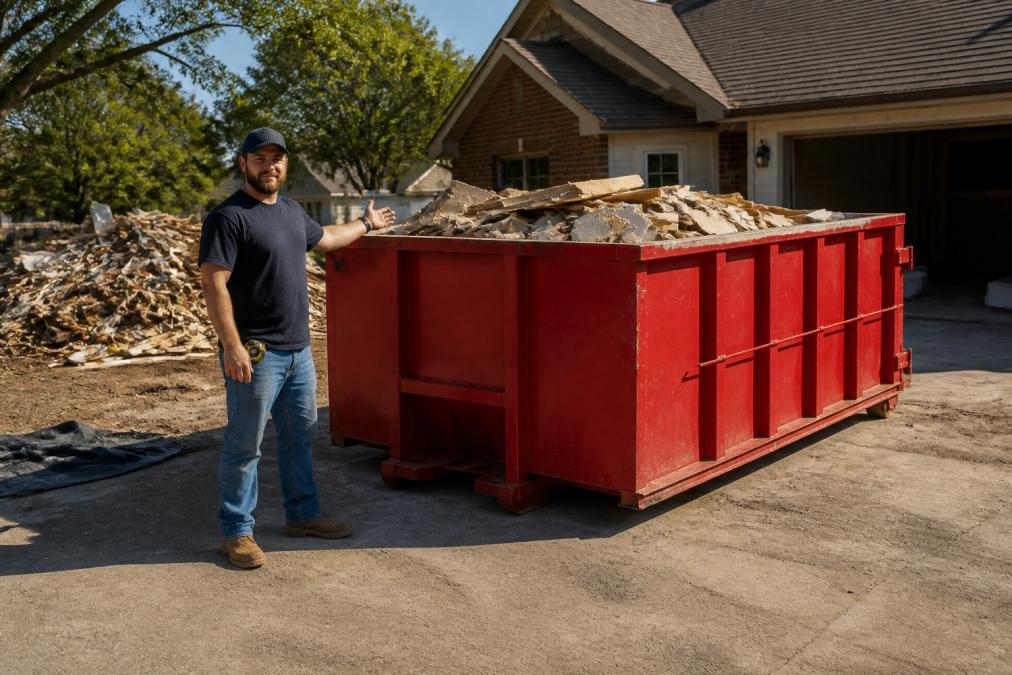
Before ordering, walk your site and physically estimate how much debris you’ll generate. Many contractors underestimate by 30-40%. If you’re uncertain, ask your dumpster rental provider for guidance based on your specific project type.
Heavy Debris Disposal Requirements: What Goes Where
Not all debris is equal when it comes to disposal requirements. Understanding what materials go where prevents costly mistakes, contamination issues, and disposal rejections that halt your project.
Heavy materials like concrete, dirt, brick, and rock follow a strict rule: they belong in a 15-yard dumpster dedicated solely to those materials. This isn’t arbitrary. Heavy debris requires specific handling, different disposal logistics, and separate processing at the waste facility. Mixing heavy materials with general construction waste contaminates both streams and creates disposal complications.
Concrete and similar heavy materials are dense. A 15-yard container filled with concrete reaches weight capacity quickly, well before volume capacity. Putting these materials in a 20-, 25-, or 30-yard dumpster wastes container space and creates disposal inefficiencies that drive up costs.
Clean concrete, dirt, brick, or rock, material with no trash, no wood, no mixed contamination, qualifies for potential tonnage breaks when disposed properly. If your project involves a large volume of clean heavy material, this can meaningfully reduce your overall waste management costs. The key is segregation: keep the heavy material pure and communicate that clearly to your dumpster rental provider.
General construction debris, drywall, wood framing, insulation, flooring, roofing materials, and fixtures fit into the larger containers where volume matters more than weight. Roofing tearoffs, for instance, generate high volume but moderate weight, making them ideal for 20-yard or 25-yard containers depending on the roof size.
Hazardous materials and prohibited items require separate handling entirely. Asbestos, lead paint, refrigerants, and other regulated materials cannot go in standard dumpsters. Before your project starts, confirm with your waste management partner which materials require special handling.
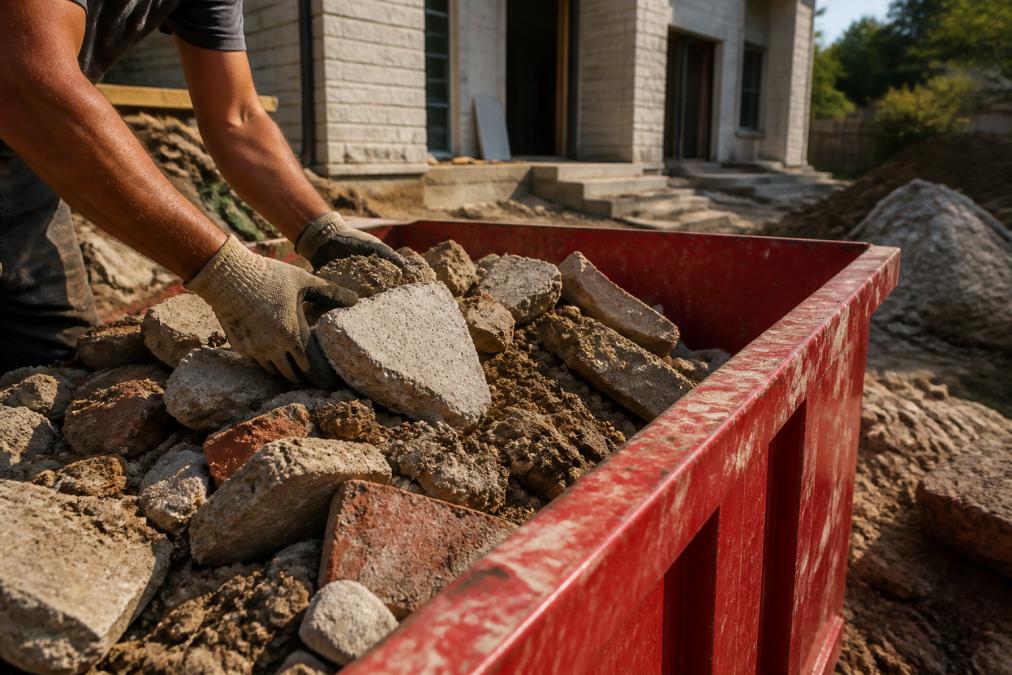
Mixing heavy materials (concrete, brick, dirt, rock) with general debris is the single biggest cause of disposal rejections and cost overruns. Once a load is rejected, you’re paying for a second pickup and facing project delays. Segregate from day one.
Local vs. National Dumpster Rental Companies: Key Differences
The choice between a local dumpster rental provider and a national platform shapes your entire waste management experience. Both have advantages, but they operate with fundamentally different priorities.
National platforms excel at scale and standardization. However, that standardization often means less flexibility. A national company treats a roofing tearoff in Austin the same way it handles one in Denver, even though local disposal facilities, permit requirements, and material handling practices differ. Response times suffer too, when something goes wrong, you’re talking to a call center, not someone familiar with your local market.
Local providers like Austex Dumpsters operate differently. They understand permit requirements specific to your area, know which disposal facilities handle different material types, and can respond quickly to same-day requests because they manage local logistics directly. When you call with a problem, you’re speaking to someone who knows the Austin market and can solve it immediately.
Service reliability matters most when deadlines are tight. A local provider has more at stake in your community, reputation travels fast. A local provider’s accountability incentive structure makes them more responsive than national platforms, which absorb customer dissatisfaction across thousands of markets.
Permit acquisition is another area where local expertise saves time and frustration. Some projects require permits for dumpster placement, and requirements vary by neighborhood and project type. A local provider navigates these regulations routinely and can guide you through the process.
Pricing transparency differs too. National platforms often bury fees in their systems, tonnage overages, fuel surcharges, delivery minimums, that only become clear after you’ve committed. Local providers tend toward straightforward pricing because word-of-mouth reputation depends on it.
Local providers win on accountability, permit expertise, and same-day responsiveness. National platforms win on standardization and broad availability. For contractors prioritizing reliability and local market knowledge, a local dumpster rental alternative typically delivers better project outcomes.
Same-Day Service and Scheduling Reliability
Same-day delivery separates contractors who stay on schedule from those who face delays. The question isn’t whether same-day service exists, it’s whether your provider can actually deliver it when your project needs it.
National platforms advertise same-day service broadly, but availability varies wildly. A Saturday morning request for same-day delivery often falls outside their operating windows. Their logistics are optimized for weekday commercial routes, not weekend residential projects.
Fill Out Form to Request Dumpster Rental →
Local providers manage their own fleet and scheduling, which creates flexibility national platforms can’t match. Austex Dumpsters can often accommodate same-day requests because they control their own delivery routes and don’t depend on third-party logistics. That responsiveness matters when your crew is ready to work and your timeline won’t tolerate delays.
Pickup reliability matters equally. A dumpster sitting in your driveway two weeks after your project ends ties up your space and your money. National platforms sometimes struggle with pickup scheduling because they coordinate across multiple markets and prioritize high-volume commercial accounts. A local provider makes pickups a priority because they’re managing fewer accounts and have direct control over their schedule.
Scheduling transparency is another differentiator. When you book a dumpster, you should know exactly when it arrives and when it gets picked up. Local providers typically offer tighter windows because they’re managing fewer routes and can be more precise about timing.
The real test of scheduling reliability comes when something changes. Your project finishes early, or you need an extra day, or weather delays the job. How quickly can your provider adjust? Local providers can often accommodate adjustments with a quick call because they have decision-making authority and flexibility built into their operations.
Transparent Pricing and Hidden Fee Avoidance
Hidden fees destroy contractor budgets. A dumpster rental quote that looks reasonable suddenly becomes expensive when tonnage overages, fuel surcharges, or disposal fees appear on the invoice. Transparent pricing is essential for accurate project budgeting.
The problem with many national platforms is their fee structure. They quote a base price, but the actual cost depends on weight, disposal location, material type, and market-specific surcharges. A contractor who doesn’t ask detailed questions ends up surprised when the final bill arrives.
Local providers typically operate with simpler, more transparent pricing structures. Austex Dumpsters leads with straightforward costs because hidden fees damage relationships in a local market where reputation matters. When you get a quote, you should understand exactly what you’re paying for and what conditions might change that price.
Key questions to ask any dumpster rental provider: Are there tonnage overages, and if so, at what threshold? Are there fuel surcharges, and how are they calculated? Does the quoted price include disposal, or is that separate? Are there fees for permit acquisition or placement in restricted areas? What happens if you keep the dumpster longer than the initial rental period?
A provider who answers these questions clearly and upfront is one you can trust. For heavy materials like concrete, dirt, brick, or rock, some providers offer tonnage breaks when the material is clean and uncontaminated. This can meaningfully reduce costs for large debris loads. Ask whether your provider offers this benefit.
How to Choose the Right Dumpster Rental Partner
Selecting a dumpster rental alternative comes down to matching your priorities to a provider’s strengths. Start with reliability assessment. How long has the provider been operating in your market? What do other contractors say about them? Ask for references from contractors who’ve used them recently.
Evaluate their sizing guidance. A good provider doesn’t just take your order, they ask questions about your project, materials, and timeline to recommend the right container. If a provider quotes you without understanding what you’re actually disposing of, that’s a red flag.
Test their responsiveness. Call with a question and see how quickly they respond. A provider who takes time to understand your needs and answer thoroughly is one that will handle problems well when they arise.
Confirm same-day service capability. Ask specifically: Can you accommodate a Saturday delivery? What’s your actual same-day window? Do you charge extra for expedited service? Get specifics, not marketing language.
Review their material handling policies. Ask which materials they accept, which require special handling, and whether they offer tonnage breaks for clean heavy materials. A provider with clear policies and no surprises is easier to work with.
Compare pricing, but don’t lead with price. The cheapest option often comes with service compromises. A provider who’s slightly more expensive but delivers reliably, offers transparent pricing, and provides expert guidance usually saves money overall by keeping your projects on schedule and avoiding costly overages and delays.
Conclusion
Choosing a dumpster rental alternative that keeps your projects on schedule requires matching your needs to a provider’s actual capabilities. Austex Dumpsters delivers on the core requirements contractors prioritize: same-day roll-off dumpster rental delivery, expert guidance on dumpster sizing, competitive and straightforward pricing, and service for homeowners, businesses, and contractors across various project types. Rather than forcing your project into a national platform’s standardized approach, Austex Dumpsters provides local market expertise, transparent pricing without hidden fees, and the scheduling flexibility that prevents costly downtime. Fill out a form to request your dumpster rental and keep your project moving forward.
Frequently Asked Questions
What's the main difference between a local dumpster rental alternative and a national franchise?
Local providers like Austex Dumpsters typically offer same-day service, personalized sizing guidance, and direct accountability for pickup schedules. National franchises often have standardized processes and may take longer to respond to urgent requests. Local operators understand regional waste streams and permit requirements better, reducing project delays and unexpected fees.
How do I choose the right dumpster size for my construction project?
Start by calculating your debris volume: measure the length, width, and height of materials you'll generate, then divide by 27 to get cubic yards. A 15-yard dumpster handles most residential renovations and roofing tearoffs. For commercial demolition or large landscaping projects, 20-, 25-, or 30-yard containers may be needed. Austex Dumpsters provides expert guidance on sizing to prevent overage fees and avoid ordering a second dumpster mid-project.
Why must heavy debris like concrete and dirt go in a 15-yard dumpster?
Heavy materials such as concrete, brick, dirt, and rock exceed weight limits in larger containers due to their density. A 15-yard dumpster is engineered to handle these materials safely without overloading the truck or violating weight regulations. Placing heavy debris in 20-, 25-, or 30-yard dumpsters risks overage charges, disposal delays, and potential legal violations. Clean loads of these materials in a 15-yard dumpster may also qualify for tonnage breaks.
How can I avoid hidden fees and overage charges?
Request upfront pricing that clearly separates rental, delivery, and disposal costs. Ask whether tonnage limits apply and what triggers overage fees. Verify that your dumpster size matches your debris volume before the project starts. Austex Dumpsters provides straightforward pricing and expert sizing guidance to prevent surprises. Always confirm pickup schedules in writing to avoid extended rental charges.
This article was written using GrandRanker