
Table of Contents
- Roll Off Dumpster Rental Comparison: What Sets Providers Apart
- Dumpster Rental Sizing Guide: Getting the Right Fit
- Heavy Material Disposal Requirements: Know What Goes Where
- Service Reliability and Pickup Frequency
- Pricing Transparency and Hidden Fees
- Local Operators vs. National Waste Management Companies
- Which Provider Should You Choose?
- Frequently Asked Questions
Last Updated: September 3, 2026
Roll Off Dumpster Rental Comparison: What Sets Providers Apart
When you’re managing a renovation, construction site, or major cleanout, choosing the right dumpster rental provider directly impacts your project timeline and budget. The roll off dumpster rental comparison landscape has shifted considerably, what once felt like a commodity service now varies dramatically across local operators and national waste management companies in terms of sizing guidance, material handling expertise, and service reliability.
At Austex Dumpsters, we’ve worked with homeowners, contractors, and property managers across the region. The most common mistake we see? Customers either overestimate their needs and pay for capacity they’ll never use, or underestimate and end up scrambling for a second dumpster mid-project. This guide breaks down the real differences between providers, how to match your project to the right dumpster size, and what hidden fees actually mean for your bottom line.
The stakes matter here. A wrong-sized dumpster can delay your project by days. Poor material handling guidance can result in rejected loads or surprise charges. A provider that doesn’t pick up on schedule leaves debris sitting in your driveway. We’ll walk you through exactly what to evaluate so you can choose confidently.
Dumpster Rental Sizing Guide: Getting the Right Fit
The fundamental challenge in a roll off dumpster rental comparison is that size recommendations vary wildly depending on the provider and the type of debris you’re disposing. Getting this wrong costs time and money.
15-Yard Dumpsters for General Debris
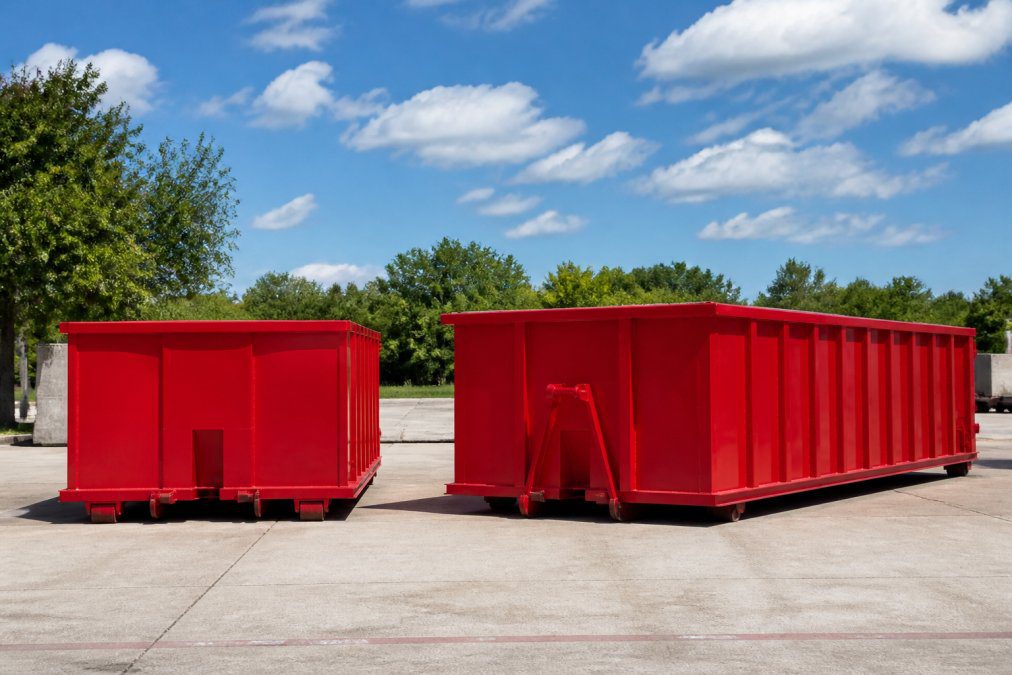
A 15-yard dumpster is the workhorse for most residential projects. It handles general household debris, old furniture, drywall, wood scraps, and similar materials efficiently. For a typical home cleanout or modest renovation, this size covers most scenarios without excess capacity you’re paying for but not using.
Here’s where the 15-yard becomes essential: it’s the only size that should accept large volumes of heavy materials. If your project involves concrete removal, significant amounts of dirt, brick, or rock, a 15-yard dumpster is the correct choice, not a 20-yard or larger. These heavy materials compress differently than general debris and require the structural design of a 15-yard unit.
One advantage that matters for budget-conscious projects: when a 15-yard dumpster is filled exclusively with clean concrete, dirt, brick, or rock (no contamination or mixed trash), customers may receive a break on tonnage. This can meaningfully reduce your overall cost if you’re working with a large volume of a single heavy material type.
20-Yard, 25-Yard, and 30-Yard Options
Larger dumpsters serve specific purposes. A 20-yard unit works well for mid-sized projects where general debris volume is substantial, think a full kitchen and bathroom renovation, or a significant yard cleanup. The 25-yard and 30-yard sizes are built for commercial demolition, large-scale construction sites, or projects generating high volumes of mixed debris over extended timelines.
The critical distinction: never use a 20-, 25-, or 30-yard dumpster as a substitute for proper heavy material handling. These larger units aren’t designed to accommodate concentrated loads of concrete, dirt, brick, or rock. Attempting to fill one with these materials creates weight distribution problems and can result in rejected loads or damage charges.
Providers in the market typically offer these four core sizes because they map to common project types. Austex Dumpsters focuses on 15-yard, 20-yard, 25-yard, and 30-yard options specifically because this range covers residential and small-to-medium commercial needs without forcing customers into oversized or undersized rentals.
Heavy Material Disposal Requirements: Know What Goes Where
This is where many roll off dumpster rental comparison guides fall short. They list dumpster sizes without explaining the material-to-size relationship that actually matters.
Heavy materials, concrete, dirt, brick, rock, asphalt, behave differently from general debris. They don’t compress. They create concentrated weight loads. A cubic yard of concrete weighs roughly 4,000 pounds (peer-reviewed research). A cubic yard of general construction debris weighs roughly 400-600 pounds (the EPA). This 6-10x weight difference fundamentally changes how you should approach disposal.
The practical rule: if your project produces significant quantities of heavy material, use a 15-yard dumpster. This size is engineered for weight distribution of dense loads. Attempting to load heavy materials into larger dumpsters creates several problems. First, weight concentration in a larger container can exceed safe load limits. Second, providers may refuse the load entirely if they detect improper material placement. Third, you risk damage charges if the load damages the container or the truck.
For projects mixing general debris with some heavy material, the approach depends on volume. Small amounts of concrete or brick mixed with general construction waste? A 20-yard dumpster handles that. Large amounts of heavy material as the primary load? Separate it into a 15-yard dumpster and use a different size for your general debris.
This distinction explains why material handling expertise matters in a provider comparison. Austex Dumpsters guides customers toward the correct container based on what’s actually being disposed, not just the volume of space needed. This prevents rejections, damage charges, and project delays.
Service Reliability and Pickup Frequency
In a roll off dumpster rental comparison, reliability separates providers more than any other factor. A dumpster sitting in your driveway two weeks after your project ends isn’t just inconvenient, it’s a project failure.
Service reliability breaks into two components: delivery timing and pickup timeliness. On delivery, some providers offer same-day service when you call early enough. Others operate on a 2-3 day standard. Same-day availability matters if your project has a tight window. If you’re tearing off a roof on Saturday and need the dumpster gone by Monday morning, a provider without same-day capability creates a problem.
Pickup timeliness is equally critical. Once your dumpster is full or your rental period ends, when does it actually get removed? The best providers commit to specific pickup windows, typically within 24-48 hours of your call. Providers that leave dumpsters sitting create liability issues (they’re taking up public or private space) and prevent you from moving forward with the next phase of your project.
For recurring needs, property managers handling multiple office cleanouts, contractors managing several job sites, pickup frequency becomes a contract issue. Can you schedule recurring pickups on a set day each week? Or do you need to call every single time? Flexible scheduling saves time for professionals managing multiple projects.
Austex Dumpsters prioritizes same-day delivery when available and commits to reliable pickup windows. For contractors and property managers with regular needs, recurring service options prevent the administrative burden of constant scheduling calls.
Pricing Transparency and Hidden Fees
This is where customers get burned most often in a roll off dumpster rental comparison. A low quoted price suddenly includes tonnage overage fees, delivery charges, fuel surcharges, or extended rental penalties that weren’t clearly disclosed upfront.
Transparent pricing means you understand exactly what you’re paying for before the dumpster arrives. The core components include the rental fee (for the dumpster itself), delivery and pickup charges, and any tonnage limits. Some providers bundle these into a single price. Others break them out separately, which can make the real cost harder to calculate.
Fill Out Form to Request Dumpster Rental →
Tonnage limits are the primary source of surprise charges. A provider might quote you a 15-yard dumpster at a base rate, but that price assumes a certain weight limit. If your load exceeds that weight, you pay per-ton overage fees. For projects with heavy materials, understanding your tonnage allowance is critical. A dumpster filled with clean concrete might hit weight limits quickly, triggering overages.
Extended rental fees apply if you keep the dumpster longer than the standard rental period (typically 7 days). If your project runs long, daily extension fees add up fast. Understanding the rental period and extension costs upfront prevents surprises.
Fuel surcharges and location-based fees are common but should be disclosed during your initial quote. Some providers charge more for deliveries outside their primary service area. Others add fuel surcharges that fluctuate monthly.
The best approach: get a detailed written quote that specifies the rental fee, delivery/pickup charges, tonnage limits, rental period, extension fees, and any location-based surcharges. Compare apples to apples across providers rather than just comparing base prices.
Local Operators vs. National Waste Management Companies
The roll off dumpster rental comparison between local and national providers reveals fundamentally different operational philosophies.
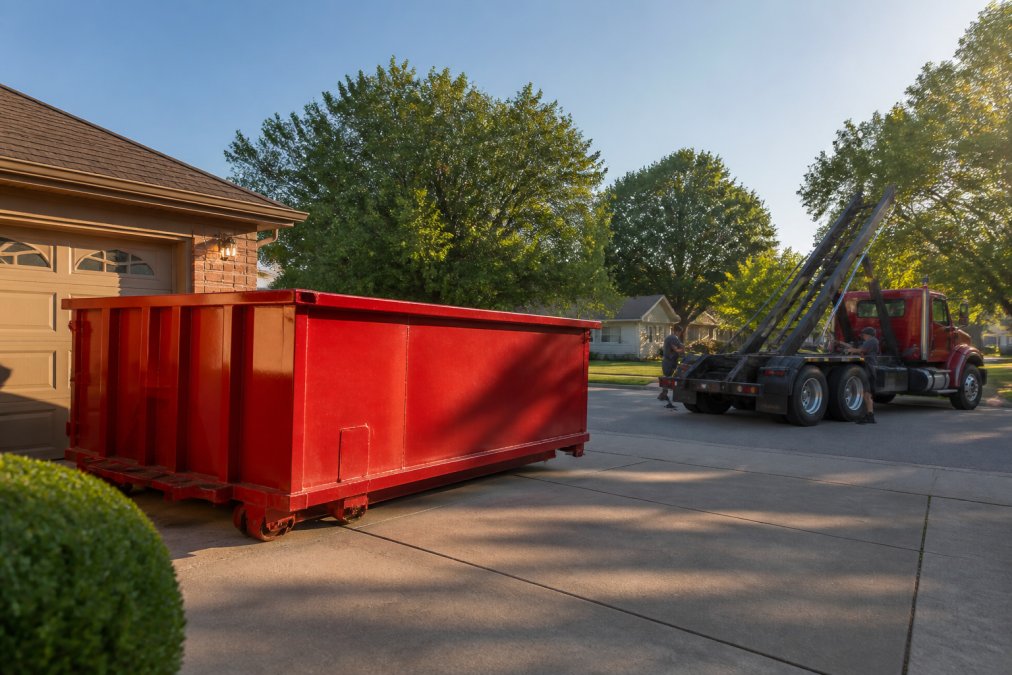
Local operators like Austex Dumpsters typically serve a defined geographic area, in this case, the Austin region. This focus creates several advantages. First, you’re working with people who understand local project types, seasonal patterns, and material handling requirements specific to the region. A local operator knows that roofing tearoffs spike in spring and summer. They understand the concrete and rock disposal patterns in construction-heavy areas.
Second, local operators often provide more personalized service. You’re not a ticket number in a national call center. Your project manager is someone who can be reached directly, who understands your specific needs, and who prioritizes your satisfaction because your reputation matters in a smaller market.
Third, same-day or next-day delivery is more feasible for local operators. National companies with distributed infrastructure might take 2-3 days to service your area because the nearest available dumpster is across town. Local operators with equipment staged throughout the service area can respond faster.
National waste management companies bring different strengths. They operate massive networks with economies of scale that can reduce costs for large commercial accounts. They offer integrated waste, recycling, and environmental services that matter for businesses managing comprehensive waste streams. They have sophisticated scheduling systems and technology platforms that make managing multiple locations easier.
However, national companies often deprioritize small residential jobs. If you’re a homeowner needing a single 15-yard dumpster for a weekend project, you’re not their target customer. Their service model optimizes for high-volume commercial contracts. Pickup timing, same-day delivery, and personalized material handling guidance become secondary to managing large accounts.
The practical comparison: choose a local operator if you value personalized service, fast response times, and material handling expertise specific to your project type. Choose a national company if you’re a large contractor or commercial entity with multiple locations and want integrated waste management services.
Which Provider Should You Choose?
A roll off dumpster rental comparison ultimately hinges on matching your specific project needs to the provider’s strengths.
Start by defining your project clearly. What’s the primary debris type? How much volume? What’s your timeline? Do you need same-day delivery? Are you a one-time user or do you have recurring needs?
For most residential projects and small-to-medium contractors, a local operator provides better value. Austex Dumpsters is built specifically for these use cases. We guide you to the correct dumpster size based on your actual debris type (not just volume). We handle heavy materials properly, concrete, dirt, brick, rock, in the 15-yard dumpster designed for them. We offer same-day delivery when available. We commit to reliable pickup windows. And we provide transparent pricing without hidden fees.
For large commercial accounts managing multiple locations, integrated waste services, and high-volume disposal, national companies offer advantages in scale and technology integration.
The decision framework is straightforward:
| Factor | Local Operators | National Companies |
|---|---|---|
| Same-day delivery | Typically available | 2-3 day standard |
| Personalized service | High | Lower priority |
| Material handling expertise | Specialized to region | Generalized |
| Pricing transparency | Direct quotes | Complex rate structures |
| Recurring service options | Flexible scheduling | Contract-based |
| Best for | Residential, small contractors | Large commercial accounts |
Choosing the right dumpster rental provider prevents costly project delays and unexpected charges. The difference between a provider who guides you to the correct 15-yard dumpster for your concrete disposal versus one who tries to upsell you a 20-yard unit isn’t just about price, it’s about whether your project stays on schedule. Austex Dumpsters specializes in getting homeowners, contractors, and property managers the right size, the right material handling, and the right service reliability. Fill out a form to request your dumpster rental and get expert guidance on sizing for your specific project.
Frequently Asked Questions
Q: How do I determine the right dumpster size for my construction or home project?
A: Start by estimating the volume of debris. A 15-yard dumpster works for general debris from small renovations or cleanouts. Larger projects like full-scale demolition or multiple-room renovations typically need 20-, 25-, or 30-yard options. Contact a dumpster rental provider for guidance based on your project scope and to prevent costly oversizing or undersizing.
Q: What is the difference between general debris and heavy material disposal?
A: General debris includes drywall, wood, flooring, and household items. Heavy materials like concrete, dirt, brick, and rock require specialized handling due to weight. A 15-yard dumpster is designed specifically for large volumes of heavy materials. Mixing heavy materials with general debris can cause overloading and additional fees. Always confirm material compatibility with your provider before booking.
Q: What factors should I consider when choosing a dumpster rental company?
A: Evaluate same-day or next-day delivery availability, service area coverage, pickup reliability, sizing guidance quality, and pricing transparency. Ask about overage fees, rental period flexibility, and whether they handle your specific material type. Local providers often offer faster response times and personalized service, while national operators provide broader coverage and established processes. Request quotes from multiple providers to compare service reliability and contractual terms.
Q: How does local service reliability compare to large waste management corporations?
A: Local operators typically offer faster response times and direct communication with management. National companies bring operational scale, multiple service locations, and standardized processes, but may take longer for delivery and have less flexibility. For time-sensitive projects in specific areas, local providers often outperform on speed; for recurring commercial needs across multiple locations, national providers offer consistency and integrated waste solutions.
This article was written using GrandRanker