
Table of Contents
- Why Property Managers Rely on Roll-Off Dumpster Rentals
- Roll-Off Dumpster Sizes for Property Managers: A Practical Comparison
- Heavy Material Disposal Guidelines: What Goes Where
- simplifying Tenant Turnovers with Flexible Scheduling
- How Dumpster Rental for Landscaping Projects Differs
- Compliance, Prohibited Items, and Fine Mitigation
- Choosing a Rental Partner: Liability and Operational Efficiency
- Conclusion: Build a Waste Management Plan That Works
- Frequently Asked Questions
Last Updated: September 4, 2026
Property managers juggle tenant turnovers, routine maintenance, and renovation projects. A dumpster rental for property managers is an operational necessity that prevents debris from piling up, keeps tenants safe, and protects curb appeal. At Austex Dumpsters, we provide the roll-off containers and flexible scheduling that keep multifamily communities and commercial sites running smoothly.
Waste streams vary between projects, and the wrong container leads to wasted spend or an overflowing site. Below, we’ll show you how to select the right dumpster, schedule pickups around tenant move-outs, and avoid fines from improper disposal.
Why Property Managers Rely on Roll-Off Dumpster Rentals
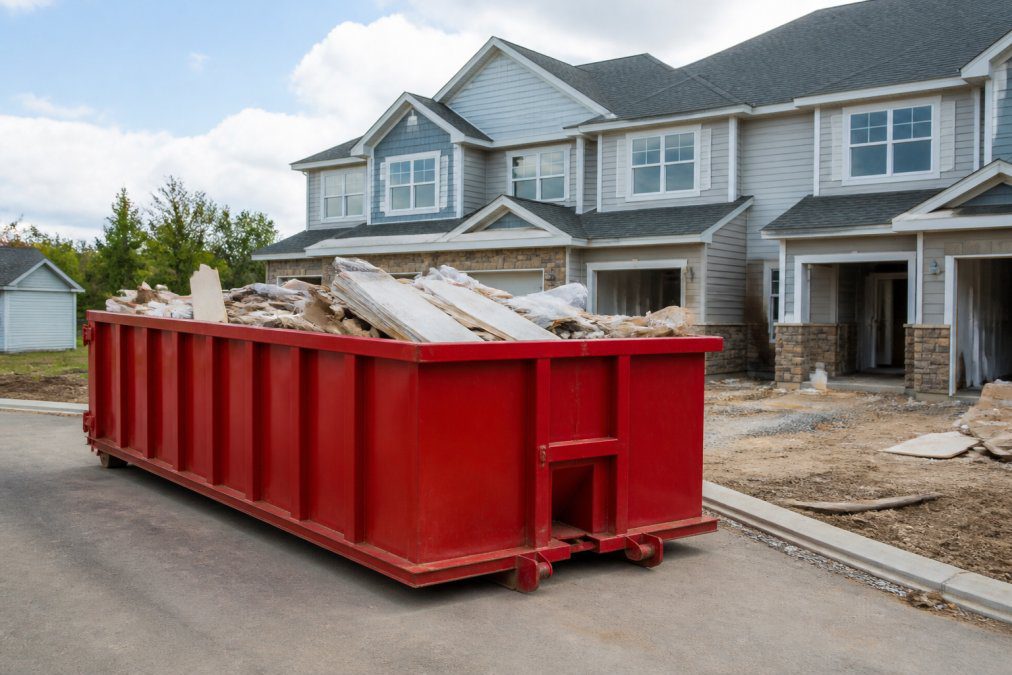
Roll-off dumpster rentals solve a daily problem for property managers: accumulating waste with no efficient way to remove it. Unlike standard trash service, a roll-off dumpster provides a dedicated, on-site disposal point for large-scale debris, bulky furniture, and renovation waste that curbside bins cannot handle.
The operational benefits extend beyond simple convenience. A designated dumpster keeps hallways clear of abandoned possessions, prevents fire hazards from piled debris, and reduces the risk of injury from materials left in common areas. The National Apartment Association’s operational guides emphasize that proactive maintenance of common areas is critical to resident retention and reducing liability. When waste is contained and removed promptly, the property maintains its value and remains attractive to prospective tenants.
Roll-Off Dumpster Sizes for Property Managers: A Practical Comparison
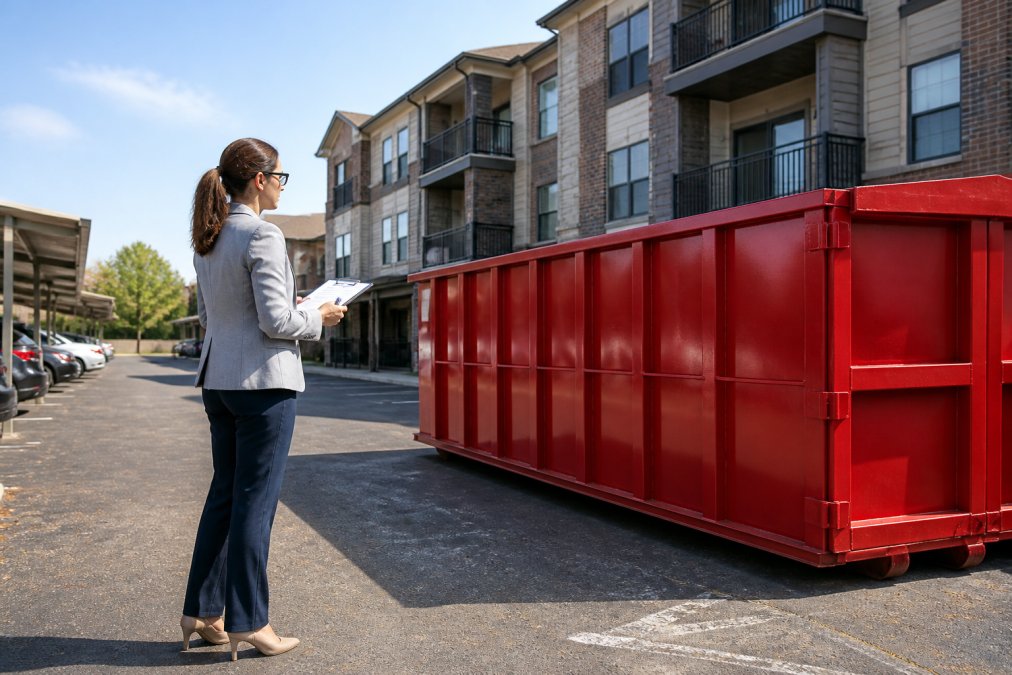
Selecting the right roll-off dumpster sizes for property managers comes down to matching cubic yardage to the waste stream. Choosing too small means a second haul; choosing too large means paying for empty space. The table below breaks down the standard options.
| Dumpster Size | Best Use Case | Typical Duration |
|---|---|---|
| 15-yard | Heavy materials, small cleanouts | 1-3 days |
| 20-yard | Standard tenant turnovers, light renovations | 3-7 days |
| 25-yard | Large turnovers, multi-unit cleanouts | 5-10 days |
| 30-yard | Full renovations, large-scale debris | 7-14 days |
15-Yard: Heavy Materials and Small Cleanouts
The 15-yard dumpster is the smallest option and serves two purposes: it is the only container approved for large amounts of heavy material like concrete, dirt, brick, or rock, and it is ideal for single-unit cleanouts and smaller debris removal jobs where space is tight.
For property managers, the 15-yard unit is also the most economical choice for clean concrete or dirt from a parking lot repair or sidewalk replacement. Customers may receive a break on tonnage when a 15-yard dumpster is filled with clean concrete, dirt, brick, or rock with no trash or other contamination.
20-Yard and 25-Yard: The Workhorses for Turnovers
The 20-yard and 25-yard dumpsters handle the bulk of property management waste. A 20-yard container suits a standard one-bedroom apartment turnover, handling old furniture, carpet, and general debris. The 25-yard version provides extra capacity for larger units or when tenants leave behind appliances and bulky items.
These sizes fit in most parking lots without blocking traffic lanes and can be placed close to building entrances. For property managers overseeing multiple turnovers in one week, these containers keep work moving without constant hauling services.
30-Yard: For Full Renovations and Large-Scale Debris
When a property undergoes a full renovation or a commercial space is stripped to the studs, the 30-yard dumpster accommodates construction debris like drywall, lumber, and old fixtures that accumulate rapidly during demolition.
The 30-yard footprint is larger, so property managers must verify that the delivery truck can access the placement area and that the container will not block fire lanes or emergency access points. Coordinating delivery and pickup with the contractor’s schedule ensures the dumpster is present when needed and removed promptly.
Heavy Material Disposal Guidelines: What Goes Where
A common mistake is filling a large dumpster with heavy materials, which leads to overweight loads and additional fees. Large amounts of heavy material such as concrete, dirt, brick, or rock must go in a 15-yard dumpster; a 20-yard or larger container filled with concrete would exceed legal load limits for transport.
Property managers should communicate this guideline clearly to contractors and maintenance staff. When a renovation involves breaking up a concrete slab or removing landscaping rock, schedule a separate 15-yard dumpster for that material. Keeping heavy materials isolated preserves the larger containers’ capacity for bulky, lighter debris like furniture and drywall.
Placing concrete, dirt, or rock in a 20-yard or larger dumpster risks overweight fines and may result in the driver refusing to haul the load. Always reserve the 15-yard unit for heavy materials.
simplifying Tenant Turnovers with Flexible Scheduling
Tenant turnover follows a predictable calendar. The most efficient approach is to schedule delivery for the day the old tenant vacates and pickup for the day the new tenant moves in. This window, typically three to seven days, provides time for cleaning and debris removal without leaving a dumpster on site longer than necessary.
Flexible scheduling is where a responsive rental partner adds value. Property managers need the ability to adjust pickup dates when move-outs run late or cleaning takes longer than expected. The Institute of Real Estate Management’s standards on property operations highlight that efficient turnover processes directly reduce vacancy loss and improve resident satisfaction. A rental company that accommodates schedule changes prevents costly project delays.
Recurring Pickup Options for Multi-Unit Portfolios
For property managers overseeing multiple properties, recurring pickup options eliminate the need to call for every job. A standing order for weekly or bi-weekly delivery ensures a container is available when a unit turns over or common-area maintenance generates waste.
A regular schedule means debris never accumulates to the point of becoming an eyesore or safety hazard. For portfolios with predictable turnover cycles, recurring service reduces administrative overhead and keeps waste management on autopilot.
How Dumpster Rental for Landscaping Projects Differs
Dumpster rental for landscaping projects involves different waste streams than interior cleanouts. Yard waste, tree branches, and soil are bulky but not necessarily heavy like construction debris. However, large amounts of dirt or rock from grading projects still require the 15-yard container per heavy material guidelines.
Landscaping debris also has distinct disposal requirements. Many municipalities have separate regulations for yard waste versus construction debris, affecting where the material can be taken and how it must be sorted. The Environmental Protection Agency’s guide on sustainable materials management outlines best practices for waste diversion and recycling that apply to landscaping projects. Property managers should confirm that their rental partner handles yard waste appropriately and complies with local landfill regulations.
For routine grounds maintenance, a smaller dumpster on a recurring schedule works well. For one-time projects like tree removal or major landscaping overhauls, a single delivery sized to the project’s scope prevents multiple hauls.
Compliance, Prohibited Items, and Fine Mitigation
Waste management carries legal responsibilities. Hazardous materials, including paints, solvents, chemicals, and certain electronics, are universally banned from roll-off dumpsters. Contamination can result in the entire load being rejected or the renter being charged for special handling.
Property managers must educate tenants and contractors about what cannot go in the dumpster. Posting a list of prohibited items near the container is a practical deterrent. Common violations include oil-based paints, automotive fluids, and asbestos-containing materials, which require specialized disposal methods.
Fill Out Form to Request Dumpster Rental →
Many jurisdictions require that materials such as cardboard and metals be diverted from landfills. A rental partner who understands local requirements and communicates them clearly reduces the risk of non-compliance and helps property managers prevent overweight charges.
The Municipal Fine Landscape: A Risk-Reduction Framework
Municipalities enforce waste disposal rules through fines ranging from a few hundred dollars for a minor infraction to thousands for improper disposal of hazardous waste. Cities actively monitor commercial dumpsters for prohibited items, especially during construction and renovation projects.
A common pattern is for a city inspector to issue a citation to the property owner, not the tenant or contractor, when prohibited items are found in a dumpster on private property. A proactive compliance program has three components:
- Pre-Placement Communication: Before delivery, send a notice to all tenants and contractors listing prohibited items, with a phone number for questions and a process for requesting separate disposal for items like electronics or paint.
- On-Site Signage: Post a laminated sign on or near the dumpster listing the most common prohibited items. This provides a defense if a citation is issued, demonstrating you took reasonable steps to inform users.
- Load Inspection Protocol: Before pickup, visually inspect the load and remove any prohibited items before the hauler arrives.
Prohibited Items: A Detailed Reference for Property Managers
The following list covers the most common sources of contamination and fines:
- Liquids and Sludge: Paints (oil-based and latex), solvents, thinners, adhesives, and any container with liquid residue.
- Automotive Fluids: Oil, antifreeze, transmission fluid, and gasoline. These are hazardous waste and require special collection events.
- Electronics (E-waste): Televisions, monitors, computers, and other devices with circuit boards. Many states have specific e-waste recycling laws.
- Appliances with Refrigerants: Refrigerators, freezers, and air conditioners must have their refrigerant removed by a certified technician before disposal.
- Tires: Most landfills prohibit tires due to fire risk and breeding grounds for pests.
- Asbestos-Containing Materials: Floor tiles, insulation, and siding that may contain asbestos require specialized abatement and disposal.
- Medical Waste: Needles, syringes, and biohazardous materials.
- Yard Waste (in some jurisdictions): Some municipalities require separate collection for grass clippings, leaves, and branches.
The Tonnage Break for Clean Heavy Materials
A distinct cost-saving opportunity exists for property managers handling clean heavy materials. When a 15-yard dumpster is filled exclusively with clean concrete, dirt, brick, or rock, with no trash, wood, or other contamination, customers may receive a break on tonnage.
This is a significant advantage for projects like parking lot repairs, sidewalk replacements, or landscaping overhauls. Keeping these materials separate from general debris and dedicating a 15-yard container to them reduces disposal costs while ensuring compliance with load limits.
Create a simple one-page flyer for tenants and contractors that lists the top five prohibited items and the phone number to call for questions. Post it near the dumpster and include it in your move-in or project kickoff communications.
Choosing a Rental Partner: Liability and Operational Efficiency
The rental partner you choose directly impacts your legal exposure and bottom line. A rigorous vetting process focuses on liability transfer, contract terms, and operational integration.
The Liability Shift: Who Is Responsible When Something Goes Wrong?
A roll-off dumpster on your property introduces new risks: a tenant trips over the container’s corner, debris damages a parked car, or an improperly secured load spills onto a public street. Whose insurance covers these incidents?
Property managers should request a Certificate of Insurance (COI) before the first delivery. The COI should show the rental company’s general liability coverage and name the property owner or management entity as an “additional insured.” This extends the rental company’s policy to cover claims arising from their operations, including placement, pickup, and transport, on your property. Without it, a claim could fall back on the property’s own policy.
Rental companies often carry coverage for their own vehicles and drivers but not for the container’s contents once it is on your site. Property managers should clarify who is responsible for the load once placed, and document the chain of custody if a third-party hauler is used.
Contract Terms That Protect the Property Owner
Beyond insurance, the rental contract is a risk-management tool. Property managers should confirm the agreement addresses:
- Indemnification: The rental company should indemnify the property owner for claims arising from their negligence, such as improper placement damaging underground utilities or pavement.
- Damage Waiver: Clarify who is responsible for property damage caused by the dumpster itself (e.g., scratches on asphalt, dents in curbs).
- Overweight Load Policy: The contract should state the maximum weight limit and the process for handling loads that exceed it, preventing surprise fees and disputes.
- Placement Indemnity: The rental company should require the property manager to confirm utility locates have been performed if the dumpster will cover a utility line.
Operational Efficiency: Beyond Drop-Off and Pickup
Operational efficiency is about how the rental partner integrates with your property’s workflow.
- Site Accessibility Assessments: A professional partner will ask about gate widths, overhead clearance, and pavement condition before delivery, preventing the common problem of a truck arriving that cannot access the placement area.
- Communication Protocols: Establish a single point of contact for scheduling changes. A partner with a direct line to dispatch, rather than a call center, can make adjustments without friction.
- Billing Clarity: The final invoice should itemize the rental period, additional days, and overage charges, simplifying your accounting and helping you track costs per property.
Do not allow a dumpster to be placed without first verifying the rental partner’s Certificate of Insurance and confirming that your property is listed as an additional insured. This single step can prevent significant legal and financial exposure.
Austex Dumpsters addresses these operational concerns with same-day delivery when available, expert guidance on sizing, and straightforward pricing that prevents overage surprises. Our team works with property managers to coordinate delivery windows and ensure pickups happen on schedule, keeping properties clean and projects on track. This focus on reliability is why property managers across the Austin area trust us for recurring and one-time rentals. The National Association of Residential Property Managers’ resource library offers additional guidance on vetting service providers to protect property owner interests.
Conclusion: Build a Waste Management Plan That Works
Effective waste management for property managers is a planned process. It involves matching dumpster size to the job, reserving the 15-yard container for heavy materials, scheduling around turnover windows, and enforcing disposal rules to avoid fines. The payoff: fewer delays, safer properties, and preserved curb appeal.
Austex Dumpsters provides the roll-off dumpsters and flexible scheduling that make this plan executable. We offer the four sizes property managers need, expert guidance on load limits and prohibited items, and same-day delivery when available. Get started with Austex Dumpsters and build a waste management routine that keeps your properties clean and your projects on schedule.
Frequently Asked Questions
What size dumpster is best for property management cleanouts?
For a standard apartment or condo unit turnover, a 20-yard or 25-yard dumpster is usually the right fit. These sizes handle furniture, carpet, and general debris from a single unit. For smaller cleanouts of common areas or storage rooms, a 15-yard dumpster often works. If you are managing a full-building renovation with construction debris, a 30-yard dumpster provides the disposal capacity you need. Contact Austex Dumpsters for guidance on matching the right size to your specific project.
How can property managers schedule recurring dumpster pickups?
Many property managers set up a recurring service plan to handle ongoing needs like landscaping waste or routine cleanouts. With Austex Dumpsters, you can arrange for flexible scheduling that includes regular drop-offs and pickups across your portfolio. This approach eliminates the need to call for a new rental each time. A scheduled plan also helps you budget more accurately and ensures a dumpster is on site exactly when your maintenance team needs it, improving operational efficiency.
What materials are prohibited in roll-off dumpsters?
Hazardous waste is not allowed in roll-off dumpsters. This includes paints, solvents, chemicals, asbestos, and certain electronics. Landfill regulations also prohibit items like tires and large appliances containing Freon. Violating these rules can result in significant fines. Always confirm the list of prohibited items with your rental provider. Austex Dumpsters can provide a clear rundown of what is acceptable, helping you avoid disposal fees and keep your project in compliance.
Are there weight limits for dumpster rentals?
Yes, every dumpster rental has a load limit based on its size. Exceeding this limit leads to overage fees. A key guideline: if you are disposing of large amounts of heavy material like concrete, dirt, brick, or rock, it must go in a 15-yard dumpster. These materials are too heavy for larger containers. When a 15-yard dumpster is filled with only clean concrete or dirt, you may receive a break on tonnage. Ask about load limits before you fill the container.
How does same-day dumpster delivery benefit property managers?
Same-day delivery prevents project delays. When a unit turns over unexpectedly or a cleanout is more extensive than planned, having a dumpster on site within hours keeps your maintenance schedule on track. This speed is critical for minimizing vacancy time between tenants. It also helps with emergency cleanouts, such as after a water leak or an eviction where abandoned possessions need quick removal, directly supporting your property value and curb appeal.
How do I get a dumpster for my business?
Getting a dumpster for your property management business starts with assessing your project needs. Determine the type of debris you will handle, such as furniture, construction debris, or yard waste. Next, choose a size. A 20-yard or 25-yard dumpster is a common starting point for turnovers. Finally, contact Austex Dumpsters to check availability and schedule a delivery. They can set up a single rental or a recurring pickup schedule to match your portfolio’s workflow.
This article was written using GrandRanker