
Table of Contents
- Why Efficient Waste Removal Matters for Your Project
- Dumpster Rental for Home Renovation Projects
- Dumpster Rental for House Cleanout and Decluttering
- Understanding Roll-Off Dumpster Sizes and Capacity
- Concrete and Dirt Disposal: Best Practices and Options
- Planning Your Waste Removal Timeline and Logistics
- Common Waste Removal Mistakes to Avoid
- Frequently Asked Questions
Last Updated: October 6, 2026
Why Efficient Waste Removal Matters for Your Project
Waste removal home renovations and cleanouts generate far more debris than most homeowners expect. A single kitchen remodel can produce multiple truckloads of old cabinetry, drywall, flooring, and fixtures.
The real cost of poor waste management isn’t the mess, it’s the downtime.
Efficient waste removal keeps your renovation or cleanout moving without interruption. The right dumpster size, delivered on your timeline, keeps your crew productive and your project on schedule.
Dumpster Rental for Home Renovation Projects
Home renovation projects create specific debris types that require careful planning. Kitchen and bathroom remodels produce tile, fixtures, and old cabinetry. Roof replacements generate shingles, underlayment, and wood framing. Foundation work creates concrete and masonry waste.
Each renovation type benefits from waste removal that matches its debris profile. A full-home renovation might span months and require multiple pickups, while a room remodel needs a single, well-timed delivery. Planning your waste removal home renovations before work begins prevents renting too small a container and paying for multiple deliveries.
Timeline matters as much as size. If your contractor works fast, you need same-day or next-day delivery to avoid material piling up on-site. Austex Dumpsters provides same-day delivery when available.
Dumpster Rental for House Cleanout and Decluttering
House cleanouts differ fundamentally from renovation debris. Clearing out an entire home, downsizing, settling an estate, or preparing for a move, means furniture, appliances, boxes of personal items, and general clutter.
A dumpster rental for house cleanout gives you one convenient place to deposit everything.
Many homeowners underestimate how much space a full-home cleanout requires. Furniture takes up significant volume, and appliances are heavy and bulky. A well-sized dumpster prevents running out of space halfway through.
Understanding Roll-Off Dumpster Sizes and Capacity
Roll-off dumpsters are sized by volume in cubic yards, but volume is only half the story, the other half is weight. Every container has a maximum haul weight, and heavy materials like concrete, dirt, brick, and rock hit that limit long before the container looks full.
Light, bulky debris (drywall, insulation, cardboard, furniture) fills by volume. Heavy, dense debris (concrete, dirt, brick, rock) fills by weight. Mix the two and you waste capacity both ways.
Match the Container to the Project, Not the Pile
Most homeowners choose a size by eyeballing the pile. A better method is to start with the project type, since each produces a predictable debris profile:
- Kitchen or bathroom remodel: mixed demolition debris, cabinetry, countertops, tile, drywall, fixtures. This is general debris and belongs in a 20-yard, 25-yard, or 30-yard container depending on room count and how much is being torn out.
- Roof replacement: shingles, underlayment, flashing, and wood framing. Bulky but relatively light per cubic yard, so it fills by volume. A 20-yard or 25-yard container is a common fit for a single-family roof.
- Whole-home renovation: months of phased debris across multiple trades. Plan on a 30-yard container, or a sequence of containers timed to each phase.
The Heavy-Material Rule and Why It Exists
Large amounts of concrete, dirt, brick, or rock must go in a 15-yard dumpster. This is a weight-limit requirement: these materials are dense enough that loading them into a larger container would exceed the haul weight before it’s anywhere near full.
A 15-yard dumpster can also be used for general debris. The rule only restricts heavy materials to the 15-yard size; it does not restrict the 15-yard size to heavy materials.
Heavy materials (concrete, dirt, brick, rock) → 15-yard dumpster only.
General debris (drywall, wood, roofing, furniture, clutter) → 20-, 25-, or 30-yard dumpster.
The Tonnage Break for Clean Heavy Loads
If a 15-yard dumpster is filled with clean concrete, dirt, brick, or rock, with no trash or other contamination mixed in, you may receive a break on tonnage charges. The word that matters is clean. A single bag of household trash or a paint can tossed on top can turn a clean load into a mixed load and cost you that break.
That’s why sorting as you load pays off. Keep heavy material in its own 15-yard container and general debris in a separate one.
How to Estimate Volume Without Guessing
A few rules of thumb help you size a container before you start:
- A standard pickup-truck bed holds roughly 2 to 3 cubic yards of loose debris.
These are rough estimates, because how you load changes everything. Breaking down cabinets, flattening cardboard, and stacking tightly can add several pickup loads of usable space; throwing debris in loose can waste a third of the container on air.
If you’re between sizes, size up rather than down. A slightly larger container almost always costs less than a second delivery, a second pickup, or a project delay.
When to Use Two Containers Instead of One
Some projects should never be a single container. If your project produces both heavy material and general debris, a kitchen remodel that includes tearing out a tile floor and a concrete patio, for example, plan on two containers: a 15-yard for the heavy material and a 20-, 25-, or 30-yard for everything else.
Austex Dumpsters offers four roll-off sizes, 15-yard, 20-yard, 25-yard, and 30-yard, and can help you match the right container or combination to your project before delivery day.
Fill Out Form to Request Dumpster Rental →
Concrete and Dirt Disposal: Best Practices and Options
Concrete and dirt disposal requires specific handling because of weight and volume. These materials are denser than general construction debris, so improper planning can lead to overloaded containers and safety issues.
When removing concrete from a driveway, patio, or foundation, plan for a 15-yard dumpster. Breaking concrete into manageable pieces before loading makes the process safer and more efficient.
The key to cost-effective concrete and dirt disposal is separation.
Planning Your Waste Removal Timeline and Logistics
Most waste-removal problems are logistics problems, not debris problems. The container was the right size, but the truck couldn’t reach it, or the delivery landed the day the crew was pouring concrete in the driveway. Planning logistics before you book prevents nearly all of these.
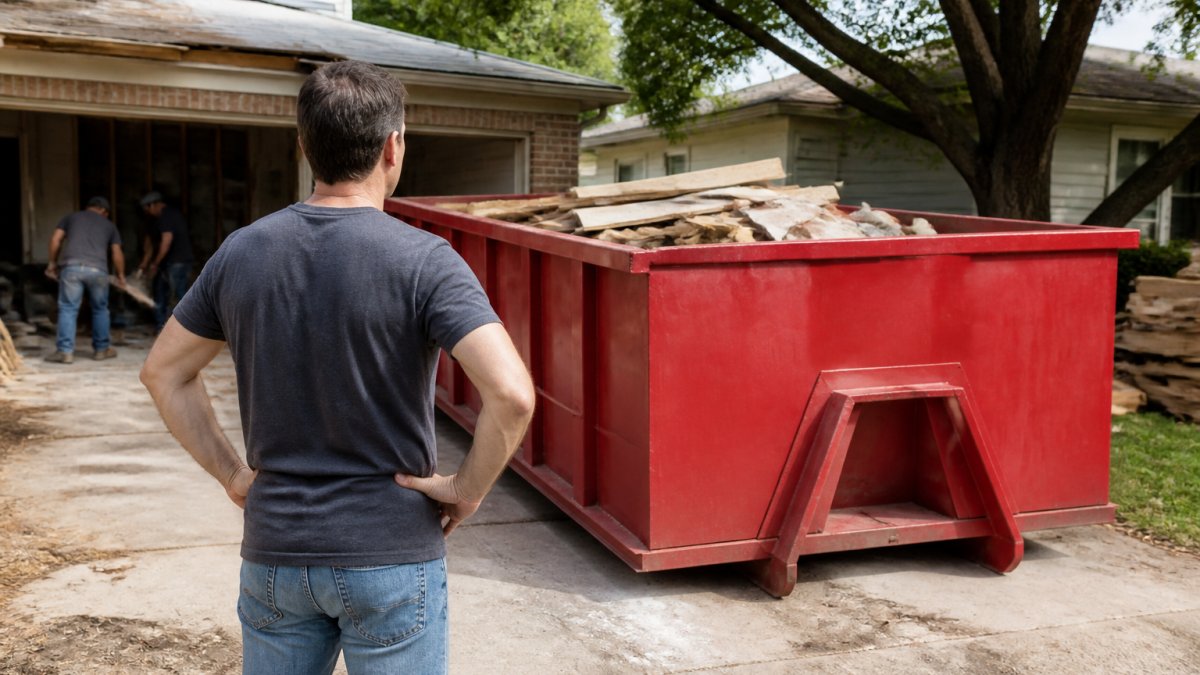
Efficient debris management relies on maintaining a clear path for haulers, which requires a disciplined approach to construction site organization that keeps your project running smoothly from start to finish.
Site Access: The First Thing to Confirm
A roll-off truck needs a straight, unobstructed path to place the container. Before scheduling delivery, check:
- Driveway width and surface: The truck and container need room to maneuver. A standard residential driveway usually works, but narrow driveways, steep slopes, or soft ground can be a problem.
- Overhead clearance: Low-hanging tree branches, power lines, and garage overhangs can block the truck’s boom. Measure or eyeball the clearance before delivery day.
- Placement surface: Concrete and asphalt driveways can be damaged by the weight of a loaded container. Many homeowners place plywood or boards under the container rails to spread the load and protect the surface.
Do not load prohibited materials into any container. Paint, solvents, chemicals, batteries, tires, and suspected asbestos-containing materials require special handling and are not accepted in a standard roll-off dumpster. Confirm what is accepted before you start loading.
Timing the Delivery Around Your Project Phases
A dumpster arriving too early sits idle and may run out its rental window before you fill it; one arriving too late creates piles that block work areas and slow the crew. Schedule delivery against your project phases, not the calendar.
- Single-room remodel: Deliver the container on demolition day, not before. Demolition produces the bulk of the debris in a short window.
- Roof replacement: Deliver the day before tear-off begins. Roofing debris accumulates fast and needs to land somewhere immediately.
- Whole-home renovation: Plan a sequence. Deliver the first container at the start of demolition, schedule a swap when it fills, and time the final container to the punch-list cleanup. Multiple pickups are normal on long projects.
- Estate or whole-home cleanout: Deliver on the first day of sorting. Cleanouts produce steady volume over several days, and having the container on-site lets you load as you go instead of staging piles in the garage.
Scheduling Around Contractors
If you’re hiring contractors, coordinate the container with their schedule, not yours. Crews work in sequence, demolition, framing, mechanical, finishes, and debris volume peaks during demolition and rough-in.
Also confirm who loads the container. Some contractors include debris hauling in their bid and supply their own container; others expect the homeowner to provide one. Clarifying this before work starts prevents double-booking and duplicate charges.
Same-Day and Next-Day Availability
Same-day delivery, when available, is useful for projects that move faster than expected. But it isn’t guaranteed, and relying on it for a fixed start date is a gamble. Booking a few days ahead locks in your delivery window.
Protecting Your Property During Removal
A loaded roll-off container is heavy, and the truck that delivers and picks it up is heavier. A few precautions protect your property:
- Place boards or plywood under the container rails on concrete or asphalt driveways.
- Keep the container off sprinkler heads, drain lines, and septic fields.
- Avoid placing the container over utility covers or cleanouts.
- Clear the path the truck will use so it does not clip landscaping, mailboxes, or fencing.
A Simple Logistics Checklist
Before you book, confirm:
- The container size matches your debris type (15-yard for heavy material; 20-, 25-, or 30-yard for general debris).
- The delivery location is accessible and clear of overhead obstacles.
- You have permission for street placement if needed.
- Prohibited materials are set aside for separate disposal.
- The delivery date aligns with your project’s heaviest debris phase.
- Your contractor and you agree on who is loading the container.
Getting these six items right before delivery day is the difference between a project that flows and a project that stalls.
Common Waste Removal Mistakes to Avoid
The most common mistake is underestimating volume.
Another frequent error is mixing incompatible materials. Hazardous waste, electronics, and certain appliances cannot go in standard dumpsters.
A third mistake is poor timing. Renting too early means paying for unused space; renting too late means your crew sits idle.
Finally, many homeowners fail to sort properly. Mixing heavy concrete with light drywall means your dumpster fills by weight before volume, wasting space.
Frequently Asked Questions
How do I choose the right dumpster size for my renovation or cleanout project?
The right size depends on the volume and type of debris. For heavy materials like concrete, dirt, brick, or rock, a 15-yard dumpster is required. For general renovation debris, 20-yard, 25-yard, or 30-yard dumpsters work well. Start by estimating the cubic footage of waste you’ll generate. If unsure, request a free quote and describe your project, an expert can recommend the appropriate size to avoid overfilling or renting unnecessary capacity.
What’s the best way to dispose of concrete, dirt, brick, and rock from my project?
Heavy materials like concrete, dirt, brick, and rock must go in a 15-yard dumpster. If the dumpster contains only clean concrete, dirt, brick, or rock with no trash or other contamination, you may receive a tonnage break on your disposal fee. Avoid mixing these materials with general debris to qualify for this benefit. Always confirm material acceptance and any tonnage considerations before scheduling pickup.
Can I get same-day dumpster delivery for my project?
Same-day delivery is available when you schedule in advance and meet service area requirements. However, availability depends on current demand and your specific location. Contact Austex Dumpsters directly to check same-day options for your project date. Booking early gives you the best chance of securing delivery when you need it, preventing project delays.
What materials are accepted in a roll-off dumpster, and what should I avoid?
Roll-off dumpsters accept most renovation and cleanout debris, including drywall, wood, roofing materials, flooring, appliances, and furniture. Hazardous materials like paint, chemicals, batteries, and electronics typically require separate disposal. Always confirm what’s accepted before loading. Mixing prohibited items into a dumpster can result in additional fees or service refusal, so clarify material restrictions when booking.
Waste removal for various project types doesn’t have to derail your renovation or cleanout. The right dumpster size, delivered when you need it, keeps your project productive and your property organized. Austex Dumpsters provides same-day delivery when available, expert guidance on sizing, and straightforward pricing designed to prevent surprises. Contact us today to request a dumpster rental and get your project back on schedule.